Mysteries and kits
Four books hang every page on one case or one setting.
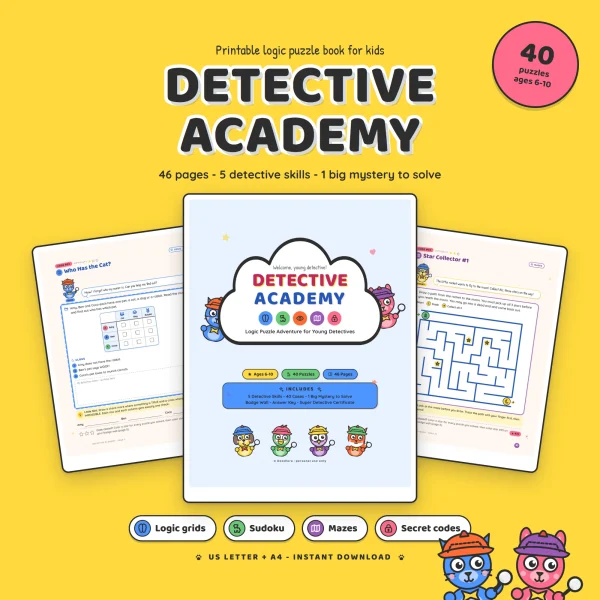
- Detective Academy opens with a missing gem at the town museum and four suspects. Its 40 puzzle cases come in five sections, and each section crosses one suspect off the list, moving from three-person logic grids to 6 x 6 sudoku.
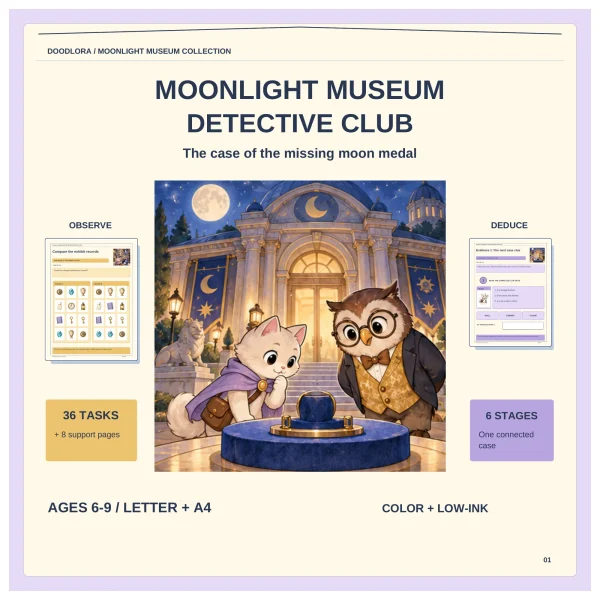
- Moonlight Museum Detective is the gentler mystery, for ages 6 to 9. A moon medal has vanished from its stand, but nobody is accused. Each of its six stages has a clue note that gives one evidence word, and by the last task all six words point to one place.
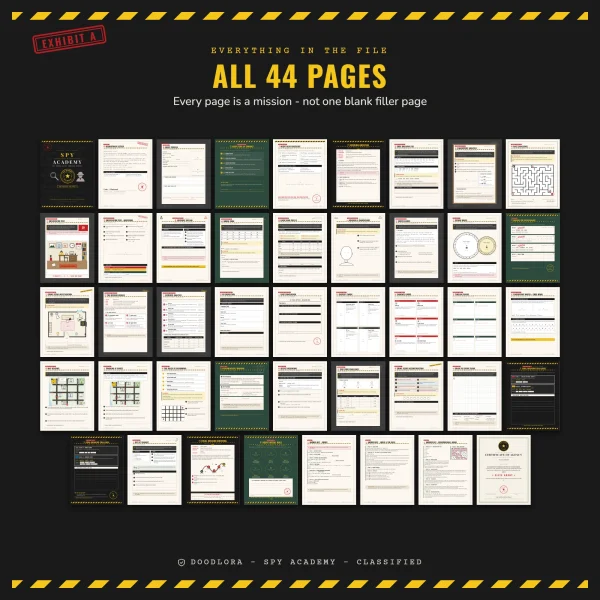
- Spy Academy trains kids in Caesar and Morse codes, fingerprints and lemon-juice ink before they work out who took the Commander's medals. There's a cipher wheel and a case file of suspect and evidence cards to cut out, so it plays more like a kit than a workbook.
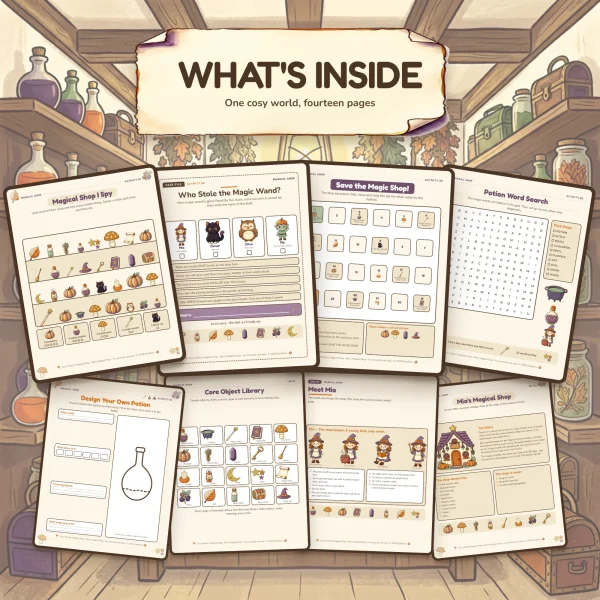
- The Witch Shop Halloween pack is the short one: nine activities in 14 pages, all set in one small shop with a black cat and a friendly goblin, and nothing scary.
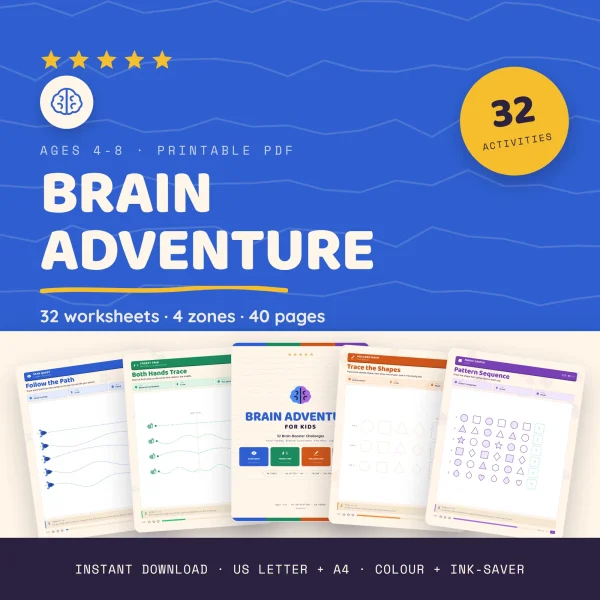
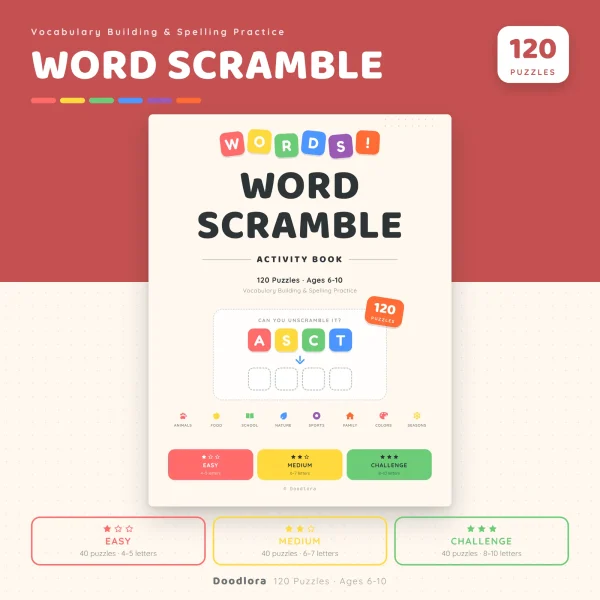
For steady practice without a storyline, Word Scramble Puzzles gives each of its 120 puzzles a page of its own, with a clue and a box for every letter, and the words in each theme grow from four letters to as many as ten. Brain Teaser Worksheets has 32 different activities in four skill zones, and every page says what it works on, how long it takes and what you need before you start.
Pretend-job activity packs
In these packs a child takes on a make-believe job and works through it one small task at a time. They come in two sizes.
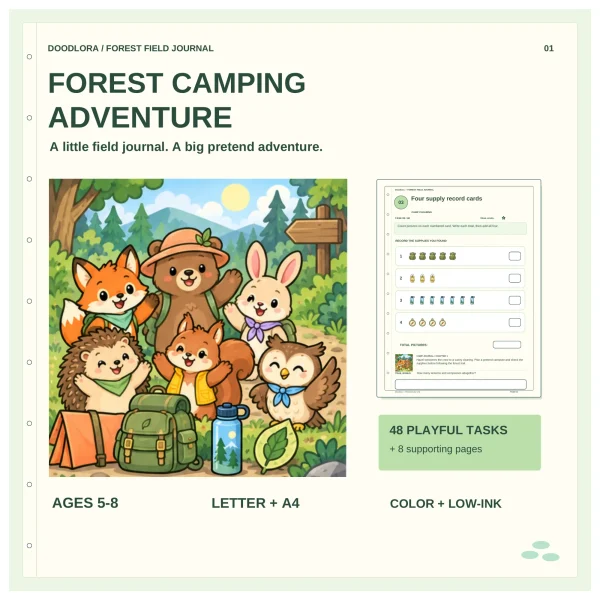
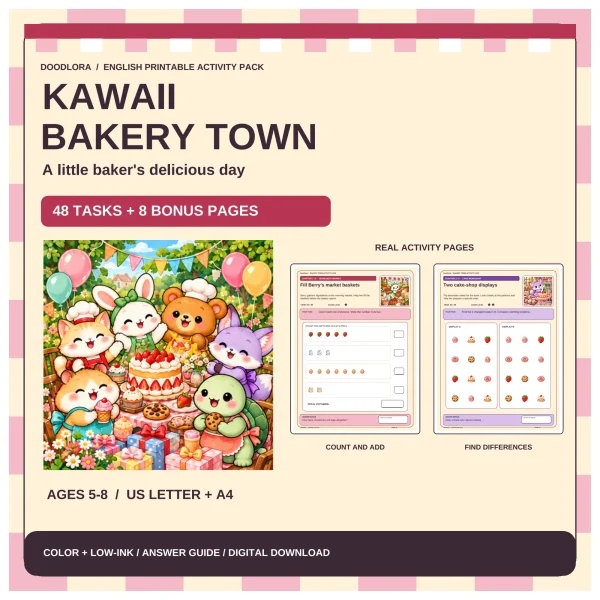
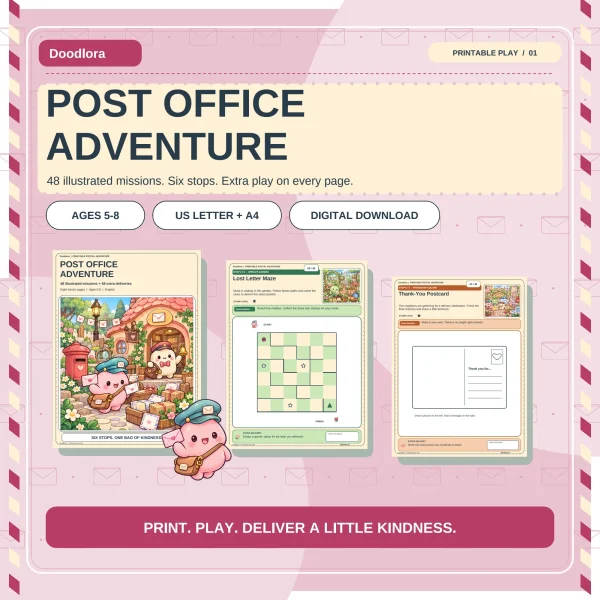
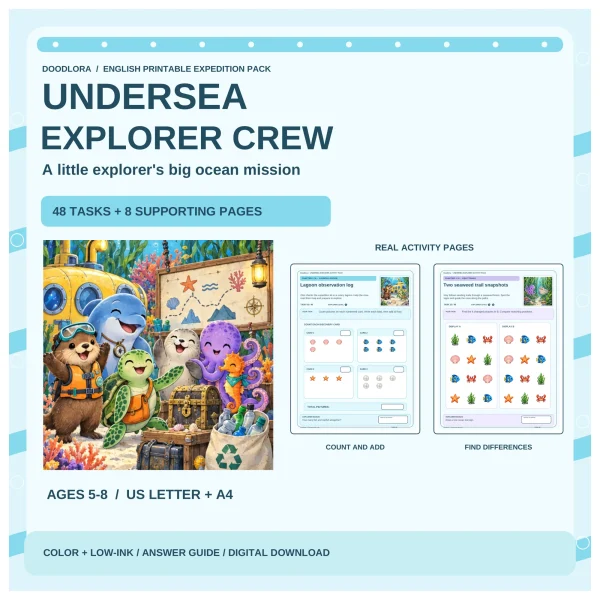
For ages 5 to 8, Kawaii Bakery Town, Kawaii Post Office, Forest Camping Adventure and Undersea Explorer Crew each have 48 short tasks in six chapters of eight. Every task page ends with a small bonus prompt for a child who wants a little more.
For ages 7 to 10, the packs have 40 tasks in five stages of eight, and they mix puzzles with one right answer and open pages for drawing, designing or writing:
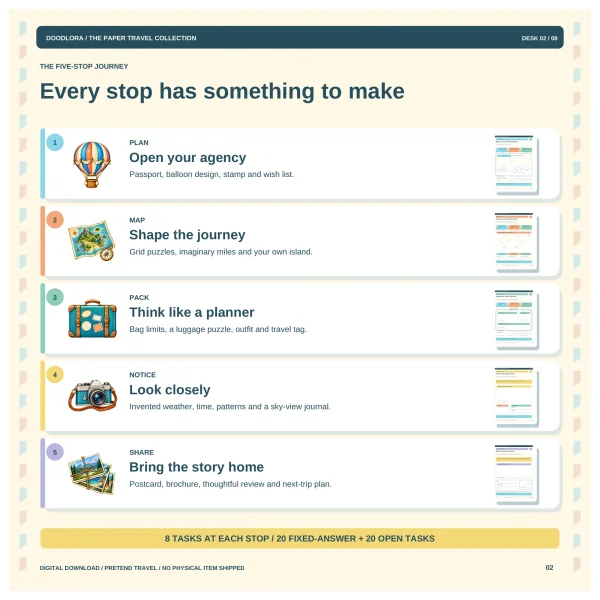
- Balloon World Travel Agency: plan a pretend balloon trip, from tickets and route maps to the postcard home.
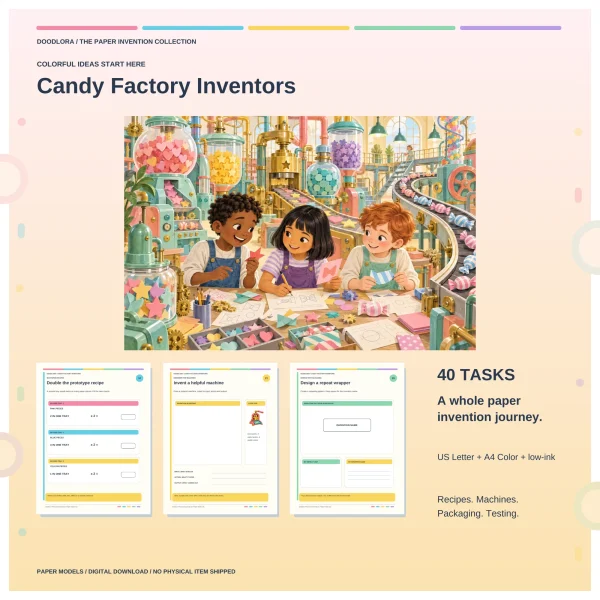
- Candy Factory Inventors: invent a sweet that only exists on paper, with no cooking or tasting.
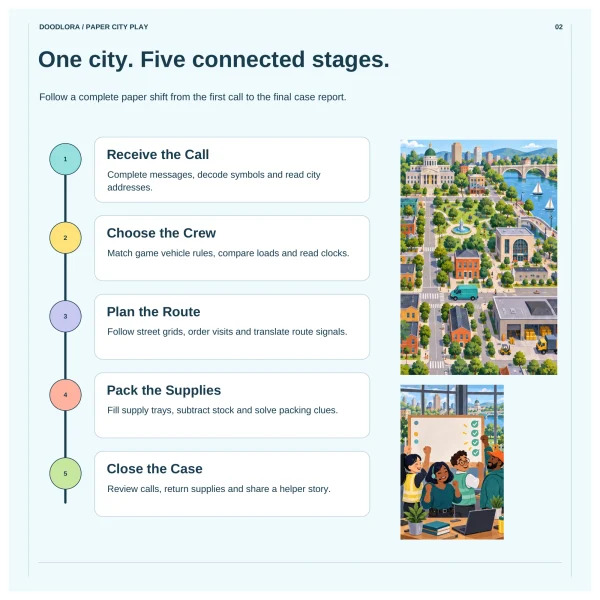
- City Rescue Dispatch: read incoming calls and send helpers around a made-up city. The book says plainly that it isn't emergency training.
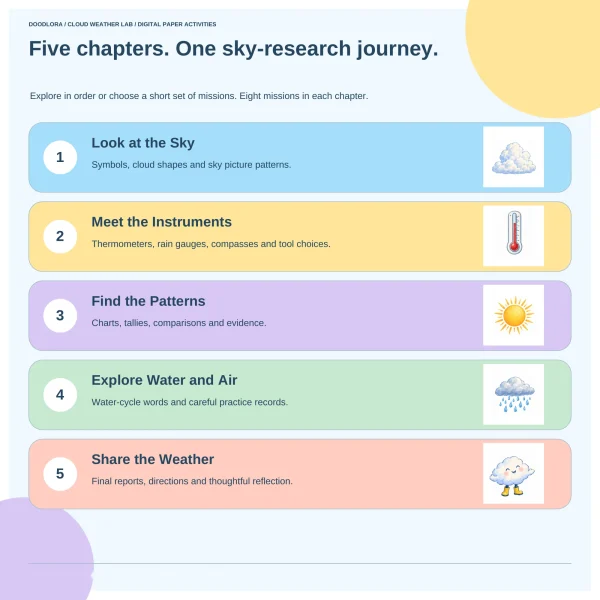
- Cloud Weather Lab: read thermometers, rain gauges and wind arrows from made-up records, and meet three starter cloud shapes.
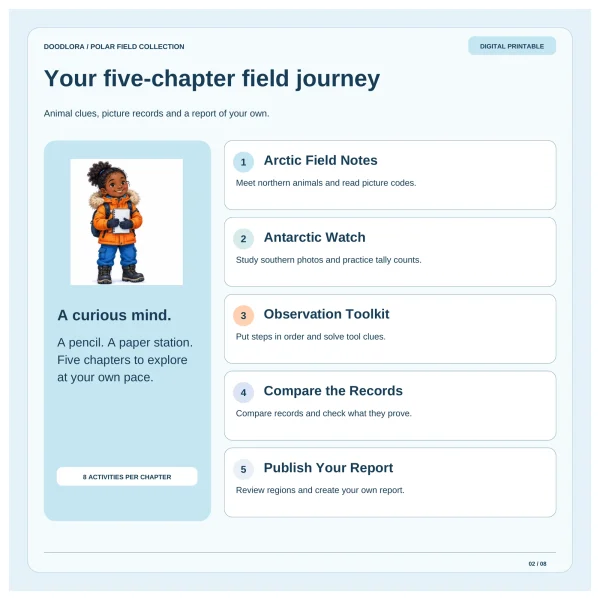
- Polar Animal Observation Station: six real polar animals, always filed under the Arctic or Antarctica, never side by side.
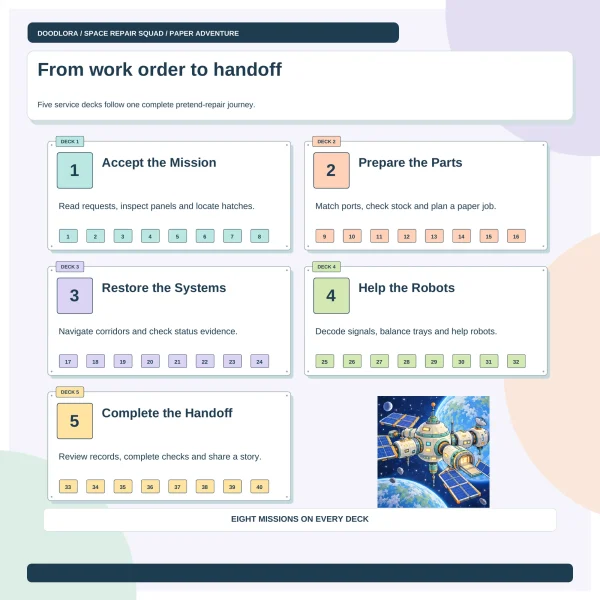
- Space Repair Squad: work orders aboard an orbiting workshop. It's about running a station, not learning the planets.
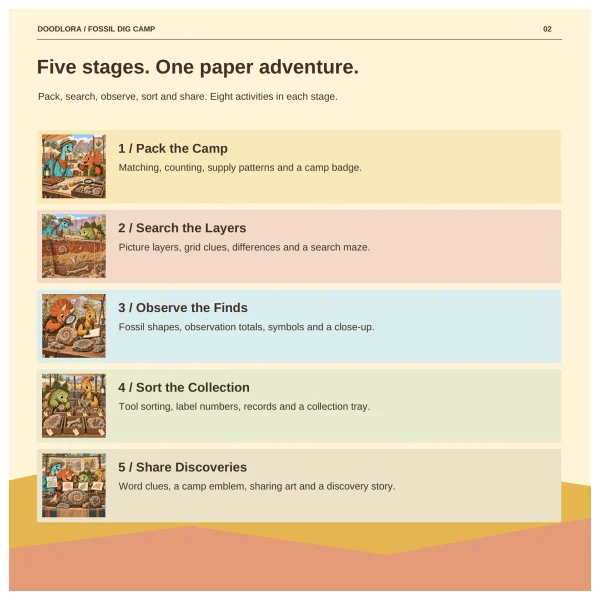
Fossil Dig Camp has the same 40-task shape for ages 6 to 9, with four dinosaur partners and simple fossil pictures meant for sorting, not for identifying real fossils.
These packs, and Moonlight Museum too, each come in a color version and a low-ink version, both in US Letter and A4, with a separate grown-up guide that holds the answers. Several say outright that pencils and crayons are all you need and nothing has to be cut.
Math card games
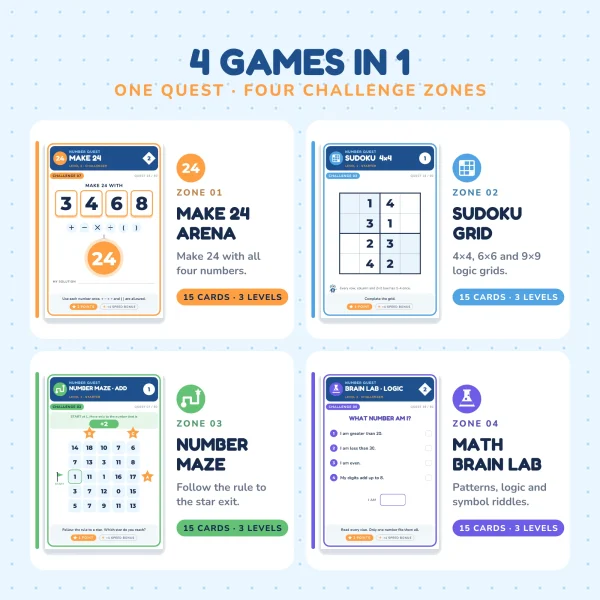
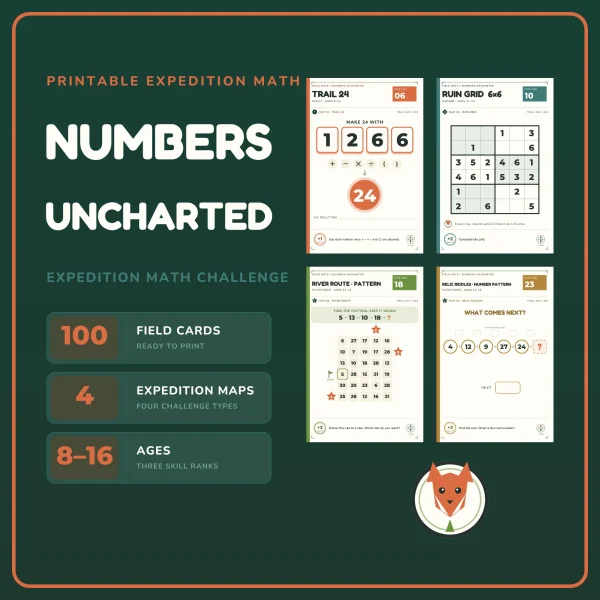
Number Quest and Numbers Uncharted turn math practice into a game for one to four players. Both use the same four puzzle types on 4 x 6 cards: reaching 24 from four numbers, sudoku, number routes that follow a rule, and short logic riddles. Points, timer cards and a star passport lead to a final four-digit code.
The difference is range. Number Quest has 60 cards in three levels, aimed at ages 7 to 12. Numbers Uncharted has 100 cards in three ranks for ages 8 to 16, so it reaches further up, into riddles about square numbers and equations with a missing number.
Holidays around the world
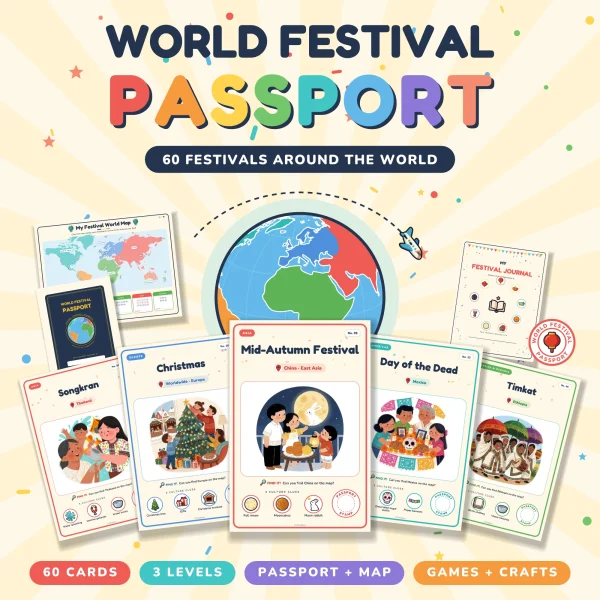
World Festival Passport is a unit for ages 5 to 10 built on 60 illustrated festival cards, 15 from each of four world regions. Every card can be read at three levels, so a five-year-old and a ten-year-old can share one deck. A passport, a world map, stamp pages and four ways to play turn the deck into a trip, and the teacher guide lays it out as a four-week unit, one region a week.
For the youngest
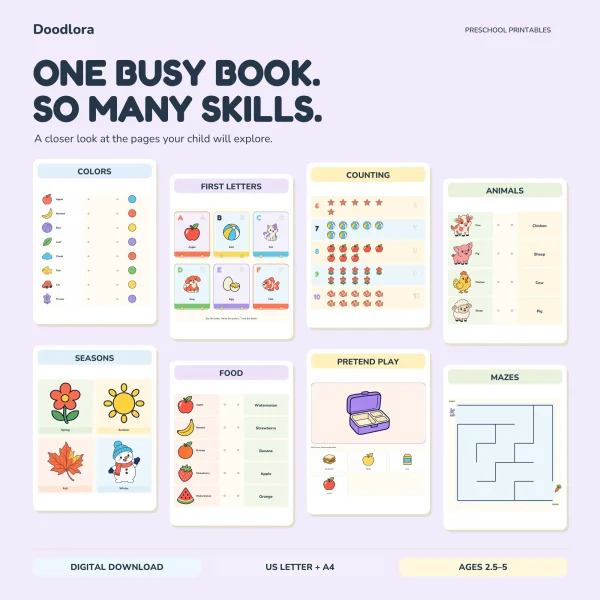
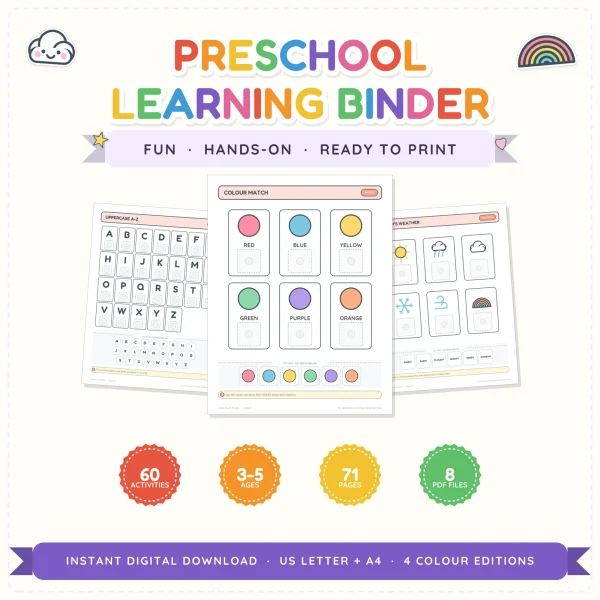
- The Preschool Busy Book has 60 binder activities, and for 52 of them the pieces to cut out are printed along the bottom of the same page. Laminate the pages, add hook-and-loop dots and the activities can be done again the next day. It comes in four color editions, including black and white.
- My Little World is the longest preschool book here, 116 pages for ages 2.5 to 5. It moves from colors, letters and numbers to feelings, weather and animals, then to ten build-and-pretend mats, such as making a pizza or packing a school bag. Most mat pieces are repeated on separate cut-out sheets, so the mats can stay whole.
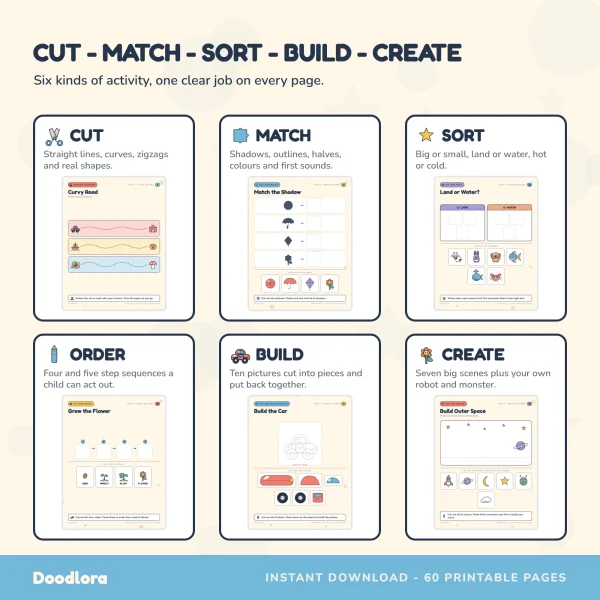
- Preschool Cut and Paste Worksheets is 58 pages of scissors and glue, starting with cutting along straight dotted lines and ending with a child building a robot or a monster from cut-out parts. Each page is marked with one of four levels, so it's easy to see which pages come first.
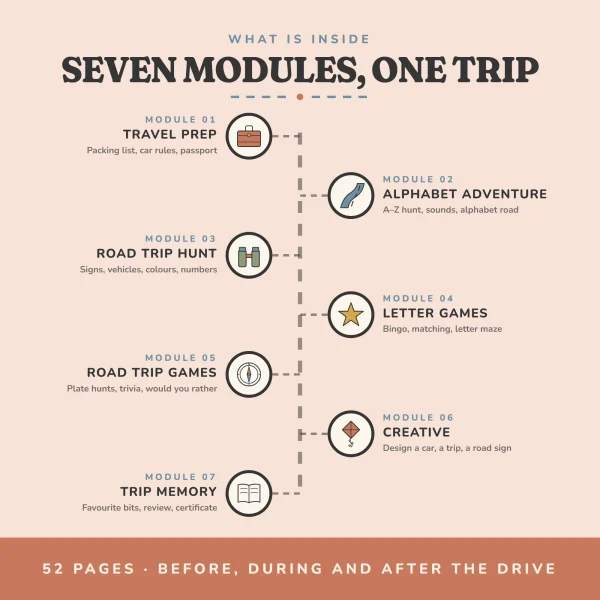
- The ABC Road Trip Activity Book turns the view out of a car window into alphabet practice, from spotting a stop sign for S to crossing letters off a bingo card. It follows the order of a trip, from a packing list at the start to a trip review at the end.
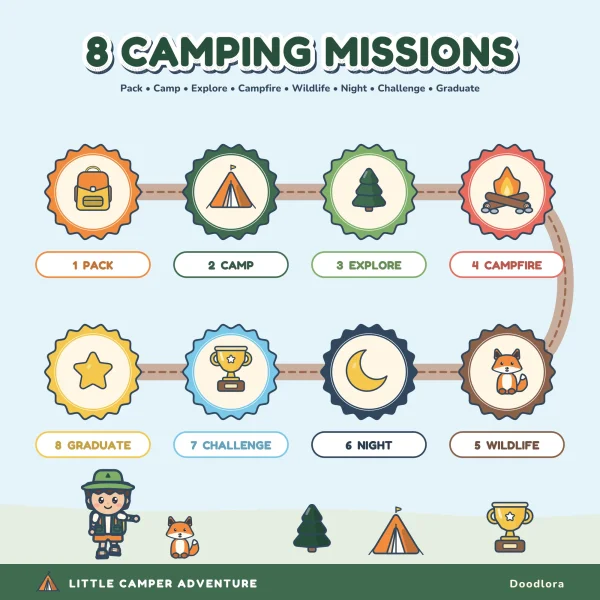
- Little Camper, for ages 4 to 8, is the hands-on one of the two camping books. Its 86 pages add cut-and-glue pages, badges to cut out, four bingo cards and a 24-card memory game, while Forest Camping Adventure stays with pencil work.
Printing
Every book comes in both US Letter and A4. Most also have a low-ink or black-and-white edition, worth using if you plan to print a book more than once: the brain teasers, the spy book, the road trip book, the cut and paste book, all the activity packs above, both math card sets, World Festival Passport and Little Camper. My Little World has no black-and-white edition, and a few of its pages, such as color matching, need color ink.
Lengths run from the 14-page Halloween pack to the 131-page word scramble book. For pages that get cut up and handled a lot, such as the busy book pieces, the spy cards, the math cards or the board game tokens in the Halloween pack, a heavier paper or light cardstock holds up better than copy paper.