 1 / 6
Polar Animal Observation Station Activity Pack
Six real polar animals, four from the Arctic and two from Antarctica, star in 40 field-note puzzles about counting, comparing and checking pretend camera records. Each animal is always filed under its own region, and the book keeps asking what a photo can and can't prove.
$4.99
Buy any 3 or more printables and save 20% at checkout.
- Download right after payment — link works for 30 days, up to 5 downloads
- Files arrive as a ZIP with your license PDF inside
- Secure checkout by Stripe · Refund policy
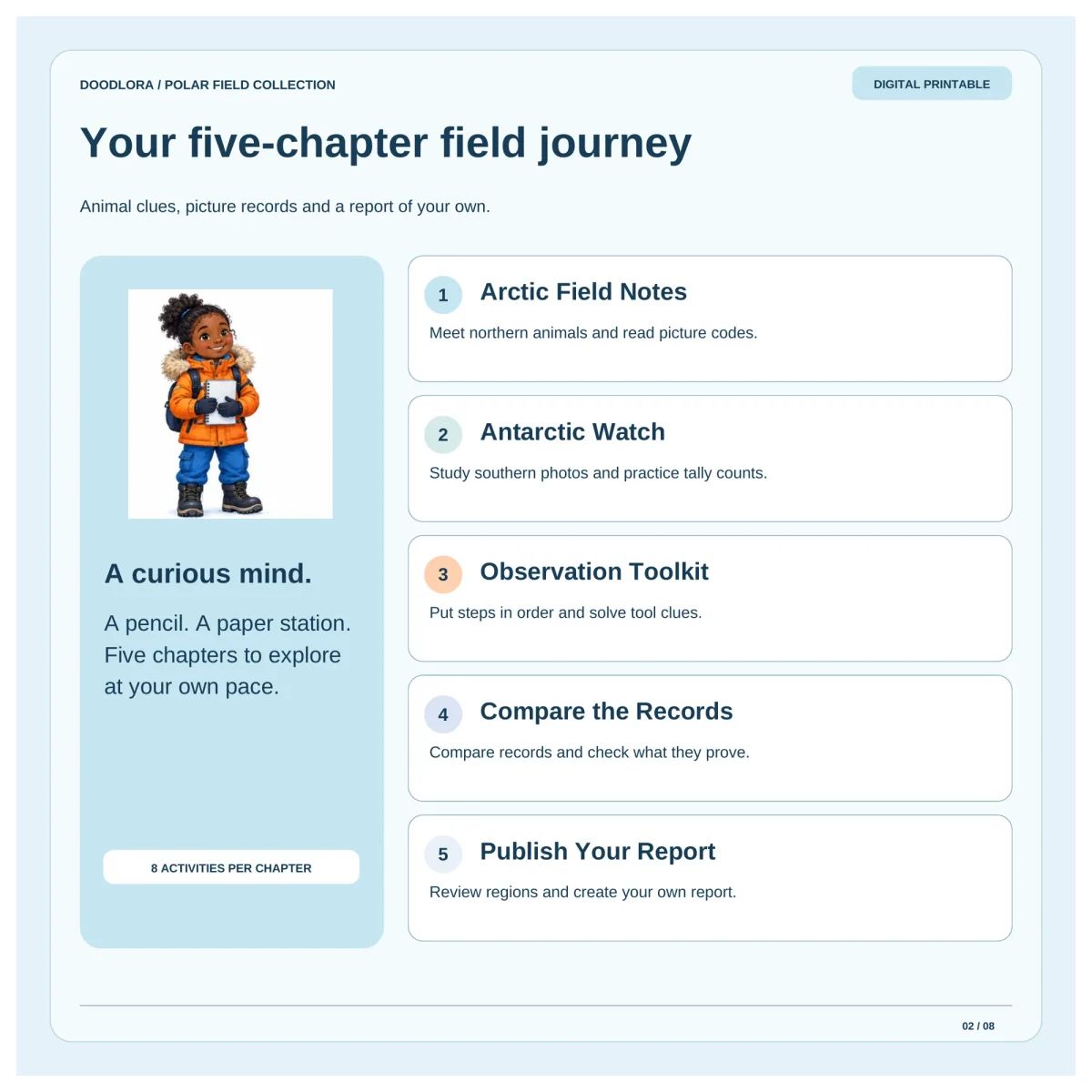
Picture records from both ends of the world fill Polar Animal Observation Station, a 48-page printable pack for ages 7 to 10 in which a child works as a field observer. Aya notices details, Leo checks the counts and Ruby explains the evidence, and those three jobs run through all 40 notes.
The animals and the two regions
Polar bears and penguins are never shown living side by side. Page 2 puts the polar bear, Arctic fox, walrus and snowy owl in the north and the emperor penguin and Weddell seal in the south, and later notes test it, such as filing species labels as N or S and sorting the six into birds and mammals. The guide lists the National Park Service and the British Antarctic Survey as where the region and species basics were checked.
Five chapters of notes
- Arctic Field Notes: match animal cards, count camera sightings, spot changed photo slots, continue animal patterns, map photo points by column and row, and sort camera labels by their last letter.
- Antarctic Watch: count penguins and seals in pretend photos, read a tally log in bundles of five, read a shore watch chart, follow printed moves on a walkway grid and decide what two photos actually prove.
- Observation Toolkit: put an observation in order, add and subtract station supplies, a three-clue puzzle matching observers to tools, track cards read on an inch scale, and a picture-letter code.
- Compare the Records: grid locations, shore patterns, how many more in one count than another, camera visits on a chart, birds and mammals, and a second check on what a record can support.
- Publish Your Report: north and south filing, the shortest station route, balancing two totals, desk assignments, a daily record log and a decoded report stamp.
Each chapter also has one drawing task, a team badge, a viewing shelter, a binocular sketch, an animal record card and a three-panel observation story, and one full-page scene to color. The coloring pages show a polar bear and fox, a penguin colony, a walrus shore, a Weddell seal and the team at work indoors.
The guide reminds families that the stylized animals help with recognition but are not an identification guide, and nothing in the book involves going near wildlife.
Questions
- Which animals are in it?
- Polar bear, Arctic fox, walrus and snowy owl for the Arctic, and emperor penguin and Weddell seal for the Antarctic.
- Are the counts real animal numbers?
- No. The guide says every station name, map, count and log is an invented example, and a photo count is not a population estimate because the same animal can appear in more than one photo.