Writing characters by hand
Two books give every character a row of its own to trace and write.
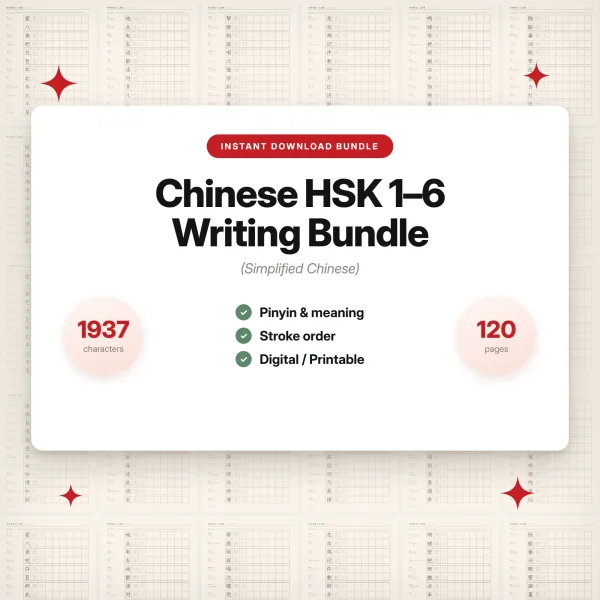
- The Chinese Character Writing Workbook takes you through 948 practice rows across HSK levels 1 to 6, and spends more pages on teaching: stroke order rules, 24 basic strokes, 48 common radicals and a stroke-by-stroke spotlight page at the start of each level.
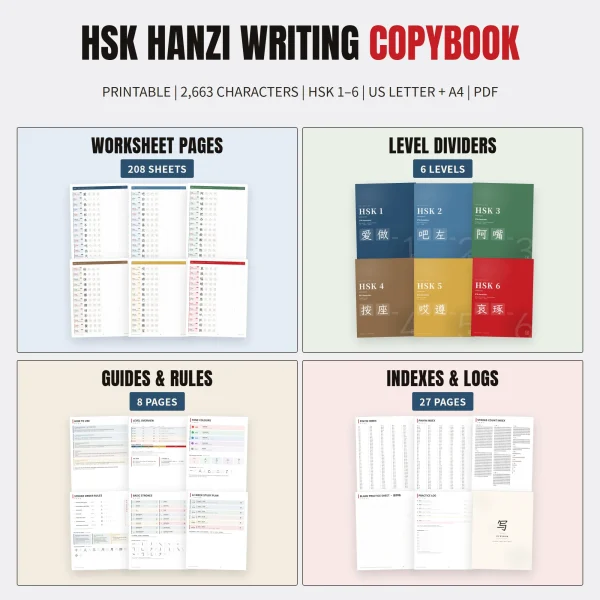
- The HSK Hanzi Copybook is the bigger drill book, with 2,663 characters at 13 to a sheet, filed by the older HSK 2.0 word lists. Its pinyin is printed in a different color for each tone.
Both come with a 12-week study plan, indexes by pinyin, stroke count and radical, and blank grid sheets for extra practice, including tián and mǐ grids in the copybook. Choose the workbook if you want guidance along the way, and the copybook if you mostly want rows to fill.
The 300 words of HSK 1
Two books cover 300 beginner words for HSK 1, and they do different jobs.
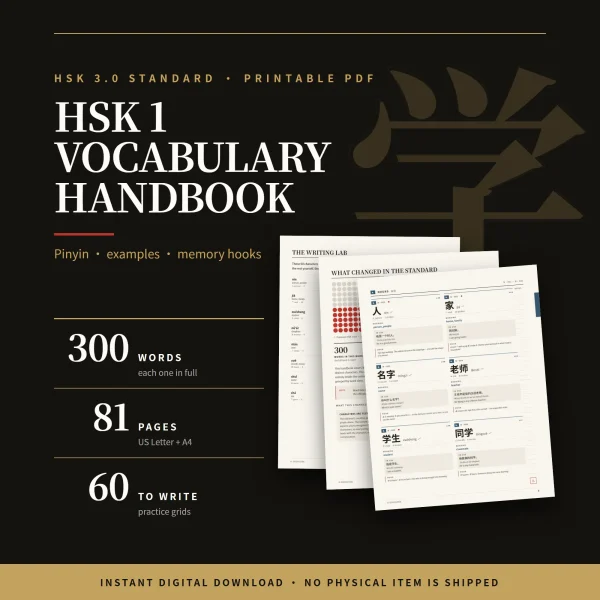
- The HSK 1 Vocabulary Handbook gives each word a full entry with its character, pinyin, meaning, a three-line example sentence and a note on how the character is built, plus a 60-character writing section.
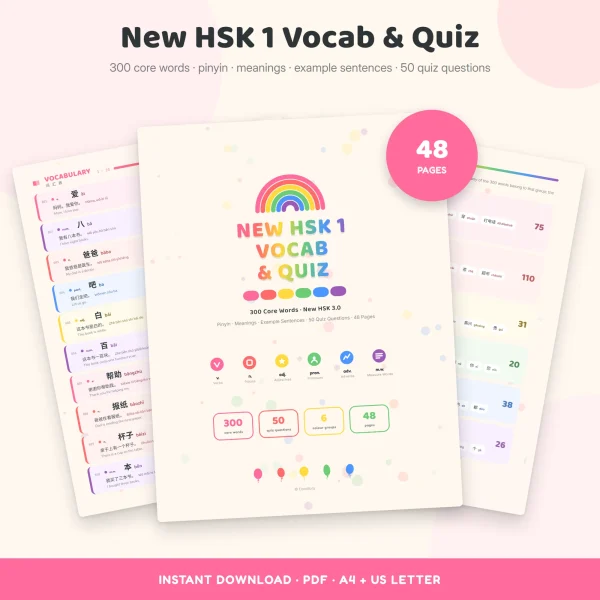
- The HSK 1 Vocabulary List & Quiz is for drilling. The 300 words are color-coded into six groups, and a 50-question quiz and a mistake log show which group needs more work. A score page has room for three attempts, so you can retake the quiz and compare.
Planning your study
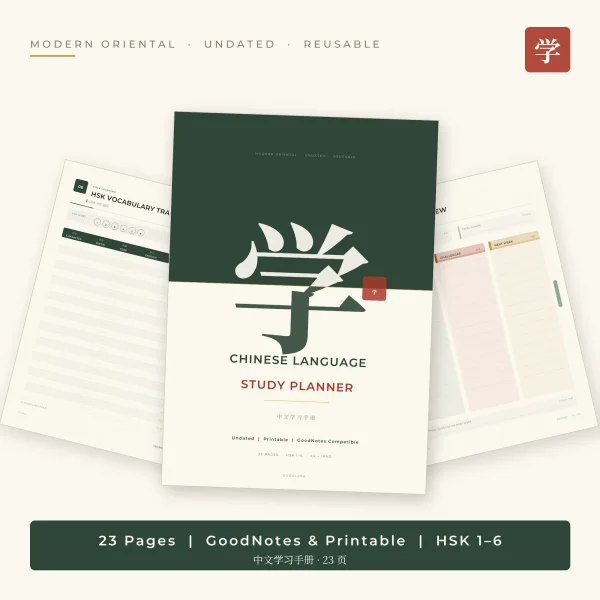
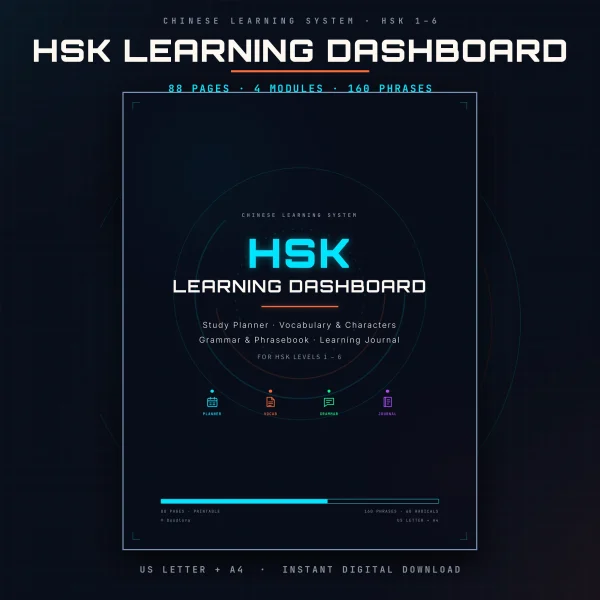
The HSK Study Planner is half planner and half reference: study schedules and a learning journal, alongside strokes, radicals, 24 grammar patterns and 160 everyday phrases. The Chinese Study Planner is a compact 23-page undated planner with every heading in English and Chinese. It prints on A4 and also comes as a landscape tablet file with linked tabs, plus 20 transparent PNG stickers. The HSK Study Planner comes in a dark full-color edition and a light ink-saver edition.
For children
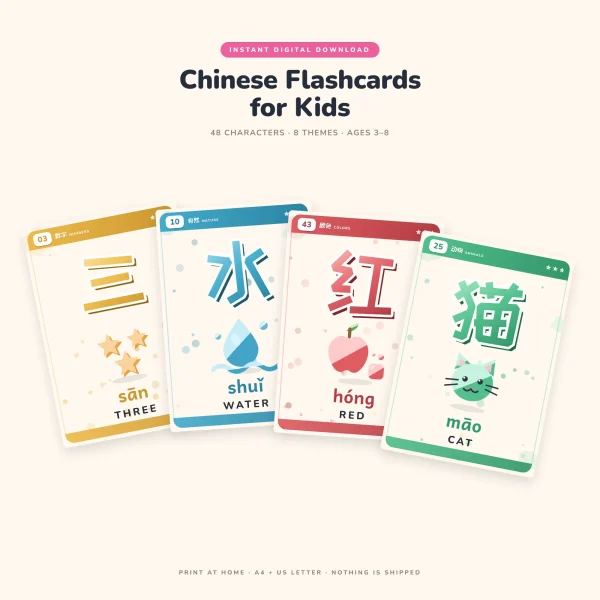
- The Chinese Character Flashcards cover 48 first characters, from 一 and 水 to 猫 and 红. Each card has a picture on the front, and the back shows the stroke order, three real words and a sentence to read together. A how-to page suggests five card games to play with them.
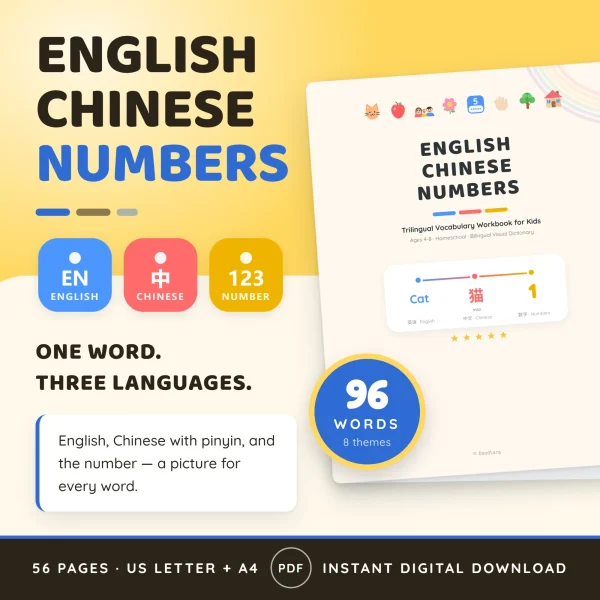
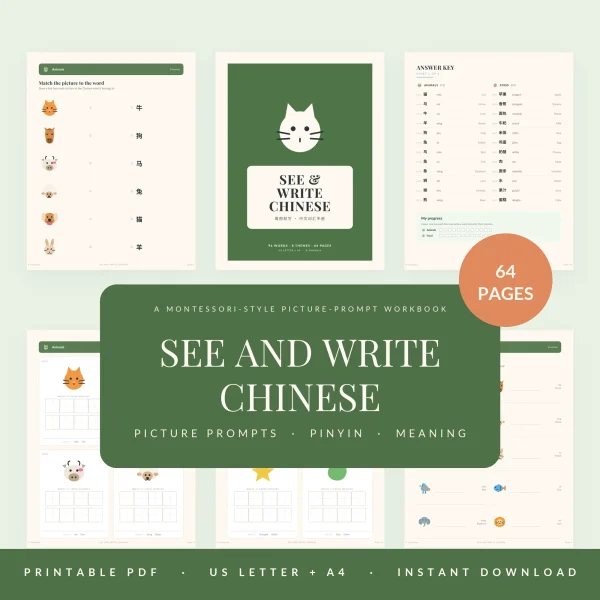
- Two workbooks share the same 96 everyday words in eight themes but practice them in different ways. The English–Chinese Vocabulary Workbook shows the English, the characters with pinyin and a number side by side, and the child traces them. The See and Write Chinese Vocabulary Workbook shows only a picture: the child writes the word from memory, then folds the card to check. Start with the tracing book while the words are new, and move to the see-and-write book to test what has stuck.
Printing
Everything here comes in US Letter and A4 except the Chinese Study Planner, which is A4 only and scales down to Letter paper. Print practice pages at actual size so the writing grids stay square.