Activities for 3 Year Olds: Indoor, Winter & Home Ideas
The best activities for 3 year olds on a cold day are short, hands-on and easy to stop: snipping paper strips, building a pretend pizza, walking like a bear, washing plastic cups at the sink or a quick trip to the library. Pick by how much time you can give, not by how educational the activity sounds.
The ideas below are grouped by your situation. Some need you at the table the whole time. Others give a 3-year-old something to do near you while you cook or answer an email. The times are rough planning guides, so stop when your child is done, even if that’s after three minutes.
| Activity | How many kids | Your time | What to set out | Quiet or moving |
|---|---|---|---|---|
| Snipping strips | 1 per adult | Sit with them | Rounded-tip scissors, paper strips | Quiet |
| Cut-and-paste picture | 1 per adult | Sit with them | Printed page, scissors, glue stick | Quiet |
| Pretend food mats | 1–2 | Sit with them | Laminated mat, cut-out pieces | Quiet |
| Play dough bakery | 1–3 | Sit nearby | Dough, rolling pin, cookie cutters | Quiet |
| Busy book pages | 1 | Set up, then step back | Laminated pages, hook-and-loop dots | Quiet |
| Tape peeling | 1–2 | Set up, then step back | Painter’s tape | Quiet |
| Ice rescue | 1 per ice block | Set up, check in | Frozen container, warm water, towel | Quiet, a bit wet |
| Color sorting bowls | 1–2 | Set up, then step back | Bowls, large toys | Quiet |
| Animal move cards | Any number | Join in | Animal picture cards | Moving |
| Balloon tap | 2 or more, you included | Stay in the room | One balloon you blow up | Moving |
| Tape line path | 1–3 | Set up, join in | Painter’s tape on the floor | Moving |
| Laundry basket train | 1 | Stay in the room | Basket, soft toys | Moving |
| Washing plastic dishes | 1 | Stay at the sink | Stool, towel, unbreakable dishes | Helping |
| Making a snack | 1–2 | Stay beside them | Soft foods, butter knife | Helping |
| Setting the table | 1–2 | Stay in the room | Plates, cups, spoons | Helping |
| Grocery picture list | 1 | All the way | Picture list, a bag | Outing |
| Library story time | Your kids | All the way | Library card, coat | Outing |
| Short winter walk | Your kids | All the way | Warm layers, a look-for list | Outing |
Activities to do together at the table
These four need an adult sitting close, mostly because of scissors, glue and small pieces. Plan on about 15 minutes, one child per adult if you can.
Snipping paper strips
Snipping is the first cutting skill, and it needs nothing but scrap paper. Cut a few strips about as wide as your finger, then let your child make single snips across them. Each snip makes a little piece of confetti, and that’s the whole reward.
Use child-safe scissors with rounded tips. Show how to hold the paper with the other hand, thumb on top. When single snips get easy, draw a straight line along a longer strip and ask for cutting along it.
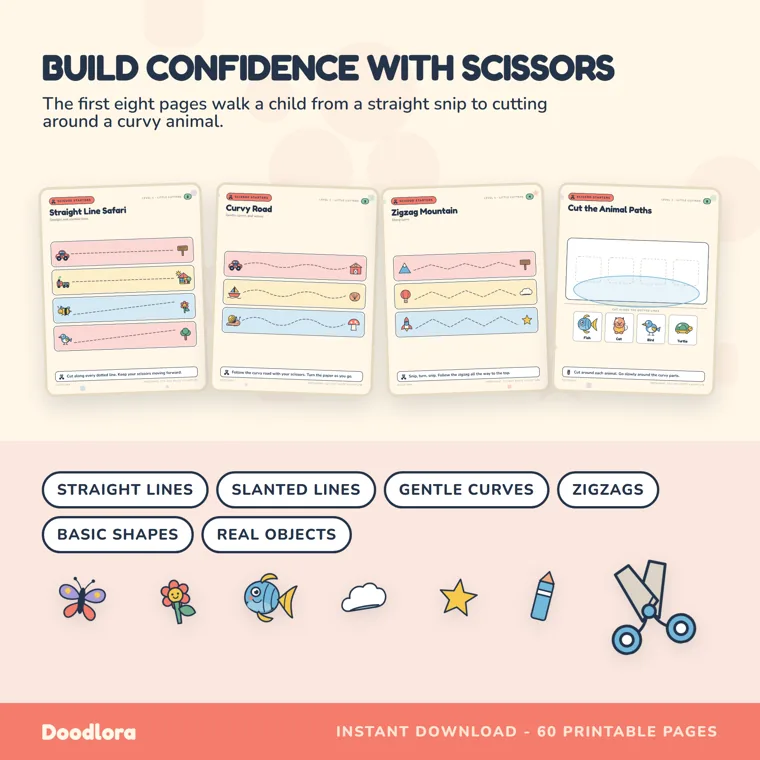
For printed practice, our preschool cut and paste worksheets open with seven Little Cutters pages. They go from straight and slanted lines to a curvy road, a zigzag mountain, shapes, weather pictures, fruit and four animals to cut around.
Finish by sweeping the snippets into an envelope. They make good “snow” for the cut-and-paste picture below.
The catch: 3-year-olds often try to cut with the scissors pointing up or sideways. Turn the paper, not the child’s wrist, and keep the blades pointing away from the body.
A cut-and-paste picture
A build-a-picture page is a short puzzle with glue. The child cuts out a few big pieces and pastes them onto an outline, so there’s a finished thing to show at the end.
Set out a glue stick, not liquid glue. The printing guide for our cut-and-paste book explains why: liquid glue soaks through and curls the page. It also suggests cutting every piece out first, laying them all on the outline, and only then opening the glue.
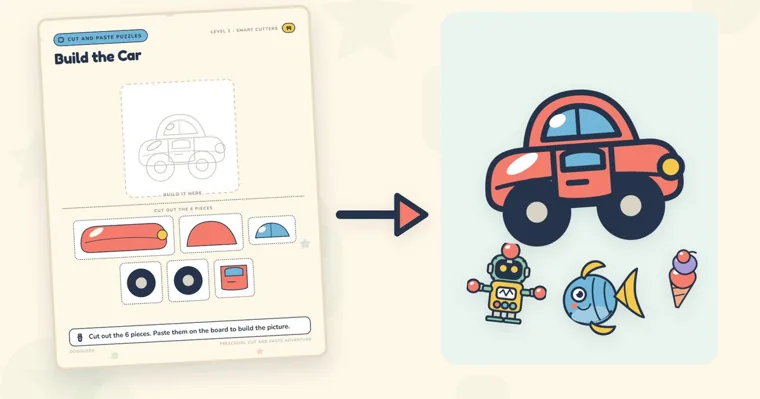
The Build the Car page (page 14) has six pieces: the body, the roof, a window, two wheels and a door. At 3, many children can cut the big body and roof while you cut the small window. That still counts.
The catch: Print at Actual Size, not Fit to Page. With Fit to Page the pieces come out smaller than the outline, and a 3-year-old will think they did it wrong.
Pretend food and dress-up mats
Pretend mats turn table time into play. A child builds a sandwich, tops a pizza or dresses a paper child, then takes it apart and starts again.
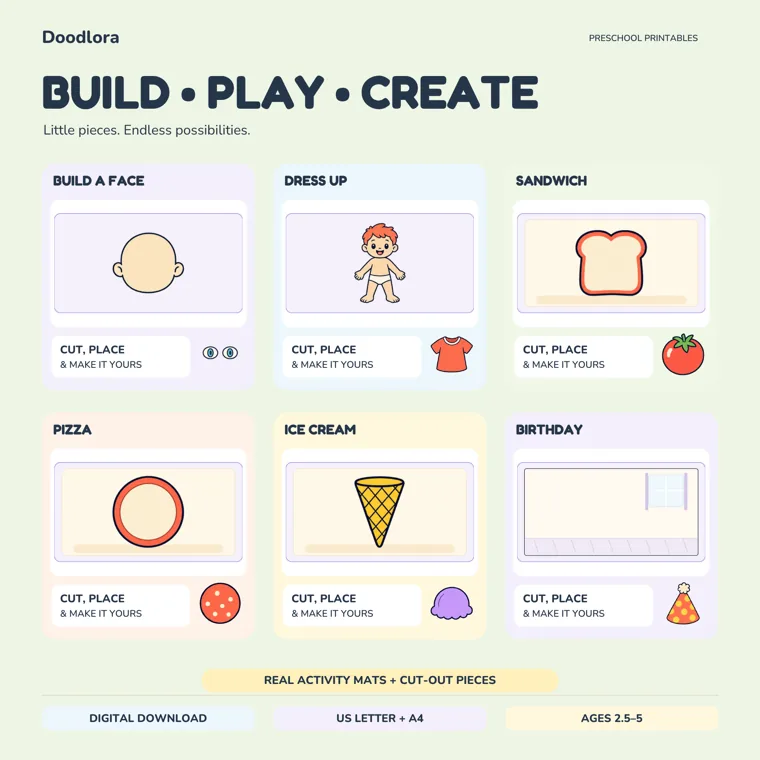
Our preschool activity book has ten of these mats on pages 81 to 90. The pizza mat on page 84, for example, comes with cheese, pepperoni, mushroom and tomato pieces. Laminate the mat or slip it into a page protector, and cut the pieces yourself. The book’s guide says adults should do the cutting, one card at a time along its own dashed border.
Play it as a little restaurant. You order “a pizza with two mushrooms,” your child builds it and serves it. Then swap roles. End the game by “washing up”: every piece goes back into its labeled envelope.
The catch: The same guide says to keep small cards and attachment dots away from children who still put things in their mouths. If your 3-year-old does, play this one only while you’re at the table, and put the envelope up high afterward.
Play dough bakery
Play dough is the easiest sit-down activity on a cold afternoon, and you can be at the counter nearby rather than right beside your child. Store-bought dough, a small rolling pin and two or three cookie cutters are enough.
Make it a bakery. Roll, cut “cookies,” lay them on a baking tray and count them. When it’s time to stop, the cookies go back in the tub “to sell tomorrow,” and the lid goes on so the dough doesn’t dry out.
The catch: Dried crumbs end up in rugs. Keep the dough at the table on a placemat or tray, and roll it on a smooth surface you can wipe.
Quiet activities a 3-year-old can do while you’re nearby
These are for the times you need 10 or 15 minutes to cook, fold laundry or make a call. Set them up, show how they work once, then step back and stay within sight.
Busy book pages
A busy book is a set of laminated pages with pieces that stick on and pull off. Because nothing is glued down, a child can do the same page every day.
Each piece is held on by a hook-and-loop dot, with the soft loop side on the page and the rough hook side on the back of the piece.
Hand over two pages, not the whole binder. Pick one your child already knows, such as matching colors, and one a little newer, like counting to 10. When the pieces are all on, the page is done. Help pull them off and zip them into their bag.
The catch: Pieces get lost fast. Keep one small zip bag per page, clipped into the binder, and make a few spares of the letters, numbers and shapes that go missing first.
Tape peeling
Tape peeling costs one roll of painter’s tape. Stick 10 or so short strips across a tabletop, a window or the side of the fridge, with one end folded under to make a tab. Your child peels each strip off and sticks it onto a sheet of paper.
Want a little more? Use two colors and ask for all the blue strips on one sheet and the green on another. Done is when the surface is clear.
The catch: Strong packing or duct tape is hard for small fingers and can pull off paint. Painter’s tape comes away cleanly.
Ice rescue
Ice rescue is a slow, absorbing job for a winter afternoon. The night before, put a few toys in a plastic container, fill it with water and freeze it. Next day, pop out the block and set it in a baking dish on a towel.
Give your child a cup of warm water, a spoon and a squeeze bottle if you have one. The job is to free every toy. Some children work at it for a long time, others lose interest once the first toy comes loose. Both are fine.
The catch: Choose toys too big to fit entirely in a child’s mouth. The American Academy of Pediatrics lists toys with small parts, and toys that can be squeezed to fit entirely into a child’s mouth, among household choking hazards. Also check the warm water yourself before you hand it over.
Color sorting bowls
Sorting gives a 3-year-old a clear job with a clear end. Put out three or four bowls and a basket of toys in matching colors: blocks, cars, plastic cups, soft toys. Each toy goes into the bowl of its color.
Make it easier by using two colors only. Make it harder by sorting the same toys a second way, such as “things with wheels” and “things without wheels.” The game ends when the basket is empty.
The catch: Craft pom-poms and beads look ideal for this, but they’re small and round. Stick to toys that are too big to swallow.
Indoor activities that use up energy
Cold weather means energy builds up indoors. These need a clear patch of floor and an adult in the room. Freeze dance, Simon Says and an indoor obstacle course are written up with our rainy day activities for kids, and the floor-is-lava game with our screen-free activities.
Animal move cards
Animal moves get the whole body going without much space. Make a small stack of animal picture cards, turn one over and everyone moves like that animal: stomp like an elephant, waddle like a chicken, flap your “fins” like a fish.
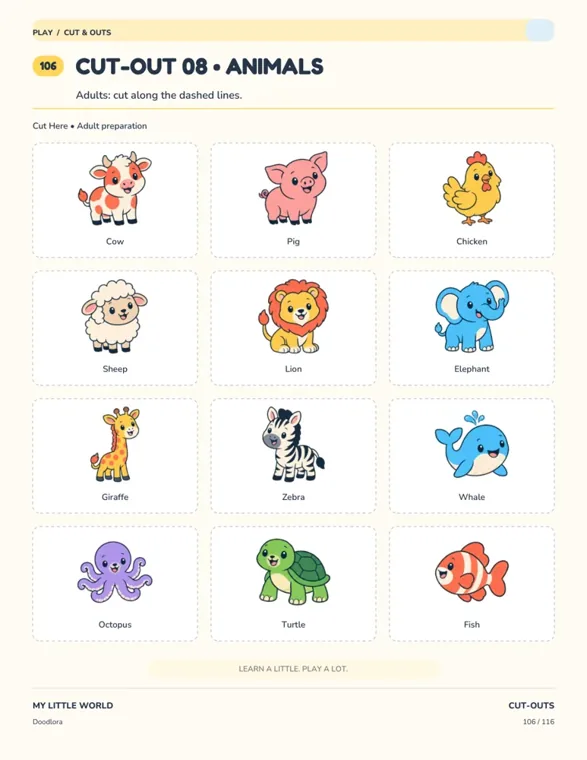
The animals cut-out sheet on page 106 of our preschool activity book has 12 cards that work for this. Let your child turn the cards over. Play for one pass through the stack, then finish with the slowest animal, a turtle crawling to the couch for a rest.
The catch: Taking turns choosing cards can cause arguments between siblings. Deal the cards out first so everyone already knows which ones are theirs.
Balloon tap
Keeping a balloon off the floor is a gentle game a 3-year-old can play with you or a sibling. Count each tap out loud and try to beat your last count.
The catch: Balloons are a real choking risk. The American Academy of Pediatrics lists balloons among the objects that cause the most choking deaths and says they pose a choking risk to children up to 8 years of age.
Blow up and tie the balloon yourself, keep uninflated balloons put away, and if it pops, pick up every piece straight away. A soft beach ball works for the same game without that risk.
Tape line path
A tape line on the floor becomes a balance beam, a road and a jumping game. Lay a long straight line of painter’s tape, then a zigzag and a curve.
Ask your child to walk the straight line heel to toe, tiptoe along the zigzag and jump over the curve. Push a toy car along it afterward. Leave the tape down for a few days and play again.
The catch: Check that the tape won’t lift a wood floor finish. Try a short piece in a corner first.
Laundry basket train
Pushing a loaded basket is hard work, which is exactly why it settles an overexcited child. Fill a laundry basket with soft toys and let your 3-year-old push it from room to room as a train. Stop at “stations” to let a passenger off.
The ride ends when the last toy has gotten off. It’s a good one to use right before a quiet activity.
The catch: Plastic baskets slide fast on hard floors. Play on a rug, or keep the route away from stairs.
Kitchen and household jobs a 3-year-old can help with
Many 3-year-olds would rather help with real work than play. These jobs take a bit longer with a small helper, so pick a day when you aren’t rushed. For more chores by age, see our age-appropriate chores list.
Washing plastic dishes
Water play counts as a chore here. Put a sturdy step stool at the sink, a towel on the floor and a tub of warm, soapy water with plastic cups, bowls and spoons.
Your child washes, you rinse, and the dishes go onto a towel to dry. Expect a wet shirt. It’s over when the dishes are all on the towel.
The catch: Clear knives, glass and anything breakable from the sink before you start, and check the water temperature yourself.
Making a snack
A 3-year-old can tear lettuce, stir yogurt, wash fruit and spread with a butter knife. Choose a snack with a few easy steps, like banana slices spread with a little nut butter.
Pick the foods with care. The American Academy of Pediatrics advises keeping high-risk foods away from children until 4 years of age or older, depending on the child. Its list includes whole grapes, popcorn, nuts, raw carrot sticks, raw apple chunks, marshmallows and thick chunks of nut butter. Spread nut butter thinly, and cut round, firm foods into tiny pieces.
The catch: The snack should be eaten sitting at the table, not carried around while playing. AAP’s choking guidance says the same.
Setting the table
Setting the table has a clear start and finish, and a 3-year-old can handle plastic plates, cups and spoons. Put one of each at every seat as a model, then let your child copy it at the other places.
The catch: Leave knives and glasses for an adult to place.
Getting out of the house in winter
A short outing can reset a long day indoors. Keep it short and pick one simple goal.
A grocery picture list
Grocery shopping goes better when a 3-year-old has a job. Draw or print three or four items on a card, such as an apple, milk, bread and carrots. Your child finds each one in the store and puts it in the cart.
At home, the bags become the next activity: sort what you bought into groups.
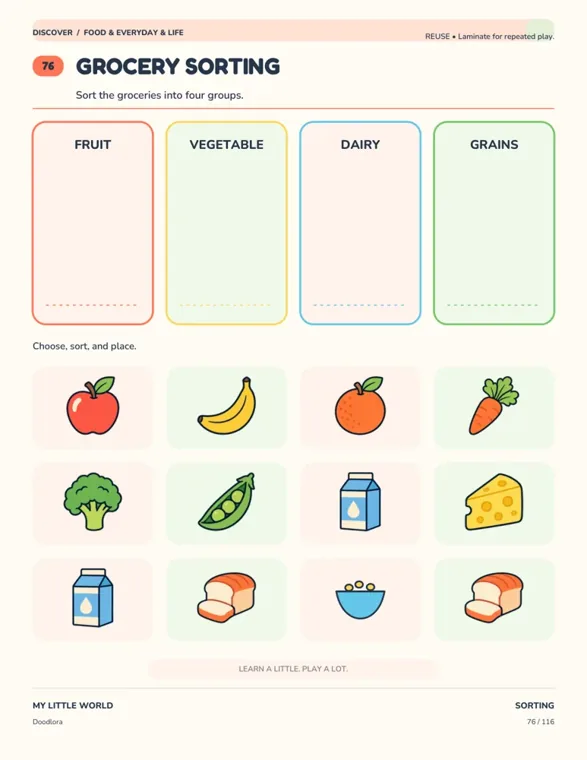
Page 76 of our preschool activity book is a grocery sorting page with fruit, vegetable, dairy and grains columns. Do the paper version first, then sort the real groceries the same way.
The catch: Stores are tiring for small children. Plan a short trip, and save the big weekly shop for a day you can go alone.
Library story time
Many public libraries run free story times for preschoolers, with songs and a picture book or two. It’s a warm place to go in winter, and you leave with books for the rest of the week.
Check your library’s calendar before you go, because times and age groups vary by branch. Afterward, let your child pick two or three books to borrow.
The catch: Story time is hard for a 3-year-old who is tired or hungry. Go after a snack, and it’s fine to step out if it isn’t working.
A short winter walk
Even 15 minutes outdoors helps on a long day. Make a short list to look for: footprints in the snow, a bird, an icicle, a red door. Your child checks each one off as you spot it.
Dress your child in layers with mittens and a hat, and come in when they say they’re cold. For a longer list, see our nature scavenger hunt ideas.
The catch: Wet mittens make cold hands fast. Carry a dry spare pair.
Planning a week at home
Repetition is not a problem at 3. Most 3-year-olds enjoy the same activity several days in a row, and a familiar job takes less setup each time.
One simple rhythm for a stay-home week: something together at the table in the morning, something that moves before lunch, and a quiet solo activity while you cook dinner. Rotate in two or three new ideas a week. If transitions are hard, a visual schedule with pictures of the day’s activities shows your child what comes next.
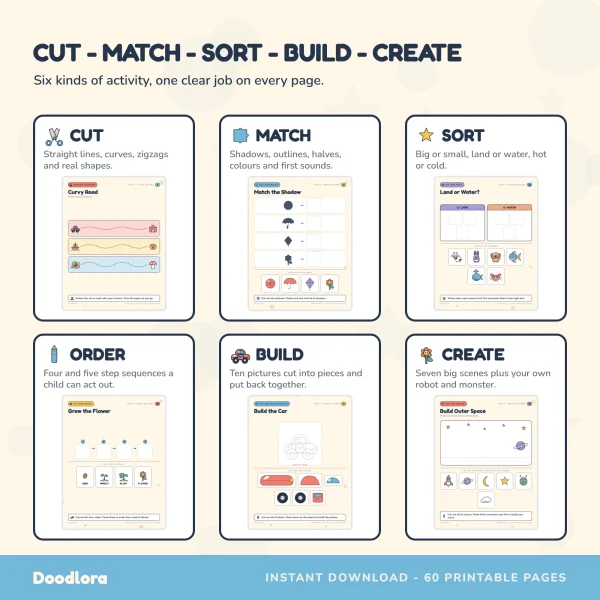
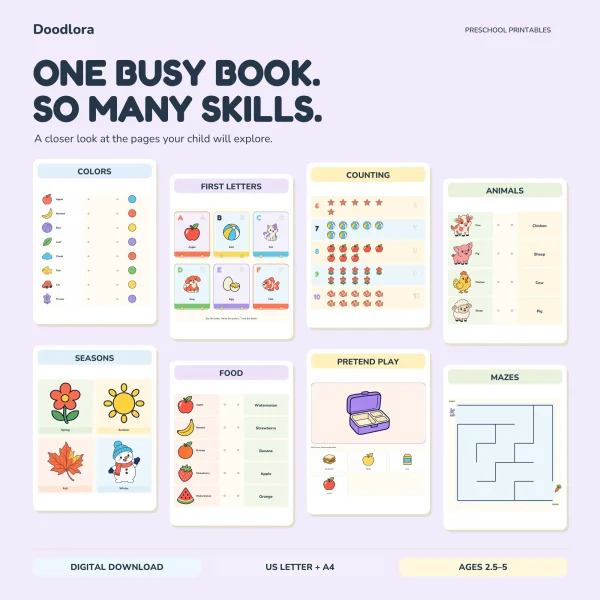
Printables from this article
Related articles
Kids Activity Books
Secret Agent Activities for Kids: Spy Codes, Clues & Party
Spy codes, invisible ink, Kim's Game, a string laser maze and a case to solve, with player counts, timings, supplies and the snags to plan around.
Kids Activity Books
Math Puzzles for Kids With Answers, Sorted by Grade
Ready-to-use math puzzles from kindergarten to middle school, each with its answer, plus how to run them as a home warm-up or a classroom center.
Kids Activity Books
Quiet Time Activities for Kids: Bin and Quiet Book Ideas
How to swap a dropped nap for an hour of quiet time, with a starting length, a timer, a rotating bin and solo activities sorted by age, from board books to build-and-play mats.