Letter M Craft Ideas: Monkey, Mouse & Mushroom for Preschool
A good letter M craft starts from the M words a young child already says: mouse, monkey, moon, mitten, mushroom and, for the silly ones, monster. One toddler at the kitchen table can print a crater-covered moon M with crumpled foil in about fifteen minutes, with no scissors involved. A small preschool group can turn a lowercase m into a pair of mouse ears or a capital M into a monkey with a springy paper tail. Kindergartners are ready to draw a map, which is an M word too, or to cut out printed mice and monkeys for a classroom display.
Choose by who’s sitting at the table, not by the animal, because attention, patience and scissor confidence change a lot between two and six. The minutes in the chart count only the hands-on part for a few children, and they’re rough guides. Paint and white glue need extra time to set after everyone has gone.
| Craft | M word | Who it suits | Minutes | You’ll need | Mess |
|---|---|---|---|---|---|
| Foil-print moon M | Moon | One child, 2–4 | 15 | Black paper, gray paint, foil | Paint |
| Mitten match | Mitten | One child, 2–4 | 15 | Paper mittens, dot stickers, clothespins | None |
| Macaroni M | Macaroni | One child, 3–5 | 15 | Cardboard, dry macaroni, white glue | Glue, dries overnight |
| Mouse-ears m headband | Mouse | Group, 3–5 | 15 | Gray card, pink paper, stapler for the adult | Glue stick |
| Monkey M with a curly tail | Monkey | Group, 4–5 | 20 | Brown and tan paper, a pencil | Glue stick |
| Spotted mushroom M | Mushroom | Group, 3–5 | 15 | Red and white paper, dot stickers | Glue stick |
| Monster M | Monster | Group, 3–6 | 20 | Any paper, yarn, markers | Glue stick |
| Mouse and cheese peekaboo | Mouse | Class set, 4–6 | 20 | Printed mouse clipart, yellow paper, hole punch | Glue stick |
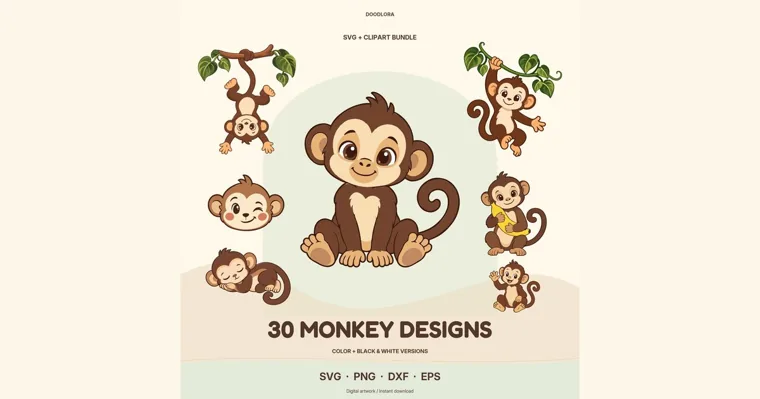
| Monkeys on a paper-chain vine | Monkey | Class set, 4–6 | 25 | Printed monkey clipart, green strips, tape | Tape |
| Mushroom village coloring page | Mushroom | Class set, 5 and up | 20–30 | A printed coloring page, crayons or pencils | None |
| Map of my room | Map | Kindergarten, 5–7 | 25 | Paper, crayons, one small toy | None |
| Mushroom fairy card | Mushroom | Kindergarten and up | 20 | Printed fairy clipart, card stock | Glue stick |
Two humps or one: what trips kids up with M
The M sound is one of the easiest for a young child to hear and feel. Saying /m/ means pressing the lips shut and humming, so a child who rests a fingertip on their lips can feel the buzz. Mouse, moon and monkey all begin with that same hum, which makes recognition quick.
The shapes cause more trouble than the sound. A capital M flipped upside down becomes a W, and a lowercase m is a lowercase n with an extra hump. Both swaps turn up in early handwriting, much like the b and d mirror mix-up we cover in our letter D crafts. The mouse-ears headband below uses the two humps of m as the ears, so you can ask what happens with an n: the mouse ends up with one ear. Children tend to remember the missing ear.
For the capital, trace it in the air together and count the moves: down, slant down, slant up, down. That’s four strokes and two points at the top. A W keeps its points at the bottom, and it’s worth saying so out loud.
One toddler, no scissors: M crafts for 2- and 3-year-olds
These three suit a single toddler working next to you at home, where there’s no waiting for a turn. Cut and lay out everything before the child sits down, because at two the setup can take longer than the child’s concentration lasts. Draw each letter with a thick marker and make it big enough to nearly fill the sheet. For more table time at this age, our activities for 3-year-olds list has plenty.
Foil-print moon M
Chalk a capital M onto black construction paper. Squeeze a little gray and a little white washable paint onto a paper plate. Crumple a square of aluminum foil into a loose, lumpy ball, then show the child how to dab it in the paint and press it along the M. The Moon’s surface is pitted with round craters, and the wrinkles in the foil leave a spotty, bumpy print that looks a lot like them. A few star stickers around the letter complete the nighttime background.
It takes about fifteen minutes, and the page needs an hour or so flat before anyone picks it up. Where it goes wrong: a ball squeezed tight prints a flat gray coin instead of a crater pattern. Keep the foil loose, and swap in a fresh ball once it turns soggy.
Mitten match
Fold a sheet of colored paper in half and cut a mitten shape through both layers, so every pair matches. Make four or five pairs. Decorate one mitten in each pair yourself with a simple sticker pattern, such as three blue dots or a row of stars. The child copies the pattern onto its partner, then pins the pair to a string with clothespins, like wet mittens drying by the door.
Allow fifteen minutes. It fits the cold months well, and the copying is quiet pattern practice. Where it goes wrong: spring clothespins are stiff for a 2-year-old’s pinch, and the frustration ends the game early. Look for the small, light kind, or let the child drape the mittens over the string while you do the clipping.
Macaroni M
Draw a pencil M on cardboard cut from a cereal box. Run a line of white school glue along the M, or let a 3-year-old squeeze the bottle with your hand over theirs. The child lays dry elbow macaroni along the glue, piece after piece, until the letter is covered. Say “M is for macaroni” as they go.
Fifteen minutes covers the gluing, then the cardboard has to stay flat overnight. A glue stick won’t hold pasta, so this is a white-glue craft. Dry macaroni is small enough to end up between a toddler’s teeth, so sit right beside a child who still tests things that way, or use torn paper scraps instead.
A table of four to eight preschoolers with one adult
When one adult has a whole table, the crafts that run smoothly give each child a single cutting job and leave the rest to glue. Children’s scissors with rounded tips handle all the cuts below, and most four-year-olds can manage them independently. Keep the stapler and anything with a sharp point on your side of the table. For more ideas that build the same hand coordination, see our fine motor activities.
Mouse-ears m headband
Draw a lowercase m about 4 inches (10 cm) wide on gray card stock and have the child cut it out. Younger children can cut a rough box around it instead. The two humps are the mouse’s ears: the child glues a pink paper oval inside each hump. Then glue the m upright on the front of a gray paper strip about 2 inches (5 cm) wide.
Wrap the strip around the child’s head, overlap the ends and staple them. It takes about fifteen minutes. Where it goes wrong: a staple pressed in from the outside leaves sharp prongs against the forehead. Staple from the inside so the smooth back faces the head, or cover the join with tape. Use card stock for the m, too, since printer paper ears flop forward.
Monkey M with a curly tail
Start with a capital M cut from brown paper. The middle point of the M, where the two slants meet, is where the face goes. The child glues on a brown circle for the head, a tan oval for the muzzle and two small circles for ears, then draws the eyes and a smile. Expressions are where personality comes in, so don’t hand out a model face to copy.
The tail is the fun part. Cut a long, thin strip of brown paper, wrap it tightly around a pencil, hold it for a count of ten and slide it off. It springs into a curl. Glue one end to the bottom of an outside leg. Some monkeys from Central and South America, such as spider monkeys, can grip a branch with their tail, which is a good fact to share while the glue sets.
Plan on twenty minutes. Thick construction paper won’t hold a curl, so use thin printer paper for the tail strip.
Spotted mushroom M
Cut a red half circle for the cap. The child glues it on top of a capital M cut from white or tan paper, so the M stands under the cap like a stem. Then they cover the red cap with white dot stickers, or with white circles from a hole punch, and draw grass along the bottom.
It’s about fifteen minutes, and with dot stickers it’s mess-free. Keep it a paper mushroom. Some wild mushrooms are poisonous, so leave the ones in the yard where they grow, and wash hands after an outdoor walk where children touched them.
Monster M
Monster is the M word in a lot of letter M crafts, and children love it because there’s no wrong answer, only imagination. Hand out a capital M in any color. Each child decides how many eyes their monster gets, cuts paper circles and adds a marker dot to each. Yarn snips along the two top points make hair, and a strip of paper with marker teeth becomes the mouth.
Ask “How many eyes does your monster have?” and count them together, which slips a little math into the craft. Allow twenty minutes. Plastic googly eyes are tempting, but they pop off and are small, so paper circles are the safer choice at a busy table.
Printable M crafts when every child needs the same pieces
Printed clipart helps when you’re preparing for a whole class, because the pieces come out identical and you can prep them the night before. Print one copy first and check the size before you print the stack. Our clipart sets are image files, so you choose how big each picture prints, and how to use clipart shows how to measure the drawing itself rather than the empty space around it.
Mouse and cheese peekaboo
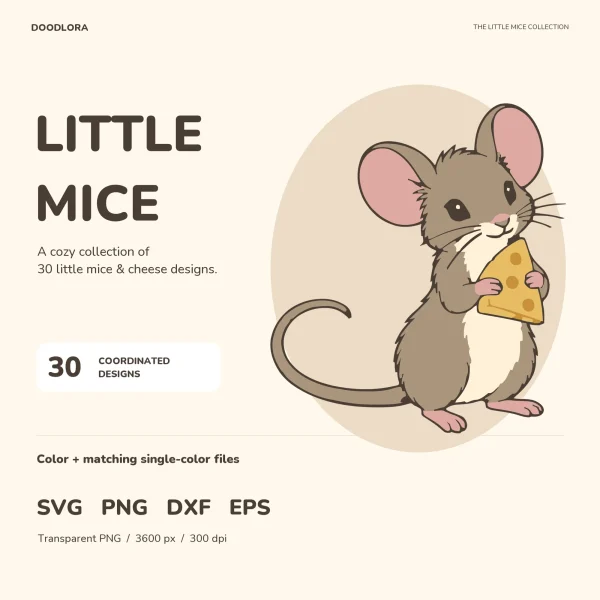
Our mouse clipart has 30 designs, and one group of six is all about cheese: four mice with cheese wedges or a cheese wheel, and two cheese shapes with open holes. The “peekaboo cheese wedge” mouse peering over a slice is the one for this craft.
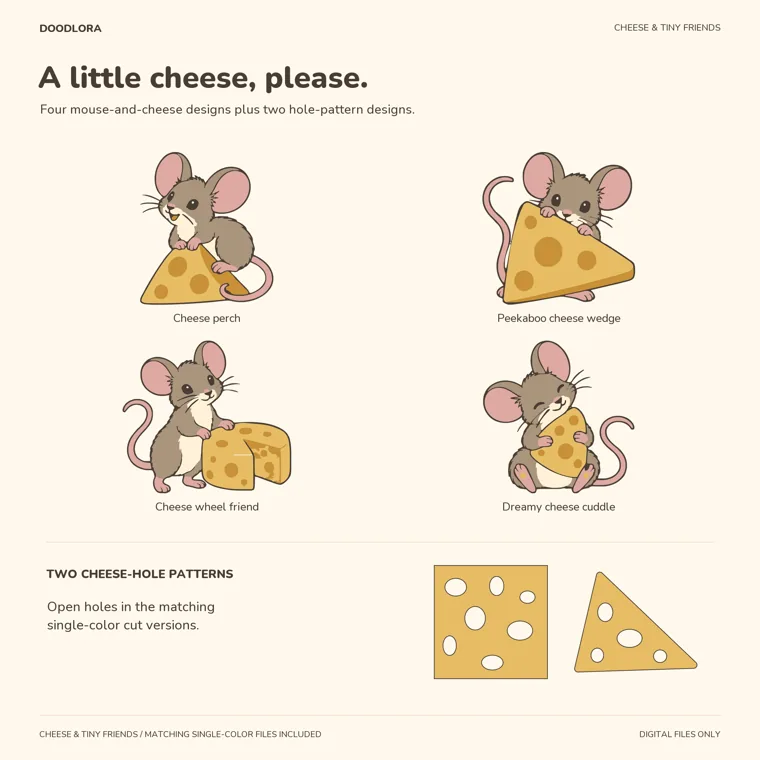
Print the mouse about 3 inches (8 cm) tall and let the child cut a loose line around it. They cut a wedge from yellow paper, punch holes in it and glue the wedge low on a sheet, gluing only its bottom edge. The mouse tucks behind the cheese and slides up to peek out. Write a big M beside it. It takes about twenty minutes.
Where it goes wrong: a hole punch only reaches about an inch in from the edge. Fold the wedge in half before punching, and the holes land in the middle of the cheese too. The mouse set carries a personal-use license, so these mice are for crafts you keep, not for anything you sell.
Monkeys on a paper-chain vine
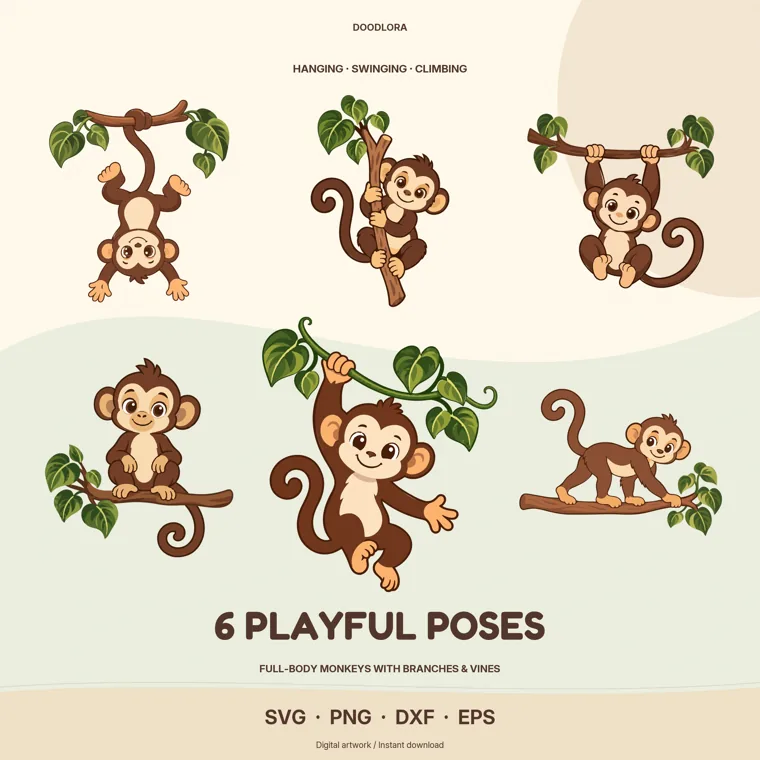
This craft is a group display. Each child makes a paper chain from five to eight green strips, taping or stapling each loop, and the chains join into one long vine across the top of a big M on the wall. Then each child cuts out a printed monkey and tapes it hanging from their own part of the vine, next to their classmates’ monkeys.
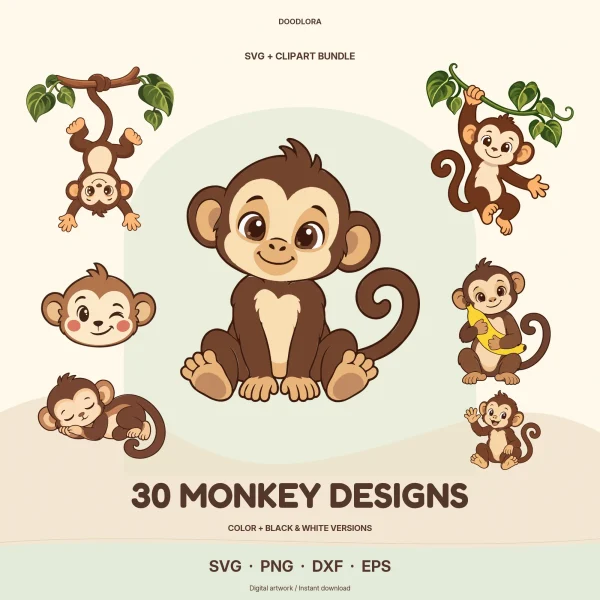
Our monkey clipart has 30 designs, each in color and in solid black. Six of them are full-body monkeys hanging by the tail, climbing, swinging on a vine or walking along a branch, which suit this craft particularly well.
Plan on twenty-five minutes. Where it goes wrong: glue-stick links pop open as soon as the chain is lifted, so use tape or staples for every loop. Fingers and leaf tips are fiddly to cut, and a loose line around the whole monkey looks fine from across the room. Like the mice, the monkey set is licensed for personal use only.
Mushroom village coloring page
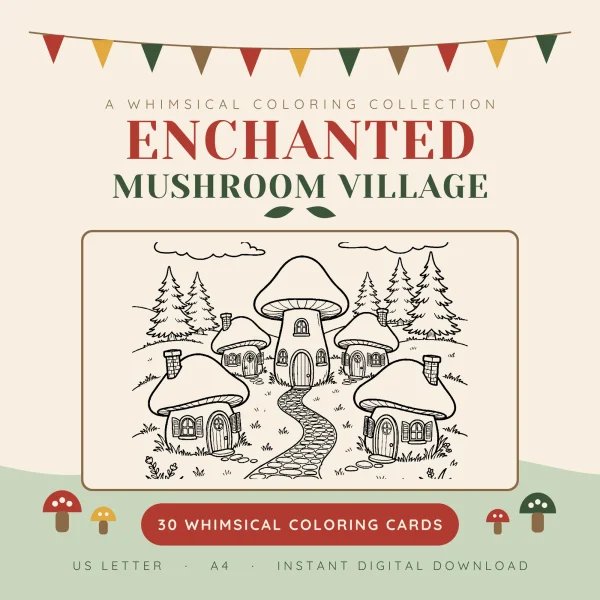
Our mushroom coloring pages hold 30 pages of one village where nearly every house is a mushroom, in US Letter and A4 files. For an M week, pick the pages that hide extra M words: a mouse baker outside a mushroom bakery, a crescent moon over an owl reading in a tree, a mouse at a little tree door.
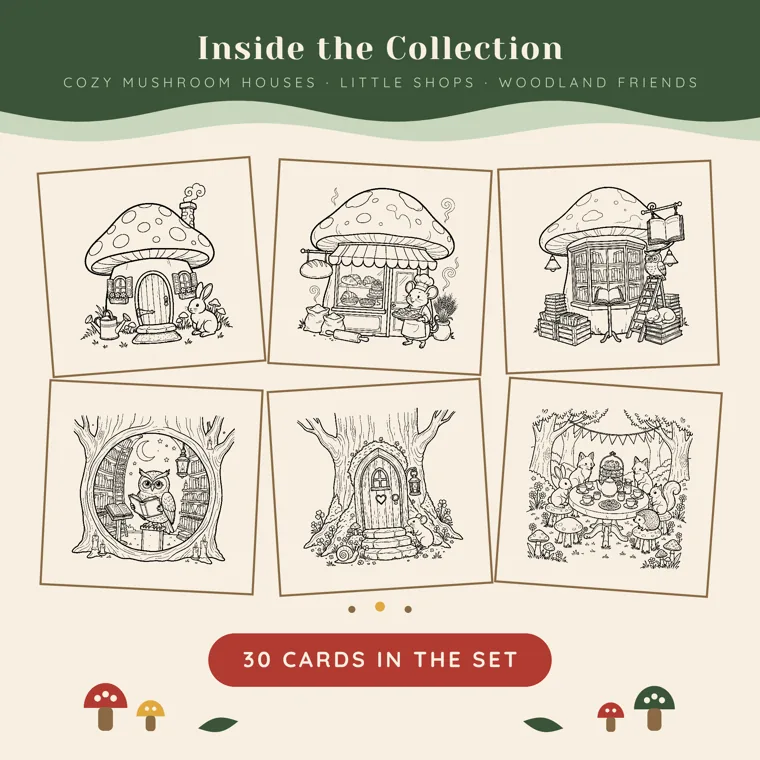
The child colors, then circles every M thing they can find, and you write the words beside it. Give it twenty to thirty minutes. The lines are fine and detailed, so the page suits five-year-olds and up. A younger child can color only the mushroom caps and still find the M words.
For kindergartners and older siblings
Children who can sit for half an hour like an M craft with a job attached, something to read, follow or give away. The extra responsibility is the appeal.
Map of my room
M is for map. Ask the child to draw their bedroom or classroom as if they were a bird on the ceiling: the bed is a rectangle, the rug is a circle, the door is a gap in the wall. They add a small key in one corner and an X where you’ve hidden a toy. Then someone else follows the map to find it.
It takes about twenty-five minutes, and the treasure hunt is the ending. Where it goes wrong: young children draw a bed from the side, with legs. Put a toy on the floor, look down at it together, and talk about what its top looks like from above. That shift in understanding is the real lesson in this one.
Mushroom fairy card
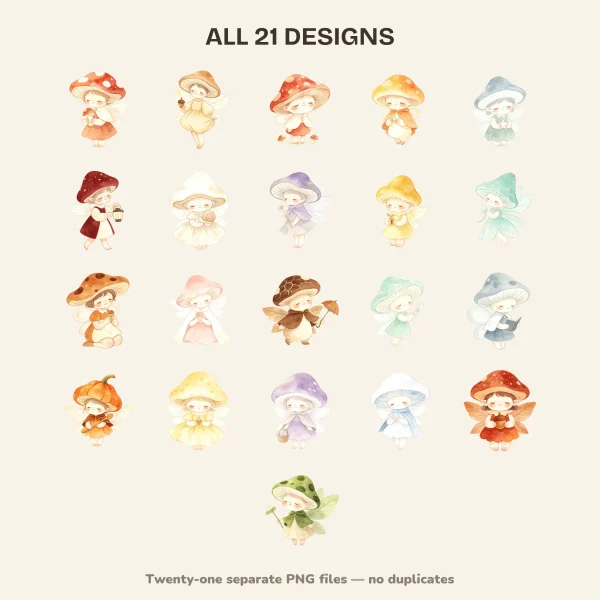
Our mushroom fairy clipart has 21 fairy designs, each a small figure under a mushroom cap. Print two or three at about 2 inches (5 cm) tall. The child folds a sheet of card stock in half, draws a ring of mushrooms on the front and glues a fairy inside next to a message, so the card becomes a “mushroom” note for a grandparent or friend.
Twenty minutes is enough. Older children want to cut each fairy along its outline, which takes a long time on small wings and props. Cutting a neat rectangle or circle around each one is faster and looks tidy on a card. The set is on our mushroom fairy clipart page.
Finish with an M museum
Museum starts with M too, which makes it a good way to end the week. Clear a shelf or a windowsill and set every finished craft on it, each with a folded paper label the child dictates: “Monkey M, by Leo.” On the last day, each child acts as the tour guide for their own piece and says its M word clearly to the group.
A five-day run could look like this: the foil-print moon on Monday, mouse ears on Tuesday, the monkey M on Wednesday, the mouse peekaboo on Thursday, and the mitten match on Friday, followed by the museum opening. That spreads the paint, the glue and the dry crafts across the week.
When a child gets stuck partway through, offer a simpler craft from the chart rather than finishing the hard one for them. The label on the shelf should name a piece the child really made, and that independence is what they’ll be proudest of.
The same kind of plan works for other letters, as in our letter A crafts and the letter D set mentioned above. For crafts that aren’t tied to a letter, try our crafts for preschoolers.
Printables from this article
Related articles
Kids Activity Books
Letter R Crafts for Preschool: Raccoon, Rabbit & Rainbow
Eleven letter R crafts grouped by what the child is into, from a sticky tissue rainbow for 2-year-olds to a raccoon shadow puppet, with ages, minutes, supplies, steps and the usual slip.
Kids Activity Books
Letter D Crafts: Dinosaur, Dog & Donut Ideas for Preschool
Eleven letter D crafts sorted by age, from a play dough D for 2-year-olds to a fuse bead dinosaur footprint, with supplies, times, steps and the snag in each one.
Kids Activity Books
Toddler Crafts: Easy, Mess-Free Crafts for 2 Year Olds
Fourteen toddler crafts sorted by mess and age, from no-glue sticky walls to printable cut-and-paste pages, with what to set out, how each one ends and what to keep off the table.