Community Helpers Crafts: Firefighter, Police, Mail & More
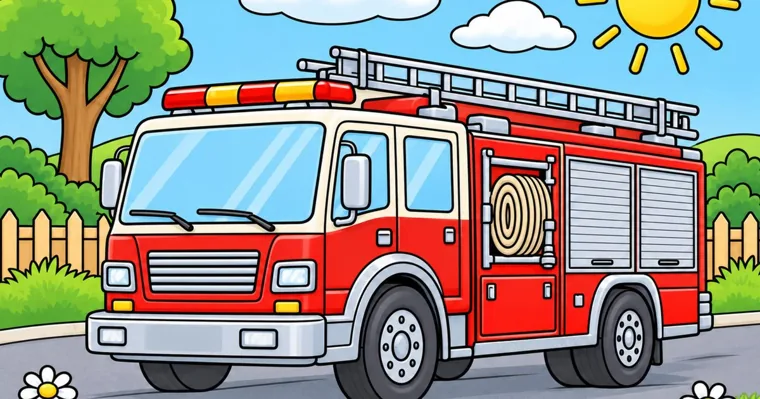
Community helpers crafts work best when each one ends with something a child can wear or hold while pretending: a firefighter hat, a stop sign for a crossing guard, a shoebox mailbox or a paper stethoscope. Most of the fourteen ideas below take 15 to 30 minutes with paper plates, cardstock, glue and a few recycled boxes. Preschoolers can do nearly all of them if an adult cuts the tricky shapes ahead of time.
The table sorts the crafts by age and time. After it, the sections go helper by helper, then cover badges, a class map and how to run the whole set with a group. Nobody timed these with a stopwatch: the ages and minutes come from how much cutting and drying each craft involves, so a slow, chatty group will run longer.
Community helper crafts for preschool and up: pick by age and time
Choose one craft per helper you’re studying, or pick by how long you have. The “adult prep” column shows what to cut or gather before the children sit down.
| Craft | Best for | Time | Adult prep |
|---|---|---|---|
| Paper plate firefighter hat | Ages 3–6 | 20 min plus drying | Cut the flap in each plate |
| Cardboard box fire truck | Ages 4–8 | 45–60 min | Cut the box open, add straps |
| Fire engine page with a yarn hose | Ages 4–8 | 20–30 min | Print, cut yarn |
| Paper police badge | Ages 3–7 | 15 min | Cut star or shield shapes |
| Crossing guard stop sign | Ages 3–7 | 15 min | Cut red octagons |
| Paper stethoscope | Ages 3–6 | 15 min | Cut yarn, cardboard circles |
| File folder doctor’s bag | Ages 4–8 | 25 min | Cut the handles |
| Ambulance with doors that open | Ages 5–9 | 25 min | Print, cut door flaps |
| Shoebox mailbox and letters | Ages 3–8 | 30–40 min | Cut the slot in each lid |
| Tissue box garbage truck | Ages 4–8 | 30 min | Collect boxes and caps |
| Paper bag tool belt | Ages 3–7 | 20 min | Cut bags down |
| Helper ID badge | Ages 4–10 | 15–20 min | Punch holes, cut yarn |
| Class community map | Ages 4–8, group | 2–3 sessions | Lay out a long sheet of paper |
| Thank-you cards for real helpers | All ages | 15–20 min | Find the station’s address |
Firefighter crafts: hats, a box truck and a fire engine page
A fire truck is easy for young children to recognize, so this group starts there, with one craft to wear, one to climb into and one quiet table project.
Paper plate firefighter hat
You need one dinner-size paper plate per child, red paint or a red crayon, yellow paper and a glue stick. Plan on 20 minutes of work and a drying break if you use paint.
- Color or paint the back of the plate red and let it dry.
- Turn it over. Draw a U shape across the middle, with the open end of the U about an inch from one edge.
- An adult cuts along the U line only. The straight end stays attached.
- Fold the cut piece up so it stands straight. That flap is the front shield of the hat, and the hole it leaves is where the head goes.
- Glue a yellow paper badge on the flap and write a number or the child’s name on it.
Dessert plates are too small to fit over a head, so check the size before you buy. Thick tempera can make a cheap plate soft, so use a thin coat or switch to crayons.
Cardboard box fire truck
A box a child can stand inside turns into a truck to wear. You need a box about the width of the child’s shoulders, red paint or red paper, four paper plates for wheels, wide ribbon, and craft sticks for a ladder. Expect 45 to 60 minutes, split across two short sessions if painting.
An adult cuts out the bottom flaps and folds the top flaps inside, so the box becomes an open tube. Punch two holes at the front and two at the back on each side, then tie wide ribbon across as shoulder straps. Children glue on the wheels, a ladder of craft sticks along the top edge and a yarn hose. Use ribbon at least an inch wide; thin string digs into shoulders within minutes.
Fire engine coloring page with a yarn hose
For a quieter table, print a fire truck outline and add one 3D piece. Give each child a 12-inch length of red or white yarn to glue in loops from the hose reel to the ground. A strip of brown paper cut into a ladder can lie over the drawn ladder. The project takes 20 to 30 minutes, and a glue stick holds yarn better than you’d expect if the child presses it down for a few seconds.
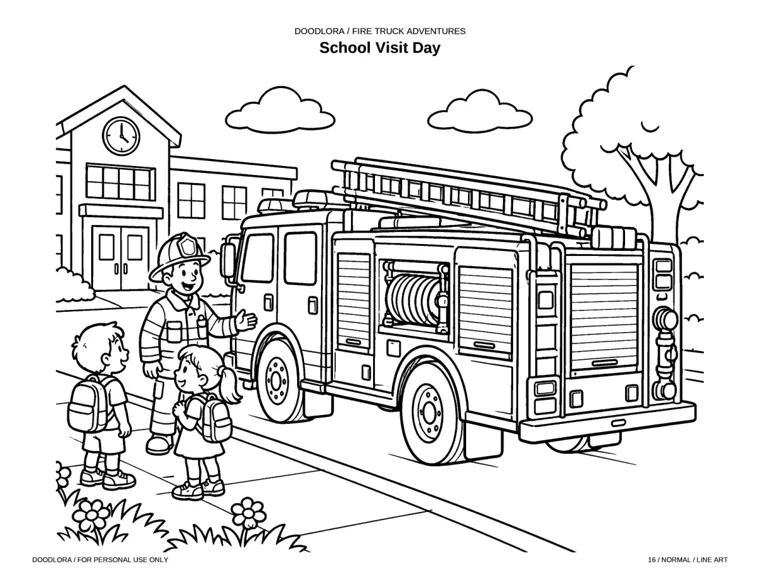
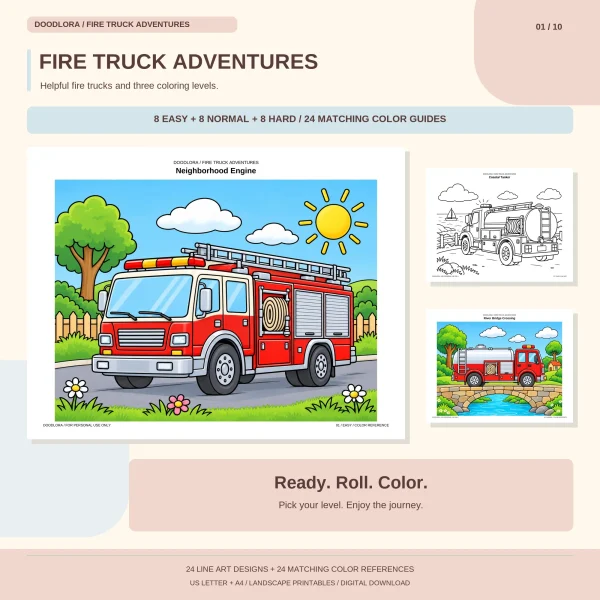
That page is School Visit Day, design 16 in the fire truck coloring pages, and page 31 of the US Letter book. A firefighter stands with two children next to the engine, which gives a child a person to talk about as well as a truck. In the 48-page book the outlines sit on the odd pages and each one is followed by its colored guide, so print odd pages only if you just want the outlines.
Police and crossing guard crafts for small hands
After the firefighter crafts, police officers and crossing guards bring in a different idea: helpers who keep people safe on the street. Both crafts here are flat paper, so they work for younger children too.
Paper police badge
Cut a star or shield from yellow cardstock, about 3 inches across. Children cover it with foil or color it gold, then write their name or a made-up badge number in the middle. The whole craft takes about 15 minutes.
Skip safety pins. A loop of painter’s tape on the back holds the badge to a shirt and comes off without marks.
Crossing guard stop sign
A stop sign gives a child a job to act out. Start with a 6-inch square of red cardstock. Mark 1¾ inches in from each corner along every edge, join the marks across the corners, and cut off the four triangles to get an octagon. Children write STOP in white crayon or glue on white paper letters, then tape the sign to a craft stick or a paint stirrer.
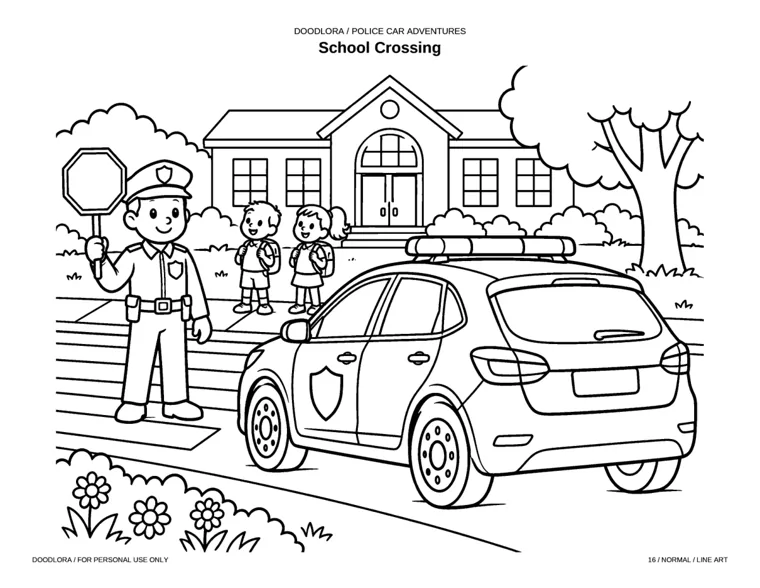
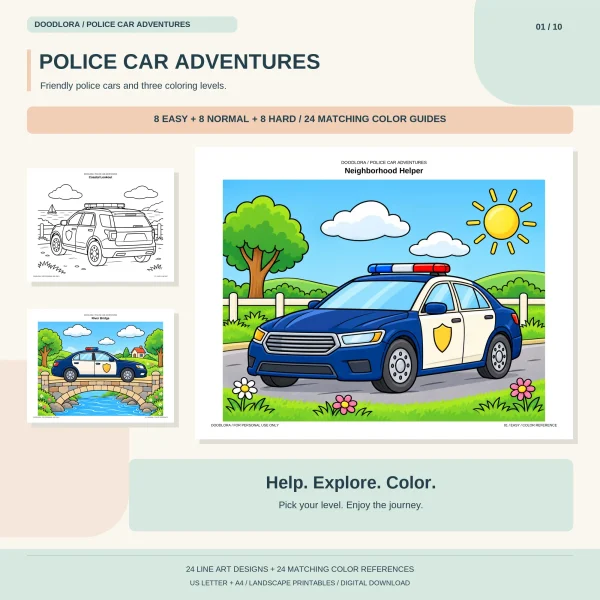
School Crossing, design 16 in the police car coloring pages, shows exactly this job. Color the page first, then play crossing guard with the new sign: one child holds it up, the others walk only when it comes down. Two or three rounds are enough before swapping who holds the sign.
Doctor, nurse and paramedic crafts with a little pretend play
Doctors, nurses and paramedics care for people rather than streets, so these crafts become props for a pretend clinic. Together they can fill a whole morning.
Paper stethoscope
You need a pipe cleaner, a 20-inch piece of yarn and a cardboard circle about 2 inches across, covered in foil. Bend the pipe cleaner into a U for the earpieces. Tie the yarn to the bottom of the U and tape the cardboard circle to the other end. Time: about 15 minutes.
Some versions use a bottle cap for the chest piece. A loose cap is a choking risk for a toddler in the room, so stick with the cardboard circle when little ones are around.
File folder doctor’s bag
Fold a manila file folder closed and cut a handle shape through both layers near the top fold. Staple or tape the sides shut, leaving the top open. Children decorate the bag and fill it with paper bandages, a paper thermometer and a craft-stick tongue depressor. Allow 25 minutes.
Decorate the bag with a heart rather than a red cross. The ambulances in our coloring set carry a heart on the side too, which keeps the pretend clinic looking friendly.
Ambulance with doors that open
Older preschoolers and early grade-schoolers enjoy a page with a surprise behind a flap. Print an ambulance with its rear doors open, color it, then cut two paper flaps the size of the open doorway. Tape each flap along its outer edge so the doors close over the inside and swing open again.
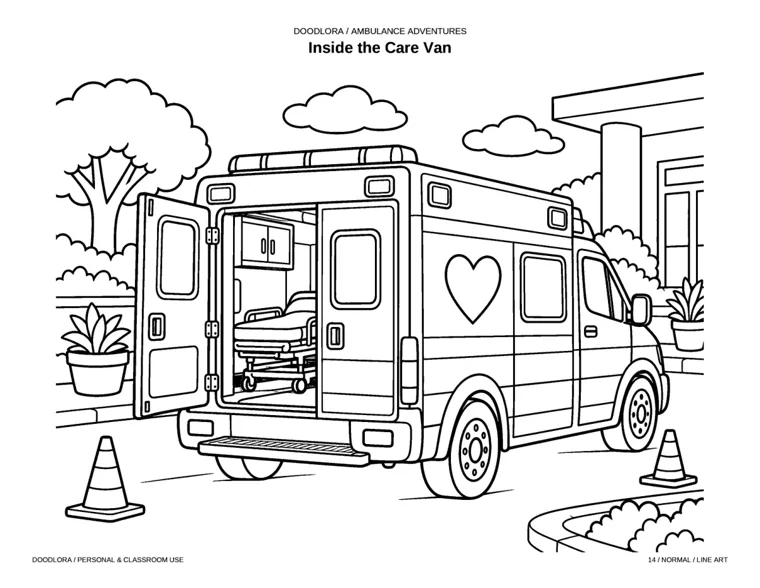
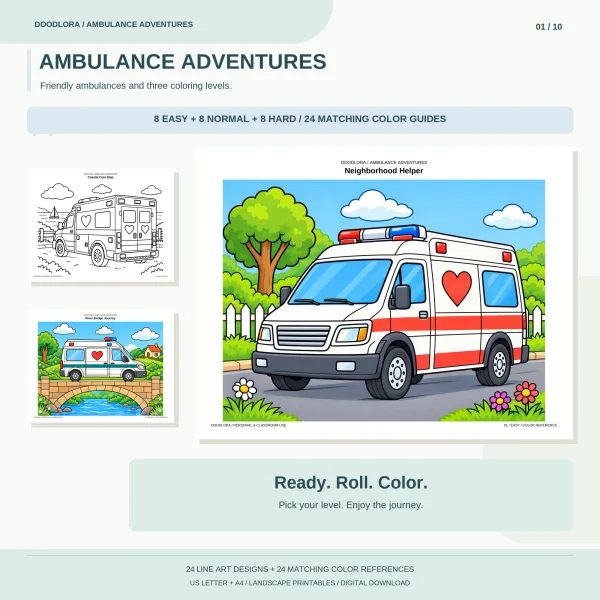
That page is Inside the Care Van, design 14 in the ambulance coloring pages. It shows the stretcher inside without anyone hurt, which suits children who are nervous about hospitals. Measure the doorway on your printout before cutting flaps, because a flap that’s too big hides the heart on the side.
Mail carrier, sanitation and construction crafts built from boxes
The helpers in this group all move things around a neighborhood: letters, trash and building materials. Recycled boxes do most of the work, so start saving shoeboxes and tissue boxes a week ahead.
Shoebox mailbox and letters
Paint a shoebox blue or cover it with blue paper. An adult cuts a slot in the lid about half an inch wider than your envelopes. Add a red paper flag attached with a brass paper fastener so it swings up. Plan 30 to 40 minutes, including a short drying break.
The letters are the fun part. Children draw pictures, fold them into envelopes, draw a stamp in the corner and “deliver” them to chairs labeled with house numbers. A mail carrier bag made from a paper grocery bag with a strap finishes the costume.
Tissue box garbage truck
Glue a small box (a toothpaste box works) to the front of a tissue box for the cab. Add four bottle caps or cardboard circles as wheels. The tissue box opening becomes the hopper. Children then sort paper scraps into two piles, “trash” and “recycling,” and load one pile into the truck. The craft takes about 30 minutes, and the sorting game adds another ten.
Paper bag tool belt for a construction worker
Cut a paper lunch bag down to about 4 inches tall, then staple two or three of them along a strip of cardstock long enough to go around the child’s waist. Children draw and cut out paper tools (a hammer, a wrench, a measuring tape) to tuck in the pockets. Tape the ends of the belt together at the back. Allow about 20 minutes.
Helper badges, a class community map and thank-you cards
Once each helper has a craft, these three projects pull them together. Badges turn the props into a role, the map gives every craft a place in town, and thank-you cards point all of it at real people.
Helper ID badge
Give each child an index card to draw their face and write a name and a job. Punch a hole at the top and thread a yarn loop through as a lanyard. Fifteen to 20 minutes is plenty.
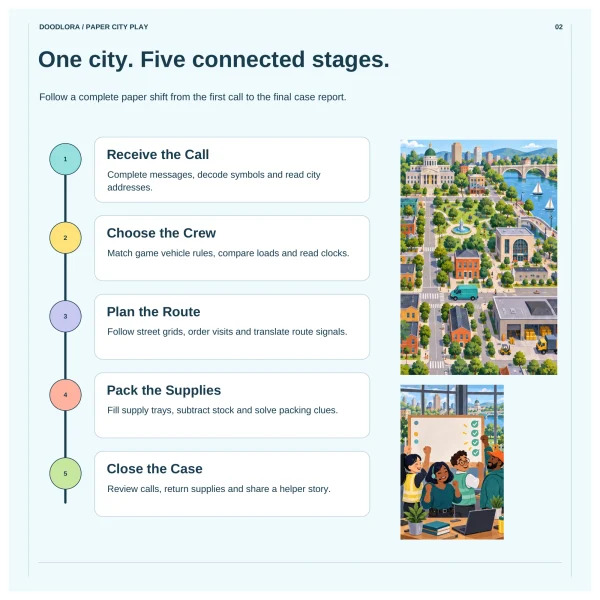
For an older child at home, the City Rescue Dispatch activity pack has a ready-made card for this. Its welcome page says it is pretend paper play, not emergency training, and it’s written for ages 7 to 10.
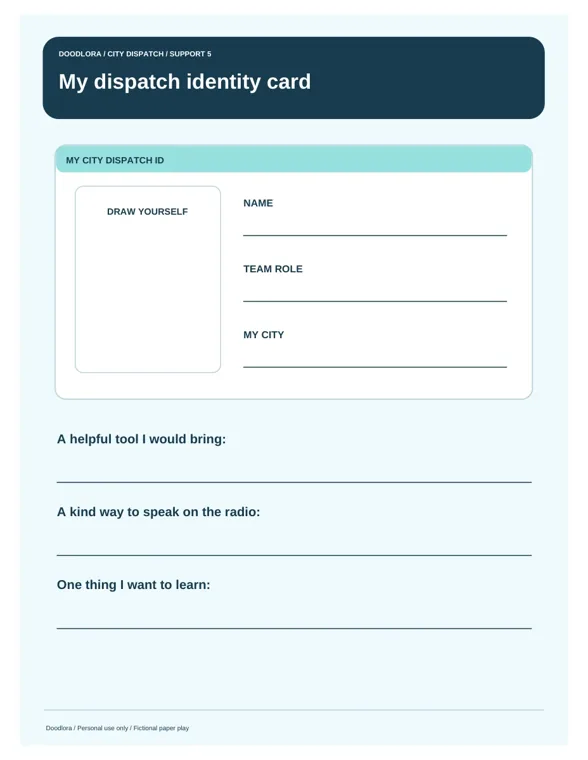
The identity card is page 45 of the 48-page book. Below the card, three prompts ask for a helpful tool to bring, a kind way to speak on the radio and one thing to learn. Cut out the top box for the badge, and keep the prompts for a talk at the end.
Class community map
Roll out a long sheet of butcher paper and draw two or three roads with a marker. Each child then adds one building: the fire station, a police station, a post office, a clinic, a school or a farm. The box crafts from earlier can park on the roads. Spread the project across two or three short sessions so the paint and glue dry between them.
A farm fits naturally on the map, since farmers are community helpers too. If your unit moves on to them next, the farm activities for preschool page pairs bingo and memory match with a one-week farm helper chart. For mixed paper, magazine pictures and texture on the buildings, the collage ideas guide has more to try.
Thank-you cards for real helpers
End the unit with a drawing for someone real: a mail carrier, the school crossing guard, the nurse’s office or the local fire station. Children draw the helper at work and dictate one sentence of thanks. Call the station’s non-emergency number first and ask when you can drop the cards off, rather than turning up unannounced.
Running community helpers crafts with a class or a group
A whole set of helper crafts runs most smoothly as one helper a day across a week, with one craft and one pretend-play prop each day. Groups of four to six children at a table give an adult time to help with cutting and gluing.
Do all the cutting the night before. Paper plate flaps, octagons, file folder handles and mailbox slots all need an adult’s scissors or a craft knife, and they take far longer with a line of children waiting. Glue sticks dry faster than liquid glue, which matters when crafts need to go home the same day.
For the coloring-page crafts, print the outlines in black-and-white mode on plain printer paper. If the lines come out gray or broken, the fix is usually a printer setting, explained in how to print coloring pages along with which paper holds up to paint. Preschoolers do better with thick lines and big shapes, and the coloring tips page explains how to match a page to an age.
Not every child wants the same helper. Let children who finish early add a second badge or a building to the map instead of waiting. Younger siblings who want to join in can try the table projects in activities for 3-year-olds. Coloring sets on other themes, including Thanksgiving and Christmas, start from the Doodlora Studio front page.
Printables from this article
Related articles
Printable Coloring Pages
Community Helpers for Kids: List, Jobs and Activities
A community helper is anyone whose job makes daily life in a town work for other people. Teach them through three questions, what do they do, where do they work and what do they use, then pick activities by age, from a tool basket for preschoolers to a neighborhood map for second graders.
Printable Coloring Pages
World Kindness Day: Random Acts, Activities & Kindness Week
World Kindness Day falls on November 13 every year. Here is who started it, plus random acts of kindness for home, the classroom, the neighborhood and young kids, each with how long it takes, what to gather and how to wrap it up.
Printable Coloring Pages
How to Draw a Race Car Step by Step (Formula, Kart, Rally)
A side-view formula car in nine pencil steps, the few parts you swap to turn it into a kart, rally car, stock car or buggy, wheels at an angle, and a race number that looks painted on.