World Kindness Day: Random Acts, Activities & Kindness Week
World Kindness Day falls on November 13 every year. The World Kindness Movement, a coalition of kindness organizations from several countries, introduced it in 1998, about a year after the group took shape at a conference in Tokyo in September 1997. You celebrate it by doing small, deliberate good deeds, the kind usually called random acts of kindness, and by noticing the ones other people do. Schools often stretch it into a kindness week, with notes, cards and a class project.
Below you’ll find the background in a few lines, a table for picking an idea by place, and 12 ideas grouped for home, the classroom, the neighborhood and young kids. Each one says how long it takes, what to gather and how to finish it. There’s also a lesson plan for kindness coloring pages and a five-day kindness week plan.
World Kindness Day: the date, the founders and the days people mix it up with
The date never moves. World Kindness Day is November 13, whatever weekday that turns out to be, so a school that has the 13th on a Saturday usually marks it on the Friday before.
The organizers are the World Kindness Movement, which took shape at a conference in Tokyo on September 20, 1997, when kindness organizations from around the world met in Japan. Since then the day has been taken up in countries such as Canada, Australia, Nigeria, Singapore and the United Arab Emirates, and in Australia it went onto the national school calendar in 2012. Events have ranged from handing out kindness cards to flash mobs and concerts.
Two other dates get confused with it in the US:
- Random Acts of Kindness Day is February 17. A separate group, the Random Acts of Kindness Foundation in Denver, runs it, along with a Random Acts of Kindness Week in mid-February.
- “Kindness week” in November is usually a school’s own choice of five days around November 13, not an official event with fixed dates.
The phrase “random acts of kindness” is older than both days. Anne Herbert wrote “random kindness and senseless acts of beauty” on a placemat in Sausalito, California, in 1982, turning around the phrase “random acts of violence and senseless acts of cruelty”. A 1993 book called Random Acts of Kindness made it a household saying.
Pick a kindness activity by where you’ll be on November 13
Start with where you’ll be and how much time you have. Every idea below fits inside an ordinary day, and none of them needs money.
| Idea | Best for | Time | What to gather |
|---|---|---|---|
| Hidden kindness notes | Home, ages 5 and up | 10 minutes | Sticky notes, a pen |
| Take over someone’s chore | Home, ages 4 and up | 15–20 minutes | Nothing, or the cleaning supplies for that job |
| Call an older relative | Home, any age with help | 15 minutes | Three questions written down |
| Compliment chain | Classroom, grades K–5 | 5 minutes a day | Paper strips, glue sticks |
| Secret kindness buddy | Classroom, grades 2 and up | A week | Name slips, a container |
| Thank-you cards for school staff | Classroom, any grade | 30 minutes | Folded paper, markers |
| Collection drive | Community, a class or family | A week | A box, a sign, a call to the charity |
| Park or schoolyard cleanup | Community, ages 6 and up with adults | 45–60 minutes | Gloves, trash bags |
| Help an older neighbor | Community, a family | 20–30 minutes | A short note offering help |
| Kindness jar | Young kids, ages 3 to 6 | All week | A jar, pom-poms or paper slips |
| Thank people by name | Young kids, ages 3 to 6 | All day | A practice run at breakfast |
| Pick toys to give away | Young kids, ages 4 and up | 30 minutes | A bag, a call to the donation place |
The age column is a starting point, not a rule. For the chore idea especially, match the job to the child first; our chores for kids by age list what kids from 2 to the teens can usually handle on their own.
Random acts of kindness ideas at home
Home ideas work best when the person on the receiving end isn’t expecting anything. These three take less than half an hour and suit a weekday evening.
Hidden kindness notes
Each person writes three or four sticky notes, each saying one specific thing they like about someone in the house: “You make the best pancakes,” not “You’re nice.” Hide them where they’ll turn up later, inside a lunch box, on the bathroom mirror, in a coat pocket. It takes about 10 minutes. Leave the notes unsigned, so the fun is guessing who wrote which one. Kids who can’t write yet can dictate the words and add a drawing.
Take over someone’s chore without being asked
Pick one job that someone else in the family normally does, such as setting the table, feeding the dog or sorting the recycling, and quietly do it before they get to it. Plan 15 to 20 minutes. The catch is choosing a job the child can actually finish safely, so pick one they’ve already done with you at least once. The act is done when the person notices, and it’s fine if they never do.
Call an older relative or family friend
Grandparents, great-aunts and family friends who live alone are often the people who’d most like a call. Before dialing, help your child write down three questions, such as what school was like for them or what they did on weekends as a kid, so the call doesn’t stall after “How are you?” Fifteen minutes is plenty. Before you hang up, set a day for the next call, which turns one good deed into a habit.
Kindness activities for the classroom
Classroom kindness activities need one rule up front: every child gives and every child receives. Without that, kids write notes to their best friends and the same few names get skipped.
Compliment chain
Hand out paper strips each morning of kindness week. Each child writes one compliment or one kind thing they saw a classmate do, then glues the strip into a loop on the class chain. It takes about 5 minutes a day. Have kids draw a classmate’s name from a container each morning so nobody is left out. On the last day, count the links together and hang the chain where the class can see it.
Secret kindness buddy
On Monday, every child draws the name of a classmate and keeps it secret. All week they do small things for that person: a note, saving them a seat, helping them pick up spilled crayons. On Friday, everyone guesses who their buddy was, then the buddies reveal themselves. Keep a list of who drew whom. If a child is absent, you can quietly step in as their buddy for the day so nobody misses out.
Thank-you cards for the people who keep the school running
The custodian, cafeteria staff, bus drivers, the nurse and the front office rarely get a card. Give each table one person to thank and 30 minutes to make a folded card with a drawing and a sentence about something specific that person does. Kids who need sentence starters can borrow from our messages for aides, specials teachers and caregivers. Finish by delivering the cards as a group, so kids see the person open one.
How to use kindness coloring pages in a classroom
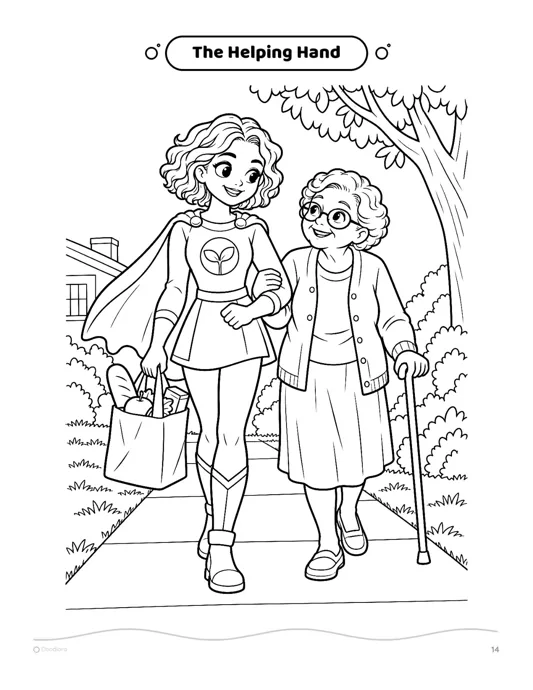
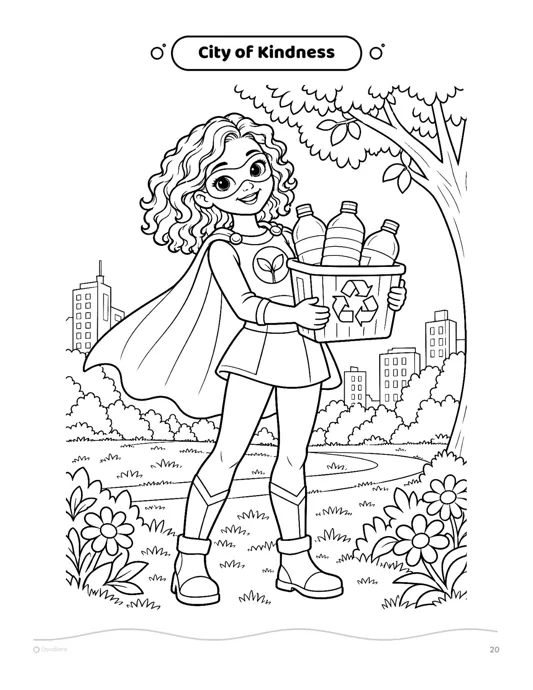
A coloring page gives younger students a quiet way to think about a good deed before they try one. Our kindness coloring pages were made for this. The heroes wear capes and masks, but their missions are ordinary deeds like carrying a neighbor’s shopping, holding an umbrella over ducklings in the rain and taking bottles to a recycling bin.
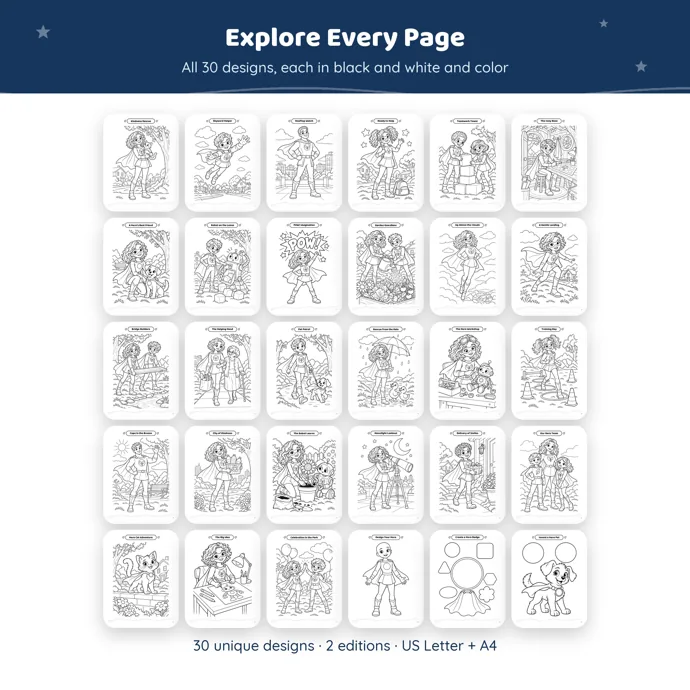
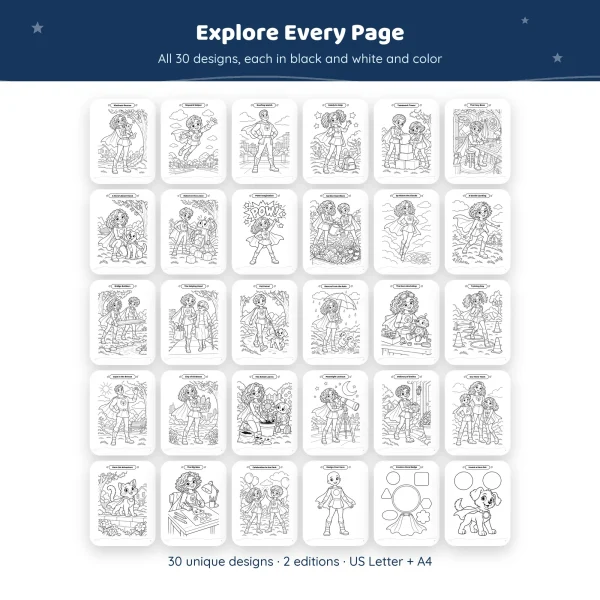
The set has 30 designs: 27 scenes and three design-your-own pages. The download includes black-and-white and color PDFs, each in US Letter and A4. The scenes that match a real act of kindness are the most useful for a lesson:
- The Helping Hand (design 14): walking an older neighbor home with her grocery bag
- Rescue from the Rain (design 16): holding an umbrella over two ducklings
- City of Kindness (design 20): carrying a bin of bottles to recycle in a park
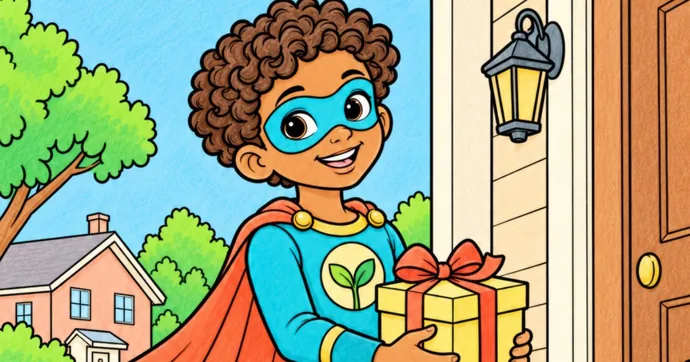
- Delivery of Smiles (design 23): leaving a wrapped gift at a front door
- Garden Guardians (design 10): watering a vegetable bed
A 30-to-40-minute lesson runs like this:
- Talk (5 minutes). Show one page and ask, “What is the hero doing? Could you do that without a cape?”
- Color (15–20 minutes). Let each child pick the scene that matches a deed they’d like to try.
- Write (5 minutes). On the back, each child writes or dictates one kind act they’ll do this week.
- Share (5 minutes). A few volunteers read theirs aloud, and the pages go up as a kindness wall.
The scene pages have fairly full backgrounds of trees, houses and grass. A child who colors slowly may not finish in 20 minutes, so let pages go home unfinished or pick a less busy one.
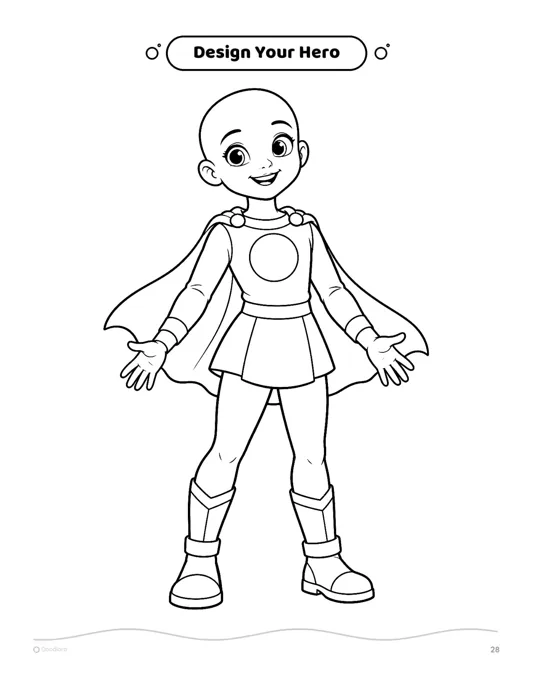
For kids who finish early, or for a second session, the last three pages turn kids into designers. Design Your Hero (28) leaves the hair, mask and chest emblem blank, so a child can draw a symbol for the good deed their hero is known for. Create a Hero Badge (29) has seven empty shapes and a cape to fill. Invent a Hero Pet (30) is a caped puppy with a blank badge. These three have open space and few details, which also makes them a better pick for preschoolers than the busy scenes.
For printing, use the black-and-white PDF at 100% or Actual Size, one page per sheet, with two-sided printing off, and print one page first to check it. The color PDF uses more ink, so it works better on a screen as a guide. If lines come out gray or markers bleed through, see why coloring pages print gray and which paper to use. The pages are a personal-use download, and a teacher printing copies for their own class is within that.
Random acts of kindness in the community
Community kindness takes a little more planning than a note on a mirror, because someone outside your house is on the receiving end. Call ahead every time.
Collection drive for a food pantry or shelter
Call the food pantry, animal shelter or family shelter first and ask what they need right now and what they can’t take. Set out a labeled box for a week at home or in the classroom and add a sign with that list. Finish by delivering everything together, so the kids see where it goes.
Park or schoolyard cleanup
Plan 45 to 60 minutes with at least one adult for every few children. Bring work gloves and trash bags, and set one rule before anyone starts: kids leave anything sharp, broken or unknown for an adult to deal with. Check with the park office or school first, since some arrange their own cleanup days and supply bags. End with a group photo next to the full bags, without anyone’s face if it will be posted.
Help an older neighbor
Write a short note offering one specific job, such as raking leaves, bringing the trash cans up from the curb or carrying groceries in on a set day. A specific offer is easier to say yes to than “let us know if you need anything.” The family delivers it together, and an adult does the talking at the door. One visit takes 20 to 30 minutes. If you’d rather make cards for a senior center or care home, call the activity staff first and ask how many residents there are and what they can accept. If the staff invite the kids to visit, the grandchildren section of our activities for seniors suits a first visit.
Kindness ideas for young kids, ages 3 to 6
Preschoolers understand kindness best when they can see it pile up and when the deeds are things they already do. Keep each one small and repeat it all week.
Kindness jar
Put a clear jar on the kitchen counter or the classroom shelf. Each time a child does something kind, like sharing, helping a sibling or putting away someone else’s toys, they drop in a pom-pom or a paper slip with the deed on it. Agree on a family or class reward when the jar is full, such as picking the weekend game or the Friday read-aloud. The jar works because a 4-year-old can see it filling up.
Thank people by name
Practice at breakfast. When someone passes the cereal, say “Thank you, Maya,” not just “Thanks.” Then, through the day, the goal is to thank the bus driver, the librarian and the cashier using their names, or with a wave and a smile if the name isn’t known. Our manners for kids covers thank-yous and greetings in more detail.
Pick toys to give away
Give your child a bag and 30 minutes to choose toys in good shape that they’ve outgrown. Talk about the kids who might get them. Call the donation place first, because some children’s charities only take new toys or won’t take stuffed animals. Let the child hand the bag over, which is the part they’ll remember.
Turning November 13 into a kindness week
A kindness week gives kids five days to practice, so the 13th isn’t over before it starts. Put November 13 on whichever day it falls and build the rest of the school week around it.
| Day | Activity | Time |
|---|---|---|
| Monday | Draw secret kindness buddies; start the compliment chain | 15 minutes |
| Tuesday | Color a kindness page and write a planned deed on the back | 30–40 minutes |
| Wednesday | Make thank-you cards for school staff | 30 minutes |
| Thursday | Deliver the cards; add to the chain; check the collection box | 20 minutes |
| Friday | Reveal kindness buddies, count the chain, deliver the collection | 30 minutes |
At home, the same week can be one idea a night: notes on Monday, a chore on Tuesday, the phone call on Wednesday, the toy bag on Thursday and a neighbor note on Friday. Keep the jar going all week. If the week falls apart halfway, that’s fine. The day was always about small acts, not a perfect plan.
Printables from this article
Related articles
Printable Coloring Pages
Community Helpers for Kids: List, Jobs and Activities
A community helper is anyone whose job makes daily life in a town work for other people. Teach them through three questions, what do they do, where do they work and what do they use, then pick activities by age, from a tool basket for preschoolers to a neighborhood map for second graders.
Printable Coloring Pages
How to Draw a Race Car Step by Step (Formula, Kart, Rally)
A side-view formula car in nine pencil steps, the few parts you swap to turn it into a kart, rally car, stock car or buggy, wheels at an angle, and a race number that looks painted on.
Printable Coloring Pages
Community Helpers Crafts: Firefighter, Police, Mail & More
Fourteen community helper crafts sorted by helper, age and time, from paper plate firefighter hats to a class map, with what to prepare and where each one goes wrong.