Basic Chinese Phrases: Easy Mandarin Phrases With Pinyin
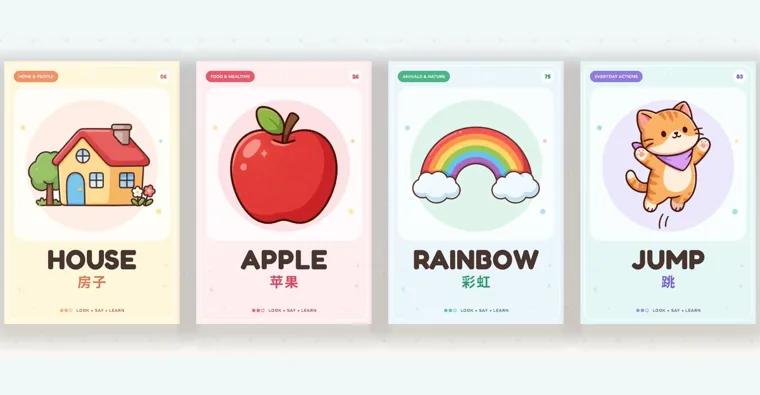
The basic Chinese phrases to learn first are 你好 nǐ hǎo (hello), 谢谢 xièxie (thank you), 不客气 bú kèqi (you’re welcome), 对不起 duìbuqǐ (sorry) and 再见 zàijiàn (goodbye). With Lunar New Year falling on February 6, 2027, add 新年快乐 xīnnián kuàilè, Happy New Year. Learn each phrase together with the reply it usually gets, and a short exchange works even if your Mandarin stops right there.
All the phrases here are Mandarin, written in the simplified characters used in mainland China. The pinyin carries the dictionary tone marks, and where a tone shifts in normal speech, the table shows how it’s actually said. Pick your starting point from this table, then work through the sections that match your plans.
| Your situation | Learn these first | Section |
|---|---|---|
| Visiting a Chinese-speaking family over Lunar New Year | 您好, 新年快乐, the words for grandma and grandpa, 谢谢 | Greetings, New Year |
| Dinner at a Chinese restaurant | 我要这个, 不要辣, 好吃, 买单 | Ordering food |
| A trip to China | 请问, 在哪里, 多少钱, 我听不懂 | Directions and shopping, introducing yourself |
| Teaching a class or your own kids a few words | 你好, 谢谢, 再见, the numbers one to ten | Greetings, numbers |
| Meeting a Mandarin-speaking coworker or neighbor | 你好, 我叫…, 很高兴认识你 | Introducing yourself |
One thing to check before you practice: Mandarin isn’t the only Chinese language spoken in American homes and restaurants. Some families speak Cantonese or another Chinese language, so ask which one before you learn a greeting for a particular person.
Chinese greetings: hello, good morning and goodbye
Greetings come first because you’ll use them every time, at the door and again on the way out. The usual answer to a greeting is the same greeting back.
| Chinese | Pinyin | Meaning | When to say it, and the reply |
|---|---|---|---|
| 你好 | nǐ hǎo (said ní hǎo) | hello, hi | Anyone, any time of day. Reply with 你好 |
| 您好 | nín hǎo | hello (polite) | Grandparents, teachers, someone older you’re meeting for the first time |
| 早上好 | zǎoshang hǎo | good morning | Mornings. Reply with 早上好 |
| 晚安 | wǎn’ān | good night | Bedtime, or leaving at the end of an evening |
| 再见 | zàijiàn | goodbye, see you again | Leaving. Reply with 再见 |
The ní in 你好 isn’t a typo. When two third tones sit next to each other, the first one is said as a rising second tone, so the dictionary’s nǐ hǎo comes out ní hǎo. You’ll hear the same change in 很好 hěn hǎo, very good.
For a first meeting with a partner’s parents or grandparents, 您好 is the safer hello. Dictionaries list 您 nín as the courteous form of “you,” as opposed to the everyday 你 nǐ.
Planning that visit for Lunar New Year? The Chinese New Year traditions page lays out the fifteen days, so you’ll know which day the greetings and red envelopes come out.
How to say thank you in Mandarin, and what to say back
Thank you in Mandarin is 谢谢 xièxie, and it gets used as often as “thanks” does in English: for a door held open, a plate passed, a gift. The replies matter just as much, since you’ll hear them right after you say it.
Thank you: 谢谢 and 非常感谢
| Chinese | Pinyin | Meaning | When to say it |
|---|---|---|---|
| 谢谢 | xièxie | thank you, thanks | Every day, for anything |
| 谢谢你 | xièxie nǐ | thank you (to you) | When you want to point the thanks at one person |
| 非常感谢 | fēicháng gǎnxiè | thank you very much | A real favor, a gift, someone’s help on a trip |
The second xie in 谢谢 has no tone mark. That’s the neutral tone, said light and short, so the word sounds like one strong beat and a quick echo. The x is close to English sh, which means xièxie never starts with a z sound.
You’re welcome: 不客气 and 不用谢
| Chinese | Pinyin | Meaning | When to say it |
|---|---|---|---|
| 不客气 | bù kèqi (said bú kèqi) | you’re welcome, don’t mention it | The standard answer to 谢谢 |
| 不用谢 | bù yòng xiè (said bú yòng xiè) | no need to thank me | Same job, for small things |
Both replies start with 不, and both change it. 不 is normally bù, but before a fourth tone it’s said with a rising second tone, so bù kèqi becomes bú kèqi. Practice 谢谢 and 不客气 as a pair, one person each, until the answer comes without thinking.
Sorry and excuse me: 对不起, 没关系 and 不好意思
| Chinese | Pinyin | Meaning | When to say it, and the reply |
|---|---|---|---|
| 对不起 | duìbuqǐ | I’m sorry | A real apology: you bumped someone, broke something, came late. Reply: 没关系 |
| 没关系 | méiguānxi | it doesn’t matter, that’s OK | The answer to 对不起 |
| 不好意思 | bù hǎoyìsi | sorry for the trouble | Lighter: squeezing past someone, asking for a small favor |
| 请问 | qǐngwèn | excuse me, may I ask | Before a question to a stranger |
| 请 | qǐng | please | Goes in front of the request |
The trap here is reaching for 对不起 every time you’d say “excuse me” in English. Dictionaries do give “excuse me” as one meaning, but it’s also the word for letting someone down. For getting a stranger’s attention, 请问 does the job, and 不好意思 covers the small slips.
Introducing yourself in Chinese
An introduction in Mandarin takes four short lines: hello, your name, where you’re from, and nice to meet you. The rest of the table is for the moment the other person answers faster than you can follow.
| Chinese | Pinyin | Meaning | When to say it, and the reply |
|---|---|---|---|
| 我叫… | wǒ jiào … | my name is … | Add your name: 我叫 Emily. Your English name is fine |
| 你叫什么名字? | nǐ jiào shénme míngzi? | what’s your name? | They’ll answer 我叫… |
| 我是美国人 | wǒ shì Měiguórén | I’m American | After your name |
| 很高兴认识你 | hěn gāoxìng rènshi nǐ | nice to meet you | Reply: 我也很高兴认识你, wǒ yě hěn gāoxìng rènshi nǐ, me too |
| 我会说一点儿中文 | wǒ huì shuō yìdiǎnr Zhōngwén | I can speak a little Chinese | When someone is surprised you tried |
| 我听不懂 | wǒ tīngbudǒng | I don’t understand | You heard it but couldn’t follow |
| 请再说一遍 | qǐng zài shuō yí biàn | please say that again | Ask once, then try 请说慢一点 |
| 请说慢一点 | qǐng shuō màn yìdiǎn | please speak a little slower | Use it early, before you get lost |
我会说一点儿中文 has a catch. Say it well and the other person may switch to quick, natural Mandarin. Keep 我听不懂 and 请说慢一点 ready right behind it, and nobody minds.
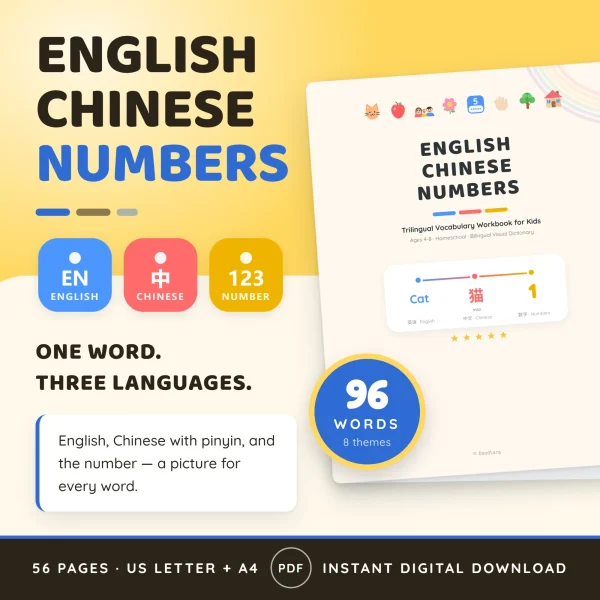
To introduce your family, put the family word after 这是我, “this is my”: 这是我妈妈 zhè shì wǒ māma, this is my mom. Our English–Chinese Vocabulary Workbook gives 12 family words with pinyin, from 妈妈 māma and 爸爸 bàba to 孩子 háizi, child.
Ordering food: Chinese phrases for a restaurant
At a restaurant, pointing plus three or four words gets you a long way. 我要这个, “I want this one,” works with a finger on the menu picture, and the rest of the table covers drinks, spice and the check.
| Chinese | Pinyin | Meaning | When to say it |
|---|---|---|---|
| 请问,有菜单吗? | qǐngwèn, yǒu càidān ma? | excuse me, is there a menu? | When you sit down |
| 我要这个 | wǒ yào zhège | I want this one | Point at the dish |
| 不要辣 | bù yào là (said bú yào là) | not spicy, no chili | Right after you order |
| 水 | shuǐ | water | 我要水, I’d like water |
| 米饭 | mǐfàn | cooked rice | A bowl of plain rice |
| 面条 | miàntiáo | noodles | |
| 好吃 | hǎochī | delicious | To the cook or the host |
| 干杯 | gānbēi | cheers | A toast. Literally “dry cup” |
| 买单 / 结账 | mǎidān / jiézhàng | the check, please | Either one, when you’re ready to pay |
Say 好吃 with care. With a low third tone it’s hǎochī, tasty. The same characters read with a falling fourth tone, hàochī, mean fond of eating, even gluttonous. That’s a funny thing to tell your host about their cooking.
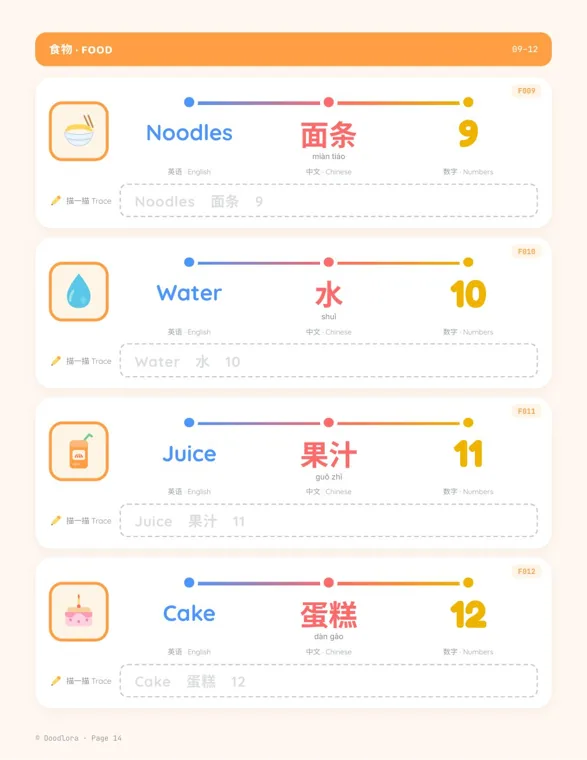
The food theme in the workbook runs 12 words over pages 12 to 14, including 米饭 mǐfàn, 鸡蛋 jīdàn (egg) and 面条. Every entry puts the characters and pinyin side by side, which helps when you’re matching what you hear to what’s on a menu.
Asking directions and shopping in Chinese
Directions and prices are where the answers come back quickest, so these phrases are short on purpose. Ask with 请问 first, then the place and 在哪里, “where is it.”
| Chinese | Pinyin | Meaning | When to say it |
|---|---|---|---|
| 请问,洗手间在哪里? | qǐngwèn, xǐshǒujiān zài nǎlǐ? | excuse me, where’s the restroom? | The one question every traveler needs |
| …在哪里? | … zài nǎlǐ? | where is …? | Put the place first, then 在哪里 |
| 左边 / 右边 | zuǒbian / yòubian | left / right | Listen for these in the answer |
| 一直走 | yīzhí zǒu (said yìzhí zǒu) | go straight | Also part of the answer |
| 多少钱? | duōshao qián? | how much is it? | Pointing at the item |
| 太贵了 | tài guì le | that’s too expensive | Only where the price is open to discussion |
| 便宜一点? | piányi yìdiǎn? | a little cheaper? | Follows 太贵了 |
Two pitfalls hide in this table. 便宜 is piányi when it means cheap; read as biànyí, the same characters mean convenient. And a price will come back faster than you can count, so hold out a phone calculator and let the seller type the number.
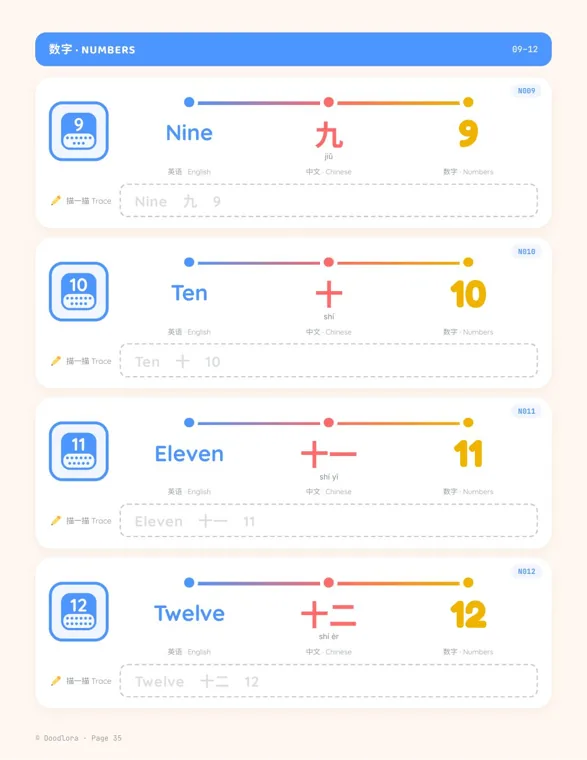
The numbers up to 10 are single words: 一 yī, 二 èr, 三 sān, 四 sì, 五 wǔ, 六 liù, 七 qī, 八 bā, 九 jiǔ, 十 shí. After that they’re built from parts. Eleven is 十一, ten-one, and twenty is 二十 èrshí, two-ten.
Chinese New Year greetings for February 6, 2027
Lunar New Year 2027 starts on Saturday, February 6, the first day of the Year of the Goat. If someone asks about your animal sign, the Chinese zodiac signs page goes through all twelve. These are the greetings to have ready for that week, along with the reply.
| Chinese | Pinyin | Meaning | When to say it, and the reply |
|---|---|---|---|
| 新年快乐 | xīnnián kuàilè | Happy New Year | Anyone. Reply with 新年快乐 or the line at the bottom |
| 春节快乐 | Chūnjié kuàilè | Happy Spring Festival | 春节 is the Chinese name for Chinese New Year |
| 过年好 | guònián hǎo | Happy New Year | A New Year hello, built like 你好 |
| 恭喜发财 | gōngxǐ fācái | may you have a prosperous year | A wish for prosperity |
| 万事如意 | wànshì rúyì | may everything go as you wish | Can follow 新年快乐 |
| 身体健康 | shēntǐ jiànkāng | good health | A good one to add for grandparents |
| 也祝你新年快乐 | yě zhù nǐ xīnnián kuàilè | Happy New Year to you too | The reply when someone greets you first |
Treat 恭喜发财 as a wish for wealth rather than a plain Happy New Year: say 新年快乐 first and add 恭喜发财 after it. Cantonese-speaking families say the same wish as gung hei fat choy. You’ll also see 羊年 yángnián, the year of the 羊, called both the Year of the Goat and the Year of the Ram in English.
Greeting grandparents by the right name
Put the family word in front of the wish: 奶奶,新年快乐! is “Grandma, Happy New Year!” The catch is that Chinese has separate words for each side of the family. 奶奶 nǎinai and 爷爷 yéye are Dad’s parents. Mom’s parents are 外婆 wàipó and 外公 wàigōng, and some families say 姥姥 lǎolao and 姥爷 lǎoye instead.
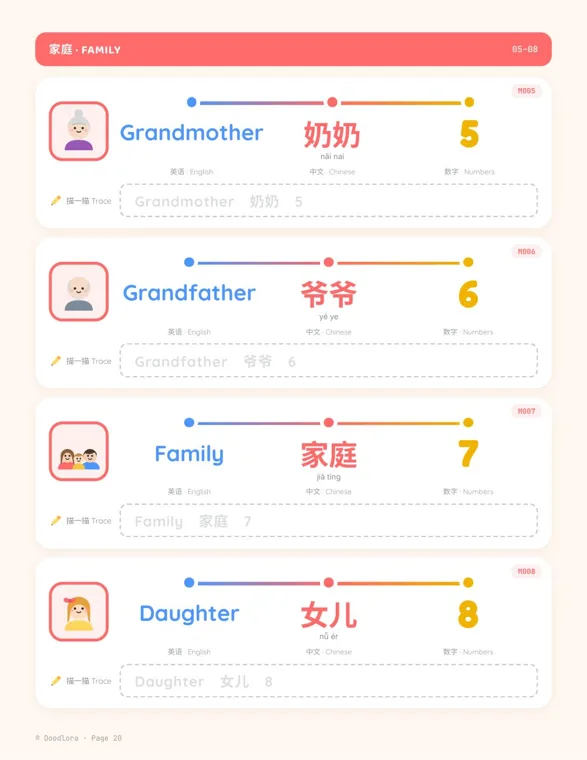
Ask the family which words they use before the visit. Getting the grandparent’s name right lands better than a long greeting.
Practicing the family words with a toddler
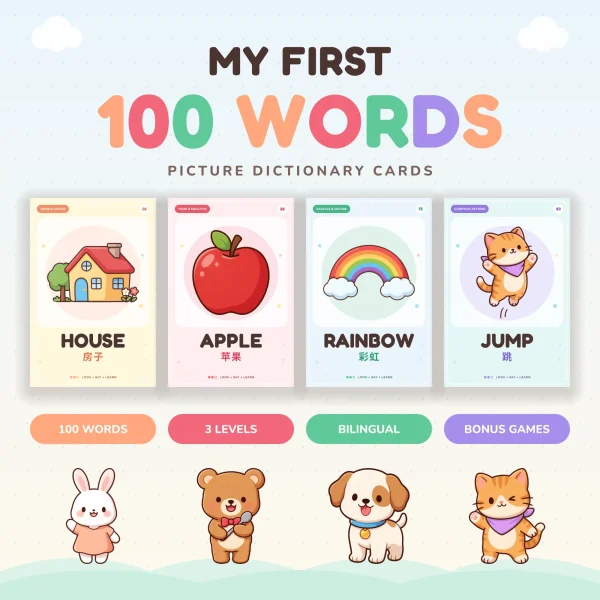
A toddler can’t manage 万事如意, but 奶奶, 爷爷 and 谢谢 are within reach. Our First 100 Words cards include Mommy 妈妈, Daddy 爸爸, Grandma 奶奶 and Grandpa 爷爷 among the 25 home and people words. The Chinese is in simplified characters only, with no pinyin, so a parent who doesn’t read Chinese should copy the pinyin from this guide onto the back.
How Mandarin tones work in these phrases
Tones are why 妈 mā, the mā in 妈妈 (mom), and 马 mǎ, horse, are different words. Both are spelled ma in pinyin, and the mark above the vowel tells you which one you’re saying.
The four tones and the neutral tone
| Mark | Tone | How it sounds | Example from this guide |
|---|---|---|---|
| ā | First | High and level, held steady | 新 xīn in 新年快乐 |
| á | Second | Rising, like a question | 您 nín |
| ǎ | Third | Low | 好 hǎo |
| à | Fourth | Falling, short and firm | 谢 xiè |
| a (no mark) | Neutral | Light and short, almost no tone | The second syllable of 谢谢 |
Three tone changes you’ll hear in these phrases
The pinyin in a dictionary doesn’t always match what people say. Three changes cover every case in this guide:
- Two third tones in a row: the first one rises. 你好 nǐ hǎo is said ní hǎo.
- 不 bù before a fourth tone becomes bú: 不客气, 不用谢, 不要辣.
- 一 yī before a fourth tone becomes yí (一遍 yí biàn), and before the other tones it becomes yì (一点儿 yìdiǎnr, 一直 yìzhí). Counted on its own, it stays yī.
Pinyin letters English speakers misread
A few pinyin letters stand for sounds English spells differently. These five show up in the phrases above:
| Letter | Close to | In this guide |
|---|---|---|
| x | English sh | 谢谢 xièxie, 新年 xīnnián |
| q | English ch, with a puff of air | 请 qǐng, 钱 qián |
| zh | the j in jam, tongue curled back | 中文 Zhōngwén, 这个 zhège |
| z | the ds in kids | 再见 zàijiàn |
| c | ts with a puff of air | 菜单 càidān |
A practice plan: a few phrases a day before New Year
From now to February, three new phrases a day plus a quick review of yesterday’s covers this guide in about two weeks. Learn each phrase with its reply, the way the tables pair them, since you’ll need both halves.
Practice with sound, not just the page. Play a recording of a native speaker, pause, and repeat the phrase. Then play it again and speak along at the same time, which is called shadowing. Record yourself on your phone and listen for the tone marks: did 谢 fall, did 您 rise?
Trace the tone mark in the air with a finger as you say each syllable. It slows you down enough to hear whether the low third tone really dipped. With kids, use the phrases at real moments: 谢谢 when a snack is passed, 再见 at the school gate.
The workbook’s theme pages ask for the same habit. A line on each theme’s opening page tells the child to say all three forms out loud before writing anything. Writing the characters is a separate skill, and how to write Chinese characters starts it with stroke order. The rest of our printables are on the Doodlora Studio home page.
Printables from this article
Related articles
Chinese Learning Printables
How to Teach Kids Chinese: Pinyin, Characters, First Words
A home plan for parents teaching Mandarin to young children: what to do at each age, a 10-minute daily routine, the first words and characters, and how to tell it's sticking.
Chinese Learning Printables
How to Say Happy New Year in Chinese: Sayings & Replies
The Mandarin greeting syllable by syllable, which wish fits grandparents, coworkers and kids, what to say back, and the four-character sayings families use at Chinese New Year.
Chinese Learning Printables
Chinese Radicals: List of Common Radicals and the Kangxi 214
What a Chinese radical is, why the count is 214 in one list and 201 in another, a table of 29 common radicals with examples, and how to use them to look up characters.