How to Say Happy New Year in Chinese: Sayings & Replies
To say Happy New Year in Mandarin Chinese, say 新年快乐, written in pinyin as xīnnián kuàilè. It works for anyone, any age, on January 1 or at Chinese New Year, which falls on Saturday, February 6, 2027. If you want a greeting that belongs only to the lunar holiday, say 春节快乐 (chūnjié kuàilè), “Happy Spring Festival.” The phrase you may know from parades, gung hei fat choy, is Cantonese, and it is a wish for prosperity rather than a word-for-word Happy New Year.
| Say this | Pinyin | What it means | Use it for |
|---|---|---|---|
| 新年快乐 | xīnnián kuàilè | Happy New Year | Anyone, either New Year |
| 春节快乐 | chūnjié kuàilè | Happy Spring Festival | Chinese New Year only |
| 过年好 | guònián hǎo | Happy New Year (northern style) | Days 1 to 5 of the new year, with a wish added |
| 恭喜发财 | gōngxǐ fācái | Congratulations, may you prosper | Adding a money wish after the greeting |
How to pronounce 新年快乐, one syllable at a time
新年快乐 is four characters, and each one is a syllable with its own tone. 新 means new, 年 means year, and 快乐 together means happy. The tone marks in the pinyin tell you the pitch, so read them as part of the word.
| Character | Pinyin | Tone | Close English sound |
|---|---|---|---|
| 新 | xīn | 1st, high and level | “sheen,” with your lips spread in a smile |
| 年 | nián | 2nd, rising like a question | “nyen” |
| 快 | kuài | 4th, a sharp drop | “kwai,” rhymes with “why” |
| 乐 | lè | 4th, a sharp drop | “luh,” said short |
The two places English speakers slip are the x and the rhythm. Pinyin x has no “ks” in it at all; it sits between “s” and “sh.” The rhythm comes from the tones: hold 新 high, lift 年 up, then drop down twice on 快乐. Said quickly, 乐 often comes out light and short. If you’d like the four tones explained from the start, our basic Chinese phrases guide has a section on them.
In traditional characters, the script used in Hong Kong and Taiwan, the same greeting is written 新年快樂. Only the last character changes shape. The sound is identical.
Which greeting to use, and with whom
Mandarin has more than one way to wish someone a happy new year, and each fits a slightly different moment.
新年快乐 for anyone
This is the safe default for a teacher, a neighbor, a classmate, a stranger at a festival, a text message, or a card. It started as a direct translation of the Western “Happy New Year,” which is why it also works on January 1.
春节快乐 when you mean the lunar holiday
春节 (Chūnjié) is the Chinese name for the holiday itself, the Spring Festival. Wiktionary marks 春节快乐 as chiefly a mainland China phrase. Use it in a class display or a card when you want it clear that you mean February 6, not January 1.
过年好 in northern families, with a wish after it
Families from northern China traditionally greet each other with 过年好 (guònián hǎo) instead of 新年快乐, to keep the lunar holiday distinct from January 1. You can say it from the first to the fifth day of the new year. It is also short enough to sound a little curt on its own, so follow it with a wish, as in 过年好,身体健康!
Grandparents and other elders
Put the family name first, then the greeting, then a health wish. For example, 奶奶,新年快乐,身体健康! (nǎinai, xīnnián kuàilè, shēntǐ jiànkāng) means “Grandma, Happy New Year, good health!” A health wish suits any older relative. Chinese uses different grandparent words for Dad’s side and Mom’s side, so check which ones your family uses before you visit.
Coworkers, clients and shop owners
恭喜发财 (gōngxǐ fācái) fits here, along with 大吉大利 (dàjí dàlì), “great luck and great prosperity.” For someone whose career you’re cheering on, 步步高升 (bùbù gāoshēng) wishes them a step-by-step rise. Open with 新年快乐 and add one of these after it.
Gung hei fat choy: the Cantonese wish and what it means
Gung hei fat choy is the Cantonese way to say 恭喜发财, the same four characters read in a different Chinese language. It translates loosely as “congratulations and be prosperous,” and it is often mistaken for a plain Happy New Year. English spellings vary, so you’ll see gung hay fat choy, kung hei fat choi and gong hey fat choi on banners and storefronts. They all mean the same thing.
| Script | Mandarin | Cantonese (Jyutping) |
|---|---|---|
| 恭喜发财 | gōngxǐ fācái | gung1 hei2 faat3 coi4 |
| 新年快乐 | xīnnián kuàilè | san1 nin4 faai3 lok6 |
The numbers in Jyutping mark Cantonese tones, which work differently from Mandarin’s four. Pick one language per phrase. “Gong hei fa cai” mixes Mandarin and Cantonese halfway through, and it sounds odd in both. With a Cantonese-speaking family, gung hei fat choy is the phrase they’ll recognize. With a Mandarin speaker, say gōngxǐ fācái.
What to say back when someone greets you
The easy answer is to say the same greeting back: 新年快乐! If you’d like to sound warmer, say 谢谢 (xièxie, thank you) first and then return the wish. The full “you too” reply is 也祝你新年快乐 (yě zhù nǐ xīnnián kuàilè), “Happy New Year to you too.”
When someone wishes you 恭喜发财, you can answer 恭喜发财 right back.
Kids have their own comeback. Children and teenagers sometimes joke with 恭喜发财,红包拿来 (gōngxǐ fācái, hóngbāo nálái), roughly “Congratulations and be prosperous, now hand over a red envelope!” The Cantonese version is 恭喜發財,利是逗來 (gung1 hei2 faat3 coi4, lei6 si6 dau6 loi4). It’s cheeky, and it only works from a child to a relative who’s about to give a red envelope (红包, hóngbāo). A grown-up guest shouldn’t say it.
Chinese New Year sayings: lucky four-character wishes
These New Year phrases are called 吉祥话 (jíxiánghuà), “auspicious words.” Most are four characters long, so they slot neatly after 新年快乐. The table below sorts them by who you’d say them to.
| Saying | Pinyin | Meaning | Good for |
|---|---|---|---|
| 万事如意 | wànshì rúyì | May everything go as you wish | Anyone, any card |
| 心想事成 | xīnxiǎng shìchéng | May your wishes come true | Friends, students |
| 吉祥如意 | jíxiáng rúyì | Good luck, and may all go as you wish | Cards and decorations |
| 身体健康 | shēntǐ jiànkāng | Good health | Grandparents, elders |
| 福寿双全 | fúshòu shuāngquán | Happiness and long life, both complete | Elders on a card |
| 大吉大利 | dàjí dàlì | Great luck and great prosperity | Coworkers, businesses |
| 步步高升 | bùbù gāoshēng | Rise step by step | Someone with a career |
| 年年有余 | niánnián yǒuyú | Plenty to spare, year after year | The fish dish at dinner |
| 岁岁平安 | suìsuì píng’ān | Peace and safety, year after year | Right after something breaks |
| 迎春接福 | yíngchūn jiēfú | Welcome spring and receive good fortune | Door signs, banners |
Two of these are wordplay, and knowing that helps you use them at the right moment. In 年年有余, 余 (yú, surplus) sounds like 鱼 (yú, fish), which is why the phrase goes with the fish served at New Year meals and with fish pictures. In 岁岁平安, 岁 (suì, year of age) sounds like 碎 (suì, to shatter). Breaking something during New Year is considered unlucky, so someone says 岁岁平安 straight away to turn the broken plate into a good wish.
To build a full greeting, stack the pieces: name, then 新年快乐, then one saying. 爷爷,新年快乐,万事如意! is a complete, polite wish for Grandpa.
The 2027 Year of the Goat, in Chinese
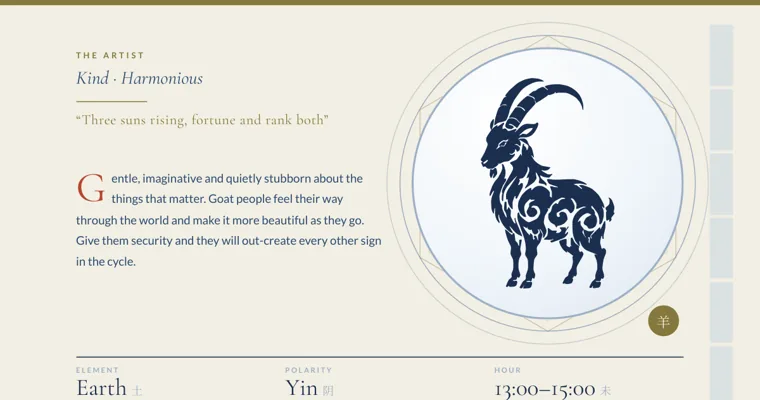
February 6, 2027 starts the Year of the Goat, 羊年 (yángnián). The character 羊 covers goats, sheep and rams. That’s why English sources say Year of the Goat, Sheep or Ram for the same year.
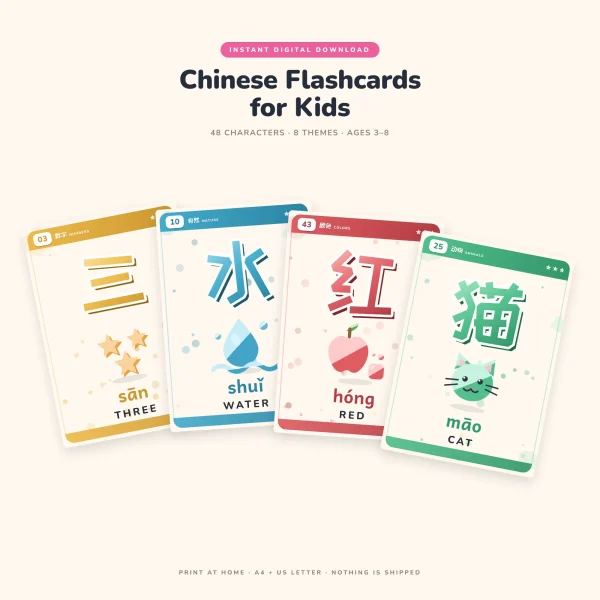
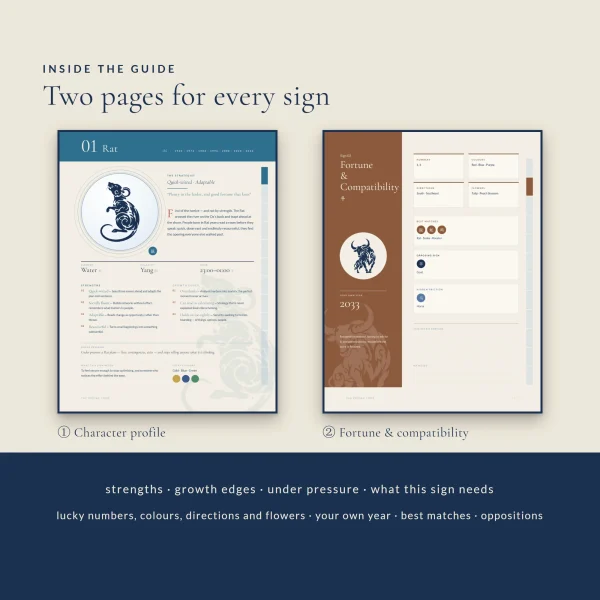
Our own products show it: the 羊 flashcard is labeled SHEEP, while the Goat page in The Zodiac Code, our Chinese zodiac guide, gives the 2027 Goat its own spread with its element, hour and lucky colors. The Year of the Goat 2027 guide covers what this particular Goat year means, and our page on Chinese New Year traditions runs through the fifteen days of the holiday.
Practice the greeting at home or in class before February 6
A greeting sticks better when a child has said it, written it and given it to someone. This plan suits a family or a classroom of kids roughly 5 and up, with about ten minutes a day across the week before the holiday. The timings are our suggestion, so stretch them for younger kids.
- Days 1 and 2: say it. Practice 新年快乐 aloud, one syllable at a time, using the table above. Have kids hold a hand high for 新, sweep it up for 年 and chop it down twice for 快乐.
- Day 3: learn the reply. One person greets, the other answers 谢谢,新年快乐! Then swap roles.
- Days 4 and 5: write it. Four characters, 31 strokes in all: 新 has 13, 年 has 6, 快 has 7 and 乐 has 5.
- Day 6: add one saying. 身体健康 for grandparents, 心想事成 for friends.
- Day 7: give it. Write the greeting on red paper or a card and hand it over on New Year’s Day.
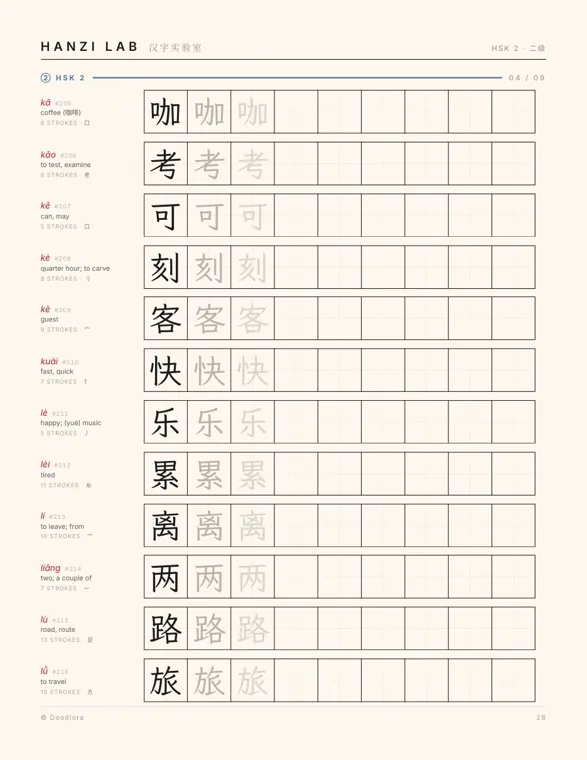
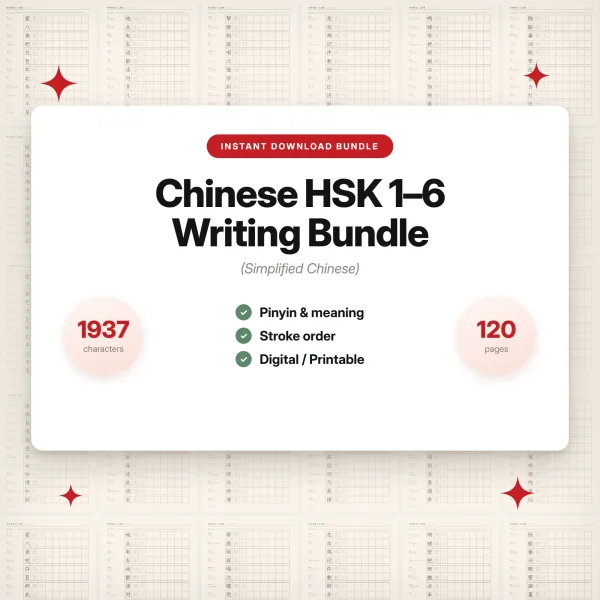
Our Chinese character writing practice workbook has a row for each of the four New Year characters. 年 is on page 18 in the HSK 1 section, 快 and 乐 sit next to each other on page 28 in HSK 2, and 新 is on page 32. Each row lists the pinyin, meaning, stroke count and radical before the boxes.
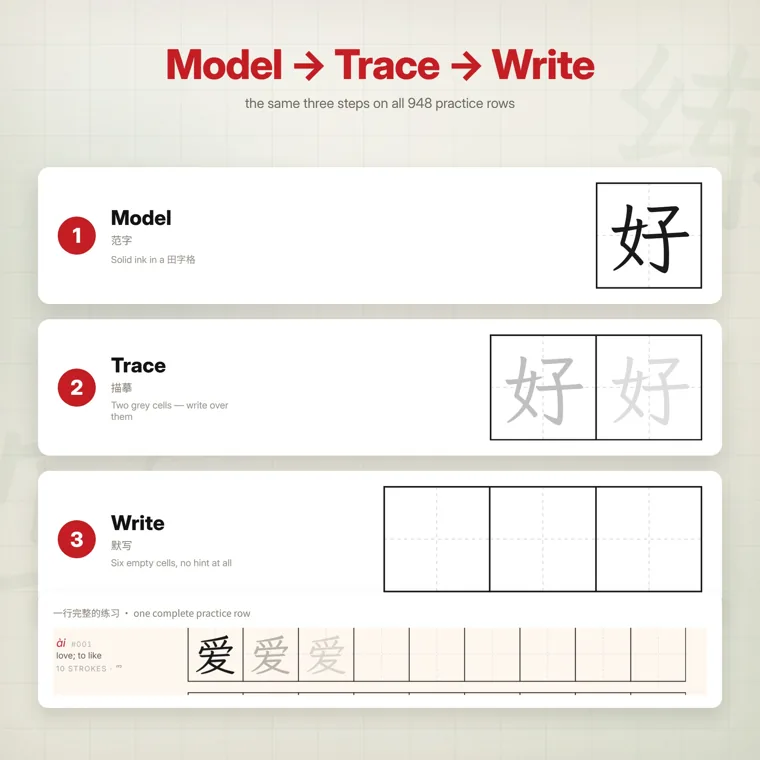
The row works the same way for every character: copy the solid model, trace the two gray copies, then write from memory in the empty boxes. For a New Year card, have kids write the four characters across one line when they finish, so they see the whole greeting together.
One catch with the workbook: the row for 快 lists its meaning as “fast, quick.” That’s right for 快 alone, but in 快乐 it pairs with 乐 to mean happy. Tell kids that, or they’ll translate the greeting as “New Year fast happy.”
For younger kids who aren’t writing yet, red is the color to learn first. Red is the New Year color, from envelopes to door decorations, and 红 (hóng) makes a good first character to point out on decorations.
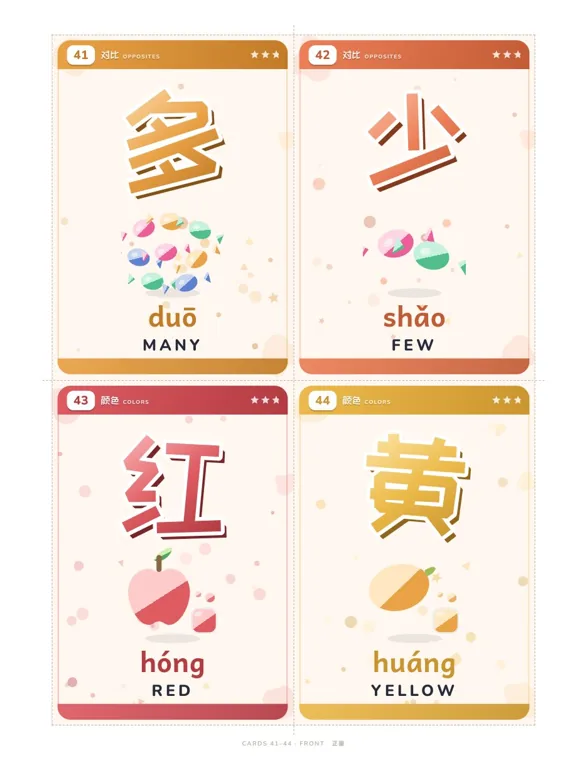
Our Chinese character flashcards include 红 as card 43 on page 24, and 羊 as card 30 on page 18, so a preschooler can learn both the New Year color and the 2027 animal. The cards carry pinyin with tone marks and an English word under every character.
Mistakes to avoid with Chinese New Year greetings
- Treating 恭喜发财 as Happy New Year. It’s a wish for wealth. Say 新年快乐 first and add 恭喜发财 after it, especially with someone you don’t know well.
- Saying 过年好 and stopping there. It’s short and can come across as clipped. Add a wish such as 万事如意.
- Reading pinyin like English. Xīn isn’t “zin,” and 乐 lè isn’t “lee.” Say each syllable with its tone, from the table near the top.
- Mixing Mandarin and Cantonese in one phrase. Use gōngxǐ fācái or gung hei fat choy, not half of each.
- Panicking over a broken dish. Say 岁岁平安 (suìsuì píng’ān). That’s exactly what the phrase is for.
Printables from this article
Related articles
Chinese Learning Printables
How to Teach Kids Chinese: Pinyin, Characters, First Words
A home plan for parents teaching Mandarin to young children: what to do at each age, a 10-minute daily routine, the first words and characters, and how to tell it's sticking.
Chinese Learning Printables
Chinese Radicals: List of Common Radicals and the Kangxi 214
What a Chinese radical is, why the count is 214 in one list and 201 in another, a table of 29 common radicals with examples, and how to use them to look up characters.
Chinese Learning Printables
What Is Pinyin? Tones, Rules and How to Read a Pinyin Chart
What pinyin is, how a syllable is built from an initial, a final and a tone, the spelling rules that trip learners up, and how to read a pinyin chart or type pinyin.