Scrapbook Ideas: 19 Page Ideas for Baby, Travel and Layouts
The best scrapbook ideas start from one moment per page: a first birthday, one beach day, the week the tomatoes came in. Pick two to four photos, one keepsake such as a ticket or a pressed leaf, and a few handwritten lines, then build the page around the strongest photo. A single page like that takes most people about 30 to 60 minutes once the photos are printed. Below are 19 page ideas grouped by what you’re saving, each with materials, a layout, the time it takes and the mistake to avoid.
Use this table to pick a starting page. The times are our planning estimates for one 12 x 12 inch or 8.5 x 11 inch page with photos already printed.
| Page idea | Photos needed | About how long | Good for |
|---|---|---|---|
| Baby’s first year, one page a month | 1–3 a month | 20 min a month | New parents |
| Birthday “same pose every year” page | 1 a year | 30 min | Kids’ albums |
| Trip page with ticket stubs and a map | 3–5 | 45–60 min | Vacations |
| Garden season page | 1–2 + a pressed leaf | 40 min | Gardeners |
| Wedding or anniversary wreath page | 1–2 | 45 min | Couples, gifts |
| Memory page with no photos | 0 | 30 min | Old memories, lost photos |
| Ten-minute scrap page | 0–1 | 10 min | Beginners, busy evenings |
Before the first page: size, glue and photo-safe materials
A scrapbook page needs less than craft-store aisles suggest. Choose one size and stick with it: 12 x 12 inch pages are the classic album size, while 8.5 x 11 inch cardstock fits a home printer and a standard binder. A basic kit is cardstock for backgrounds, photo corners, a glue stick or tape runner for paper only, scissors, a soft pencil and one pen for journaling.
Photos need the most care. The Library of Congress tells people not to use self-adhesive tape, sticky notes, glue or other adhesives on photographs, so hold prints with photo corners or slip them into photo-safe sleeves. Glue the backing paper, never the photo. If a name or date must go on the print itself, the same guidance says to write on the back, near the edge, with a soft graphite pencil.
Check the album too. The Library of Congress advises avoiding albums with colored, “magnetic” or sticky self-adhesive pages, and says photo-safe storage materials must pass the Photographic Activity Test (PAT) under ISO 18902. The same page notes that suppliers often state this on the label. For background papers, serious scrapbookers look for acid-free, lignin-free stock.
Printed clipart and pages from a home printer count as paper, not photos, so a glue stick is fine for them. If you print decorations, matte cardstock takes pencil and pen better than glossy photo paper.
Scrapbook ideas for babies and kids
Pages about children are the ones families add to for years, so a repeatable format matters more than a clever one. Each idea here works as a series: set the layout once and repeat it.
1. Baby’s first year, one page a month
Make 12 matching pages, one for each month, with a monthly photo in the same spot every time. Put the month number in large type in one corner, add the baby’s weight or length if you have it, and leave three lines for “new this month.” Each page takes about 20 minutes, so it fits into a nap.
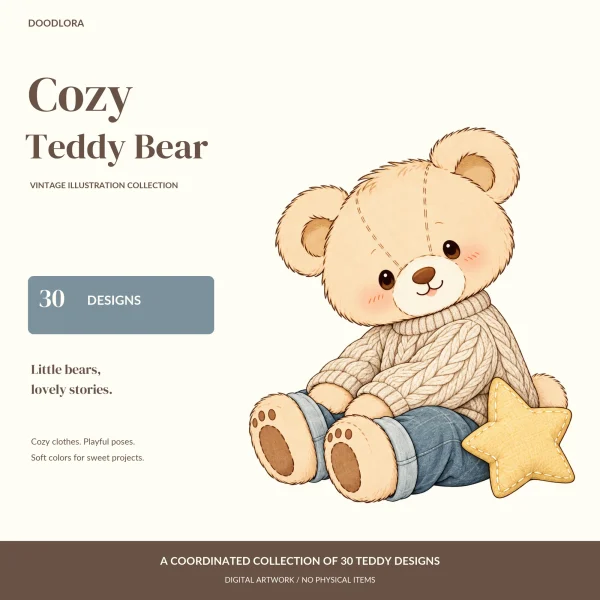
Small illustrations give the series a look without competing with the photos. Our Vintage Teddy Bear Clipart has four baby-day designs, numbers 17 to 20: a bear crawling in a diaper, one holding a bottle on a cushion, one playing with a hanging star and one asleep under a patchwork quilt. Print one bear per page, about 2 to 3 inches tall, in the corner opposite the photo.
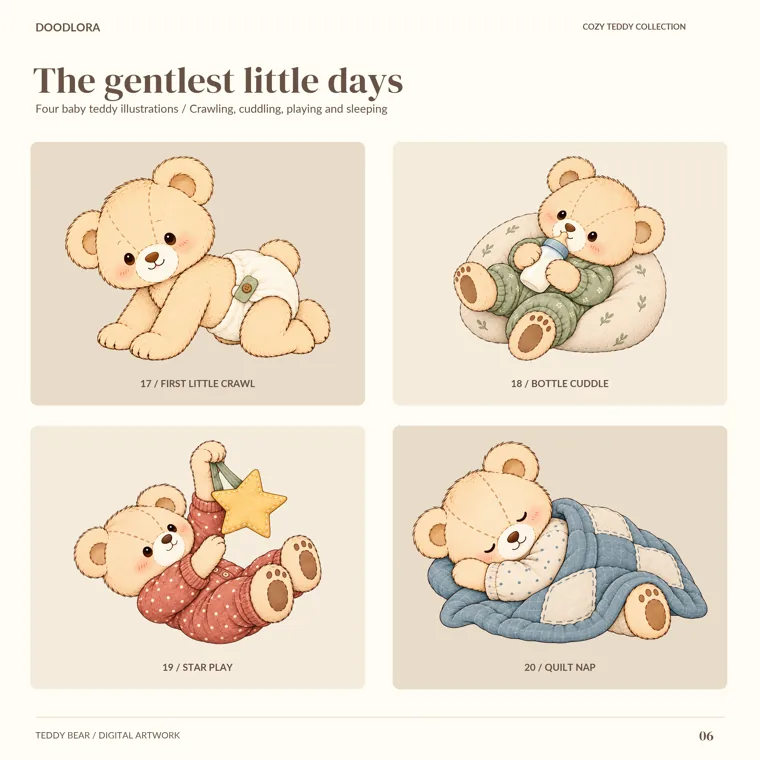
The mistake to avoid is printing the vector versions for color pages. In the SVG, EPS and DXF files, the coral reds on several designs turn caramel brown, so use the PNG files, which keep the original colors. The color PNGs are 3,600 pixels on the long edge, far more than a 3 inch print needs.
2. Birthday page: the same pose every year
Take one photo at every birthday in the same spot, holding the same stuffed animal or standing by the same door frame. Each year’s page uses that photo large on the left, the party invitation or a candle from the cake in a small envelope, and two lines: what they loved this year and what they wished for. Plan on 30 minutes.
Fix the pose before the first one. Children notice when the photos line up across years, and a different spot each time breaks the series.
3. First day of school page
Photograph your child at the same front step each year with a sign showing the grade, the teacher’s name and one answer to “When I grow up, I want to be…” Add the class list or a drop-off note. The page takes about 30 minutes and works well as a two-page spread at the end of the year, with the last-day photo on the facing page.
Write the sign in thick marker. Thin pen disappears once the photo is printed at 4 x 6 inches.
4. Kids’ artwork page
Big paintings and craft projects don’t fit an album, so photograph them flat, print the photo small and arrange four to six on one page in a grid. Write the date and the child’s name for each piece under it. Keep one small original, such as a finger-paint card, in a clear sleeve.
Glitter and glued pasta are the trouble spot. Anything raised rubs against the facing page, so photograph three-dimensional work instead of mounting it.
5. Pet page
Give a pet its own page: adoption day photo, the collar tag or an old ID tag in a small pocket, a paw-print outline traced on paper and a list of nicknames. One page takes about 40 minutes. A pocket made from a folded envelope keeps a metal tag from denting the next page.
Travel scrapbook ideas for trips and days out
Travel pages usually come with more material than space. The ideas below help you choose what to keep, which matters more than how it’s arranged.
6. Trip page with ticket stubs and a map
Use a map of the place as the background, cut to the page size, and lay three to five photos over it in a loose row. Tuck ticket stubs and a museum entry slip into the corners. The whole page takes 45 to 60 minutes, most of it choosing photos.
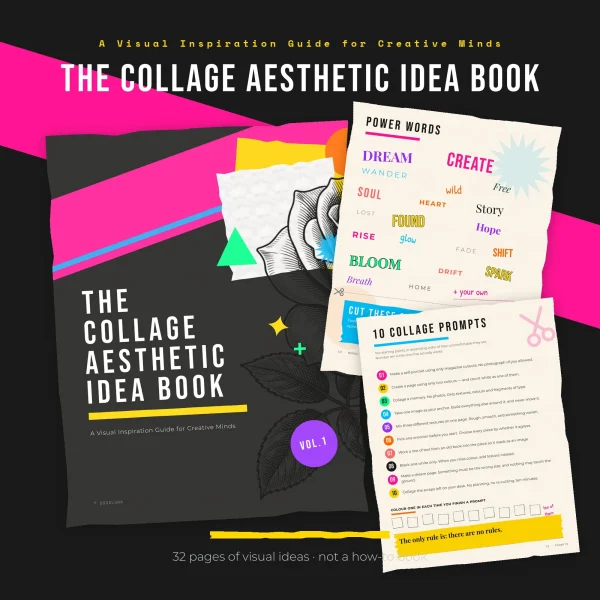
Our Collage Aesthetic Idea Book has a related idea on its urban page: layer a street map under an architectural drawing so the two grids disagree slightly. A scrapbook version is a city map under a printed photo of a building from the trip.
Thermal paper receipts often fade, so photocopy or scan the ones you care about and glue in the copy.
7. Postcard page
Buy a postcard on the trip, or write one to yourself, and make it the center of the page with a photo on each side. On the back of the postcard, write what the weather was and what you ate. Glue only the top edge of the postcard so it can lift and be read. Plan on 30 minutes.
The idea book’s summer spread is built this way, as a postcard with “Wish you were here” and a time and temperature written on it. Copy that habit of writing the hour and the weather, since those are the details people forget first.
8. One-day outing page
A zoo trip, a beach day or an apple-picking afternoon fits one page with three photos in a column and a short timeline down the other side: “9:30 left home, 11:00 the giraffes, 2:00 rain.” Allow about 30 minutes. Picking three photos is the hard part; choose one wide shot, one close-up and one of people’s faces.
Scrapbook ideas for seasons, holidays and gardens
Seasonal pages repeat every year, so they work best as a set you can line up later. Color does most of the work on these pages.
9. Four seasons spread
Make one page per season from the same family year, each with a single palette. The idea book names ten four-color palettes, including Kitchen Garden (oat, terracotta, deep green and clay) for autumn and Deck Chair (coral, mint, lemon and sky) for summer. Cut background papers and borders in those four colors only, then add photos. Each page takes 40 minutes or so.
For more palette and seasonal collage ideas, our collage ideas guide works through them in detail. Keep the palette to four colors here, since a fifth color on a busy photo page starts to look accidental.
10. Holiday gratitude page
For Thanksgiving, which falls on November 26 in 2026, pass around a card at the table and ask everyone to write one thing they’re thankful for. Paste the cards around a group photo. The page itself takes 30 minutes, and the writing happens during dinner.
Prepare the cards in advance and hand out pens with them. People write more when the card is small. For more prompts to put on the cards, see our gratitude journal prompts.
11. Garden season page
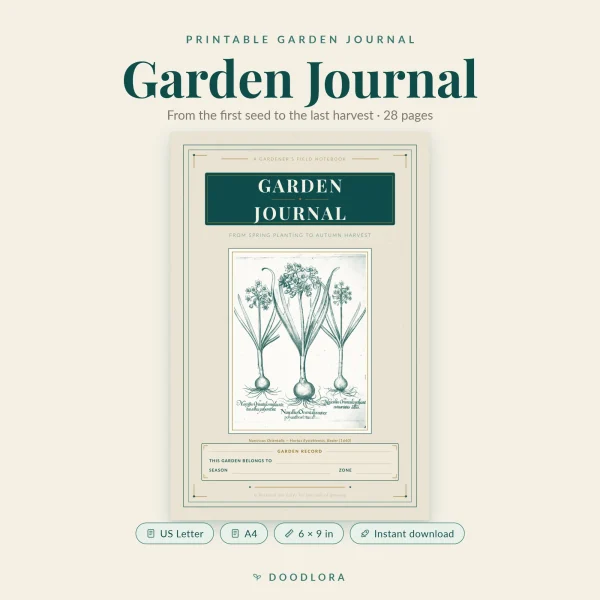
A garden page holds one photo of the bed at its best, a pressed leaf or flower and a few notes on what grew well. Page 26 of our Vintage Garden Journal is set up exactly like this: a tall box for a photo, a smaller box for a dried flower or leaf, a box for a sketch or note and four lines titled “The story behind these.” Allow 40 minutes, plus a week of pressing.
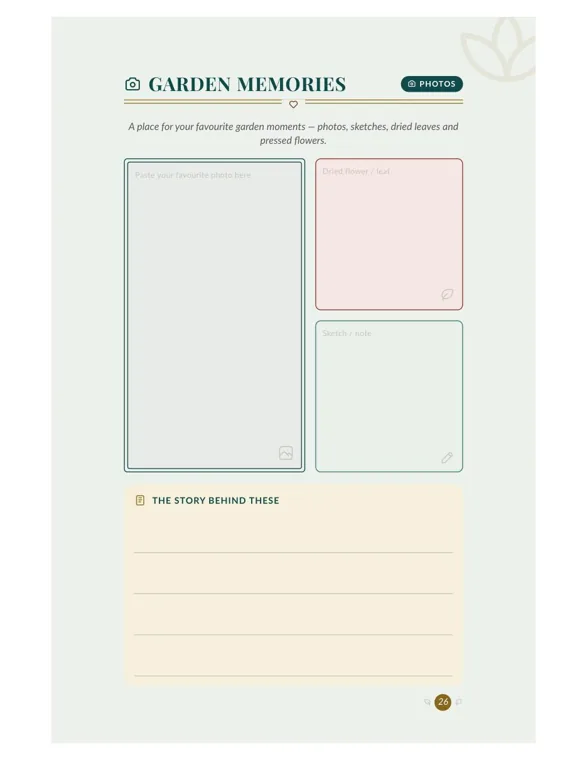
The idea book’s nature page gives the pressing time: leave real leaves between book pages for a week, then glue them straight onto the work. Thick flowers such as roses stay bulky, so flat petals and leaves are easier to mount. The journal’s printing guide also warns against glossy photo paper, because pencil and ballpoint won’t write on it.
12. Pressed flower and botanical page
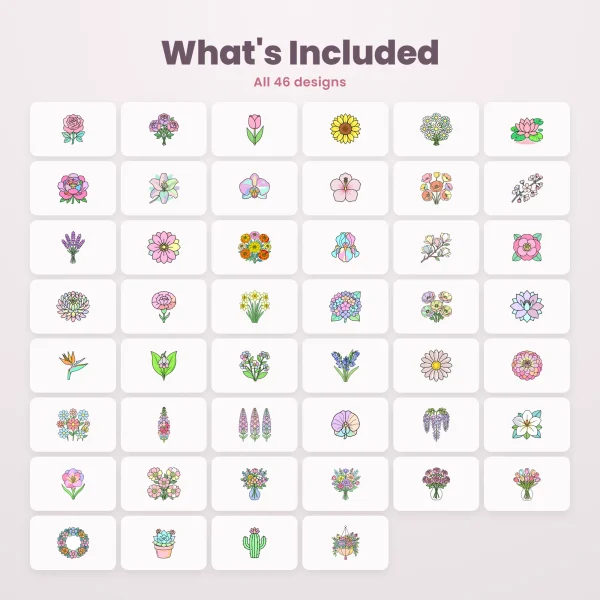
Pair a few real pressed flowers with printed flower illustrations so the page stays full even when only two blooms survived pressing. Our Pastel Floral Clipart has 46 designs, from a rose and a sunflower to wisteria and a hanging basket, so you can match a printed flower to the real one. The idea book suggests pairing a botanical engraving with your own handwriting, which works here too: a label for each flower and the date you picked it.
Plan on 40 minutes. Keep pressed flowers away from photos on the same side of a page, since the petals can stain.
Wedding, friendship and milestone scrapbook ideas
Milestone pages often end up as gifts, so they need to look finished from across a room. Fewer pieces, placed with more space, do that best.
13. Wedding or anniversary wreath page
Center a printed floral wreath on the page and write the couple’s names and date inside it, then place one or two photos below. The floral clipart set includes a ring of flowers with an open center. Printed about 5 inches across, the empty middle is roughly 2 inches wide, enough for two first names and a date in small capitals. The page takes about 45 minutes.
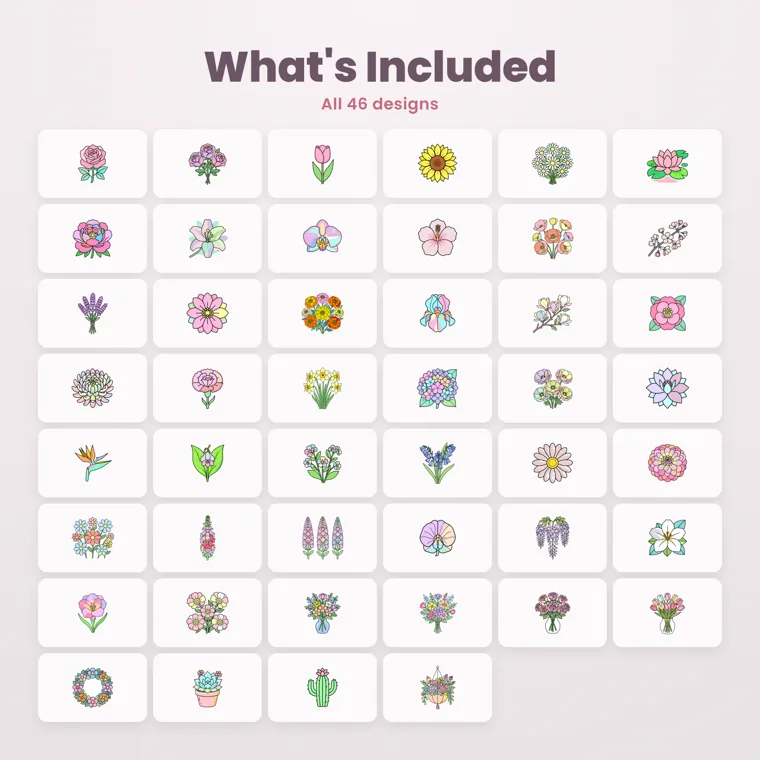
The pitfall is a dark background. The flowers have black outlines that disappear on navy or black paper, so use white, cream or blush cardstock behind them. Our guide on how to use clipart shows how to size the art and test a print first.
14. Friendship page
Ask a friend to fill a small card with three questions: how we met, our longest laugh and one trip we still owe each other. Glue the card next to a photo of the two of you. Allow 30 minutes, plus waiting for the card to come back. Handwriting is the point, so don’t retype the answers.
15. Graduation or new home page
Use a before-and-after layout: one photo of the first day (first apartment key, first day of college) and one of the finish (diploma, moving day). Between them, write three numbers that sum up the stretch, such as years, moves or roommates. The page takes about 40 minutes and makes a good gift if you print a copy instead of removing a page from your album.
Scrapbook ideas for pages with few or no photos
Not every memory has a photo. These pages use words, color and scraps, and they make good warm-up pages for anyone new to scrapbooking.
16. A memory page with no photos
Pick a memory from before phones, such as a childhood kitchen or a summer job, and build the page from textures, colors and bits of type: a scrap of fabric, a recipe card, a colored stripe for the wallpaper you remember. The idea book’s third collage prompt asks for exactly this, “Collage a memory. No photos.” Allow 30 minutes and write two lines saying what the memory is, or nobody else will know.
17. One-photo anchor page
When you have one good photo, place it first and never move it, then build everything else around it. That’s prompt four in the idea book. Add a mat in a color picked from the photo, a short caption and one keepsake. Expect 20 to 30 minutes. The pitfall is adding a second photo “to fill space,” which takes attention from the first.
18. Ten-minute scrap page
Set a timer for 10 minutes and make a page only from the scraps left on your desk: no planning, no re-cutting. That’s the idea book’s tenth prompt, and it’s the quickest way to use up offcuts from bigger pages. Date the page. Some of these turn out better than the planned ones.
19. Word page
Cut out a few printed words and build a page around them, such as “home,” “found” or “bloom,” with a photo or none. Page 13 of the idea book is a sheet of 20 such words in mixed fonts, designed to be cut up and glued into your own work, with space to add one of your own. Plan on 20 minutes.
The book has several pages printed dark from edge to edge. To save ink, its printing note suggests printing only pages 4 to 13 and 30 to 31, on 32 lb (120 gsm) paper or heavier. Like the other files on this page, it’s for personal use, which covers your own albums.
Scrapbook layout ideas that fit any theme
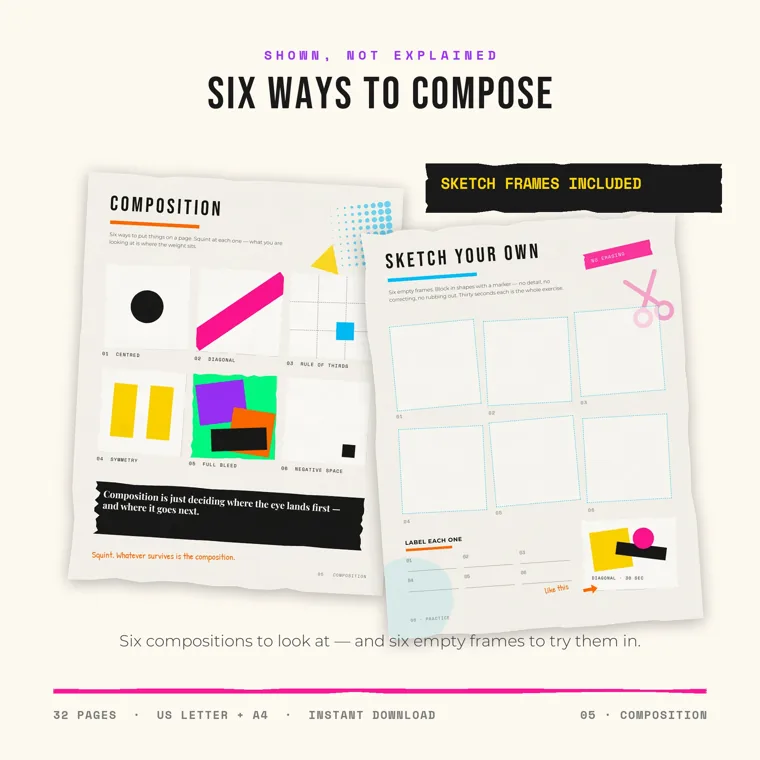
A layout is just where the weight of a page sits, and changing it can rescue a page whose photos you like but which still looks flat. The idea book’s composition page shows six options: centered, diagonal, rule of thirds, symmetry, full bleed and negative space.
| Layout | Where the photos go | Use it when |
|---|---|---|
| Centered | One photo in the middle, small items around it | You have one strong photo |
| Grid | Same-size photos in rows of two or three | Kids’ art, outings, a month in photos |
| Rule of thirds | Main photo on one third, journaling on the rest | You want to write more than a caption |
| Diagonal | Photos stepping from one corner to the opposite | Action pages: sports, a hike, a party |
| Negative space | One small photo, most of the page left plain | Quiet pages: a new baby, a memorial |
Sketch before you glue. The idea book’s practice page has six empty frames and a 30-second time limit for each sketch, with no erasing, which is about the right amount of effort for a scrapbook plan. Lay everything on the page, take a phone photo, then move one thing and compare. Glue goes on last.
For a journal that pairs with your albums, our journal prompts for beginners cover the writing side. And for more printables across the Doodlora shop, the clipart sets come in PNG and SVG for paper projects like these.
Printables from this article
Related articles
Printable Journals
Stoic Journal Example: Morning & Evening Prompts to Copy
Three Stoic journaling practices with the original lines, a filled-in page for each, how many minutes they take, a sample week, and the two ways entries usually go wrong.
Printable Journals
DIY Five-Minute Journal: Format, Template & How to Start
Build your own five-minute journal: pick three morning and three evening questions, lay out a week per spread, print and bind it, and keep going after missed days.
Printable Journals
Journal Prompts for Beginners: 40 Ideas to Start Journaling
Forty beginner journal prompts sorted by what you want from the page, with how long each kind of entry takes and what to do when you get stuck.