Journal Prompts for Beginners: 40 Ideas to Start Journaling
Journal prompts for beginners work best when they ask about something small and recent, like the best part of today or the one decision on your mind, so you can answer in four or five sentences. Pick one prompt, give it five minutes at the same time each day, and write the date at the top.
The 40 prompts below are our own, sorted by what you want the journal to do for you: keep a record, clear your head, learn what you like, plan the year or look back on a week. Each group says how long an entry takes and when it fits best. After the lists, you’ll find what to do on the days the page stays blank.
Pick journal prompts by what you want from the page
Choose a starting row by the reason you bought the notebook, not by the order of this page. You can switch groups any week. The times are our suggestions for an entry that feels finished, and stopping early is fine.
| What you want | Time per entry | When it fits | Start with |
|---|---|---|---|
| Remember what happened | 3 to 5 minutes | Evening | Prompts to record your day |
| Clear a crowded head | About 10 minutes | Whenever things pile up | Prompts to sort out your thoughts |
| Learn what you like and value | 10 to 15 minutes | A slow weekend morning | Prompts to get to know yourself |
| Plan the new year | 15 to 20 minutes once, then 5 a month | Late December or early January | Prompts for goals |
| Spot patterns across days | About 15 minutes | Sunday evening | Prompts to look back on the week |
| Notice good things | 2 to 5 minutes | Bedtime | Gratitude prompts |
Journaling for beginners: a notebook, five minutes and a set time
Journaling for beginners comes down to three choices: what you write in, how long you write, and when. Settle all three before the first entry, and every later entry starts with the prompt instead of a decision.
Notebook or printed pages
Any notebook works. A spiral one lies flat on a table, and a small one fits in a bag if you’d rather write on a lunch break. Keep one pen with it so you’re never hunting for one.
Printed journal pages trade freedom for structure. Each page already holds a question and a space sized for the answer, which helps when a blank sheet feels like too much. You can print one page at a time and keep finished pages in a folder.
How many minutes, and when
Start with five minutes on a timer. Short entries are easier to repeat, and you can always keep going when the timer ends. Mornings suit plans and intentions; evenings suit a record of the day.
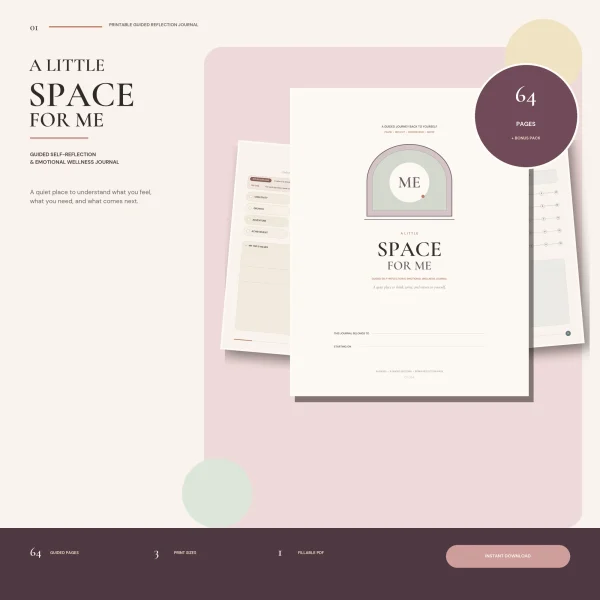
Choose a time when you’re rarely interrupted, then guard it for two weeks before you judge the habit. The opening pages of our A Little Space for Me guided journal take the same approach. Page 3 lists five rhythms, from a daily check-in or weekly reflection to writing only when you feel overwhelmed, need clarity or want to reconnect with yourself, and suggests trying one for two weeks and changing it if it starts to feel like pressure.
What a first entry looks like
Write the date, copy one prompt at the top, and answer it in a few sentences. Spelling, grammar and neat handwriting don’t matter, since nobody grades a journal. A first entry might read: “Tuesday. Best part of today: the walk back from the bus stop, because it finally stopped raining.” That’s a complete entry.
Prompts to record your day
Use these in the evening when you mainly want a record of your life to look back on. Choose one or two, and allow three to five minutes. Daily entries make the most sense here, though three evenings a week still builds a useful record.
- What happened today that I’d want to remember a year from now?
- What did I spend the most time on, and was that the plan?
- Who did I talk to today, and what did we talk about?
- What was the best thing I ate or drank, and where was I?
- What surprised me today, even a little?
- What did I finish, and what am I leaving for tomorrow?
- Describe one room I was in today so someone else could picture it.
- If today had a title, what would it be?
The usual trap is an entry that reads like a schedule: “Work, groceries, dinner, TV.” Pick one moment from the list and add one detail you could see, hear or taste. That detail is what you’ll recognize when you reread the page in a year.
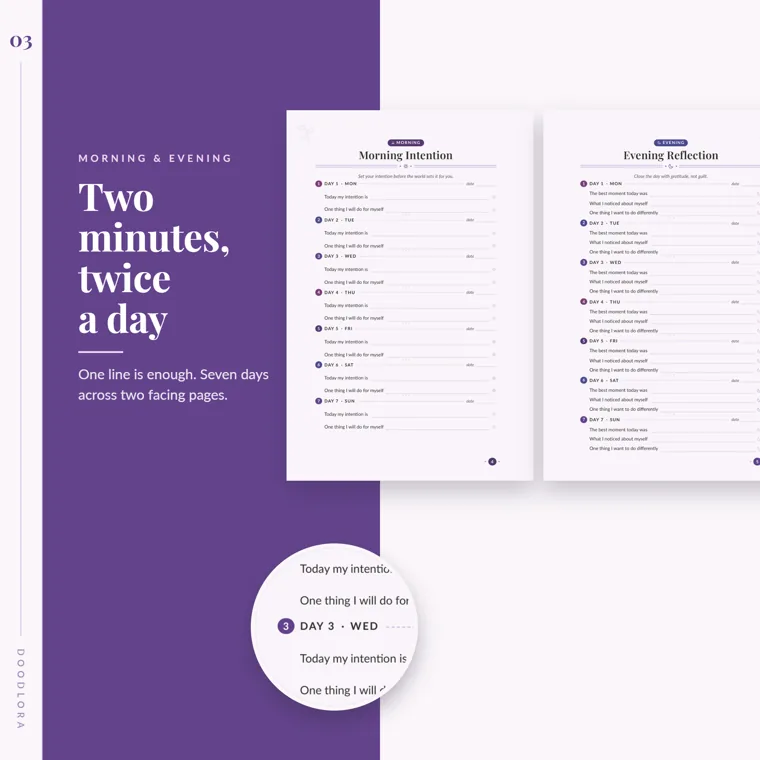
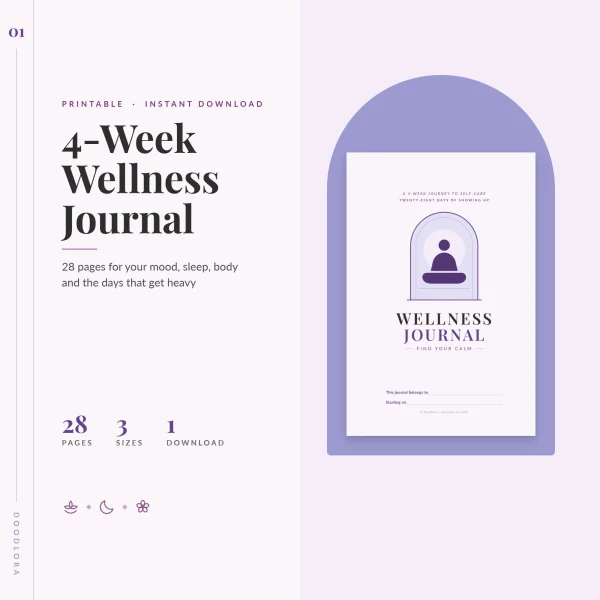
Our 4-Week Self-Care Journal builds this habit into two facing pages. Page 4 asks for a morning intention and one thing you’ll do for yourself, and page 5 asks for the day’s best moment, something you noticed about yourself and one thing to do differently. Each page holds all seven days of a week.
Prompts to sort out your thoughts
These prompts help when your head feels crowded with errands, worries and half-made decisions. Set aside about ten minutes, at any time of day. Start with the first prompt, which empties everything onto the page, then choose one or two of the others to work through that list.
- What’s on my mind right now? List everything, big and small.
- Which item on that list have I been putting off the longest?
- What am I waiting on from someone else?
- What decision keeps coming back, and what are my two real options?
- If a coworker handed me this list, which item would I tell them to drop?
- What’s one item I can finish before lunch tomorrow?
- What am I assuming here that I haven’t checked?
- What can wait until next week without anything going wrong?
The risk with this group is going in circles, rereading the same worry and adding to it. Stop when the timer ends, write one next action at the bottom, and close the notebook. Page 16 of our guided journal handles the same moment with a mind-dump box and a short follow-up: mark each item act, schedule, ask, accept or release.
Prompts to get to know yourself
Save these for a slow morning when you have ten to fifteen minutes and no rush. They’re less about today and more about patterns: what you enjoy, what you return to, what you’d change. One prompt per sitting is plenty, and once a week is a good pace.
- What did I love doing at age ten that I don’t do now?
- What do people often ask me for help with?
- What small habit of mine would my friends recognize?
- Where do I lose track of time?
- What’s an opinion I’ve changed in the last few years?
- What does a good Saturday look like for me, hour by hour?
- What do I buy without thinking twice, and what do I always hesitate over?
- Which compliment have I remembered the longest?
Beginners often answer these like a job interview, listing what sounds impressive. Write as if nobody will ever read the page. “I don’t know yet” is an honest answer, and it often turns into a better question for next week.
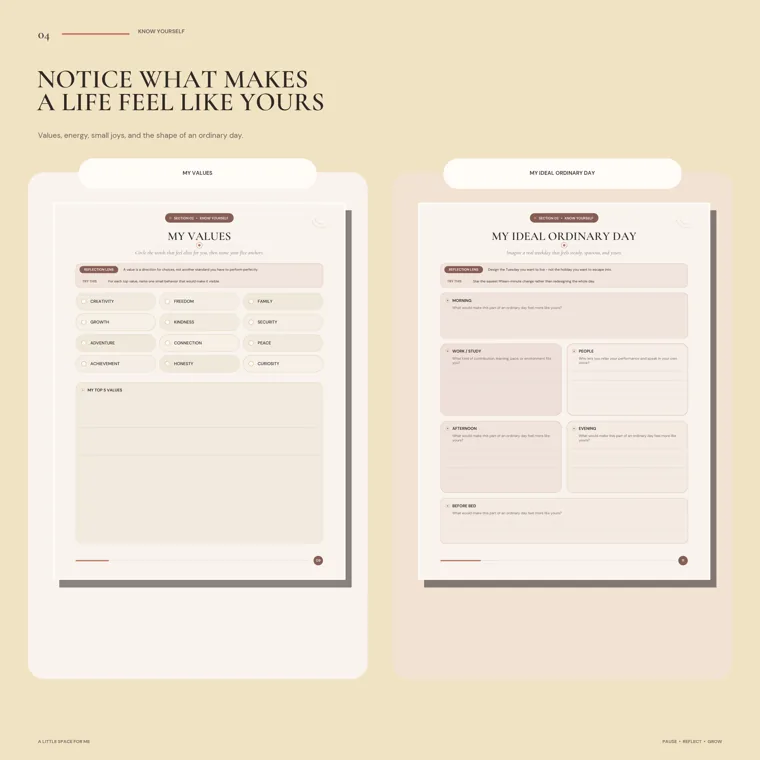
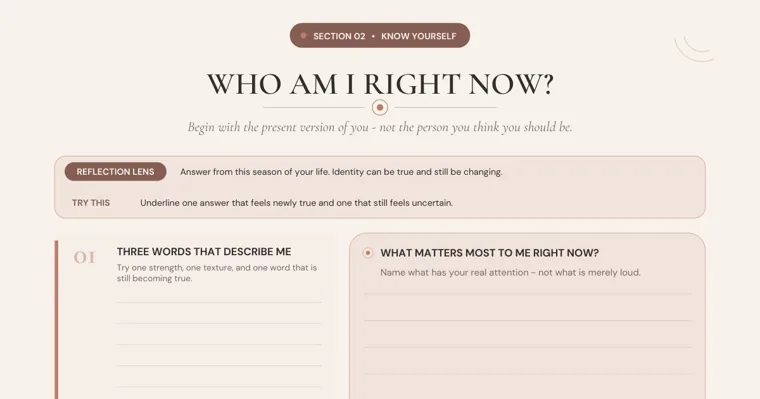
The second section of the guided journal works through this ground in order. Page 5 begins with who you are right now, page 9 is a values list to circle before naming your top five, and page 11 plans an ordinary weekday instead of a dream vacation.
Prompts for goals and the new year
A new journal in January usually starts with goals. Give these prompts one longer sitting of fifteen to twenty minutes in late December or on the first days of January. After that, reread the page once a month and add a few lines in about five minutes.
- What do I want this year to feel like by December?
- What did last year teach me that I want to keep using?
- Which one goal would make the others easier?
- What would progress on that goal look like by the end of January?
- What’s the smallest first step I could take this week?
- What has stopped me before, and what will I do when it shows up again?
- What can I stop doing to make room for this?
- Who could I tell about this goal?
The common mistake is writing ten resolutions on January 1 and none by February. Answer prompt 3 before anything else, and let that single goal carry the page. Then write the date of your first monthly reread at the bottom, so the page has a next appointment.
Prompts to look back on the week
A weekly entry shows patterns that daily pages hide, like which day always runs late or which friend you keep meaning to call. Sit down for about fifteen minutes on Sunday evening, flip through the week’s entries first, then answer three or four of these.
- What went better this week than I expected?
- What took more time than it should have?
- What did I keep meaning to do but didn’t?
- Which day felt best, and why that one?
- What did I learn, read or hear that stuck with me?
- Who do I want to see or call next week?
- What’s one thing I’ll do differently next week?
- Looking at this week’s entries, what shows up more than once?
Keep the first prompt first. Starting with what went wrong can turn a weekly review into a report card, and by prompt 3 you may want to stop. Opening with a good surprise keeps the review honest without making it harsh.
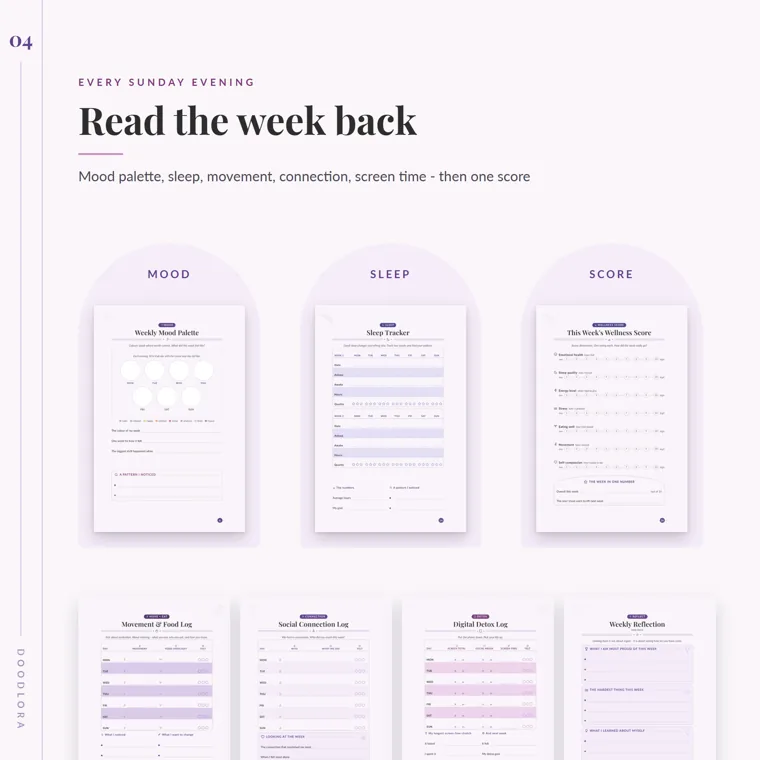
In the self-care journal, page 18 is a weekly reflection with four questions, starting with what you’re most proud of that week. Page 19 then looks ahead, asking for one focus area, what you want more and less of, and how you’d like to feel by Sunday.
Gratitude prompts for beginners
Gratitude entries are the shortest kind on this list, often two to five minutes at bedtime: a few things from the day and a detail for each one. We’ve covered them in a separate guide, with prompts for busy days, hard weeks and kids. Start with our gratitude journal prompts if that’s the habit you want first.
When journaling stops working for a beginner
Almost every new journal hits a stall in the first month. The three below are the most common, and each one has a quick fix that keeps the notebook open.
The page stays blank
A blank page usually means you’re choosing a prompt and answering it in the same sitting. Copy five prompts from this article onto the inside back cover, and take the next one in line each day without deciding.
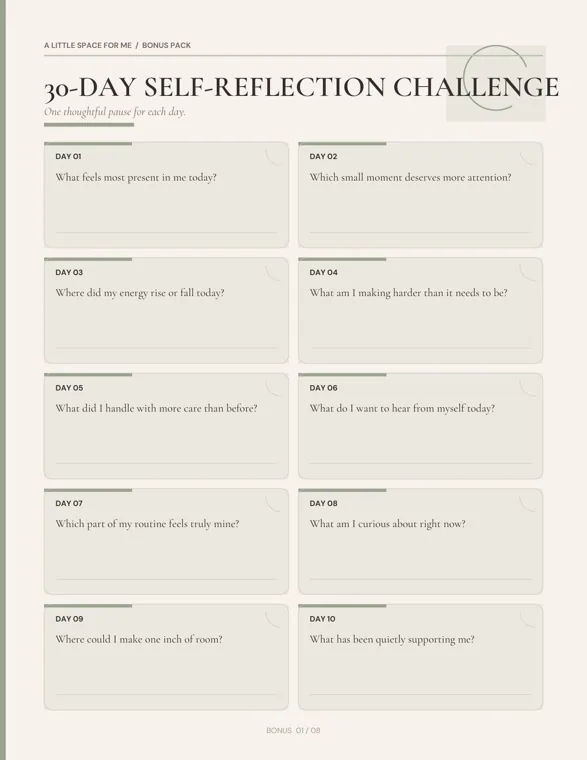
The bonus pack with our guided journal does the same job on paper. Its first three pages hold a 30-day list, one question a day, from Day 01 to Day 30.
You skipped a week
Don’t go back and fill in the missing days from memory. Write today’s date, one line about right now, and carry on. A gap in a journal isn’t a failure. It’s simply a week you didn’t write down.
An entry gets heavy
Sometimes a prompt brings up more than you expected. You can stop mid-sentence and close the book, or switch to the day’s lighter prompts. A journal is a private place to write things down, not a replacement for help. The name page of our guided journal says it is “not a substitute for professional care,” and if something keeps coming back, talk to someone you trust.
Printables from this article
Related articles
Printable Journals
Gratitude Journal Prompts: 60 Ideas for Hard Days and Kids
Sixty original gratitude journal prompts grouped by situation, with how long to write, what to do on hard days, and a family version for the dinner table.
Printable Party Games
How to Plan a Baby Shower: Timeline, Food & 2-Hour Schedule
A baby shower plan from the first talk with the parents-to-be to the last gift: timing, guest list, budget, venue, a two-hour schedule, safe food and backup plans.
Printable Party Games
How to Plan a Bridal Shower: Timeline, Budget and Schedule
A host's plan for a bridal shower, from the first talk with the bride and co-hosts to the guest list, invitations, a timed party schedule, the gift opening and what to do when something slips.