Is a Tomato a Fruit? Is Corn a Vegetable? Cucumbers Too
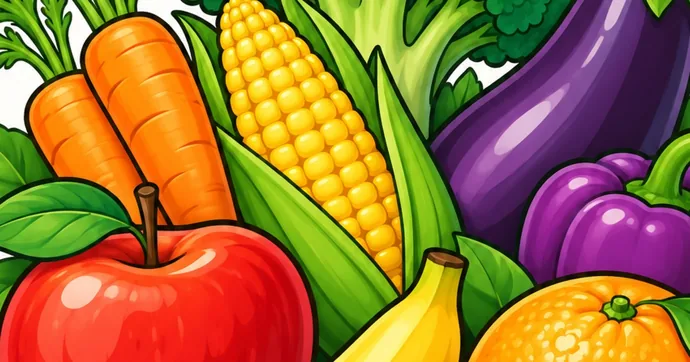
Is a tomato a fruit? In botany, yes. A tomato forms from the flower of the tomato plant and carries that plant’s seeds, which is the whole botanical test for a fruit, and botanists go one step further and call it a berry. In the kitchen, though, a tomato is a vegetable, because it goes into salads, sauces and main dishes instead of desserts.
The U.S. Supreme Court took the kitchen side in 1893, when it ruled in Nix v. Hedden that tomatoes were vegetables under the tariff law of the day. Both answers are correct, because each one follows a different set of rules.
Corn, cucumbers, pumpkins, peppers and peas split along the same line. Below are the botanical rule, the court case, a two-answer table for the foods people ask about most, three checks a child can run on any food, and a sorting lesson built on coloring pages.
What makes a tomato a fruit in botany
Botanists sort produce by where it grows on the plant, not by taste. In botany a fruit is the seed-bearing part of a flowering plant, formed from the flower’s ovary after it blooms. The ovary is the swollen base at the center of the flower. Once the flower is pollinated, the tiny ovules inside it grow into seeds, and the ovary wall ripens around them into the part you eat.
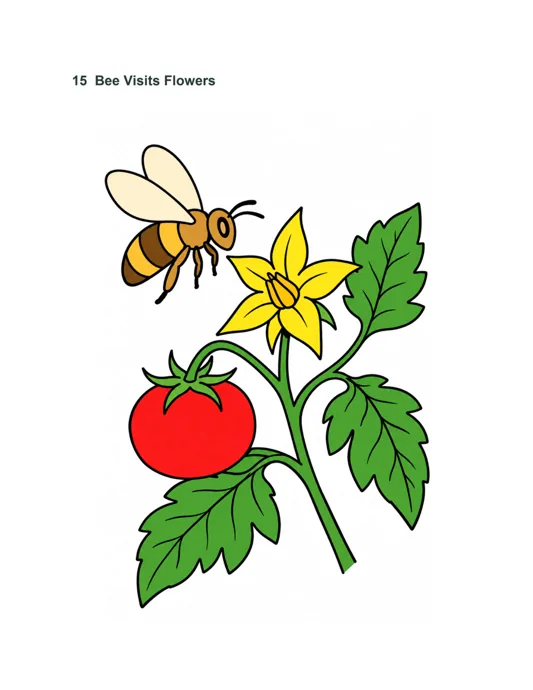
Children who spot the bee in that picture usually want to know what it’s after. Our page on how bees make honey answers that by following one forager from a flower back to the hive.
A tomato also passes the stricter test for a berry: a fleshy fruit grown from a single ovary, with the seeds sitting in the soft interior. Wikipedia’s list of true berries includes tomatoes, cucumbers, eggplants, chili peppers, grapes and bananas. It leaves out strawberries and raspberries, which usually surprises people more than the tomato does.
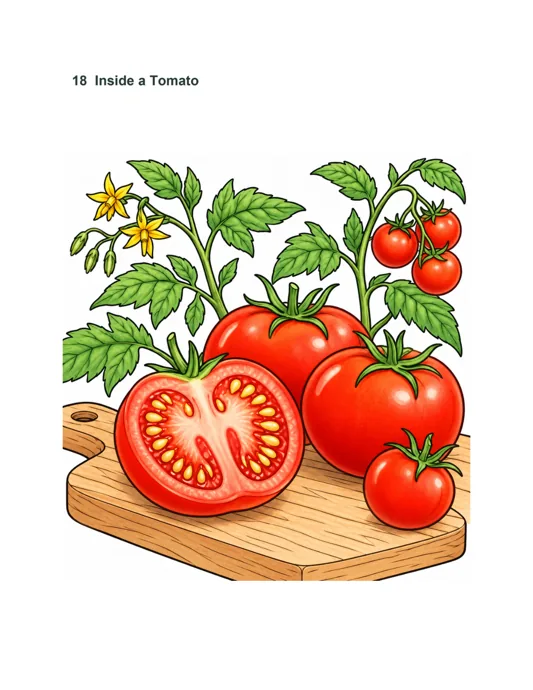
The proof is inside. Slice a tomato across its middle and you’ll see the seeds packed in jelly, divided into several chambers. Leave the knife to a grown-up, and let the kids count the chambers and point out the seeds.
Nix v. Hedden: why the Supreme Court ruled the tomato a vegetable
The case was about money, not science. The Tariff Act of 1883 charged a duty of 10 percent of value on imported vegetables, while fresh fruit sat on the free list. John Nix & Co., a big New York produce seller, paid that duty on tomatoes it imported from the West Indies in the spring of 1886. The company then sued Edward L. Hedden, collector of the Port of New York, to get the money back, arguing that a tomato is botanically a fruit.
The court ruled against the company unanimously on May 10, 1893. Justice Horace Gray accepted the botany and still said no. “Botanically speaking, tomatoes are the fruit of a vine, just as are cucumbers, squashes, beans, and peas,” he wrote. In everyday speech, though, people serve all of those at dinner with the soup, fish or meat, “and not, like fruits generally, as dessert.” The tariff used ordinary words, so the ordinary meaning won.
Two details tend to drop out when the story is retold. The ruling settled how one tariff treated tomatoes; it didn’t change the botany taught in science class. The opinion also put cucumbers, squashes, beans and peas in the same sentence, so the case covers a whole group of garden fruits, not just one.
State lawmakers have taken sides since then. In 2009 Ohio made the tomato its official state fruit, and Arkansas named its South Arkansas Vine Ripe Pink Tomato both the state fruit and the state vegetable in a single law.
Fruit or vegetable? Common foods in botany and in the kitchen
Each row gives two answers, one from botany and one from the kitchen, plus the plant part on your plate. That last column ends most arguments, because once you know you’re eating a root or a leaf, the fruit question answers itself.
| Food | Botany says | The kitchen says | Part of the plant you eat |
|---|---|---|---|
| Tomato | Fruit (a berry) | Vegetable | Ripened ovary with seeds |
| Corn | Each kernel is a fruit, also called a grain | Vegetable on the cob, grain once dried | Kernels |
| Cucumber | Fruit (a pepo, a kind of berry) | Vegetable | Whole fruit, seeds included |
| Pumpkin, zucchini and other squash | Fruit (a pepo) | Vegetable | Fruit flesh |
| Bell pepper | Fruit (a berry) | Vegetable | Fruit wall |
| Eggplant | Fruit (a berry) | Vegetable | Whole fruit |
| Peas and green beans | The pod is a fruit, the peas and beans are seeds | Vegetable | Seeds, or pod and seeds |
| Okra | Fruit | Vegetable | Pod |
| Carrot, beet, radish | Root | Vegetable | Taproot |
| Potato | Stem | Vegetable | Underground stem called a tuber |
| Onion, garlic | Bulb | Vegetable | Bulb |
| Broccoli | Flower buds | Vegetable | Unopened buds on their stalks |
| Celery | Leaf stalks | Vegetable | Petioles |
| Lettuce, spinach, cabbage | Leaves | Vegetable | Leaves |
| Rhubarb | Leaf stalk | Often used like a fruit in pies | Stalk |
| Strawberry | Fruit, but not a true berry | Fruit | Flesh from flower parts other than the ovary |
| Apple, peach, orange | Fruit | Fruit | Fruit |
Is corn a vegetable?
Corn is a vegetable in the kitchen, a grain on the farm and a fruit in botany, and all three are fair. Corn is a grass, and each kernel is a fruit fused with its seed coat, a type botanists call a caryopsis. Every kernel starts as its own female flower: each strand of silk on an ear belongs to one flower, and that flower becomes one kernel. Sweet corn, picked before it’s ripe and eaten on the cob, is the vegetable on your dinner plate. Field corn is left to dry and becomes a cereal grain for cornmeal, masa and animal feed.
Is a cucumber a fruit?
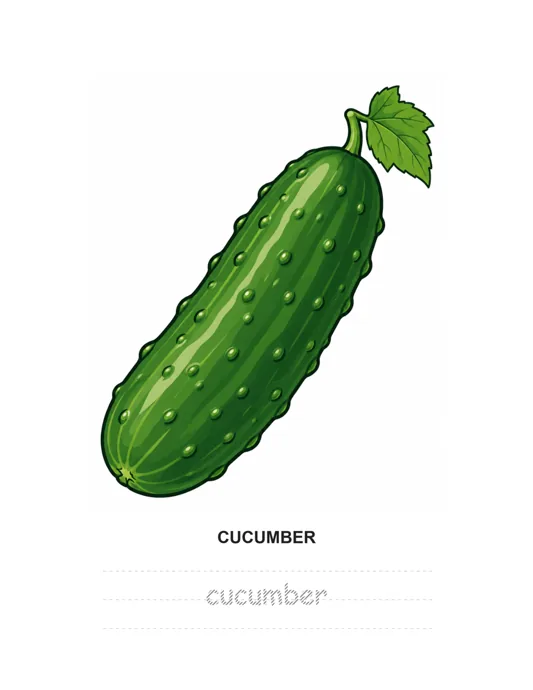
Yes, a cucumber is a fruit in botany and a vegetable in cooking. It’s a pepo, the thick-rinded berry made by the squash family, and Justice Gray named it right beside the tomato. Watch out for the seedless kind. Some greenhouse cucumbers set fruit without pollination and make no seeds, yet they still grow from the flower’s ovary, so they’re still fruits.
Pumpkins, peppers and eggplant
Pumpkins are pepos too, so every jack-o’-lantern is a carved fruit. Bell peppers and eggplants are true berries, the same type as the tomato, and both get cooked like vegetables. Zucchini and other summer squash follow the pumpkin: a fruit by birth, a side dish by habit.
Three checks a child can run on any food
Kids can settle most fruit-or-vegetable fights with three questions, asked in this order:
- Which part of the plant is it? Root, stem, leaf, flower, fruit or seed. If it’s a root, a stem or a leaf, you’re done: it’s not a fruit.
- Does it hold seeds, or did it start to? Cut it open (an adult does this) and look. Seeds inside almost always mean fruit.
- Did it grow where a flower was? Picture the plant. A tomato hangs where a yellow flower bloomed; a carrot grew underground.
Three traps catch kids every time. Sweetness doesn’t decide anything: rhubarb goes into pies, but it’s a leaf stalk. Missing seeds don’t rule a fruit out, as seedless cucumbers show. And a name with “berry” in it proves nothing, since a strawberry isn’t a botanical berry at all and a tomato is.
A fruit-or-vegetable sort for a classroom or kitchen table
The sort works for a parent with one or two children at the table and for a teacher with a full class. Allow roughly half an hour for ages 4 to 6 and 45 minutes for ages 7 to 10, coloring included.
Gather printed food pages, something to color with, and two labeled sorting spots, such as paper plates on a table or two columns taped on a whiteboard. Real produce makes it stick: bring a tomato, a cucumber and a pepper, and a grown-up handles any slicing.
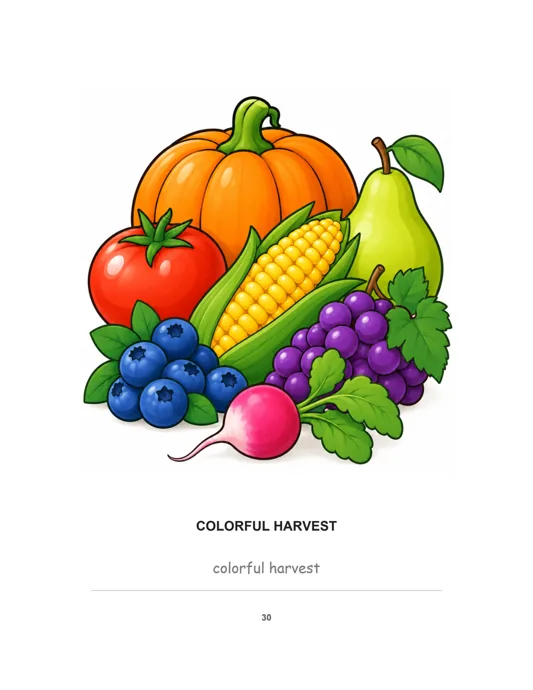
Ages 4 to 6: the two-pile sort
Give each child one page to color, then run the sort twice. In the first round, children put each food where a cook would: dessert and snacks on one side, dinner on the other. In the second round, ask the seed question from the checklist, and move any page that holds seeds to the fruit pile. Finish by counting how many pages moved and asking which one surprised them most.
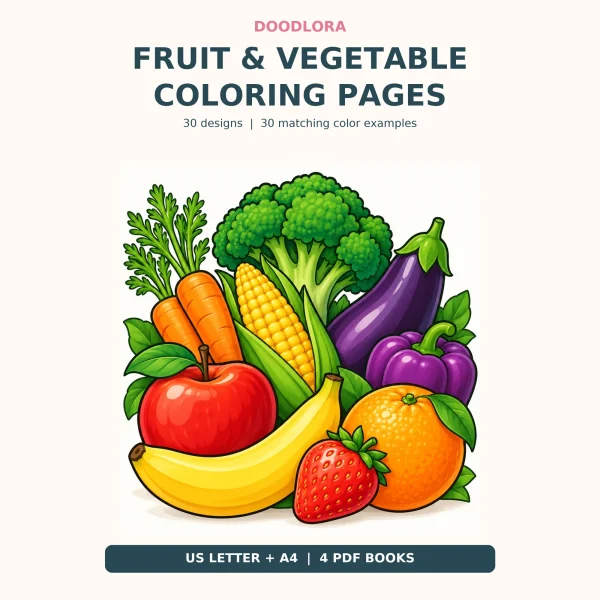
Our fruits and vegetables coloring pages fit this round. The set has 10 fruits, 10 vegetables, four pairs of smiling food friends, four garden and market scenes and two rainbow pages, each with its name printed under the picture. Six of its 10 vegetables are fruits to a botanist: tomato, corn, eggplant, pumpkin, peas and bell pepper. Call them the “hidden fruits” and let kids rescue them from the vegetable pile.
Ages 7 to 10: sort by plant part
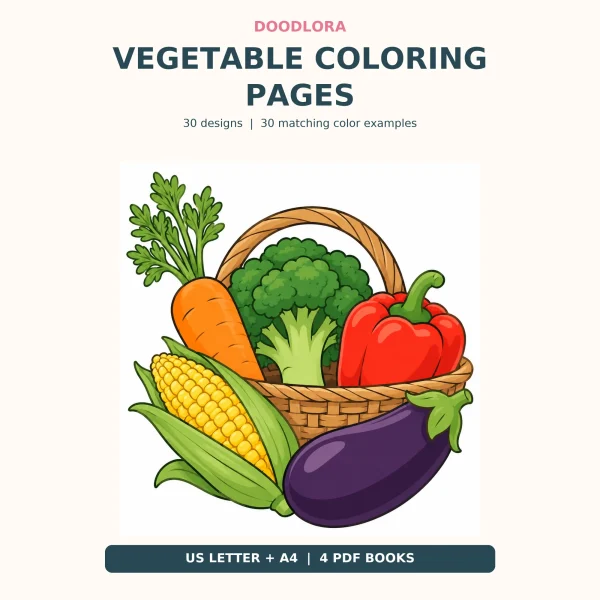
Older kids can sort into six groups instead of two: root, stem, leaf, flower, fruit and seed. The sorting deck here is the 20 single-vegetable pages in our vegetable coloring pages; the other 10 pages in that book are gardens, baskets, a market stand and cartoon veggie friends.
Nine of those 20 are botanical fruits: tomato, corn, peas, eggplant, pumpkin, bell pepper, cucumber, okra and zucchini. The other 11 split into roots (carrot, beet, radish), leaves (lettuce, spinach, cabbage), bulbs (onion, garlic), leaf stalks (celery), flower buds (broccoli) and a stem (potato).
Warn the class before they start: the word under each picture is the kitchen name, and the book itself is called vegetable coloring pages. That’s the point of the lesson, but a child who trusts the label will sort tomato into the vegetable pile and feel tricked. When the class enjoys sorting, a rock tray, a magnet hunt and a sink-or-float test run on the same sort-then-check rhythm, and all three are in our science activities for kids.
Tomato pages in flower-to-fruit order
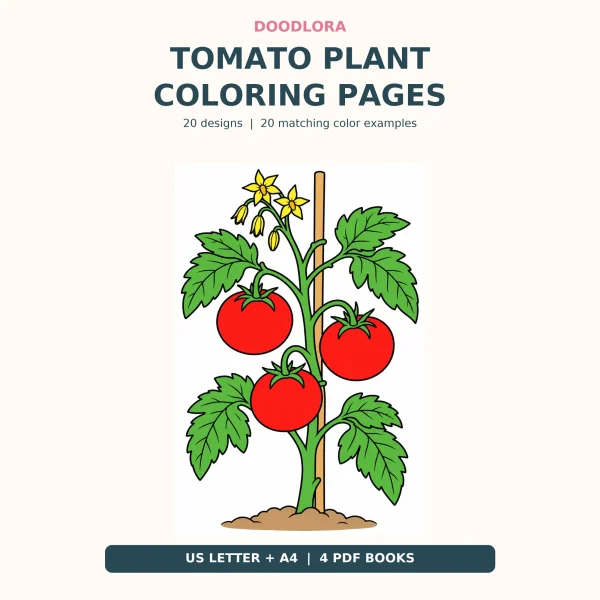
To follow a single plant, use our tomato plant coloring pages, where each of the 20 designs carries a number and a name in the top corner. Hand out five of them shuffled: 05 Yellow Flowers, 15 Bee Visits Flowers, 06 Green Tomatoes, 07 Ripe Plant and 18 Inside a Tomato. Kids put them in order from flower to green fruit to ripe fruit to seeds, which walks them through the botanical definition one page at a time.
Each of the three sets downloads as four PDFs: line art to color and a finished color guide, each in a US Letter version and an A4 version. The color guides help when a child asks what color an okra or a beet should be. If lines come out faint or the page gets cropped, check the settings in how to print coloring pages before printing a class set. They’re sold with a personal license, which covers a teacher printing copies for students in that teacher’s own classroom.
Quick answers
Is a tomato a berry? Yes, in botany. It grows from a single ovary and keeps its seeds inside the flesh, which is the definition of a true berry.
Is a potato a vegetable? Yes, by both rulebooks. A potato is a tuber, a swollen underground stem, so it’s never a fruit.
Is a pumpkin a fruit or a vegetable? A fruit to a botanist (a pepo) and a vegetable to a cook, the same split as the cucumber.
Are nuts fruits? Botanically, yes. A plant science textbook from the University of Minnesota lists a nut, a corn kernel, a pumpkin, a tomato and an orange as fruits.
Did the Supreme Court make tomatoes legally vegetables everywhere? No. Nix v. Hedden decided how the Tariff Act of 1883 taxed imported tomatoes, and Gray’s opinion openly agreed that the tomato is botanically a fruit.
A good way to close the lesson is to hold up a tomato and ask the class for both answers in one sentence. A child who can say “fruit to a botanist, vegetable to a cook” has learned the whole idea.
Printables from this article
Related articles
Printable Coloring Pages
How to Draw Food: Cute Fruit, Desserts and Snacks
Every cute food starts as a plain shape. Ink one bold outline, add the single detail that names it, color it warm with a white shine spot, and put a face on last if you want one.
Printable Coloring Pages
Types of Sushi: Nigiri vs Sashimi, Rolls and Sushi for Kids
Sushi is vinegared rice plus a topping or filling, and the shape gives each type its name: nigiri, maki, uramaki, temaki, gunkan, chirashi, inari and oshizushi. Sashimi is sliced fish with no rice. Here's how to spot each one, what to order first and which pieces have no raw fish.
Printable Coloring Pages
What Is STEM? Meaning, STEM Activities and Careers
STEM stands for science, technology, engineering and mathematics, a label the National Science Foundation adopted in 2001 for four subjects that work best when taught together. Here is what each letter covers, how STEAM differs, one hands-on activity per age group, the jobs behind the letters and five women whose work shaped them.