Chinese New Year Traditions: Lunar New Year 2027, Day by Day
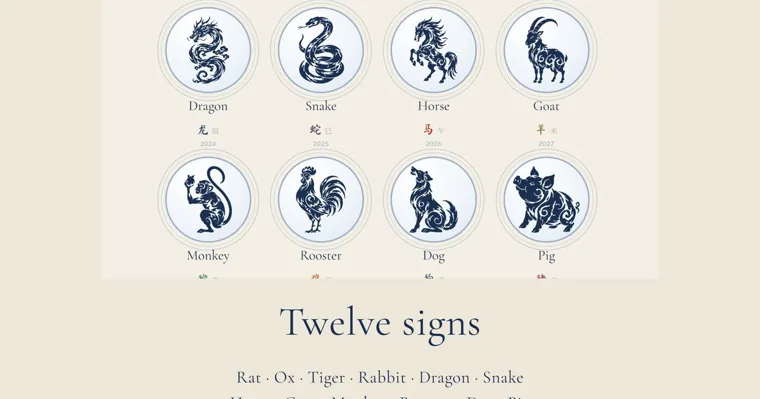
Chinese New Year traditions run for about two weeks, from a thorough house cleaning before New Year’s Eve to the Lantern Festival on the fifteenth day. In between come red decorations, a reunion dinner, staying up late, red envelopes for children and visits to relatives. In 2027 the Year of the Goat starts on Saturday, February 6, and the Lantern Festival falls on Saturday, February 20.
Most families in the United States keep a handful of these, not all fourteen. The table sorts them by date and by how much each one takes to prepare. After it, every tradition gets its own section: when it happens, what to buy or print, a line for explaining it to kids and the step where it usually goes wrong.
| Tradition | 2027 date | What to prepare | Who it suits |
|---|---|---|---|
| Cleaning the house | The days before February 6 | Brooms, cloths, an hour of shared chores | Everyone who can hold a duster |
| Red couplets and a fu sign | Up by February 5 | Red paper, a black marker or brush, tape | Kids who can trace a character |
| Goat decorations and red clothes | Up by February 5 | Printed animal art, something red to wear | Preschoolers and up |
| Reunion dinner | Friday, February 5 | Fish, dumplings, nian gao, noodles, mandarin oranges | The whole family |
| Staying up late | Night of February 5 | Games, snacks, a late bedtime | Older kids and adults |
| Firecrackers and the Nian story | Around midnight, February 5 | The story; your town’s fireworks rules | Story for all, fireworks for adults |
| Red envelopes | Saturday, February 6 | Red envelopes, new bills | Children and unmarried young people receive |
| New Year greetings | From February 6 | Two or three phrases | Everyone |
| The New Year don’ts | Saturday, February 6 | A broom put away the night before | Families who want the full custom |
| Family visits | February 6 to 8 | A visiting plan, oranges or sweets | Families with relatives nearby |
| God of Wealth day and Renri | February 10 and 12 | Nothing to buy | Kids curious about the calendar |
| Lion and dragon dances | During the festival | An event listing for your city | Everyone |
| Lanterns and riddles | Saturday, February 20 | Paper, scissors, glue, riddle slips | Kids who can cut with help |
| Tangyuan | Saturday, February 20 | Glutinous rice balls, frozen or homemade | The whole family |
When Chinese New Year 2027 starts and how its fifteen days run
The first day of Chinese New Year falls on the new moon between January 21 and February 20, so the date moves every year. In 2027 that new moon lands on Saturday, February 6. New Year’s Eve, the night of the family dinner, is Friday, February 5, and the Lantern Festival closes the season fifteen days in, on Saturday, February 20.
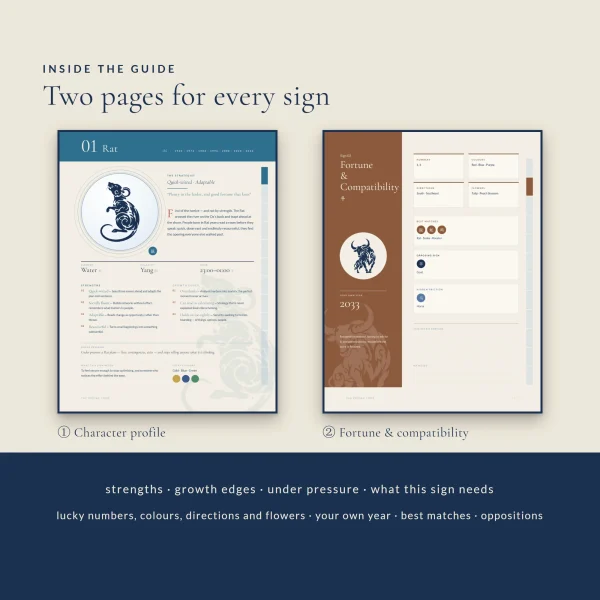
The zodiac animal changes at the same moment, not on January 1. 2027 is the Year of the Goat, the eighth of the twelve animals. That matters for kids born in January or early February, who may belong to the previous year’s animal. Page 6 of our Zodiac Code guide lists the Lunar New Year date for every year from 1984 to 2033, so you can check a birthday against it.
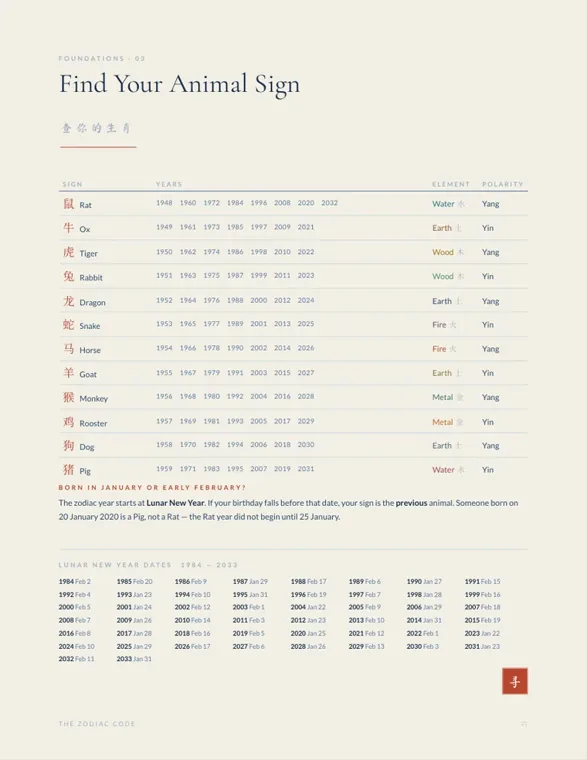
The animal is sometimes called the Sheep or the Ram instead of the Goat. All three translate the same Chinese sign, 羊 (yáng), and Korea’s version of the zodiac uses the Sheep. Vietnam’s zodiac swaps in a Cat for the Rabbit, so a Vietnamese American family may count the cycle a little differently.
If someone at your table wants to know which animals get along, the Chinese zodiac compatibility chart lays out the traditional pairs and walks through the January and February birthday check in more detail.
Lunar New Year traditions for the week before New Year’s Eve
Those fifteen days start with a few days of getting ready. Three traditions belong here, and all three need to be finished by Friday, February 5, because two of them are traditionally off limits once the new year arrives.
1. Clean the whole house before the new year starts
A few days before the holiday, families give the house a complete cleaning, including the dishes and household goods. Our festival card tells kids the reason in one line: the house is swept clean to make room for good luck.
At home, this works as one shared hour on the weekend before, with a job for each person. Give the youngest a cloth for low shelves.
The common mistake is leaving it too late. Tradition puts brooms and dustpans away on the first day, so the luck that just arrived isn’t swept out the door. If you clean on Saturday morning, February 6, you’ve broken the custom you were trying to keep.
2. Hang red couplets, paper-cuts and an upside-down fu
Red is the color of almost every New Year decoration, because it’s believed to bring luck and keep bad things away. Doors and windows get red paper-cuts and couplets, pairs of written lines hung on either side of the door. The single character 福 (fú), meaning good fortune, often goes up upside down.
The upside-down fu is a pun: the word for upside down sounds like the word for arrived, so the sign reads as “good fortune has arrived.” Kids can make one with a red square of paper, turned to sit on its point, and a black marker. A child who has practiced the strokes in our guide to how to write Chinese characters can write it freehand.
Check before you turn it over if Cantonese-speaking relatives are coming. In Cantonese communities the fu is usually hung the right way up.
3. Make Year of the Goat decorations, and wear red in your own animal year
Each new year brings out pictures of its animal, on cards, red envelopes and signs. For 2027 that means goats. Printed clipart is the quickest way to put one on a homemade card or a party sign, and older kids can design their own envelopes around it.
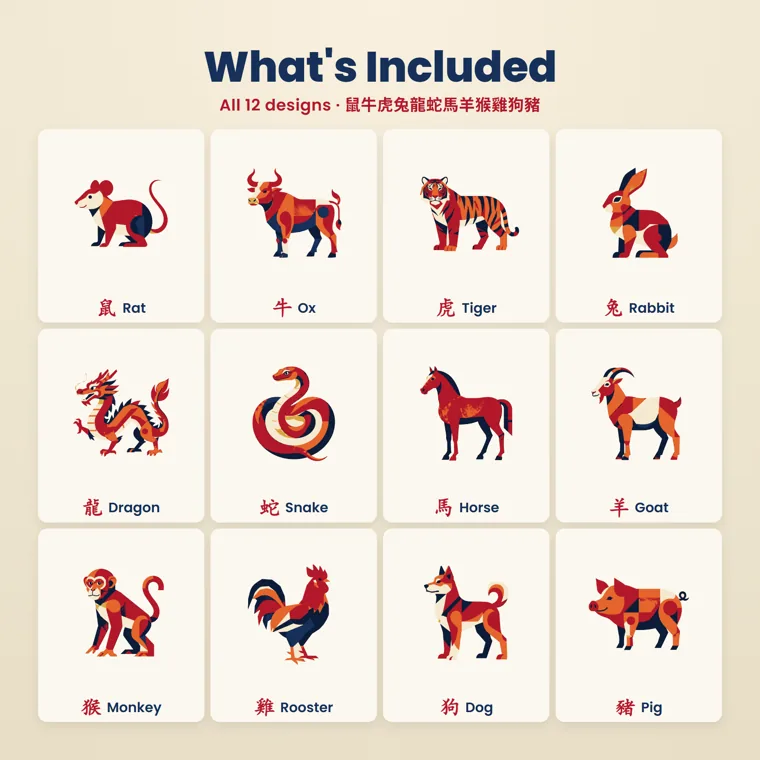
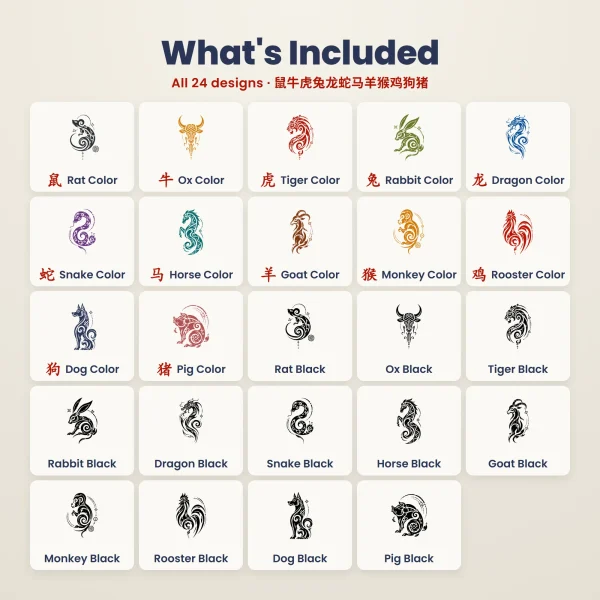
The animals above are the red and orange set in our Chinese zodiac clipart, which also comes in a one-color style and a muted style. Before printing on red cardstock, run one copy on plain paper; dark paper swallows dark ink.
Red also goes on the body. Wearing red was traditionally believed to scare away evil spirits, so many families put on something red for the holiday.
There is a second, older custom for people born in a Goat year. Tradition treats your own sign’s year as the bumpiest of the twelve. The old remedy, as our Zodiac Code guide puts it, is to wear red, given to you by somebody else.
Children born between February 19, 2015 and February 7, 2016 are Goats, so 2027 is their own year. A red scarf or pair of socks from a grandparent is an easy gift that fits the custom. Present it as a family tradition, not a warning that the year will go badly.
New Year’s Eve traditions: the reunion dinner, staying up and the Nian story
Once the house is clean and the red is up, everything moves to the evening of Friday, February 5. New Year’s Eve is the night families gather in one place, even if some members traveled far to get there.
4. Cook a reunion dinner with dishes that carry a wish
The reunion dinner on New Year’s Eve is the most important meal of the year for many Chinese families. Several of the dishes are on the table for what their names sound like or what they stand for:
- Fish, because “may there be surpluses every year” sounds the same as “let there be fish every year”
- Dumplings (jiaozi), made and eaten at midnight in northern China
- Nian gao, a sticky rice cake eaten as a wish for a better year ahead
- Long noodles, for a long life
- Mandarin oranges, the fruit of the season, often given as gifts too
You don’t need every dish. Pick two or three your family will actually eat, and let kids fold the dumplings; it’s the job they’ll remember.
Customs differ by region. The midnight dumplings are a northern Chinese habit, and a family from Guangdong or Hong Kong may set a different table. Ask the grandparents what they ate before you plan a menu around one region’s dishes.
5. Stay up late to see the old year out (shousui)
After dinner, many families stay up late on New Year’s Eve, a custom called shousui. In 2027 the Eve falls on a Friday night, so even school-age kids can try.
The trouble is the length of the evening. Young children rarely make it to midnight, so plan a short countdown at an earlier hour for them. The kids’ section of our New Year’s Eve games has quieter games for the stretch after dinner, and they work just as well on the Lunar Eve.
6. Tell the Nian story, and keep the firecrackers safe
According to legend, Chinese New Year began with fighting off a beast called Nian. On our festival card the story is told for kids: Nian was frightened away by the color red, bright lights and loud noises, which is why families decorate with red paper and lanterns. Firecrackers, rolled in red paper, were thought to scare away evil spirits with their bangs.
Tell the story first and the decorations make sense. A child who has heard it will see the red couplets and lanterns as the family’s defense against Nian.
The tricky part is the noise in an American backyard. The U.S. Consumer Product Safety Commission tells families to make sure fireworks are legal in their area. It also says never to let young children play with or light fireworks, sparklers included, since sparklers burn at about 2,000 degrees Fahrenheit. Pots, pans and clapping scare off a pretend Nian just as well.
New Year’s Day traditions: red envelopes, greetings and things to avoid
Saturday, February 6 is the first day of the Year of the Goat, and the day starts at home. Red envelopes come out, everyone says the greetings, and a few habits are put away for the day.
7. Give red envelopes (hongbao) with new bills
Red envelopes almost always hold money. Adults, married couples and older relatives give them to the children. By custom, the givers are usually married and the receivers are the younger, unmarried people in the family, mostly children and teenagers. The amount ranges from a couple of dollars to several hundred, and the bills should be new.
Numbers matter here. Amounts that begin with an even number, such as 8, are favored, but 4 is avoided because it’s considered especially unlucky, so skip $4 and $40. Odd amounts are traditionally avoided too.
Plan the bank trip early. New bills mean a stop at the bank in the week before, so buy the envelopes at the same time. For kids, the card puts it simply: a little money inside is a wish for a happy year.
8. Learn two or three New Year greetings
Kids enjoy having something to say when they hand over or receive an envelope. Three greetings cover most families:
- Xīnnián kuàilè (shin-nyen kwai-luh), Mandarin for Happy New Year
- Gōngxǐ fācái (gong-shee fah-tsai), roughly “congratulations and be prosperous”
- Gung hei fat choy, the Cantonese form of the same wish, spelled several ways in English
Gōngxǐ fācái is often mistaken for “Happy New Year,” but it’s a wish for prosperity. Teach kids the meaning along with the sound, so they know which one to use with which relative.
9. Know the New Year’s Day don’ts
A handful of things are traditionally avoided on the first day: sweeping, swearing, breaking dishes and cutting hair. The broom goes away so the new luck stays in. A broken bowl is the one kids most often worry about.
Explain these as what some families avoid, not as rules that bring bad luck. A child who drops a cup should hear that families have a phrase for that: suìsuì píng’ān, “peace year after year,” which also sounds like “broken pieces, peace.”
Plan around the haircut rule. If a child needs a haircut for photos, book it for the week before, not the first days of the new year.
Traditions for the first week: visits, lucky days and lion dances
New Year’s Day is for the household. The days after it go outward, to relatives, friends and the street.
10. Visit family in the right order
The first day is for gatherings with the immediate family. On the second day, married daughters visit their birth parents, relatives and close friends. The third day is considered unlucky for having guests or going visiting.
In 2027 those three days are Saturday, Sunday and Monday, February 6 to 8, so a weekend plan fits the custom. Visit your own household’s elders on Saturday and the wife’s parents on Sunday. Leave Monday quiet.
Bring a gift. Fruit, especially oranges, cakes, cookies, chocolates and candy are the usual choices. Pears are the exception and are never given.
11. Mark the God of Wealth day and Renri, everyone’s birthday
Two later days are easy to teach with a calendar. The fifth day, Wednesday, February 10 in 2027, is the birthday of the God of Wealth. That makes it a natural evening to count the red envelope money and decide how much goes into savings.
The seventh day, Friday, February 12, is Renri, the day when everyone grows one year older. Kids like the idea of a shared birthday; a small dessert on that evening is all it needs.
12. Watch a lion dance or dragon dance
Lion dances are performed to ward off evil spirits, and our festival card lists lion dances, dragon dances and fireworks as the things children watch for. In the United States the easiest way to see one is a city parade or a festival at a Chinatown, a cultural center or a museum.
Check your city’s event listings in January. A public celebration doesn’t always fall on the new year itself, so note the date and time before you promise the kids.
The drums are very loud up close. Stand farther back with small children, or bring ear protection for babies and kids who dislike loud sounds.
The Lantern Festival on the fifteenth day: lanterns, riddles and tangyuan
The season ends on the fifteenth day, Saturday, February 20, 2027, under the full moon. The Lantern Festival marks the final day of the New Year celebrations, and it’s the one most suited to a craft afternoon.
13. Make paper lanterns and hang riddles on them
During the Lantern Festival, children go out at night carrying paper lanterns, and families solve riddles written on or tied to them. Guessing lantern riddles is called cāi dēngmí.
A paper lantern takes one printed sheet and five steps. The template in our World Festival Passport set works like this:
- Color the lantern panel and the handle strip.
- Cut out both pieces on the solid lines.
- Fold the panel in half on the dashed fold line and cut the slits.
- Unfold the panel, roll it into a tube and glue the tab.
- Glue the handle across the top.
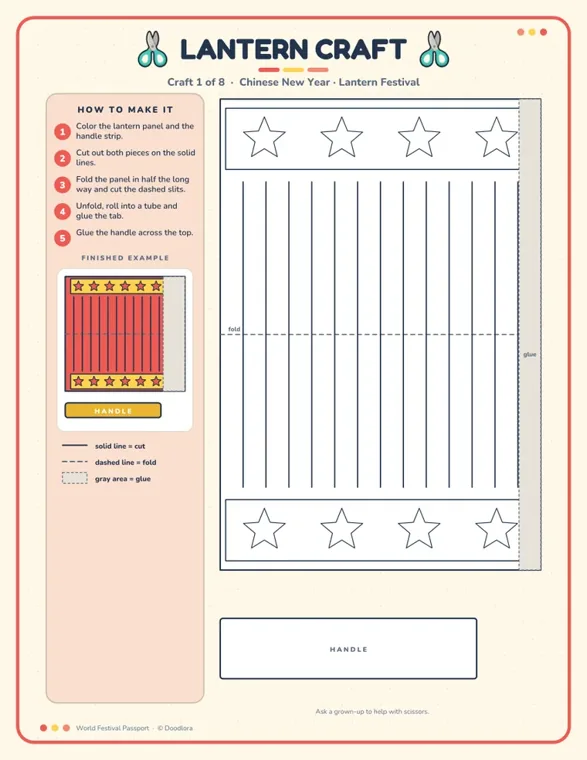
Watch step 3. The sheet’s instructions say to cut the “dashed” slits, but the slits are drawn as solid lines and the dashed line is the fold. Cut the solid slits only, and stop where they end at the star bands, or the lantern falls apart. The sheet itself says to ask a grown-up for help with scissors.
For the riddles, write one per slip of paper and tape it to the lantern. The riddles for kids 6 to 8 in our brain teaser collection come with answers, so a parent can check guesses without looking anything up.
14. Eat tangyuan, round rice balls for a family together
Tangyuan, also called yuanxiao, are glutinous rice balls served in a bowl of warm broth. They’re often filled with sweet red bean paste, sesame paste or peanut butter. Their round shape, and the round bowls they’re served in, stand for the family being together.
Frozen tangyuan from an Asian grocery store only need boiling, following the package directions. Making them by hand is a good job for kids, who can roll the dough into balls.
How to explain Chinese New Year to kids at different ages
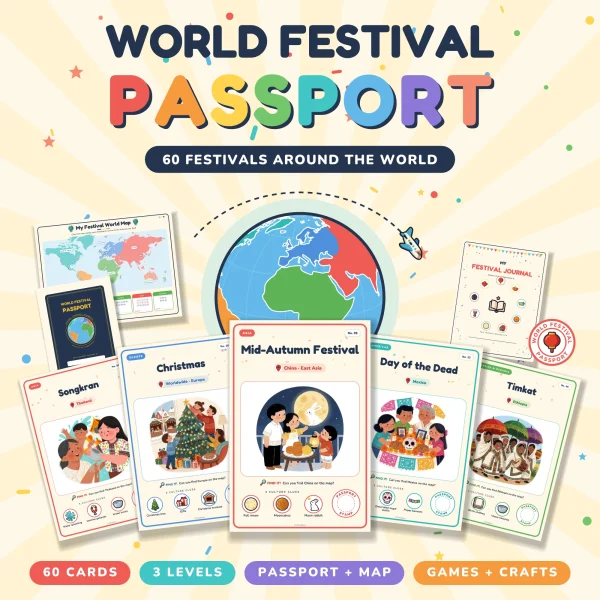
All fourteen traditions come back to a few ideas a child can hold onto: a fresh start, red for luck, and the family together. Our World Festival Passport cards tell Chinese New Year at three reading levels, and they show one way to scale it.
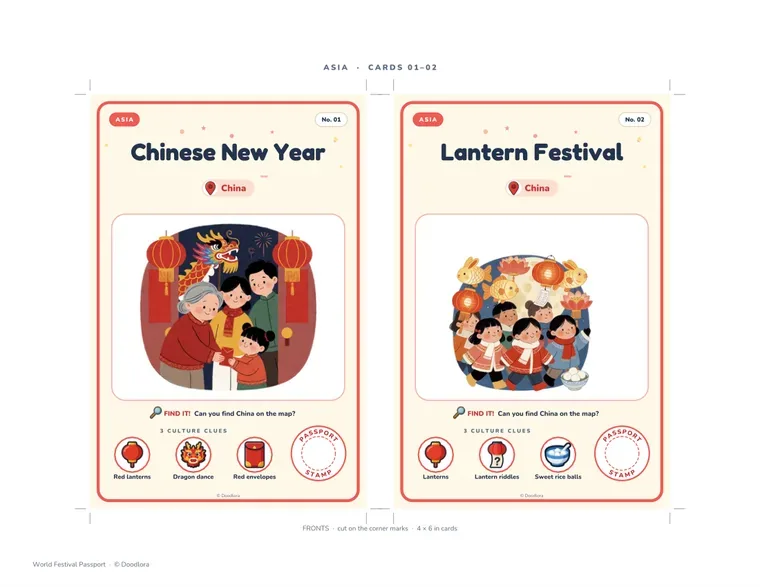
For the youngest, start with the pictures on the front: red lanterns, a dragon dance and red envelopes. Ask them to find each one at home or at a parade.
At the next level, the back gives one line each on a tradition, a food and an activity. The question it asks is a good dinner-table opener: what wish would you write for the new year?
Older kids get the story itself: the beast Nian, the reunion dinner and the twelve zodiac animals. They can retell it to a younger sibling, which is the best test of whether they’ve understood it. Our holidays around the world for kids guide uses the same three steps for other festivals, including Seollal, the Korean new year that usually falls on the same day.
Printables from this article
Related articles
Printable Guides & Magazines
How to Start Homeschooling: Steps for Beginners
A first-year plan for new homeschool families: where state rules live, the order for leaving school, curriculum, daily hours, records, friends and the first 90 days.
Printable Guides & Magazines
Year of the Goat 2027: Fire Goat Dates, Years and Customs
When the 2027 Year of the Goat starts and ends, every Goat year with its exact dates, why 2027 is a Fire Goat, what tradition says about Goat people, and what to do when it's your own year.
Printable Guides & Magazines
Chinese Zodiac Signs: 12 Chinese Zodiac Animals by Year
The twelve Chinese zodiac animals in order, the years that belong to each, what tradition says about them, and how to work out your own sign from your birthday.