Age Appropriate Chores: Chores for Kids by Age, 2 to Teens
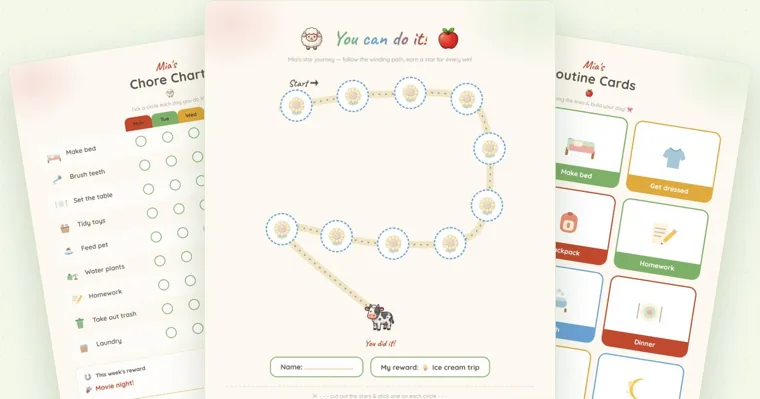
Age appropriate chores grow with a child’s hands and attention span. A 2- or 3-year-old can drop toys into a bin and carry napkins to the table. At 6 and 7, the AAP’s list includes making the bed, setting the table and filling the pet’s dish. By 11 or 12, the American Academy of Pediatrics lists cleaning the bathroom, doing laundry and cooking a simple meal with an adult supervising.
The lists below come from two neutral sources: the CDC’s developmental milestones for the toddler and preschool years, and the AAP’s HealthyChildren.org pages for age 5 through the teens. Each age gets what to hand over, how to teach it, how to check it and what to do when it comes back half done. The days off around the holidays are a good time to start, since nobody is rushing out the door.
| Age | Chores to start with | How much help | Minutes a day |
|---|---|---|---|
| 2 and 3 | Toys into a bin, napkins and plastic cups to the table, clothes into the hamper | Do it next to them every time | A few |
| 4 and 5 | Washing fruit, matching socks, clearing their own plate | Show, then watch | 5 to 10 |
| 6 and 7 | Making the bed, setting and clearing the table, feeding a pet, watering plants | Check when they say they’re done | 10 to 15 |
| 8 to 10 | Vacuuming, putting away their laundry and the groceries, helping with dinner | Spot-check | 15 to 20 |
| 11 and 12 | Cleaning the kitchen and bathroom, doing laundry, a simple meal with you nearby | Check the finish | 20 to 30 |
| Teens | Shared rooms, the car, the yard, snow, younger siblings | Agree on the standard, then step back | 30 or more |
The help and minutes columns are our own starting points. Neither source puts a clock on chores, so adjust them to the child in front of you.
How to teach a chore: show it, share it, then hand it over
Whatever the age, a new chore goes through three stages before it’s really your child’s job. In our view, jumping straight to the third is why so many chore plans stall in the first week.
- Show it. Do the whole job while your child watches. Say each step in a few words: “Shirts in this pile, socks in that one.”
- Share it. Split the job. You fold and they stack, or they start and you finish. Next time, swap halves.
- Hand it over. Your child does it alone, and you check afterward.
The AAP describes the same order for one of the riskiest jobs on any list. Before a child mows the lawn alone, it says to spend time showing them how to do it safely and to supervise until you’re sure they can manage it.
Before the hand-over, say what “done” looks like in words your child can repeat. “Pillow at the top, blanket pulled up.” “Every toy off the floor and in the bin.” That sentence is your check, and it keeps the talk on the job instead of on whether it counts.
The AAP’s advice is to praise the effort rather than the result and not to expect perfection, because children build the skill over time.
Chores for toddlers, ages 2 and 3
Toddler chores start as copying. The CDC’s milestone checklist says most children copy chores like sweeping with a broom by 18 months and can follow a one-step direction, such as “Give it to me.” The CDC counts a skill as a milestone when at least 75% of children can do it by that age, so some children get there later.
Jobs that suit this age:
- Putting toys in a bin. One bin and one kind of toy is easier than “clean your room.”
- Carrying napkins or plastic cups to the table. The CDC suggests this for 2-year-olds as a way to help get ready for meals.
- Washing fruit or stirring a bowl. The CDC’s tips for 3-year-olds name both as simple ways to help with a meal.
- Putting dirty clothes in the hamper and wiping up their own spill with a cloth.
Teach one step at a time. By 3, the CDC suggests giving instructions with two or three steps, like “Go to your room and get your shoes and coat.”
At this age, you are the check. You’re right there, so name what went well while it happens: the CDC’s own example is “Look how nicely you put the toy away.”
Two things to keep out of a toddler’s chores. First, the stove: the CDC says most 3-year-olds avoid touching a hot stove when warned, which is a sign they listen, not a reason to let them stir at the burner. Keep the bowl on the counter. Second, cleaning sprays: hand over a damp cloth instead. For bathing, brushing teeth and getting dressed, a picture routine works better than a chore list, and our visual schedule guide shows how to set one up.
Chores for preschoolers, ages 4 and 5
Preschoolers want to help, and that’s the moment to give them a real job. “Likes to be a helper” is on the CDC’s checklist for 4-year-olds, and the AAP says most preschool children can start pitching in with simple household tasks.
- Serving themselves or pouring water, with you watching. The CDC lists this for 4-year-olds “with adult supervision.”
- Matching socks from the clean laundry and clearing their own plate after a meal. Both are examples on the CDC’s list for 5-year-olds.
- Making their bed in a simple way: pillow up, blanket pulled flat.
- Putting toys back on a shelf and feeding a pet from a scoop you’ve filled.
Size each chore for the attention span. The CDC says most 5-year-olds can pay attention for 5 to 10 minutes during an activity, so one job per session fits better than three jobs before breakfast.
Check right after the job, using your “done” sentence. When the bed is lumpy, leave it. The CDC’s tip for this age is to let children do things for themselves even when the result isn’t perfect, and not to fix anything you don’t have to.
Chores for kids ages 6 and 7
The AAP’s first age list covers 5 to 7, so a 5-year-old who’s ready for more can borrow from it. Its examples fall into four groups:
- Their own things: make the bed, put toys away, neaten the bookshelf, put dirty clothes in the hamper.
- Meals: set and clear the table, make and pack a school lunch, wash plastic dishes in the sink.
- Around the house: dust, sweep, empty wastebaskets, sort laundry, fill the pet’s food dish, bring in the mail.
- Outside: water flowers, weed and rake leaves.
Don’t hand over the whole list. For a school-age child who hasn’t had chores before, the AAP’s advice is to add tasks one by one, since a long list can overwhelm them. Two jobs to start, and a third once the first two happen without reminders, is our usual pace.
Notice the word “plastic” in the dish job. Glasses and sharp knives stay with an adult. For watering, a child needs to know when a plant actually needs it. Our houseplant care guide explains the finger test: water when the soil feels dry about an inch down.
A chart starts to help at this age. The AAP suggests a star chart or chore list on the refrigerator or in your child’s room, so your child can see what’s expected every day.
Chores for kids ages 8 to 10
At 8 to 10, the AAP adds vacuuming, helping make dinner, making their own snacks, walking the dog, putting away their own laundry and putting away the groceries. Kids keep everything from the 5-to-7 list as well.
“Help make dinner” means a job inside your cooking, such as washing and tearing lettuce or measuring rice. The AAP doesn’t list cooking a simple meal until 11 and 12, and even then with supervision.
Teach the vacuum like any new tool: where it plugs in, how to empty it and what not to suck up. Socks and small building bricks are the usual casualties. For dog walks, go along the first few times to see whether your child can hold the leash when the dog pulls.
Checks can loosen now. Look at the job some days rather than every day. When something comes back half done, point to the one spot that needs redoing and let your child fix it, rather than redoing it yourself while they watch.
Chores for kids ages 11 and 12
The AAP’s list for 11 and 12 adds the jobs most adults would call real housework: cleaning the kitchen, changing the sheets, unloading the dishwasher, doing and folding laundry, scrubbing toilets and cleaning the bathroom, washing the car and cooking a simple meal with supervision. It also lists watching younger siblings, but only with an adult at home.
Bigger jobs need a checklist of parts. “Clean the bathroom” can mean the toilet, the sink, the mirror and the floor, and your child should know which ones before starting. Read the label on each cleaning product together the first time.
Twelve is also the AAP’s general minimum age for running a walk-behind power mower. Its lawn mower page says more than 5,000 children are treated in emergency departments each year for power mower injuries. Older children and teens are most often hurt while mowing as a chore or to earn money. If mowing is on your list, use the show, share, hand over order, and supervise until you’re sure.
Chores for teens
Teen chores, in the AAP’s page by pediatrician Shelly Flais, are everything from the younger lists plus jobs for the whole household:
- Vacuuming shared rooms, hallways and stairs
- Washing and vacuuming the car
- Mowing, weeding and spreading mulch
- Clearing snow from the walkways and driveway
- Grocery shopping, once they have a driver’s license
- Cleaning the kitchen after cooking
- Pet care, including feeding and grooming
- Helping with younger siblings
Dr. Flais makes the point that a teen who can run a smartphone can work out a washing machine, an oven and a dishwasher. She also says a part-time job after 16 isn’t a reason to stop helping at home. Riding mowers wait until 16, according to the AAP’s lawn mower guidance.
Teens can own a job from start to finish, including noticing when it needs doing. Agree on the standard and the deadline, such as the driveway cleared before the car leaves at 7:30, and then stay out of how they get there.
Chores for siblings of different ages
With two or more kids, split one job by age instead of giving the youngest a separate easy job. At dinner, the 3-year-old carries the napkins, the 7-year-old sets the plates and forks, and the 11-year-old clears and loads the dishwasher.
- Say each child’s standard out loud. A 4-year-old’s made bed and a 10-year-old’s made bed don’t look the same, and siblings notice.
- Rotate the jobs nobody wants each week, so trash duty doesn’t always land on the oldest.
- Give each child their own chart, so one child’s full row doesn’t shame the other.
Kids will also compare their chores with their friends’. The AAP suggests using that as a chance to talk about your own family’s rules.
Chore chart ideas that fit your child’s age
Charts don’t do the teaching, but they keep a chore from depending on your memory. The AAP describes a chore chart or checklist as a visual reminder for the whole family. Each finished task also gives a child a small sense of accomplishment. The trick is to print a chart and then cut it down to your child’s age.
A weekly chore chart with only a few rows in use
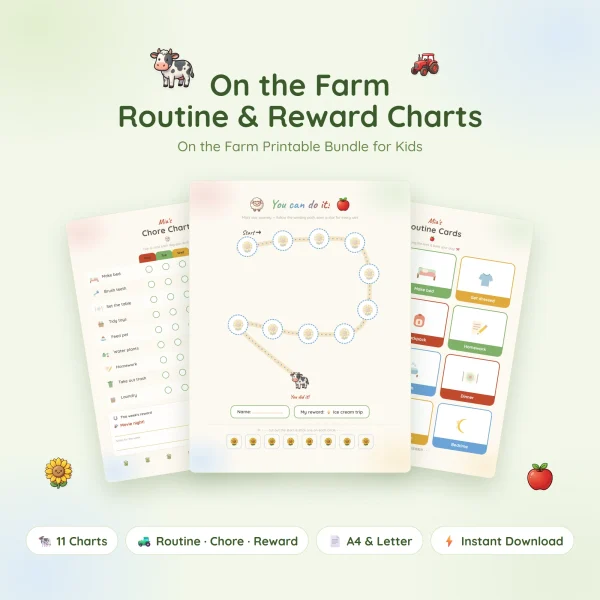
The weekly chore chart in our farm set lists nine jobs, each with a small picture: make bed, brush teeth, set the table, tidy toys, feed pet, water plants, homework, take out trash and laundry. Colored day tabs run from Mon to Sun, with a circle under each day.
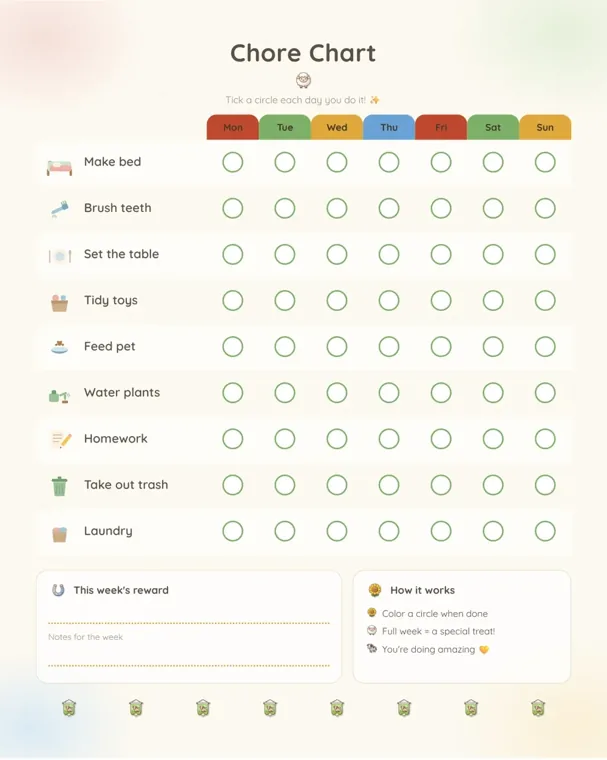
Two of the nine rows, brush teeth and homework, are routines rather than household chores. Decide whether they count before your child asks. The page has no blank rows, so a job like matching socks goes over a row you’ve crossed out or into the notes box. Pictures sit next to every job, which lets a child who can’t read yet find their own row.
A one-day checklist for a younger child
For a 4- to 7-year-old, a week of circles can feel far away. A one-day list works better: the My Daily Jobs page in our picture visual schedule set puts each job in its own row with a picture and a circle to check.
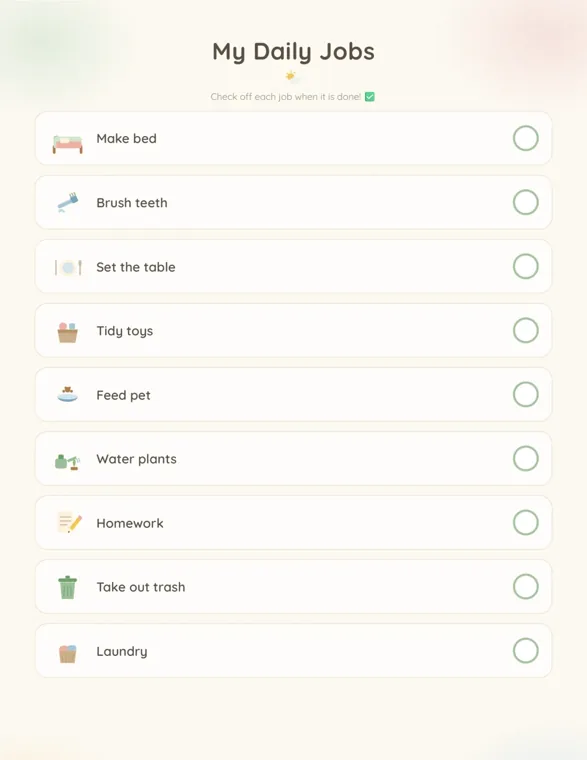
One thing to know before printing: the US Letter version of this page stops after the last job. The A4 file has an extra line at the bottom, “All jobs done? My reward:”, that Letter doesn’t. Write the reward on a sticky note under the list, or skip it if your child is doing the jobs without one.
Jobs sorted by morning, after school and bedtime
The AAP suggests doing chores at the same time each day, which makes a time-of-day page useful. Our farm My Jobs page has three columns, Morning, After School and Bedtime, with three jobs under each.
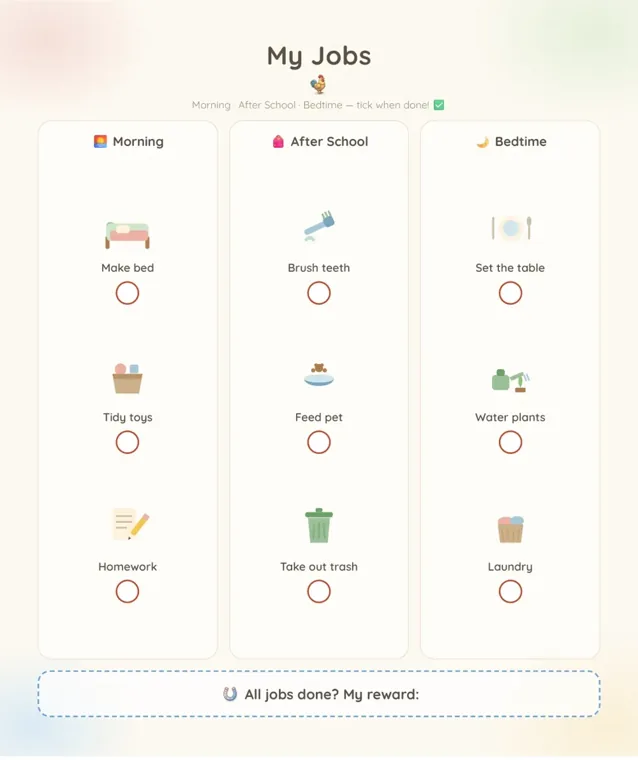
The printed order doesn’t match a normal day. Homework sits under Morning, brushing teeth under After School, and setting the table and laundry under Bedtime. Cross the names out and write in the jobs your child actually does at each time. If mornings are the tight part, our morning routine ideas include a section for parents getting kids out the door.
The reward and chore charts shelf has the other themes, and the Doodlora Studio home page lists everything else we make.
Starting chores over winter break
Winter break gives you something school weeks don’t: time to teach. Pick one chore per child from their age list in the first few days off, and run it through show, share and hand over while nobody is late for the bus.
- Agree on it together. The AAP recommends regular family meetings where you review progress and ask for your child’s ideas about chores. A short one around New Year’s Day is a natural start.
- Fix a time. Tie the chore to something that already happens every day, such as clearing plates after dinner or tidying toys before the bedtime story. The AAP says a set time each day makes chores easier to remember.
- Keep the time when school starts again. A job that moved around all break will slip once mornings get busy.
For teens, winter brings its own job. Clearing the walks and driveway of snow is on the AAP’s list for that age.
When kids skip chores or do them badly
Most kids procrastinate or need reminders at some point, the AAP says, and encouragement usually gets them back on track. When it doesn’t, its suggestions run in this order:
- Spell out the job daily and weekly, on a chart your child can see.
- Give honest praise for the effort, especially for a chore started without a reminder.
- Build the chore into a routine at the same time each day.
- Review it at a family meeting, and adjust the chore if it isn’t working.
- Use a consequence if your child still chooses not to do it, such as losing a privilege. The AAP counts screen time as a privilege, not a right.
Nagging and scolding are on the AAP’s list of what doesn’t work. Rewarding success and encouraging your child work better, it says. The AAP also mentions allowances and stickers tied to completed chores. If you go that way, our guide on how to use a behavior chart covers how many stars to ask for and how to wean a child off the chart later.
Some kids drift off halfway through a chore, struggle to get organized or have trouble switching from play to work. The AAP suggests factoring your child’s style into what you expect. That might mean a shorter job, a timer or one step at a time.
If your child still doesn’t take on everyday responsibilities after all this, mention it to your pediatrician. The AAP says the doctor may simply reassure you. They may be more concerned when the same pattern shows up at school too.
Printables from this article
Related articles
Reward & Chore Charts
Morning Routine for Kids: School-Day Steps and Times by Age
How to set a wake-up time from the time you leave, which steps a school morning needs and how long each takes, how it changes from preschool to age 12, and fixes for the usual hold-ups.
Reward & Chore Charts
Bedtime Routine for Kids: Steps, Times and a Chart by Age
How to set a bedtime from your child's wake-up time, which steps go in the routine and how long each takes, how it changes from toddlers to age 12, and how to get back on track after the holidays.
Reward & Chore Charts
How to Use a Behavior Chart: Reward System for Kids by Age
A step-by-step plan for setting up a behavior chart at home, from picking one to three goals and wording them for your child to choosing rewards and phasing the chart out.