Manners for Kids: Good Table Manners & Holiday Thank-Yous
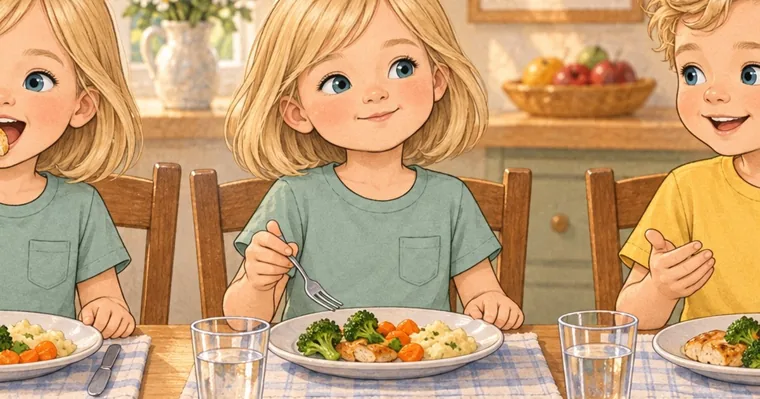
Good manners for kids come down to a short list of words and actions a child can actually use: please and thank you, hello and goodbye, asking for the rolls instead of reaching, and thanking someone for a gift. Before Thanksgiving or Christmas, pick the two or three situations your child will meet that day and rehearse them at home, so the words are familiar before the relatives arrive.
Each section below gives the words to say, what to do, how to practice it and what to do when it doesn’t go to plan. We’ve left out exact ages. A tired child on a loud holiday afternoon can lose skills that come easily on a quiet Tuesday, so start from what your child already does at home.
Pick the manners your next family gathering will test
| Situation | Teach first | Where most families start | The usual snag |
|---|---|---|---|
| Holiday dinner table | Stay seated, ask for food to be passed, “No, thank you” | Please and thank you, as soon as a child is talking | The meal runs far longer than a weeknight dinner |
| Greeting relatives | Hello, goodbye, a wave or a high five | Waving before the words come easily | A shy child freezes at the door |
| Phone and video calls | Say hello, answer one question, say goodbye | Waving at the screen | Wandering off in the middle of the call |
| Opening gifts | Look at the giver, say thank you, name the gift | Thank you with a parent’s prompt | “I already have this one” |
| Thank-you notes | A drawing or two sentences about the gift | A drawing, with an adult writing the words | Notes that wait until February |
| Visiting another house | Ask before touching, follow house rules, help tidy up | “May I?” before picking up a toy | House rules that differ from yours |
| Stores and lines | Wait in line, a quieter voice, “Excuse me” | Holding a grown-up’s hand while waiting | Long waits with nothing to do |
Table manners for kids at a holiday dinner
Table manners for kids at a holiday meal come down to three things: staying at the table for an agreed stretch, asking instead of reaching, and turning down food politely. Teach those before napkin folding or which fork to use. A child who can say “May I have the rolls, please?” and “No, thank you” will get through most family dinners without a scene.
Asking for food and turning it down
Practice the exact sentences rather than a general “be polite.” “Can you pass the potatoes, please?” tells a child what to say and when. For food your child doesn’t want, teach “No, thank you” and nothing more. Comments like “yuck” or “I hate green beans” are the part to drop. If you want your child to try a new dish, ask for one tiny taste and let that be enough.
Relatives sometimes push a second helping or a dish they’re proud of. Agree with your child beforehand that “No, thank you” is a complete answer, then back it up at the table. If a polite refusal gets overruled, the lesson your child takes home is that polite words don’t work.
Staying seated through a long holiday meal
Holiday dinners usually run longer than ordinary ones, with grace or a toast, seconds and a pause before dessert. Agree on a plan before anyone sits down. Your child stays through the main course, then asks “May I be excused?” and carries the plate to the kitchen. Seat a young child next to you instead of at the far end, so a reminder can be a whisper.
A job before the meal also helps a child settle at the table. The place cards in our Thanksgiving activities for kids give children a table-setting task while the food is still cooking.
Greeting relatives, hugs and video calls
Greetings are the first manners a child uses at a gathering, often in a crowded doorway with coats coming off. Keep the expectation small: look at the person, say hello, and say goodbye before you leave. Practice both in the car with the real names, because “Hi, Grandma” comes out more easily after your child has said it twice on the way.
Hugs and kisses from relatives
Many families let a child choose how to greet: a hug, a high five, a fist bump or a wave. Tell your child the choices before you arrive. If you expect a relative to insist on a hug, mention it to them quietly too. A wave and “Hi, Uncle Mike” is still a polite greeting.
If your child freezes at the door, say hello for both of you and let the wave be enough. Don’t turn the arrival into a test. Try again at goodbye, when the house is calmer and your child knows everyone.
Phone and video calls with family far away
Video calls ask a lot of a young child: a voice coming out of a screen, questions that arrive with a delay, and nothing to do with their hands. Give the call a shape. Your child says hello, answers one question, shows one thing (a drawing, a toy, the tree) and says goodbye before handing the phone back. Keep calls short and end them while they’re still going well.
Rehearse with a toy phone first, with you playing the grandparent. If your child wants something to ask in return, the family history questions in our family conversation starters are short enough to read out or repeat.
Gifts and thank-you notes
The polite response to a gift is short. Your child looks at the person who gave it, says thank you and names the gift or one thing about it. “Thank you for the dinosaur book” sounds warmer than a thank-you mumbled into the wrapping paper. When a big pile of gifts is opened at once, slow the round down so each thank-you is finished before the next present starts.
When a child doesn’t like a gift
Disappointment is the hard part. Give your child one sentence for it ahead of time, such as “Thank you for thinking of me,” and agree that opinions about the gift wait until you’re home. “I already have this one” usually comes out simply because it’s true. Plan for it: your child says thanks, and you sort out duplicates privately later.
Thank-you notes children can make
Thank-you notes work best within a few days of the gift, while your child still remembers it. A child who can’t write yet can draw the gift or draw themselves playing with it, while you write the giver’s name and the words your child dictates. A child who writes can manage two sentences: what the gift was and one thing they’ve done with it. Our Christmas activities for kids include a thank-you note session for the days after Christmas.
Being a good guest at someone else’s house
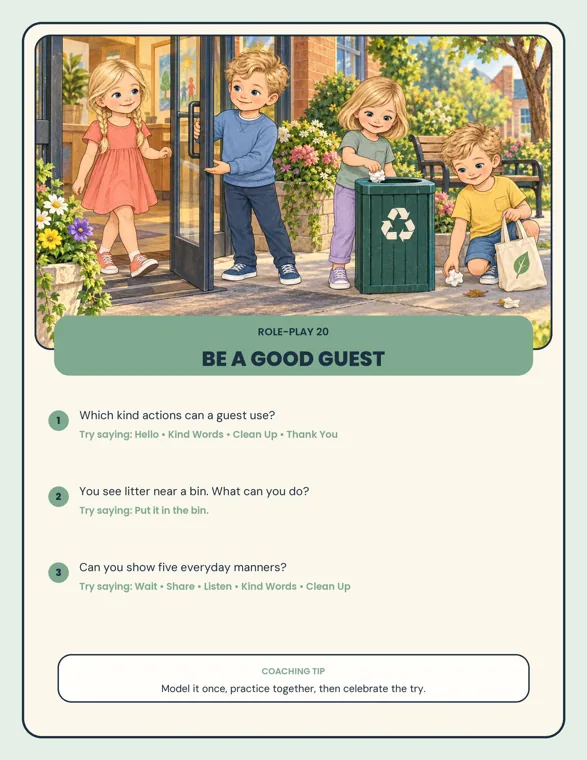
Visiting another family’s home adds rules your child doesn’t know: shoes off at the door, a room that’s off limits, a dog that isn’t fed from the table. On the drive over, go through what you know about the house. Then name the three things a guest does everywhere: ask before touching, follow that house’s rules even when home is different, and help tidy up.
Toys cause most of the trouble at a cousin’s house. Practice “Can I play too?” and “May I use this?” and decide in advance what your child does when the answer is no, such as asking for a turn later or finding another toy.
At the end of the visit, your child thanks the host by name. Practice the leaving line, “Thank you for having us,” because it comes when children are tired and coats are going on. A goodbye said at the door counts even if it’s quiet.
Manners in stores, lines and other public places
Holiday errands put children in long checkout lines, crowded stores and sometimes a service or a school concert. The manners there are waiting, a quieter voice, walking instead of running, holding the door and saying “Excuse me” to get past someone. Tell your child what the place will be like before you get there, and choose one skill to work on, such as waiting in line.
Bring a quiet activity for any wait longer than a few minutes, because standing still with empty hands is the hardest version of waiting. Afterward, name one thing that went well, like “You waited in that long line with calm feet,” instead of listing what went wrong.
How to practice manners at home before the holiday
Short, playful rounds a few days ahead work better than a lecture at the door. Choose three to five situations from the table at the top and practice one or two a day. Say please and thank you to your child, not only to adults in front of your child. Children pick up the words they hear used with them.
Role-play the holiday before it happens
Take turns being the child, the grandparent, the host and the cousin. A stuffed animal can play the relative if your child is shy. Act out the silly version first, such as grabbing the rolls or shouting hello from the stairs, then the kind version; children enjoy correcting the silly one. Finish with one real mission for the day, such as saying thank you when someone passes the food.
Picture cards and a manners chart
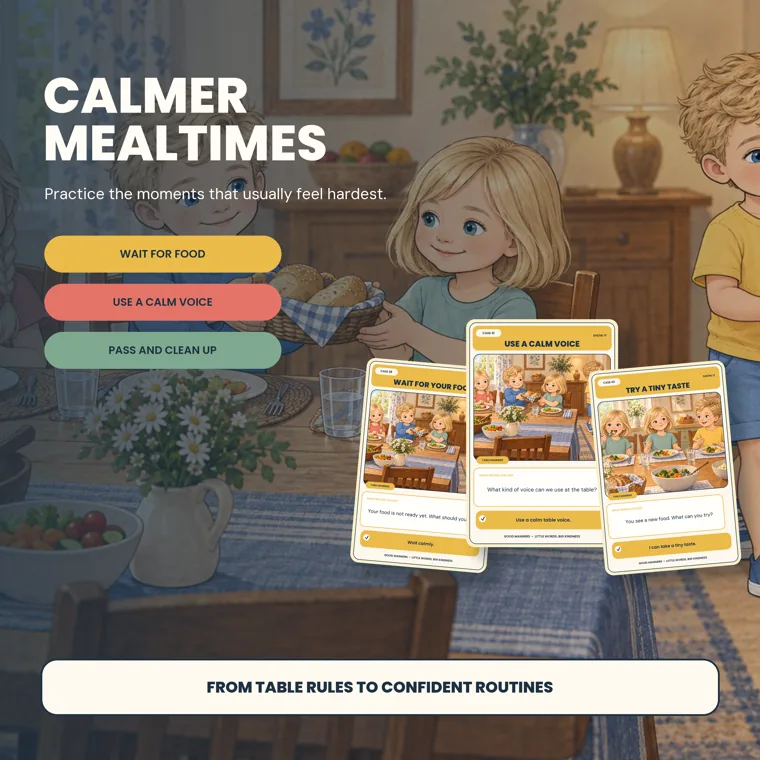
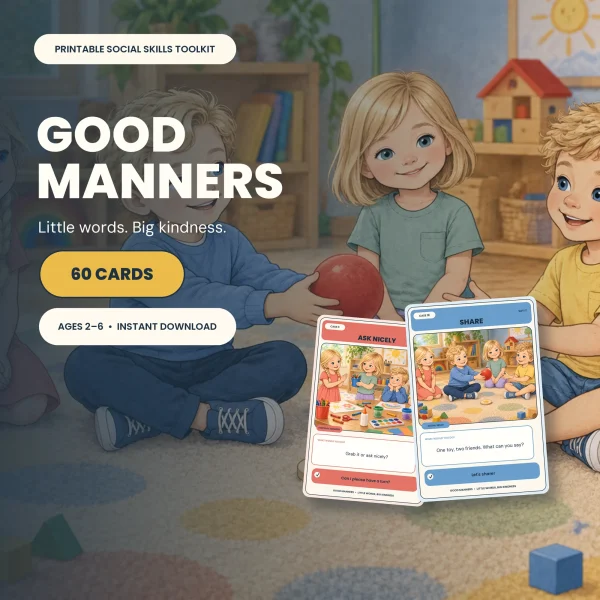
Picture cards help younger children because the situation is on the card before the words are. Our Good Manners cards have 60 cards in four colored sets of 15. The yellow table manners set includes sitting at the table, asking before reaching, waiting for your food, a calm voice, cleaning up and trying a tiny taste. Each card asks “What would you do?” and prints the answer in a bar at the bottom, so cover the bar if you want your child to think first.
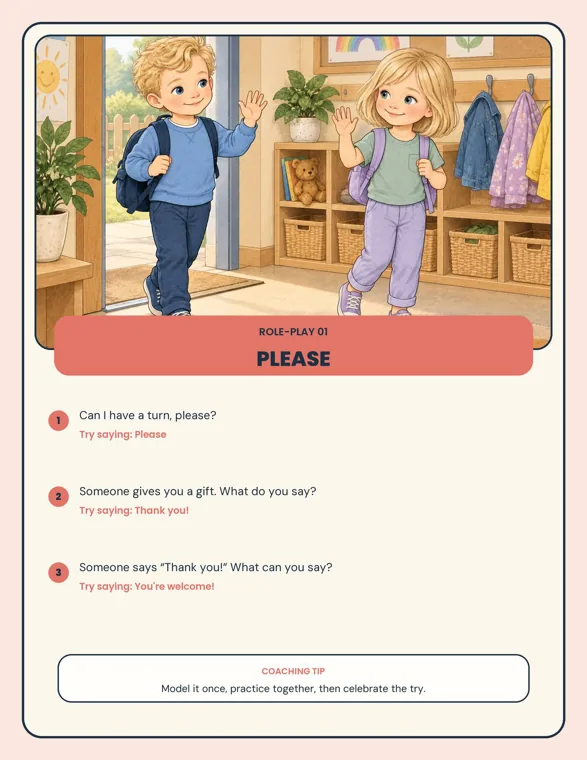
The bonus file adds 20 role-play pages with three prompts each and an eight-page parent guide that suggests choosing three to five cards at a time. Match the cards to your holiday: the table set and the guest page before Thanksgiving dinner, the gift prompt before Christmas morning.
The same file has a four-week chart with five habits to circle or star each day: said please, said thank you, used kind words, took turns and helped someone. Use it to notice progress rather than to grade a visit. Our guide to using a behavior chart explains how to pick a few behaviors and when to phase stars out.
When a child forgets their manners in front of family
Every child forgets at some point during a long holiday, usually when hungry, tired or overexcited. Handle it quietly. Lean in, say “Let’s try that again,” and give the words if your child needs them. A whispered reminder at the table works. A lecture in front of the relatives teaches embarrassment more than manners.
Don’t demand an apology or a thank-you on cue for an audience. Prompt once, say the words yourself if your child can’t, and move on. If a relative comments, “We’re working on it” ends the conversation. At home, name one thing your child did well, then pick the situation to practice before the next visit.
Sometimes the fix is the schedule, not the child. A child who skipped a nap or hasn’t eaten since lunch will struggle with any manners, so feed children a snack before a late holiday meal and plan a quiet break in another room. For more printable cards, games and pages for family gatherings, browse our home page.
Printables from this article
Related articles
Printable Flashcards
Pattern Activities for Preschool: AB to Growing Patterns
Fourteen pattern activities for preschoolers, ordered from first AB rhythms to growing number patterns, with what to prepare, how long each takes and where kids get stuck.
Printable Flashcards
What Is a Ten Frame? How to Fill One and 8 Activities
How a ten frame works, why five on top and two below reads as seven, what age to start, and eight short activities with players, time and setup.
Printable Flashcards
Telling Time Activities: How to Teach Time to Kids by Stage
Fifteen clock activities sorted by stage, from an hour-hand-only clock to elapsed time on a number line, each with ages, players, time, supplies and the mistake to watch for.