Fall Activities for Kids: Toddlers, Preschoolers & Outdoors
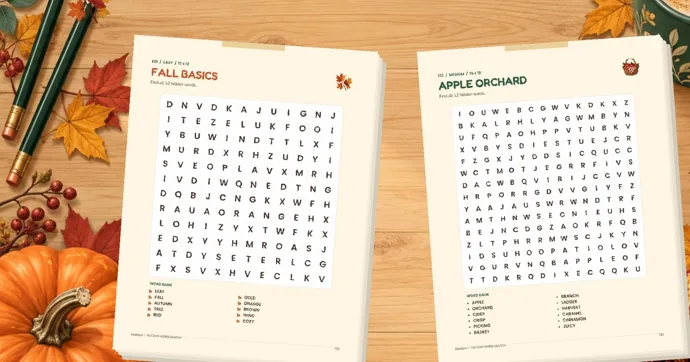
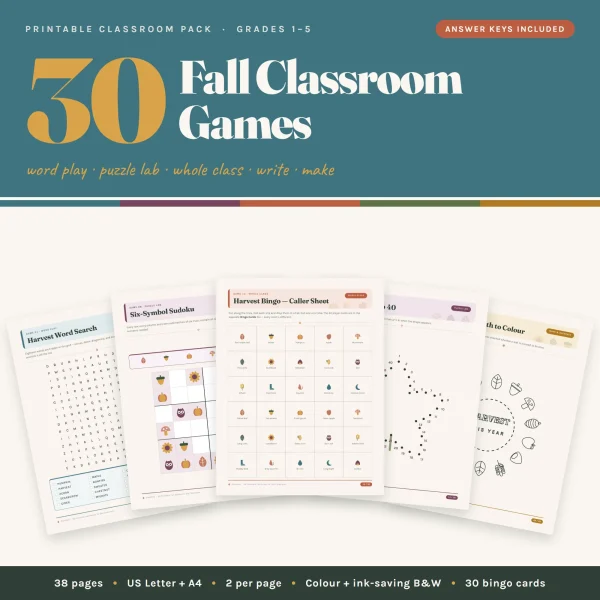
Fall activities for kids can be as simple as a leaf walk with a checklist, an apple cut open for stamping, or a word search saved for a rainy afternoon. Match the activity to the child: toddlers need a few minutes of hands-on play with big leaves, preschoolers like counting and sorting what they find, and school-age kids can take on puzzles, mazes and a roll-a-die scarecrow drawing.
Where you’ll be matters as much as age. The sections below go outdoors first, then through each age group, then to rainy days and the classroom, with setup, rough timing and the spots where an activity tends to go wrong. The time estimates are our planning suggestions; stretch them when children are still interested.
Outdoor fall activities for kids: leaf walks, collecting and farm trips
A walk costs nothing and works for every age in the family. Pick a route you can finish before anyone gets cold or tired: around the block, a schoolyard, or a park loop of 20 to 30 minutes. Give each child, or each pair, one job so the walk has a shape.
A leaf walk with a checklist
For children who can read short phrases, a checklist turns a stroll into a game. The Autumn Scavenger Hunt page in our fall classroom games pack has 18 boxes, from “A leaf bigger than your hand” to “A puddle (do not step in it)”. Its instructions say finders don’t have to pick anything up, so the list still works in a park where collecting isn’t allowed.
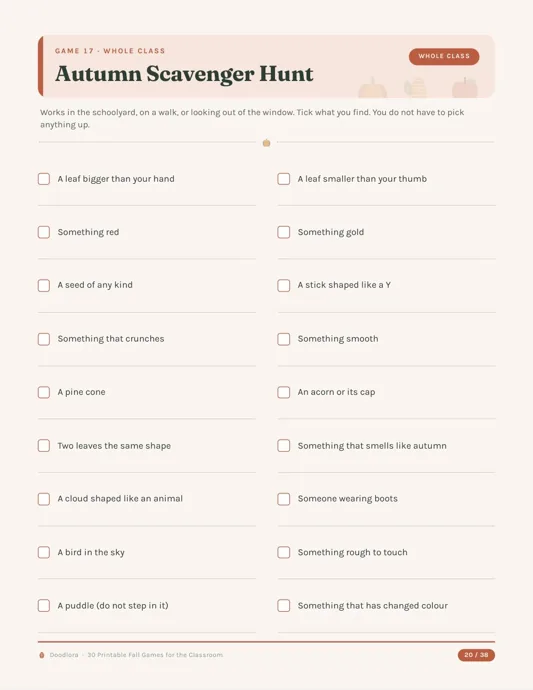
Hand out one sheet and a pencil per pair; a clipboard or a hardback book keeps the paper flat. Before you set off, agree on the open items. “Something that smells like autumn” and “Two leaves the same shape” can start a debate, so decide that any reasonable answer counts. A child who can’t read yet can walk with an older partner who reads each line aloud.
Stop when you’re back at the door, then count the ticks together instead of naming a winner. When someone asks why leaves turn yellow and orange, the trivia answer key in the same pack has a child-sized explanation: the green chlorophyll breaks down, and the yellow and orange colors that were already in the leaf show through.
Collecting, sorting and pressing leaves
Where picking up is allowed, bring a paper bag for each child. Back home, sort the haul by color, by size or by shape. Two leaves from the same tree laid side by side often show how much the color varies on one branch.
For leaf rubbings, place a leaf vein side up under thin printer paper and rub the side of a peeled crayon over it. Flat, fresh leaves give the clearest lines; dry, curled ones crack. To keep favorites, press them between sheets of paper inside a heavy book for several days, until they feel dry and papery.
Leave wild mushrooms and berries where they grow, and wash hands after a collecting walk. For a longer list of what can come home and what stays put, plus the tick check after walking through long grass, see these nature scavenger hunt ideas.
Apple orchard and pumpkin patch trips
A farm outing is a bigger trip, so give children something to do besides waiting in line. Before you go, check the farm’s own rules on picking, wagons and prices, because they differ from farm to farm. In the orchard, ask each child to find the reddest apple within reach, or to compare two kinds by crunch.
At the pumpkin patch, one simple rule saves an argument: each child picks a pumpkin they can carry on their own. Pack wipes, a spare layer and a bag for apples. Short legs tire long before the rows end, so plan to turn back halfway.
Fall activities for toddlers: short, big and hands-on
Toddlers explore with their hands and mouths, and their attention lasts minutes rather than an hour. Plan 5 to 10 minutes per activity and offer one thing at a time. Most printed activity sheets, including the puzzle packs in the Doodlora Studio shop, are written for children who can already read or count, so this age is mostly about real leaves, apples and pumpkins.
Keep small things with the adult. The American Academy of Pediatrics notes that young children can choke easily on food or small objects they can reach, and it lists nuts and seeds among the foods to keep from children until 4 years of age or older. Acorns, acorn caps, pebbles and berries stay in the adult’s pocket, and big leaves are what this age collects.
Ideas that fill a few minutes each:
- Leaf crunch walk. Walk through dry leaves and listen. Name the sound together, then find a pile that stays quiet because it’s wet.
- Sticky leaf window. Tape a sheet of clear contact paper to a window, sticky side out, and let the toddler press leaves onto it. Nothing needs glue or scissors.
- Two-bowl sort. Put out two bowls and a handful of big leaves, then sort red into one bowl and yellow into the other. Stop when the leaves run out.
- Apple stamping. An adult cuts an apple in half across the middle, which shows a star of seeds; the toddler dips the cut side in washable paint and stamps it on paper.
- Pumpkin touch. Let a toddler pat, roll and lift a small pumpkin. If an adult opens one and scoops the seeds out first, the slippery strings and pulp make a whole sensory session.
Each of these ends when interest fades. Paint and pumpkin goo both finish at the sink, so set up close to it.
Fall activities for preschoolers: counting, sorting and first crafts
Preschoolers can follow two-step instructions and enjoy counting what they’ve collected. Allow 10 to 20 minutes for each activity, and finish with something the child can show.
Counting acorns, leaves and pumpkin seeds
An egg carton makes a counting tray. Write a number from 1 to 6 in each cup with a marker (use all 12 cups for confident counters), and let the child fill each cup with that many acorns or small leaves. Seeds from a carved pumpkin work the same way once they’re rinsed and dried on a towel.
Check together by counting out loud; a wrong cup just means a recount. Stay at the table while acorns and seeds are out, since the AAP’s under-4 guidance on nuts and seeds still covers a three-year-old. Put them away afterward, too: the AAP notes that many choking incidents happen when older brothers or sisters give small objects to a younger child.
A squirrel maze and a numbers page
Children who hold a pencil well can try the squirrel maze in the fall classroom pack. The squirrel buried her acorn and can’t remember the way; the path runs from START on the left to FINISH on the right, and only one route works. Let them trace it with a finger first, then with a pencil.
The same pack has a dot to dot that runs from 1 to 40, and a color-by-number leaf where each small piece carries a number to match the key. The dot to dot asks for counting past 20, so we’d save it for children close to kindergarten rather than younger preschoolers.
A paper pumpkin with an adult helping
The pack’s paper pumpkin is eight strips stacked, fastened with a split pin and fanned into a ball, then finished with a stem and a leaf. Preschoolers can color the strips and help fan them out; an adult should do the cutting and push the pin through.
Read the page before you start. Each strip has a hole marked at both ends, while the supply line lists one split pin, so keep a second pin or a stapler nearby in case you fasten the top and bottom separately. The page also suggests scoring the leaf down its middle line before gluing, so it stands up.
Fall activities for elementary kids: word searches, scarecrows and a bucket list
School-age children can manage longer tasks on their own and enjoy a little competition; the classroom pack above is labeled for grades 1–5. Plan 20 to 40 minutes, and give them a choice between two activities.
Fall word searches from easy to hard
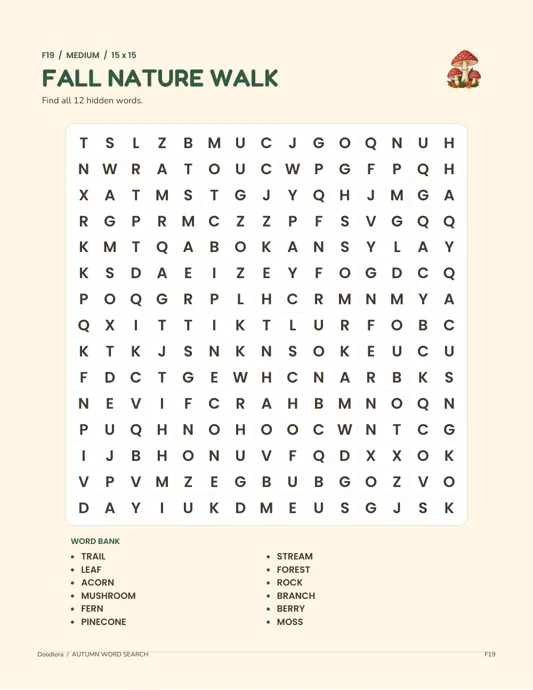
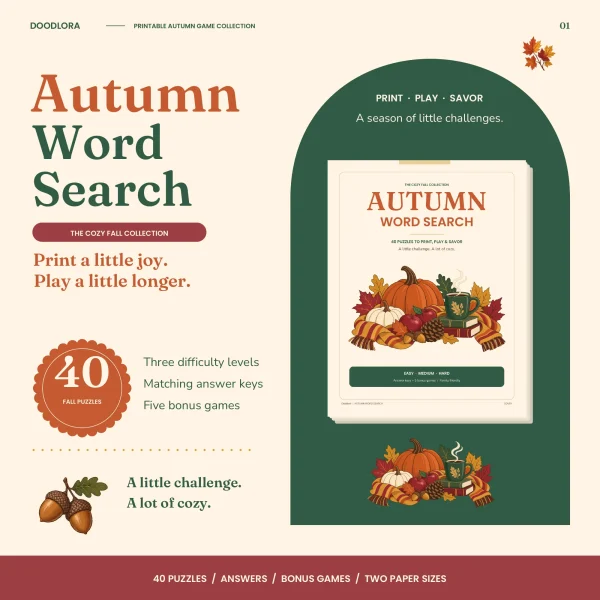
Word searches suit a quiet half hour or a car ride. Our fall word search pack has 40 puzzles: 12 Easy on a 12 by 12 grid, 16 Medium on 15 by 15, and 12 Hard on 20 by 20. On Easy pages words run right and down, with up to two going diagonally down-right. Medium and Hard words go in all eight directions, backward included, so start a new solver on Easy even if they read well.
After a nature walk, try puzzle F19, Fall Nature Walk. Its 12 words include trail, fern, mushroom and moss, so children hunt on paper for what they just saw outside.
Check the themes if you want a plain fall set. Four puzzles are holiday ones (Thanksgiving, Halloween Fall, Thanksgiving Dinner and Thanksgiving Challenge), and one bonus game is a Thanksgiving word race; save those for later in the season.
For siblings or a class, the bonus Fall Word Race works with any main puzzle. Print the same page for each player, set a 3-minute timer, and give 1 point per word confirmed on the answer key. The most words wins, and a tie is a shared win.
Roll and draw a scarecrow
This one needs only a die and a pencil. The Roll & Draw a Scarecrow page in the classroom pack has six rows (hat, eyes, nose, mouth, arms and a friend), each with six choices. Children roll once per row and draw what they land on, so a scarecrow might end up with a top hat, sleepy-line eyes, a twig nose and an owl for company.
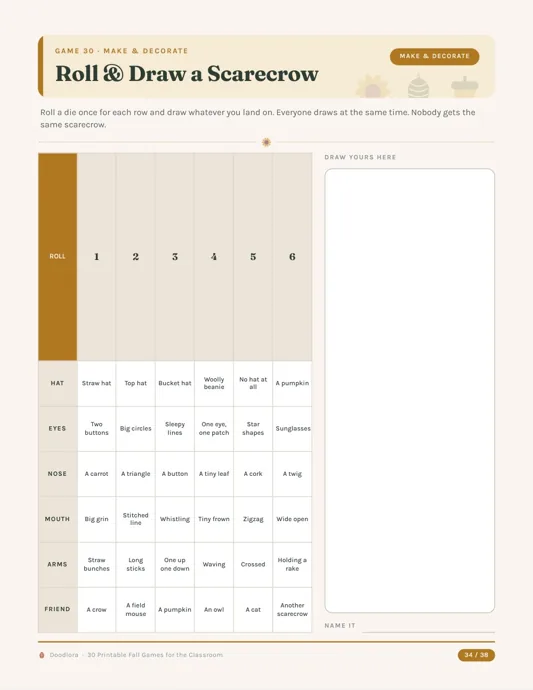
Everyone draws at the same time, which suits a group. With only one die per table, let children take turns rolling one row at a time. Finish by asking each child to name their scarecrow on the line under the drawing box and hold it up.
An autumn bucket list for the whole season
For a project that lasts weeks, the Autumn Bucket List page has 18 printed ideas and two blank lines for your own. Some are quick, like “Draw the tree outside your window”. Others need a parent’s call first, such as “Drink cider outside” or “Get caught in the rain on purpose”.
Read the list together, cross out anything that doesn’t suit your family, and add two ideas of your own. Then pin it to the fridge and tick items off through November.
Rainy fall days: coloring, bookmarks and indoor hunts
Rain cancels the walk, not the season. Set up a table with paper, pencils and a timer, and offer a choice of two activities.
Detailed fall coloring pages for older kids
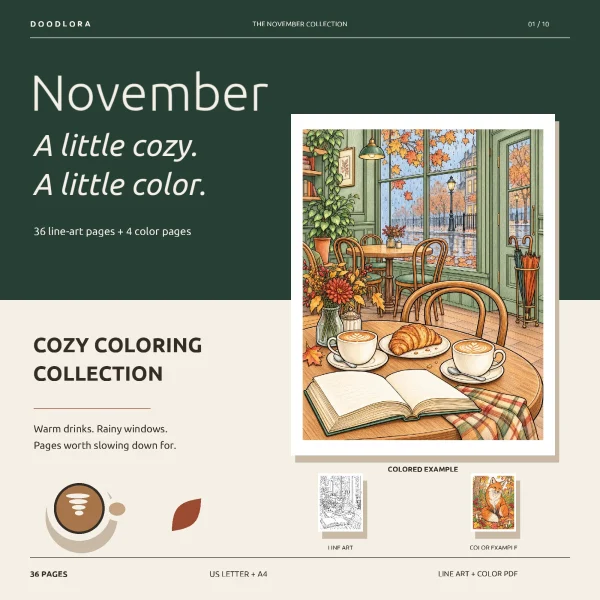
Some children enjoy a slow, detailed page. Our Cozy November coloring pages have 36 line-art pages, and the later ones include a squirrel in a tree hollow (page 28), a fox (page 29), a hedgehog with pumpkins (page 30) and an owl (page 31). For a wet afternoon, page 27 shows rain boots standing in a puddle beside a dropped umbrella.
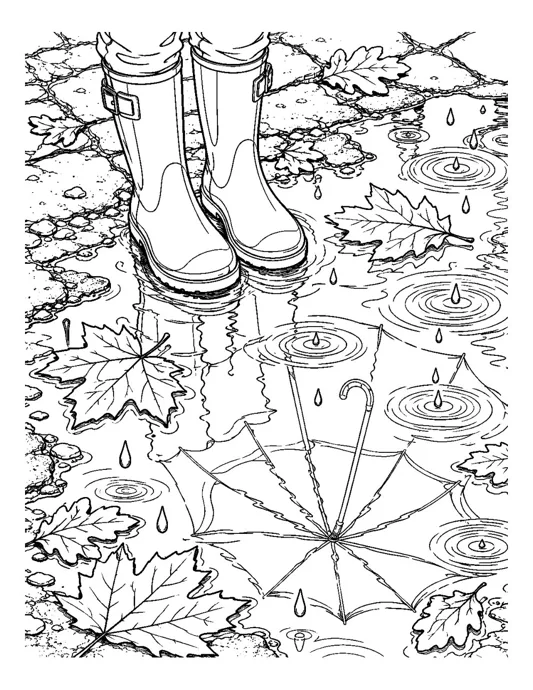
The lines are fine and the spaces small, so these pages suit older children with sharp colored pencils, or a parent coloring alongside. Print at 100% on the paper size the file was made for; how to print coloring pages walks through that setting and which paper suits pencils or markers.
Leaf bookmarks and a reading corner
The classroom pack also has four bookmarks with short fall lines, such as “Big oaks were once very small acorns.” Print them on card stock, cut along the dashed lines, then punch a hole and add a loop of yarn. Pair them with a blanket and a stack of library books.
Bringing the scavenger hunt indoors
When rain cancels the checklist walk, use the window: a bird in the sky, a puddle and someone wearing boots can all be ticked from inside. The fall party games guide has a 16-item fall scavenger hunt with an indoor version for rainy days. Late in October, our Halloween activities for kids add crafts and drawing for the run-up to trick-or-treating.
Fall activities in the classroom: a 40-minute plan
Teachers can join the outdoor and paper activities into one block. The plan below assumes pages are printed and a schoolyard route is chosen; the timings are suggestions.
| Time | Activity | Materials | End with |
|---|---|---|---|
| 0–15 minutes | Schoolyard walk with the Autumn Scavenger Hunt | One sheet and pencil per pair, clipboards | Count ticks back in the classroom |
| 15–30 minutes | Fall Nature Walk word search, or the squirrel maze for younger classes | One page per child | Check against the answer key |
| 30–40 minutes | Roll & Draw a Scarecrow | One die per table | Name and show the scarecrows |
Keep a rain plan ready by swapping the walk for the window version. For the November weeks, our Thanksgiving activities for kids cover gratitude leaves, place cards and coloring for the holiday itself.
Printables from this article
Related articles
Printable Coloring Pages
Turkey Disguise Ideas: 18 School Project Ideas & Template
Eighteen ways to disguise a paper turkey for the school project, from a ten-minute snowman to a recycled robot, with materials, ages, time and the usual snags.
Printable Coloring Pages
Coloring Tips: Supplies by Age, Shading and Fixing Mistakes
Which coloring tools and pages suit each age, the order to color a page in, simple shading, fixing mistakes and splitting a busy page across a few sittings.
Printable Coloring Pages
Christmas Activities for Kids: Crafts for Home and Classroom
19 Christmas activities for kids, grouped by situation: crafts, kitchen projects, outings, quiet evenings, after Christmas and the last week of school.