Halloween Activities for Kids: Crafts and Activity Sheets
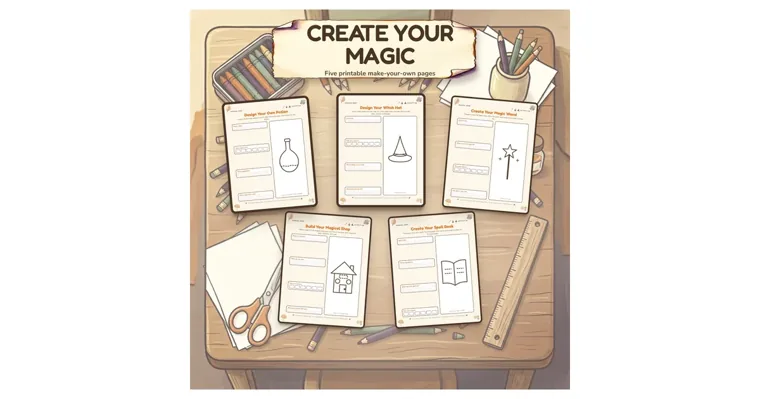
Paper monster faces, a drawn potion bottle and a pumpkin covered in silly faces are Halloween activities for kids that can start with supplies already in the house. A counting sheet or word search gives readers something quieter to work on, while fuse beads suit a longer afternoon.
The times and age groupings below are planning suggestions. Follow the children’s reading and handling skills, and the age labels on their supplies.
Halloween crafts at home for a short gap before trick-or-treating
Paper and pencils fit the short stretch before costumes go on. Paint needs a place to dry, and a half-built bead design needs a place to stay. A paper face can go straight into a child’s bag when it’s time to leave.
Make a paper monster portrait. Give each child construction paper, a glue stick and a backing sheet. Brighter Futures Indiana suggests circles, triangles and squares for the face. Adults cut the shapes for children who aren’t ready for scissors.
Allow roughly 10–15 minutes for one child or a table of two to four. Preschoolers can arrange adult-cut shapes, and school-age children can cut their own. Start with a big face shape, add eyes and a mouth, then name the monster before putting it aside.
Set the loose shapes out before opening the glue. Children can move an eye around until they like the expression, then stick it down. A face with mismatched eyes is still a finished face, and there’s no model everyone has to copy.
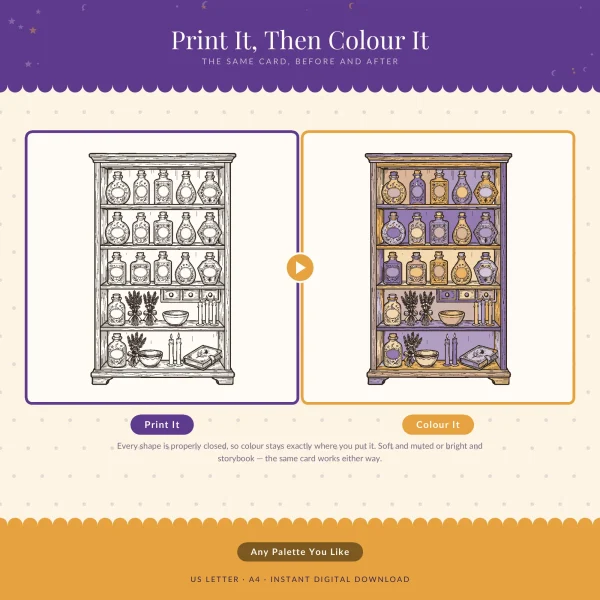
Color one corner of a witch’s shop. Give each child a printout and colored pencils, and allow about 10–20 minutes for a chosen part of the picture. The potion cabinet in Cozy Witch Shop pages has rows of bottles with small labels and fine lines.
For this short session, choose a shelf to color and leave the rest for another day. The whole cabinet can wait until the child wants to return to it.
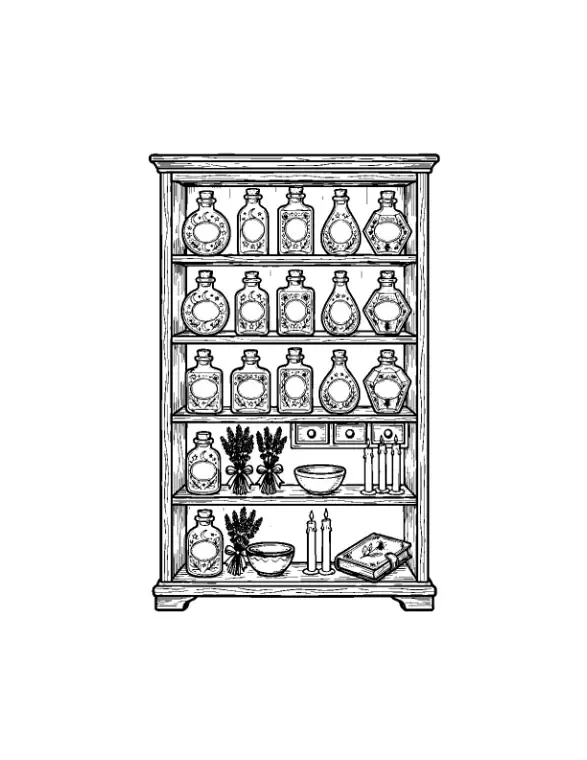
This detailed sheet suits elementary-age children who like coloring small spaces, with help where they need it. For preschoolers, draw a big pumpkin outline on blank paper instead. Check coloring-page print settings, then print the chosen page.
Give a pumpkin several faces. Put a whole pumpkin and washable markers on a covered table. Each child draws an expression on a different side, then turns it around to introduce the faces. Allow around 10–15 minutes, with an adult steadying the pumpkin for younger children.
Keep the pumpkin whole for this activity. There’s enough to decide in an angry eyebrow or a crooked smile, and the finished decoration can stay on the table. Use drawing supplies labeled for the child’s age, and keep the markers on the pumpkin and paper.
Drawing a Halloween potion, witch hat or tiny shop
A potion label takes a child’s own ideas further than a face does: the child decides what the bottle holds and what its magic does. This suits one child or a small group sharing pencils. Allow roughly 15–25 minutes and stop after one finished design.
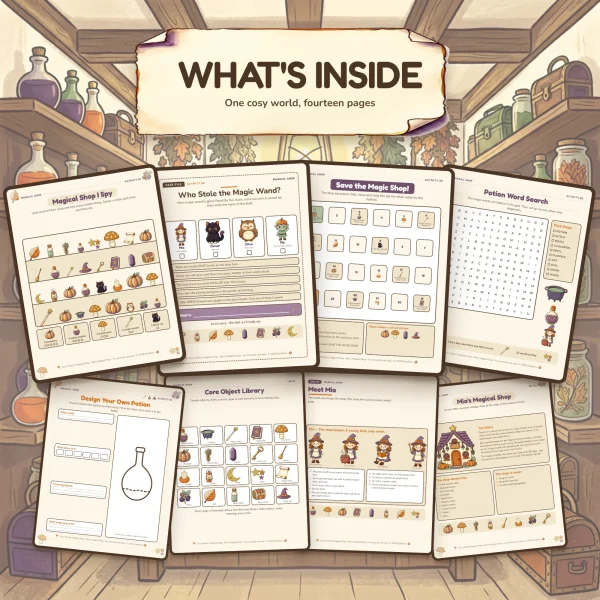
Our Witch Shop activity pack has five design pages. The potion sheet asks for a name, a color, three ingredients and a magical effect, then leaves a large bottle to draw in. A witch hat, wand, shop and spell book each have their own prompts and drawing space.
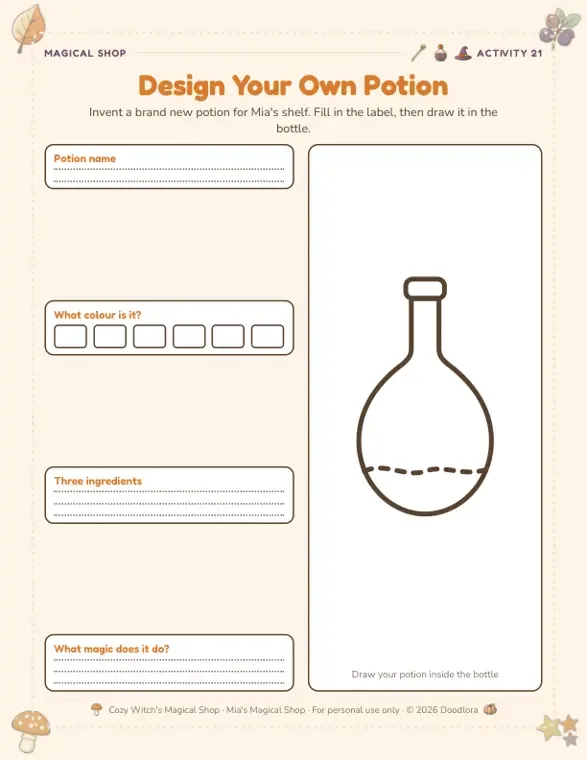
Give everyone the same prompt, then let the answers diverge. A potion might turn a yawn into a squeak or make a pumpkin tell jokes. Those are invented drawing ideas, so the ingredients can stay imaginary: a moonbeam, a sock cloud and a pinch of giggles.
For preschoolers and beginning writers, read each prompt aloud and write down the child’s answer while they draw. Skip the neatly copied label, because the interesting part is what the potion does. Independent writers can fill the boxes themselves, then describe their bottle to a partner.
The nonprofit education organization Waterford also suggests letting children draw when they aren’t yet writing. A finished picture and a spoken description can be the end of the activity. Spelling every ingredient is a separate task.
For another design, decorate the hat sheet or draw the shop and name its keeper. The shop page asks who works there, and a child can add a story about the first customer’s visit. Blank paper works too, with an adult writing the prompts across the top.
Print one design per child at first. The five outlined sheets are part of the pack made by Doodlora Studio, and the US Letter file is the one for Letter paper. The choice of paper for printables depends on the drawing supplies, so keep a small pencil-only table simple.
Halloween activity sheets for readers and counters
After the open-ended potion drawing, a counting sheet or word search gives children a task with a right answer. Pick by skill: a pumpkin count can start with adult help, while the word search needs a reader who knows words such as CAULDRON.
The Witch Shop pack also opens with a few pages of design notes, character details and the shop setting. Those are reading for the adult, so keep them with your own preparation and hand children only the sheet they will work on.
Counting pumpkins and potion bottles
The counting sheet has four shelves of objects, with five picture labels underneath. The labels ask for five pumpkins, four potion bottles, three mushrooms, two wands and one black cat. Give each child a copy and a pencil or crayon. It works alone, with an adult, or in pairs taking turns pointing.
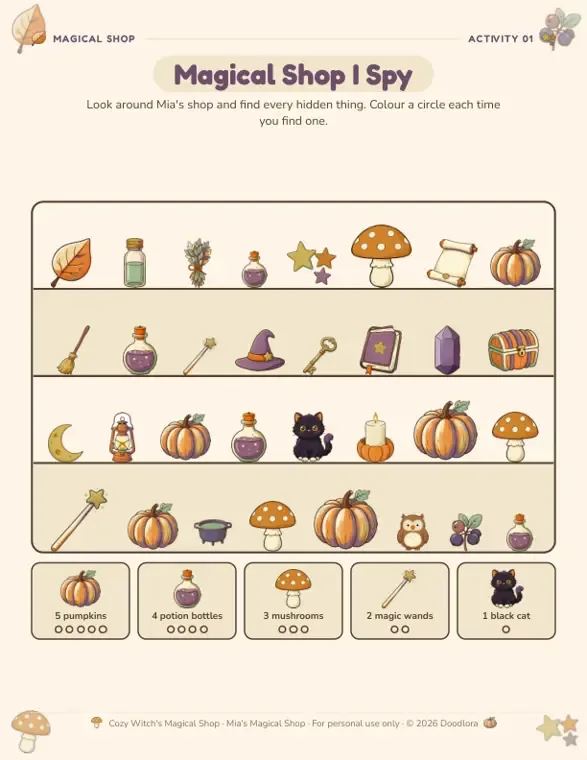
Begin with the cat, which has one circle, then move to a larger count. Color a circle each time an object is found, as the sheet instructs. For a child who loses track, add a light pencil mark beside each object already counted and check one shelf at a time.
Count only the potion bottles that match the purple one in the label. A green bottle on the top shelf is easy to count by mistake, and comparing it with the label picture settles it.
Allow roughly 5–10 minutes for one sheet as a planning starting point, and stay beside a preschooler who needs help tracking the finds. The activity ends when the child can point out the objects behind each completed row of circles. Checking the picture together matters more than finishing first.
A Halloween word search for children who can read the list
The word search hides ten words in a 14-by-14 grid. Print a copy for each reader, put pencils on the table, and allow around 10–20 minutes to start. Younger children can work beside a reader who says each word aloud, and independent elementary readers can search on their own.
Warn children that some words run upward or backward. The instructions name across, down and diagonal, but the grid also spells words the other way. Read the word list together first and mention this, so a reversed word doesn’t look like a mistake.
Solve a spare sheet before handing out copies, because this pack supplies no answer page. Use a light circle around each found word and check its box. If the time runs out, circle the next word to find and save the page. A partly finished search is easy to resume.
When the group needs to get up from the table, switch to Halloween games for kids. The drawing and learning sheets here can stay available for children who prefer to keep working.
Halloween fuse bead projects need a longer table session
Save Halloween bead projects for children who already handle small beads and counted charts. A worksheet can go home unfinished in a folder, but loose beads on a pegboard need a much steadier place. Follow the bead manufacturer’s age label and keep the iron with an adult.
Prepare a chart, pegboards, its listed bead colors, sorting dishes and a tray. One child can build alone, or two can divide the rows. Reserve an hour of table space and allow work to continue another day. That’s a suggested booking window, not a completion time.
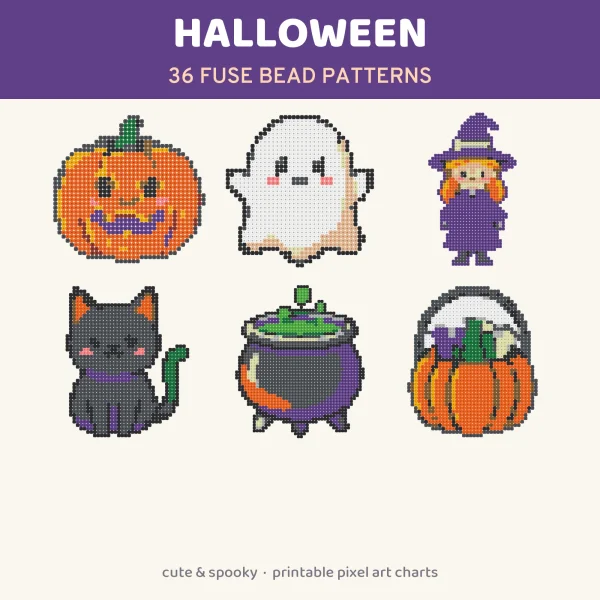
Check the chart dimensions before setting out the boards. Our Halloween bead patterns put the arched black cat on a 48-by-48 chart. Its printed finished size on 5 mm beads is about 9.4 inches (24 cm) across, so a single 29-by-29 pegboard can’t hold it. Check the bead size on the packet before buying pegboards to match.
Choose the chart together, count the available pegs and colors, then begin with a section the child can track. Keep the chart beside the board. An adult does the fuse bead ironing once the design is ready, following the instructions for the beads in use.
A session can end before the design is ready to fuse. Leave the board on its tray, put the child’s name beside it and store it flat where it won’t be bumped. If there is nowhere to keep an unfinished board, choose a drawing sheet for that day.
A Halloween classroom afternoon with drawing and a read-aloud
For a class, the drawing and counting pages can share one set of table supplies. Start with a single sheet per child and a short read-aloud, then give children time to finish or describe their work. Put extra sheets within the teacher’s reach so early finishers can choose another task.
For an elementary class of around 20–30, a proposed half-hour plan is five minutes to introduce the picture and prompts, about fifteen for drawing or counting, five for sharing, and five to collect work. Adjust that plan to the teacher’s available time and the children’s needs. It isn’t a timed classroom trial.
Before class, print each child’s sheet, put pencils in table baskets and set out folders or a collection tray. Read an approved Halloween or autumn picture book. Waterford suggests a library read-aloud and drawing for Halloween reading activities, and the pictures give children something to discuss before starting.
A child working slowly can finish one potion picture and dictate its label. An early finisher can draw the potion’s customer or choose a word search they can read. In pairs, let each child explain one detail, rather than waiting through a whole-class presentation.
Check the school’s celebration rules before choosing witch and spell pages. A class using an autumn theme can draw pumpkin faces and paper shape portraits instead. For mixed ages at home, use the same table plan on a smaller scale and keep loose bead supplies at a separate supervised table.
Leave the last few minutes for names and collection. Ask each child to point to the part they want to finish next, put the picture in their folder and close the pencil basket. The next session then starts with their own unfinished idea.
Printables from this article
Related articles
Kids Activity Books
Secret Agent Activities for Kids: Spy Codes, Clues & Party
Spy codes, invisible ink, Kim's Game, a string laser maze and a case to solve, with player counts, timings, supplies and the snags to plan around.
Kids Activity Books
Math Puzzles for Kids With Answers, Sorted by Grade
Ready-to-use math puzzles from kindergarten to middle school, each with its answer, plus how to run them as a home warm-up or a classroom center.
Kids Activity Books
Quiet Time Activities for Kids: Bin and Quiet Book Ideas
How to swap a dropped nap for an hour of quiet time, with a starting length, a timer, a rotating bin and solo activities sorted by age, from board books to build-and-play mats.