Animal Group Names: A Pride of Lions, a Murder of Crows
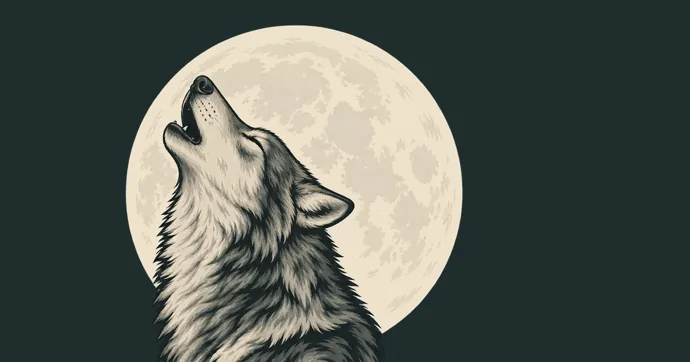
Most animal groups have a plain everyday word: a herd of elephants, a flock of birds, a school of fish, a pack of wolves, a pod of whales. Those are the names scientists actually use. The famous fancy ones, like a murder of crows, a parliament of owls or a bloat of hippos, are mostly old word play. Many trace back to The Book of Saint Albans, an English hunting book printed in 1486, and most of them fell out of everyday use long ago.
So the right answer depends on why you’re asking. A child learning English needs the everyday words first. A writer can borrow a fancy one for color. A quiz needs the fancy ones, plus an answer key that accepts more than one name. This guide is split up that way.
| You are… | Use these | Watch out for |
|---|---|---|
| Teaching a child the basics | herd, flock, school, pack, swarm, pod, colony, troop | Don’t teach “murder of crows” as the normal way to say it |
| Writing a story or a poem | murmuration, pride, parliament, dazzle, skein | Use the fancy word once, then go back to plain words |
| Writing a school report | flock, herd, pack, pod, colony | Fancy terms read as jokes in nonfiction |
| Running a quiz | pride, murder, flamboyance, tower, bloat, crash | Many animals have two or three listed names |
The names people ask about most
Here are the group names people search for most often, with the everyday word next to the famous one. The names come from Wikipedia’s “List of animal names” table; where that list gives several words, the table shows the best-known ones.
| Animal | Everyday word | Famous or old word | How it’s used |
|---|---|---|---|
| Lions | pride | pride | The normal word, biologists included |
| Crows | flock | murder | Old hunting-list term, long out of use |
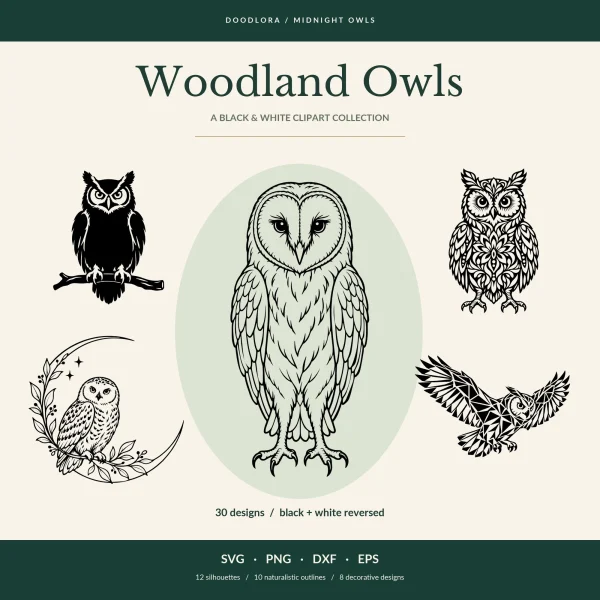
| Owls | flock | parliament | Came from popular culture |
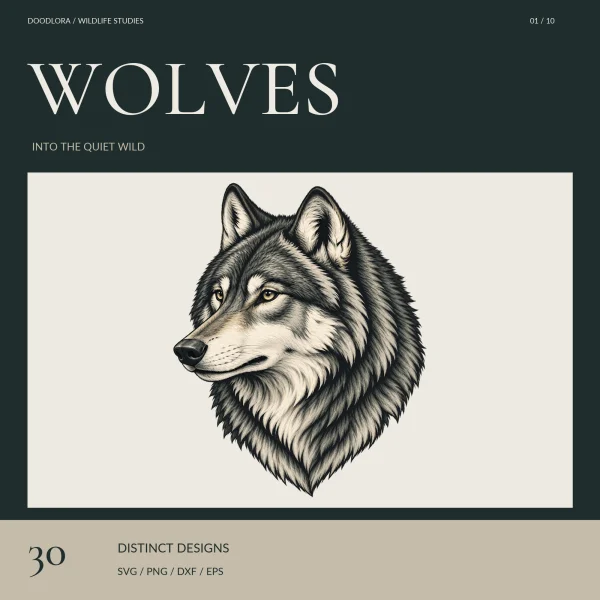
| Wolves | pack | pack | A real, everyday phrase |
| Whales | pod, herd | pod | A real, everyday phrase |
| Geese | flock | gaggle (on land), skein (in flight) | Gaggle is a real, everyday phrase |
| Fish | school, shoal | school | In common use |
| Starlings | flock | murmuration | Listed; mostly word play |
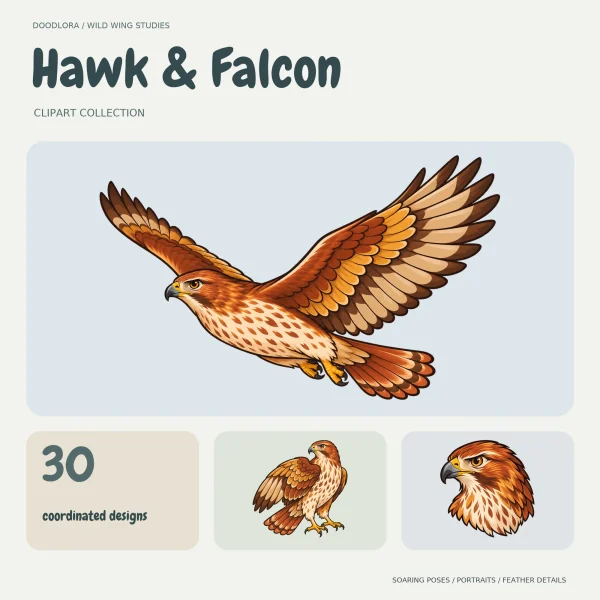
| Hawks | flock | kettle (soaring in large groups) | Listed for big soaring groups |
| Flamingos | flock | flamboyance | Listed; mostly trivia |
| Zebras | herd | dazzle | Listed; mostly trivia |
| Giraffes | herd | tower | Listed; mostly trivia |
| Ravens | flock | unkindness, conspiracy | Listed; mostly trivia |
| Hippos | herd | bloat | Listed; mostly trivia |
Pride of lions
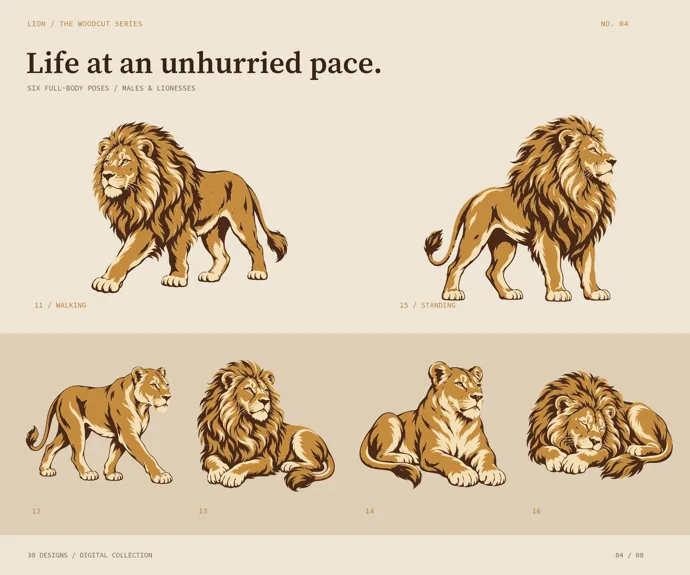
A pride of lions is one of the few colorful group names that is also the plain one. Lions are social cats, and a pride is a real family unit: related females and their cubs, with one or a few adult males who are not related to the females. Male lions often compete to keep or win their place in a pride. The same table lists “pride” for big cats in general, and “clowder” for a group of ordinary cats.
What is a group of crows called?
A group of crows is called a murder, but that is a term-of-venery word from old hunting lists, and Wikipedia’s list of animal names says most such terms, “murder” included, fell out of use in the 16th century; in everyday English, and to bird scientists, it is simply a flock.
Parliament of owls
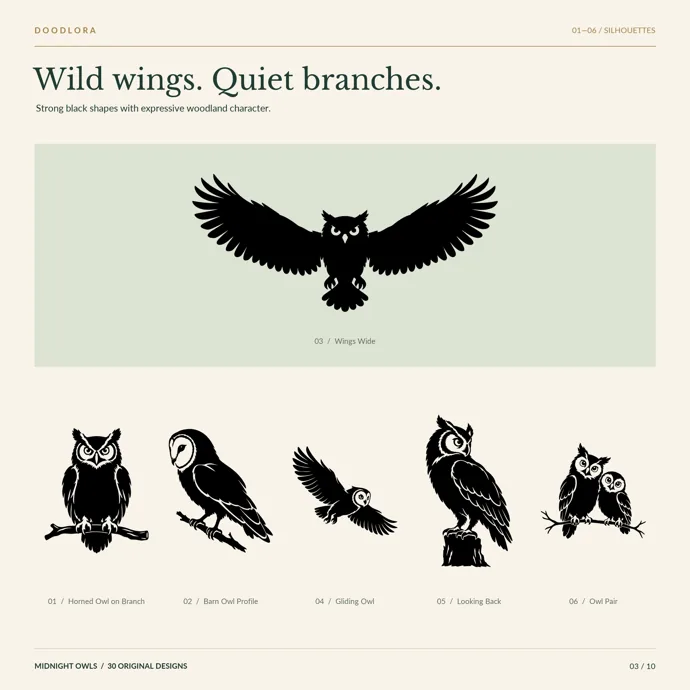
A parliament of owls is a newer joke than most. Wikipedia’s article on collective nouns lists it as an example that comes from popular culture rather than from the old hunting books. There is no everyday word for owls that’s any different from “a group” or “a flock”, so if a quiz asks about owls, “parliament” is the answer it wants.
Everyday group words for kids learning English
Start with eight words. They cover most of the animals a child will meet in books, at a farm or at the zoo. Every animal below is listed with that word in Wikipedia’s table.
| Word | Use it for |
|---|---|
| herd | cattle, horses, elephants, zebras, deer, giraffes |
| flock | birds of almost any kind, sheep |
| school (or shoal) | fish, dolphins |
| pack | wolves, dogs |
| swarm | bees, ants, butterflies |
| pod | whales, dolphins |
| colony | ants, bats, penguins |
| troop | monkeys, baboons, gorillas |
Teach them in pairs of opposites so they stick. “Herd” is for animals that walk together on the ground, while “flock” is for birds in the air or on a field. “School” is for fish, and “pod” is for whales and dolphins, which are mammals, not fish. That last pair is a good one for older kids, because it sneaks in a science fact.
A matching game for two to six children
You need one picture card and one word card for each animal, about ten pairs. Any clear animal pictures work; how to use clipart covers sizing and printing them. Kids who can read short words can play alone; younger ones can play with an adult reading the word cards out loud. A round takes about ten minutes.
- Lay the picture cards face up and the word cards face down.
- A player turns over one word card, reads it and places it under every animal it fits. “Flock” can go under the pigeon and under the hawk.
- Keep going until every word card has at least one animal.
- Check the answers together with the table above. The child who placed the most correct cards reads the next round’s words.
The trap here is that one word fits many animals, and some animals take two words. Dolphins sit under both “pod” and “school”. Count both placements as correct; a child who knows one but not the other has still learned something.
One grammar point: is or are?
In American English, a group word usually takes a singular verb: “The pack is resting,” “The herd is crossing the river.” British English often allows “are” when you mean the members one by one. If your child’s homework comes from an American school, use “is”.
Fanciful names: where they came from
The colorful names have a long story. In late medieval England, hunters used special words for groups of particular animals, called “terms of venery”. Lists of these grew longer and sillier through the 1400s, and The Book of Saint Albans (1486), an essay on hunting attributed to Juliana Berners, ran to 164 items. Many of its entries weren’t about animals at all. They poked fun at people instead, such as “a melody of harpers” or “a poverty of pipers”.
The book was reprinted again and again, and that kept many of the terms alive in dictionaries long after anyone used them for hunting. Wikipedia’s list of animal names says most of them fell out of use in the 16th century, and it names herd, flock, school and swarm among the terms in common use.
Real scientists mostly don’t use the fancy terms. An Audubon article put them to researchers, and a reptile scientist had never used any of them and wouldn’t know what they meant if heard. For birds, the article’s answer is simple: any group of birds is a flock. The same article grants that a few have become real phrases: a pod of whales, a troop of monkeys, a gaggle of geese and a pack of wolves.
Modern writers have kept inventing more, too. A “flange” of baboons, which appears in some lists, started as a joke in a British comedy sketch. If a word sounds too clever, it may be newer than it looks.
Group names for writers, sorted by where the animals live
These are the ones that earn their place in a story or poem because they paint a picture. All of them appear in Wikipedia’s table; the notes in brackets come from that table too.
Birds
- Murmuration of starlings: for a big, swirling cloud of birds in the sky.
- Exaltation of larks: lovely for a morning scene.
- Skein of geese: geese in flight. On the ground they are a gaggle.
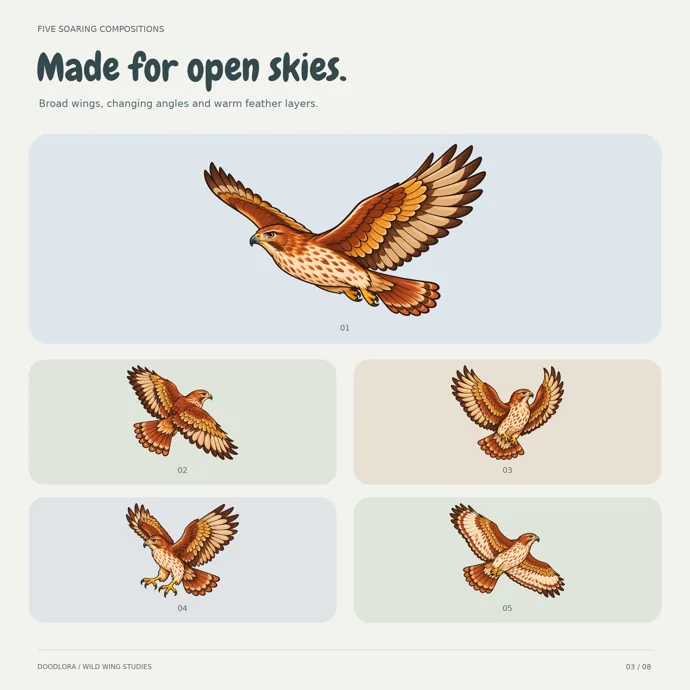
- Kettle of hawks: hawks soaring together in a large group, as if stirred in a pot.
- Unkindness of ravens or conspiracy of ravens: for a dark or eerie mood.
- Convocation of eagles: formal and grand.
- Wedge of swans: swans in flight. A group on the water is a bevy.
- Paddling of ducks: ducks on the water. Ducks flying are a skein.
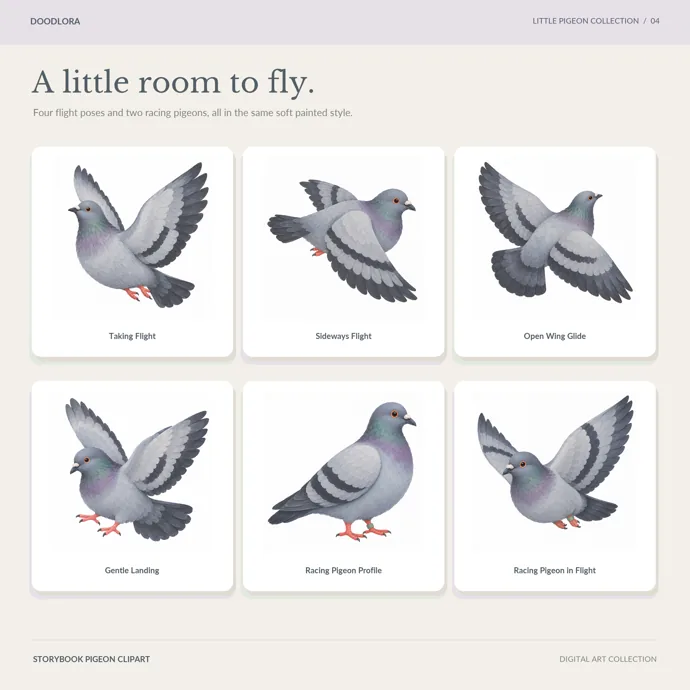
Pigeons are ordinary enough that “flock” is the usual word, and wild pigeons often live in flocks of 50 to 500 birds, depending on how much food is around. The table also lists “flight” and “kit” for pigeons.
Sea animals
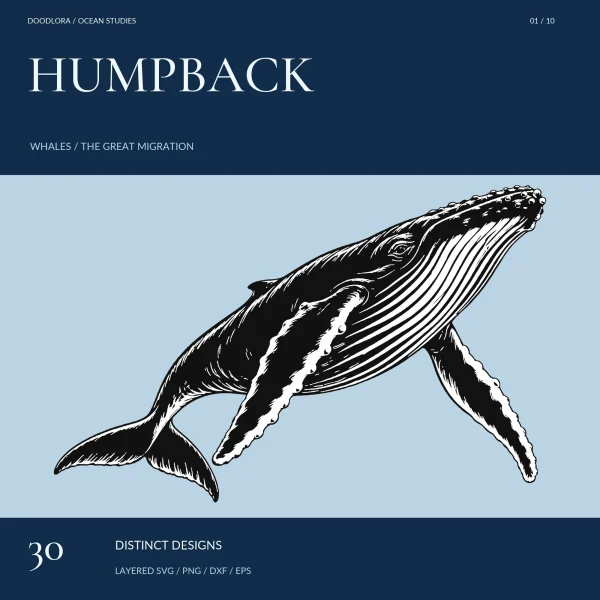
- Pod of whales: the everyday word. Wikipedia’s table adds that “pod” is generally preferred for toothed whales, like orcas, and “herd” for baleen whales, like humpbacks.
- Shiver of sharks: a writer’s word, not a scientist’s.
- Smack of jellyfish or bloom of jellyfish: both are listed, along with the odd “fluther”.
- Raft of sea otters: the sea otter word. Otters in general are a romp.
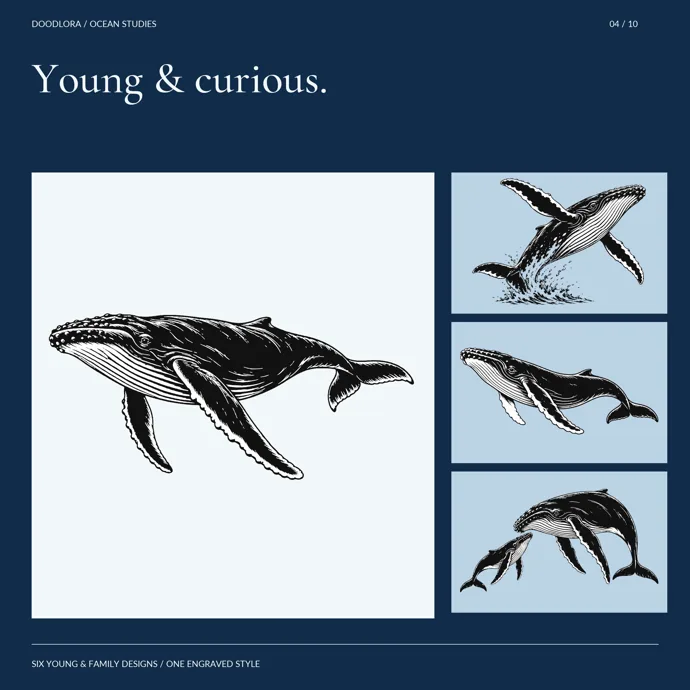
Humpbacks don’t stay in big fixed groups. Apart from mothers with calves, humpback groups usually stay together for days or weeks at most, so “herd” in a story about humpbacks is more poetic than literal.
Land animals
- Dazzle of zebras: easy to link with the stripes. In plain speech, zebras are a herd.
- Tower of giraffes: easy to picture, which makes it a good one for kids.
- Crash of rhinoceroses: fits their size and their temper.
- Bloat of hippopotamuses: a quiz favorite.
- Business of ferrets: one of the oddest; “busyness” is listed too.
- Romp of otters: for playful scenes.
- Skulk of foxes: sly and sneaky.
- Sloth or sleuth of bears: both are listed.
- Cackle of hyenas: hyenas are also a clan.
- Leap of leopards and ambush or streak of tigers.
- Coalition of cheetahs: specifically a group of males.
- Prickle of porcupines and array of hedgehogs.
- Mob of kangaroos: court, herd and troop are listed too.
How to use them without sounding like a list
Use the fancy word once, early, where the picture matters: “A dazzle of zebras crossed the river.” After that, call them a herd, or just the zebras. If the word might stop a reader cold, let the sentence explain it: “a parliament of owls, which is the old name for a group of them”. In a school report or any nonfiction, stick to the plain word unless the report is about the names themselves.
An animal group names quiz round
This works as one round of a family quiz or a classroom warm-up: about 15 questions, five to ten minutes. Read the animal, and players write the group name. For how to set up a full quiz night, see how to host a trivia night.
| # | A group of… | Answer | Also accept |
|---|---|---|---|
| 1 | lions | pride | sawt |
| 2 | crows | murder | flock |
| 3 | owls | parliament | |
| 4 | flamingos | flamboyance | stand |
| 5 | zebras | dazzle | herd, zeal, cohort |
| 6 | giraffes | tower | herd, corps |
| 7 | hippopotamuses | bloat | herd |
| 8 | rhinoceroses | crash | herd |
| 9 | starlings | murmuration | chattering |
| 10 | ferrets | business | busyness |
| 11 | jellyfish | smack | bloom, fluther |
| 12 | geese flying in a V | skein | wedge, team |
| 13 | ravens | unkindness | conspiracy |
| 14 | larks | exaltation | |
| 15 | sharks | shiver | |
| 16 | kangaroos | mob | court, herd, troop |
Decide before you start whether “also accept” answers score. Lists disagree, and someone at the table will know a second name. The safest rule is that any name in the “also accept” column counts.
Two tie-breakers with a twist: ask what a group of baboons is called (the safe answer is a troop; “flange” started as a comedy-sketch joke), and ask whether a group of whales is a pod or a herd (both are right; pod is usually for toothed whales, herd for baleen whales).
Picture cards with animal clipart
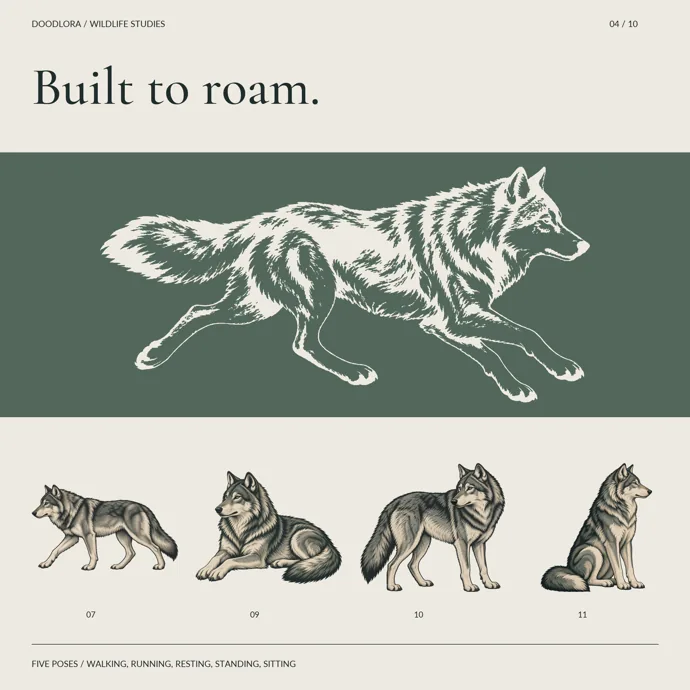
For the matching game or a classroom display, you need a clear picture of each animal. Print one animal per card on Letter paper, two or four to a sheet, and write the group word under it or on the back. If you print several poses of the same animal on one card, the card shows the group itself: six lions for a pride, a few wolves for a pack, scattered hawks for a kettle.
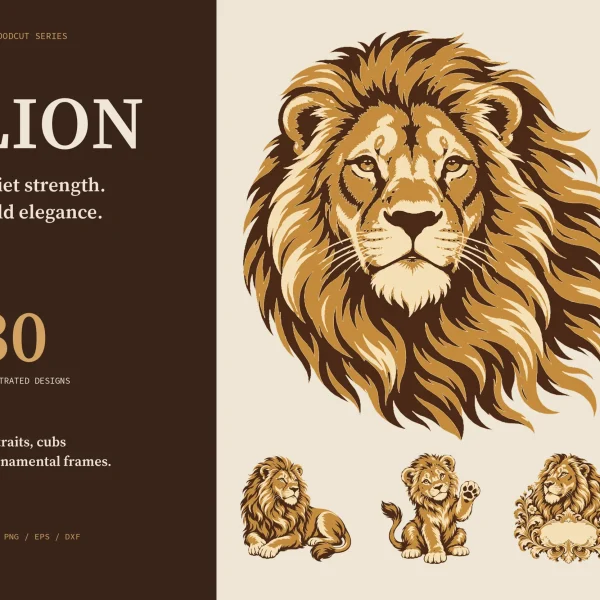
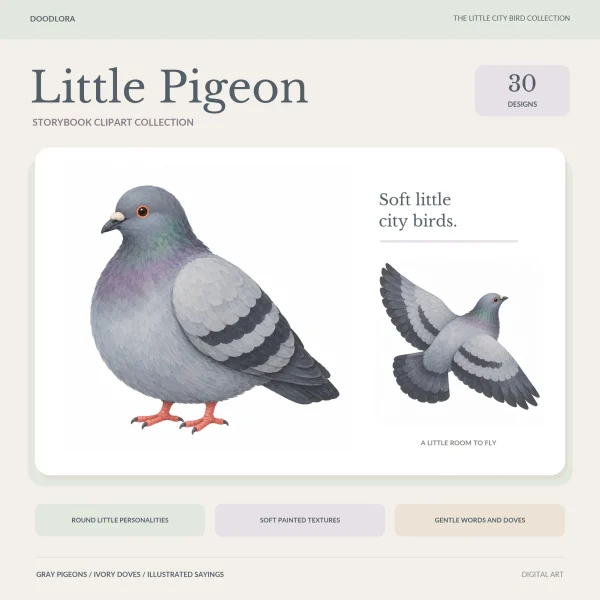
Our animal clipart covers several of the animals in this guide. The Lion Clipart, Wolf Clipart, Black and White Owl Clipart, Hawk Clipart, Humpback Whale Clipart and Pigeon Clipart sets each hold 30 designs as SVG and transparent PNG files. The owl and humpback sets are black and white, which suits cards kids will color in.
Each of those sets draws one animal at a time; only a few designs show a pair or a parent with young. So the “group” on your card comes from how you arrange the pictures. For hands-on projects, animal crafts, bird crafts and ocean crafts go well with a lesson on group names.
Printables from this article
Related articles
Clipart & SVG Cut Files
How to Draw a Truck: Easy Pickup, Big Rig and Cartoon
Split a pickup into three parts before you draw a single wheel: a bed, a cab and a hood. Keep the roof about 2.2 wheels tall and the bed rail level with the hood, and the truck looks right even before the details go on.
Clipart & SVG Cut Files
How to Draw a Train: Steam Engine, Cars and Tracks
Split the page into a 10-square grid, lay a long boiler tube across the middle, set a box cab at the back and a tall stack at the front, hang two big driving wheels under the cab end, then couple cars behind and run the rails to a vanishing point.
Clipart & SVG Cut Files
Hawk vs Falcon: Wings, Size, Hunting Style and Eagles
A falcon has long, narrow wings that taper to sharp points and flies on steady, quick wingbeats; a hawk has broader wings with rounded tips and either soars in slow circles or flaps hard and glides. Falcons kill with a notched beak and hawks with their talons, and eagles are the largest, heaviest-billed members of the hawk family.