Safari Animals: Big Five and a List of 25 African Animals
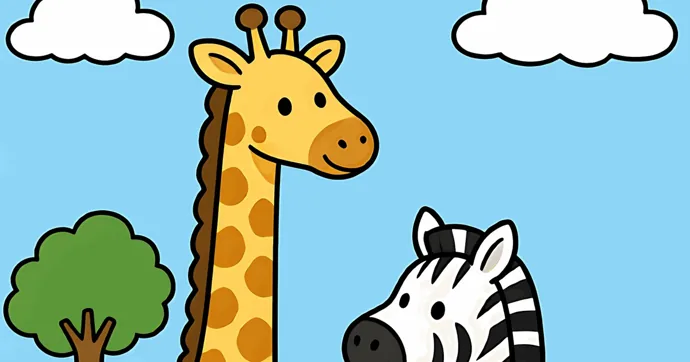
The most famous safari animals are Africa’s Big Five: the lion, leopard, elephant, rhino and buffalo. After them, the ones most people hope to see are the giraffe, zebra, cheetah and hippo. Most of them live on the savanna, a grassland with scattered trees, and how easy each one is to see comes down to when it is awake, how many there are and whether it hides.
This list covers 25 African safari animals, sorted by where you would look: the Big Five first, then the open plains, the water and the birds. Each entry says where the animal lives, what it eats and your chance of seeing it. It works for a child’s animal report or a zoo visit as well as for a trip. Facts come from the University of Michigan’s Animal Diversity Web, Smithsonian’s National Zoo and each species’ Wikipedia page.
Safari animal list: 25 at a glance
The last column is our own sorting, not a measured chance. “Easy” animals are large, active or resting in plain view by day, or live in herds. “Some luck” means you need the right place or hour. “Lots of luck” means few animals, night habits or a talent for hiding. Dry-country species overlap with our desert animals list, where the meerkat also appears.
| Animal | Where in Africa | What it eats | How easy to see |
|---|---|---|---|
| Lion | Most of sub-Saharan Africa | Large hoofed animals | Some luck |
| Leopard | Grassland, woodland, forest | Prey caught by ambush | Lots of luck |
| African elephant | Parts of central, eastern and southern Africa | Leaves, bark, fruit, grass | Easy |
| Rhino (black, white) | Scattered protected areas | Black: twigs; white: grass | Lots of luck |
| African buffalo | South of the Sahara, near water | Grass | Easy |
| Giraffe | Savanna and open woodland | Tree leaves | Easy |
| Plains zebra | Eastern and southern Africa | Short grass | Easy |
| Cheetah | Grassland and desert | Gazelles and other small antelope | Some luck |
| Spotted hyena | Sub-Saharan Africa | Mostly its own kills | Some luck |
| African wild dog | Grassland, open woodland | Antelope | Lots of luck |
| Blue wildebeest | Kenya to Namibia and South Africa | Grass | Easy |
| Common warthog | Open savanna | Grass, roots | Easy |
| Impala | Kenya to South Africa | Grass, leaves | Easy |
| Thomson’s gazelle | Kenya, Tanzania, southern Sudan | Short grass | Easy in East Africa |
| Meerkat | Southern Africa | Mostly insects | Some luck |
| Aardvark | Sub-Saharan savanna | Ants, termites | Lots of luck |
| Hippopotamus | Rivers, lakes, swamps | Grass, at night | Easy |
| Nile crocodile | Sub-Saharan lakes and rivers | Fish, birds, mammals | Easy |
| Waterbuck | Grassland close to water | Grass | Easy |
| Common ostrich | Dry, open country | Seeds, plants | Easy |
| Secretary bird | Open grassland | Insects, small mammals | Some luck |
| Lesser flamingo | Soda lakes | Microscopic algae | Easy at the right lake |
| African fish eagle | Beside open fresh water | Fish | Some luck |
| Gray crowned crane | Eastern and southern Africa | Seeds, insects, frogs | Some luck |
| Red-billed oxpecker | Eastern savanna | Ticks, blood | Some luck |
Big Five animals: lion, leopard, elephant, rhino, buffalo
The name Big Five came from big-game hunters. They used it for the five animals that were hardest to hunt on foot, so it has nothing to do with the five largest. A giraffe is taller than a lion and a hippo is far heavier than a leopard, and neither is on the list. Tour guides kept the name, and these five are now the checklist most visitors carry.
Lion
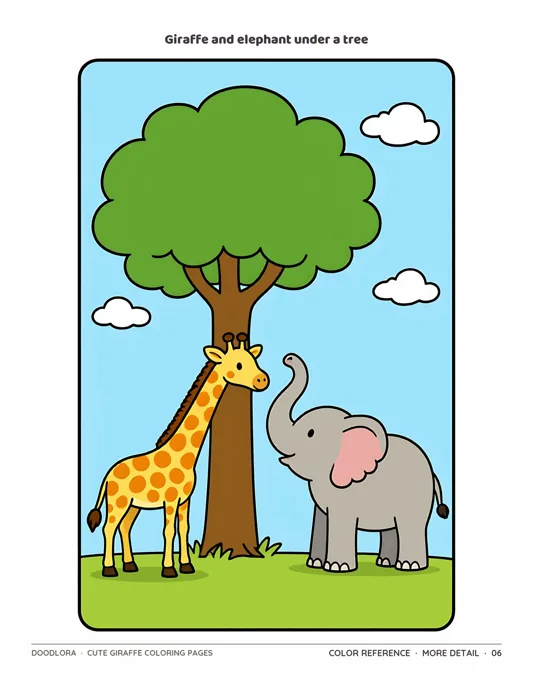
Lions live in most of sub-Saharan Africa, in grassland and savanna with plenty of prey. They are the only cats whose males grow manes. Males typically weigh about 417 pounds (189 kg) and females about 278 pounds (126 kg). Females do most of the hunting for the pride, which averaged 13 lions in Kruger and Serengeti national parks.
Your chance: activity peaks after dusk, so a lion seen at noon is often a lion lying in the shade. If your child wants to take one home on paper, our lion drawing guide starts with simple shapes.
Leopard
Leopards live in woodland, grassland and forest and like to be near trees. They hunt alone, mostly at night, creeping within 10 to 33 feet (3 to 10 m) before they pounce. A leopard is strong enough to haul prey into a tree. One was seen dragging a young giraffe of nearly 276 pounds (125 kg) up 18 feet 8 inches (5.7 m).
Your chance: low. Check branches as well as the ground, and look for a tail hanging down. To tell it from a cheetah, use the face and the spots, as in cheetah vs leopard.
African elephant
The African bush elephant is the largest living land animal. Males weigh about 9,900 to 13,400 pounds (4,500 to 6,100 kg) and stand 10.5 to 13.1 feet (3.2 to 4 m) at the shoulder. Elephants eat leaves, fruit, grass, roots and bark, and they need around 50 gallons (190 L) of water a day.
Your chance: good where they are protected, because they are huge, live in herds and stay active for most of the 24 hours. Watch water holes.
Rhinoceros
Africa has two rhino species, and color is no help in telling them apart. Look at the mouth. A black rhino has a pointed, gripping upper lip for pulling twigs off bushes. A white rhino has a wide, square lip for grazing grass. Black rhinos weigh about 1,760 to 3,090 pounds (800 to 1,400 kg), white rhinos about 2,200 to 7,900 pounds (1,000 to 3,600 kg).
Your chance: low for the black rhino, which is listed as Critically Endangered and lives mostly alone. Mornings and evenings are when it feeds, drinks and moves around.
African buffalo
Buffalo live in many habitats as long as there is grass and permanent water, and they prefer to stay within about 0.6 miles (1 km) of it. Both males and females carry the heavy horns. In the Serengeti area a herd can top 1,500 animals.
Your chance: high near water. Expect the big mixed herds to be cows, calves and bulls, and smaller groups to be all bulls.
African safari animals of the open plains
These eleven animals share the grassland with the Big Five. The grazers are out by day in numbers, and the hunters follow them.
Giraffe
Giraffes are the tallest living land animals. A male can stand 18.7 feet (5.7 m) from the ground to his horns, and the tongue is about 18 inches (45 cm) long. They live in savanna and open woodland and eat mostly acacia leaves.
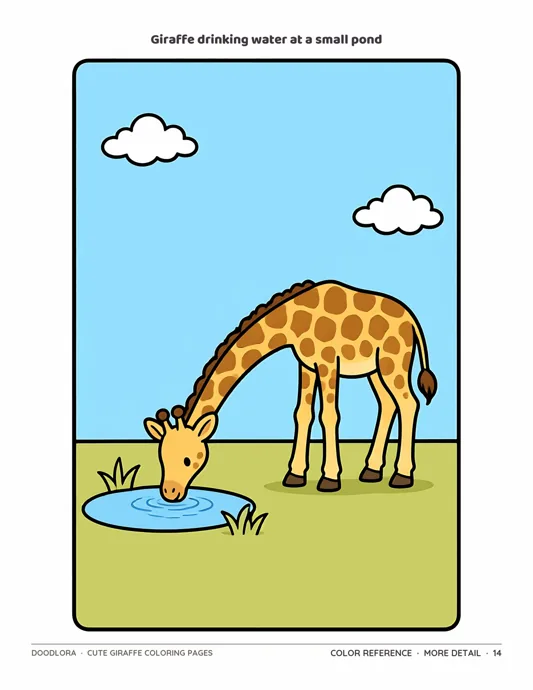
Your chance: high, since the head often shows above the trees. They feed and drink in the morning and evening. Drinking is worth waiting for, because a giraffe has to bring its head all the way down to the ground.
Plains zebra
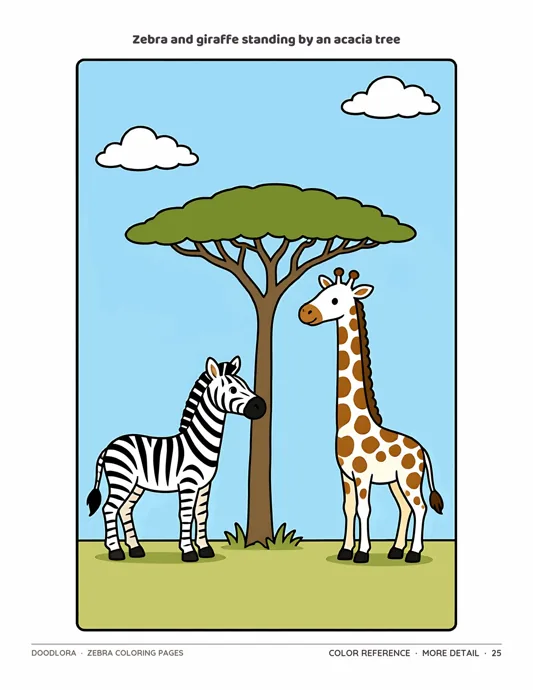
Plains zebras, also called Burchell’s zebras, graze the open grassland of eastern and southern Africa. About 90% of their diet is short grass. Every zebra’s stripes are different, and zebras recognize one another by them. They live in family groups of one stallion, one to six mares and their foals.
Your chance: high. Herds also travel with wildebeest in the Serengeti, so find one and look for the other. If you’re not sure whether to say herd or dazzle, see animal group names.
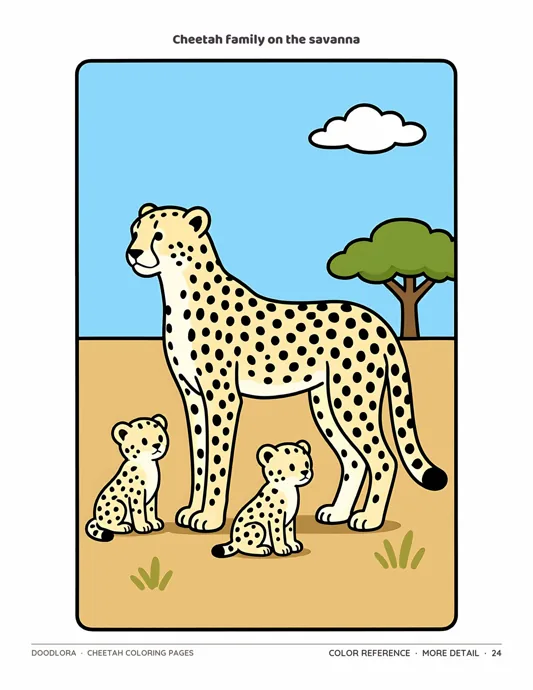
Cheetah
The cheetah is the fastest land animal, running at 58 to 65 miles (93 to 104 km) per hour. A full sprint lasts only about 20 seconds. The black tear marks running from eye to mouth are the quickest way to name it. Cheetahs eat gazelles, impalas and other small or medium antelope.
Your chance: better than a leopard, because cheetahs hunt in the early morning and late afternoon. There are still few of them: 6,517 mature cheetahs were estimated worldwide in 2021.
Spotted hyena
Spotted hyenas are hunters more than scavengers. A study in the Kalahari found that 70% of their diet came from their own kills. Females are larger than males and rank above them, and a clan can hold 3 to 80 hyenas.
Your chance: fair, and you may hear one first. The whoop is a contact call. The giggle is the famous laugh.
African wild dog
A wild dog’s coat is a patchwork of brown, red, black, yellow and white, and no two match. Ears are large and round. Packs average 7 to 15 dogs and hunt antelope such as impala.
Your chance: low. Only about 6,600 adults are left, and the species is listed as Endangered. They hunt mostly at dawn and dusk.
Blue wildebeest
This is the animal of the great migration. Roughly 1.5 million wildebeest and 250,000 plains zebras move north from the Serengeti toward the Maasai Mara in Kenya. Wildebeest weigh 260 to 595 pounds (118 to 270 kg), and a calf can stand about six minutes after birth.
Your chance: high in the right region. The migration’s timing shifts from year to year with the rain.
Common warthog
Warthogs graze short grass kneeling on their front wrists, which have calloused pads. They sleep in burrows at night, often old aardvark holes, and back in so the tusks face out.
Your chance: high by day in open savanna. An alarmed warthog runs with its tail straight up like a flag.
Impala
Impalas are reddish-brown antelope with black stripes on the tail and thighs, and only males grow the S-shaped horns. They live from Kenya to South Africa and eat grass after the rains and more leaves in the dry season.
Your chance: high, especially just after dawn and before dusk. Impalas can leap up to 10 feet (3 m) high and 33 feet (10 m) long.
Thomson’s gazelle
This small gazelle weighs 33 to 77 pounds (15 to 35 kg) and has a bold black stripe along each side. It is the most common gazelle in East Africa and stays on dry short grass longer than the bigger grazers.
Your chance: high in Kenya and Tanzania, and none in South Africa, where it doesn’t live. Watch for stotting, a stiff bounding leap.
Meerkat
Meerkats live in the dry south: southwestern Angola, Namibia, Botswana and South Africa. They are small mongooses, 9.6 to 11.4 inches (24.5 to 29 cm) from head to rump, and eat mostly insects. While the mob feeds, one stands guard on a high spot.
Your chance: fair in the right country. Early morning is best, when they stand up to bask in the sun.
Aardvark
Aardvarks live in grassland and savanna across sub-Saharan Africa and eat ants and termites. They come out at night and cover 1.2 to 3.1 miles (2 to 5 km) looking for food.
Your chance: very low. They are shy and rarely seen, so count a burrow or claw marks as a find.
Safari animals by the water
Water is the easiest place to wait. Grazers come to drink, and these three rarely stray far from it.
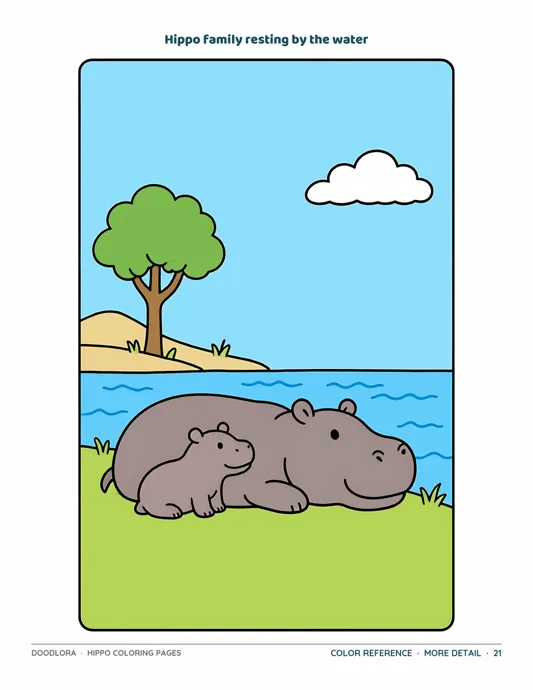
Hippopotamus
Hippos weigh about 2,870 to 7,050 pounds (1,300 to 3,200 kg) and spend the day in water or mud to stay cool. At dusk they walk out and graze for four to five hours. Their skin oozes a fluid that turns orange-red within minutes. It was once called blood sweat, but it is neither blood nor sweat.
Your chance: high. Look for a row of eyes, ears and nostrils at the surface, which sit high on the head. Hippos are among the most dangerous animals in the world, so this is one to watch from far back.
Nile crocodile
Adult males are usually 11.5 to 16.4 feet (3.5 to 5 m) long and weigh 496 to 1,653 pounds (225 to 750 kg). Nile crocodiles eat fish, birds, reptiles and mammals, and can wait hours or longer for prey to come close.
Your chance: high on sunny banks, where they lie still and bask, sometimes with their jaws open. What looks like a log may have eyes.
Waterbuck
Waterbuck are shaggy antelope that graze near water and use it to get away from predators. Only males have horns. The common waterbuck has a white ring on its rump.
Your chance: good along rivers. That ring is the mark to look for when it walks away from you.
Safari birds to look for
Birds are worth a separate list, because several of these are tall enough to see from a distance.
Common ostrich
The ostrich is the tallest and heaviest living bird. Males stand 6 feet 11 inches to 9 feet (2.1 to 2.75 m) and are black and white, while females are gray-brown. It sprints at up to about 43 miles (70 km) per hour and doesn’t bury its head in the sand.
Your chance: high in dry, open country, often beside zebras and antelope.
Secretary bird
This is a bird of prey that hunts on foot. It stands about 3 to 4 feet (0.9 to 1.2 m) tall, with long bare legs and a crest of black-tipped feathers. It eats mostly insects and small mammals and stamps larger prey, especially snakes, to death.
Your chance: fair. It starts walking about two hours after sunrise, once the grass is dry. It is listed as Endangered.
Lesser flamingo
Lesser flamingos are the smallest flamingos, 31 to 35 inches (80 to 90 cm) tall. They feed on microscopic algae in salty and soda lakes, and pigments in the algae make them pink.
Your chance: it depends on the lake. Kenya’s Nakuru, Elmenteita and Bogoria and Tanzania’s Natron are known for them.
African fish eagle
Its white head and brown body make it look like a bald eagle, but the two aren’t closely related. It swoops from a perch and snatches fish with its talons.
Your chance: fair to good near lakes and rivers. Scan the tall trees at the water’s edge.
Gray crowned crane
A stiff gold crown, white cheeks and a red throat pouch make this crane easy to name. It is about 3 feet 3 inches (1 m) tall, and it can roost in trees, which most cranes can’t. It eats seeds, insects, frogs and worms.
Your chance: fair in savanna near wet ground. Cranes dance, bow and jump at any time of year.
Red-billed oxpecker
Find it by finding something else, since oxpeckers ride on rhinos, cattle and other large mammals. One adult can eat nearly 100 blood-filled ticks in a day. It also pecks at wounds for blood, so it isn’t only a helper.
Your chance: fair. Look along the backs of grazing animals.
When to look for African safari animals
The hour matters as much as the place. This table puts the animals above by the time of day their habits favor.
| Time | Look for | Why |
|---|---|---|
| Dawn to early morning | Cheetah, wild dog, meerkat, impala, giraffe | Cooler hours for hunting, feeding and basking |
| Mid-morning | Secretary bird, ostrich, warthog, zebra | Awake and moving by day |
| Midday | Hippo, crocodile, elephant | Resting in or beside water, or feeding through the day |
| Late afternoon to dusk | Giraffe, impala, cheetah, wild dog, hippo leaving the water | Second feeding and hunting spell |
| Night | Lion, leopard, aardvark | Most active after dark |
One trap with a class chart: “nocturnal” and “diurnal” are habits, not rules. A lion can be active at any time, and leopards sometimes hunt on overcast days. Write “mostly at night” instead of “only at night.”
Safari animal activities for kids
A zoo safari checklist
Who and how long: ages 4 and up, an hour or two at the zoo. You need: this list, a pencil and a clipboard.
Before you go, check the zoo’s website for which animals it keeps and copy only those onto a sheet. At each stop, tick the animal and write one thing it is doing: eating, resting, walking or hiding. Finish by counting which word came up most. Younger kids can draw a dot under a picture instead of writing.
Measure a safari with chalk
Who and how long: ages 6 to 10, about 20 minutes. You need: a tape measure, sidewalk chalk and a safe stretch of pavement away from cars.
Mark a start line and measure each height flat along the ground: lesser flamingo about 3 feet, secretary bird up to 4, ostrich up to 9, male elephant’s shoulder up to 13 and giraffe up to 18.7. Have each child lie down beside the marks. Laying the heights flat means nobody needs a ladder.
Sort the cards
Who and how long: ages 5 to 8, 10 to 15 minutes. You need: 25 slips of paper with one animal each.
Sort by grazer, hunter or both first. Then sort again by “plains,” “water” and “bird.” The snag is animals that fit two piles: a flamingo is a bird and lives at the water. Let the child choose one and explain why. For a second round, mix in a few woodland animals and ask which ones would never meet a lion.
Color while you learn the marks
Who and how long: ages 4 and up, 10 to 20 minutes a page. You need: printed pages and crayons.
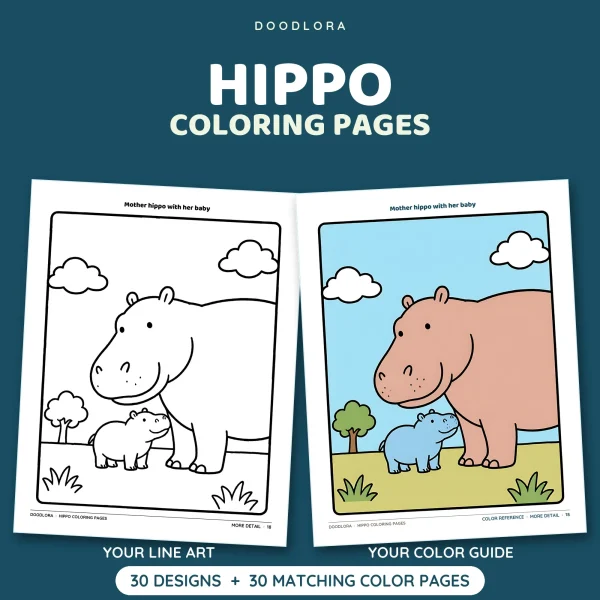
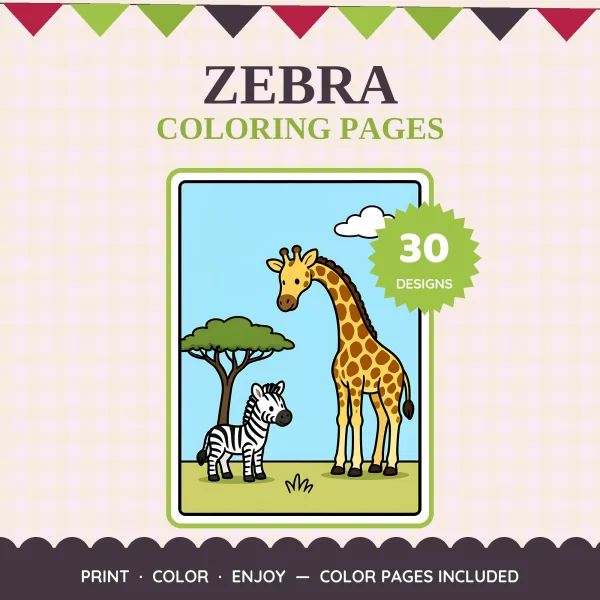
Pick a page that shows the feature you just read about. Our cheetah coloring pages print the spots as solid dots on most pages, page 24 among them, and the zebra set has head close-ups with the stripes drawn in. The giraffe set is all framed scenes, some of them silly, such as a giraffe on a bicycle. The hippo set opens with big simple shapes for small hands. Ask the child to name one true thing and one made-up thing on the page.
If you want several animals at once, the bundle below holds the giraffe, zebra, cheetah and monkey sets, 120 designs in all. Hippos aren’t in it.
Safari animals FAQ
Are tigers safari animals?
Not on an African safari. Tigers are native to Asia, and the wild striped animal to look for in Africa is the zebra.
Which safari animals are endangered?
On the IUCN Red List, the black rhino is Critically Endangered. The African bush elephant, African wild dog, secretary bird and gray crowned crane are Endangered. The lion, leopard, cheetah, giraffe and hippo are Vulnerable.
Which of the Big Five is hardest to see?
By their habits, the leopard and the black rhino. The leopard hunts mostly at night and hides well, and black rhinos are few and spread out. Buffalo and elephants are the easiest of the five where they live.
Printables from this article

Related articles
Printable Coloring Pages
Santa’s Reindeer Names: How Many, Origins and Facts
Dasher, Dancer, Prancer, Vixen, Comet, Cupid, Donner and Blitzen come from an 1823 poem, and the last two started out as Dunder and Blixem. Here's what each name means, how the team grew to nine, a name-card activity for kids and what real reindeer are like.
Printable Coloring Pages
Food Holidays: National Food Days by Month for Kids
A month-by-month list of American food holidays with the date rule for each one, such as January 23 for National Pie Day or the first Friday of June for National Donut Day, plus simple ways to mark them at home and in a classroom.
Printable Coloring Pages
How Is Chocolate Made? Bean to Bar, Step by Step
Chocolate starts as the seeds inside a cacao pod. Farmers ferment the beans for up to a week and dry them in the sun; a factory then roasts them, cracks off the shells, grinds the nibs into chocolate liquor, mixes in sugar and sometimes milk, and conches, tempers and molds the result.