Food Holidays: National Food Days by Month for Kids
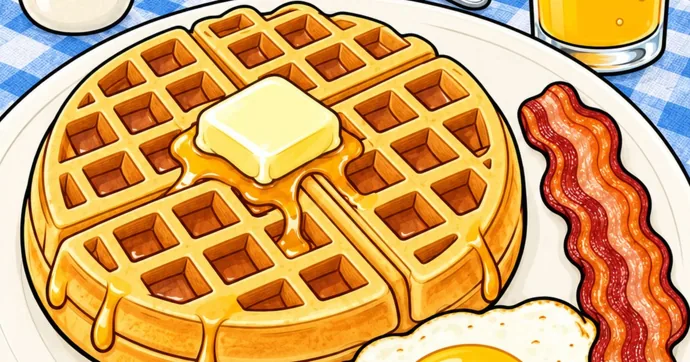
A food holiday is a day set aside to celebrate one food, and the American calendar is packed with them. Some sit on a fixed date every year, such as National Pizza Day on February 9. Others follow a rule, such as National Donut Day on the first Friday of June or National Ice Cream Day on the third Sunday of July, so the actual date moves around.
Very few of these days are official in any legal sense. A Colorado teacher picked his own birthday for National Pie Day, the Salvation Army started Donut Day, and National Ice Cream Day is one of the rare ones that came with a presidential proclamation. That doesn’t stop them from being handy: a food day gives a coloring session, a lunch or a short lesson a reason to happen on a particular date. Below are the food holidays whose dates match Wikipedia’s list of U.S. food days, grouped by when they fall, with what to do on each one.
Food holidays by month at a glance
Scan the month you’re planning for and pick one or two days. The “date rule” column is the part to copy into a planner, since a rule like “first Friday of June” lands on a different number each year. Most of the ideas in the last column start with a printed coloring page, so skim how to print coloring pages once before the first food day; it covers printer settings, paper and lines that come out gray.
| Month | Food holiday | Date rule | Easy way to mark it |
|---|---|---|---|
| January | National Pie Day | January 23 | Color a pie and list favorite fillings |
| February | Ice Cream for Breakfast Day | First Saturday of February | A small scoop on top of breakfast at home |
| February | National Pizza Day | February 9 | Kids design and color their own pizza |
| March | Pi Day | March 14 | Measure round things, then share a pie |
| April | National Peanut Butter and Jelly Day | April 2 | Make sandwiches together, spread thin |
| April | National Grilled Cheese Sandwich Day | April 12 | Adult runs the pan, kids build the sandwich |
| May | National Burger Day | May 28 | Draw a “build your own burger” stack |
| June | National Donut Day | First Friday of June | Color a box of donuts, talk about its history |
| June | National Vanilla Milkshake Day | June 20 | Blend one at home, adult on the blender |
| July | National Ice Cream Day (July is National Ice Cream Month) | Third Sunday of July | Sundae bar with toppings in bowls |
| August | National Chocolate Chip Cookie Day | August 4 | Bake one batch, kids scoop the dough |
| August | National Waffle Day | August 24 | Waffle breakfast with a toppings line-up |
| August | National Banana Split Day | August 25 | Build one banana split to share |
| September | National Chocolate Milkshake Day | September 12 | Taste test chocolate vs. vanilla |
| September | National Cheeseburger Day | September 18 | Burger coloring page with cheese added |
| October | World Food Day | October 16 | Talk about where food comes from |
| October | National Chocolate Day | October 28 | A chocolate tasting with small pieces |
| November | National Sandwich Day | November 3 | Sandwich assembly line for lunch |
| November | National Pickle Day | November 14 | Pickle taste test, sweet vs. dill |
| December | National Cookie Day | December 4 | Decorate cookies or color a cookie page |
| December | National Cupcake Day | December 15 | Frost plain cupcakes with a few toppings |
Why the same food day shows up on different dates
Food days have no central registry. Wikipedia’s list notes that the United States had more than 365 days tied to specific foods or drinks as of 2014, which means some dates carry two or three food days at once and some foods get more than one day. August 24, for example, is both National Waffle Day and National Peach Pie Day.
The day’s origin tells you how firm its date is. National Ice Cream Day began with a joint resolution of Congress that President Ronald Reagan signed on July 9, 1984, with Presidential Proclamation 5219. That resolution named July 1984 as National Ice Cream Month and July 15, 1984 as National Ice Cream Day. It covered only that one year, and the third-Sunday-in-July date has carried on since, largely publicized by ice cream makers. Pi Day got a non-binding resolution from the U.S. House of Representatives in 2009. Most of the others started with one person, a charity or a company, and spread from there.
Two practical catches come out of this. First, a calendar you find online may list a different date than the one here, so check the date rule against the calendar your school or library uses before you announce anything. Second, a fixed date often lands on a weekend. When National Pizza Day falls on a Sunday, a classroom marks it on the Friday before or the Monday after; nobody keeps score.
Food holidays during the school year
These days fall between September and May, so they suit a classroom, a homeschool week or an after-school club. Each one works as a 20- to 30-minute coloring and talking session, with food as an optional extra.
National Pie Day (January 23) and Pi Day (March 14)
National Pie Day started in the mid-1970s, when Boulder, Colorado, teacher Charlie Papazian declared his own birthday, January 23, to be National Pie Day. The American Pie Council has sponsored it since 1986. Pi Day is a different holiday that borrows the food: it falls on March 14 because 3, 1 and 4 are the first three digits of pi, and celebrations often involve eating pie. The earliest known large-scale Pi Day was held in 1988 at the San Francisco Exploratorium, where staff and visitors marched around a circular space and then ate fruit pies.
For a class on Pi Day, give each pair of students a piece of string, a ruler and three round objects (a plate, a lid, a roll of tape). They wrap the string around each one, measure it, then measure straight across the middle and divide the first number by the second. Every answer should land a little above 3. Coloring a pie page afterward gives early finishers something to do while the rest catch up. The common snag is string that stretches or slips, so tape one end down before wrapping.
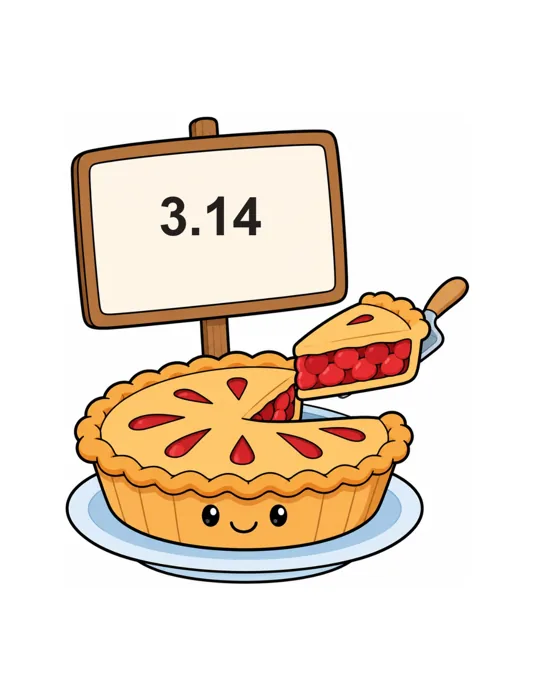
On National Pie Day at home, the simplest version is a store-bought pie and a vote on everyone’s favorite filling. If you bake, an adult handles the oven and any knife work; kids can crimp the edge of the crust with a fork or cut vent shapes with a small cookie cutter. Our pie coloring pages include the 3.14 sign page shown above, a second pi-themed page with three pie slices around a 3.14 badge, and fruit, pumpkin, pecan and lemon meringue pies across 30 designs.
National Pizza Day (February 9)
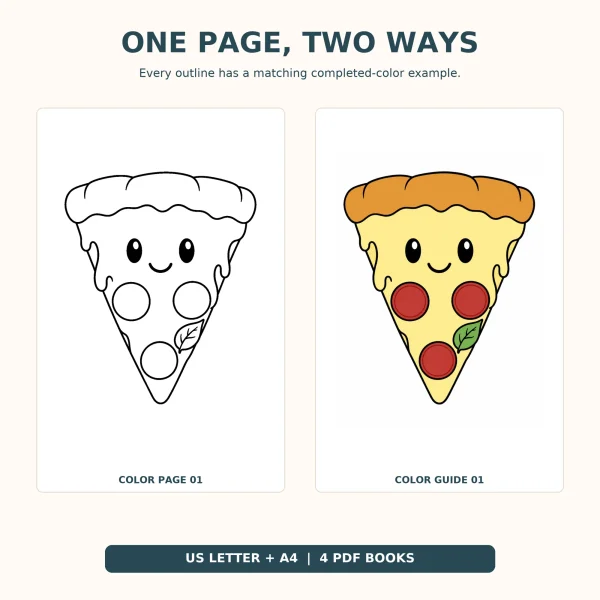
Pizza is the easiest food day to run with a mixed-age group, because everyone has a favorite topping. Hand out a blank round pizza on paper and let each child draw and color their own toppings, then cut the paper pizza into slices and trade one slice with a neighbor. Younger kids can count the toppings on each slice; older kids can write fractions (one slice is 1/8 of the pie). If you’d rather start from a drawn crust, the pizza coloring pages end with three blank crusts and two fraction pages marked 1/2, 1/4 and 1/8, which fit the fraction version. Making real pizza at home works well with store-bought dough: kids spread the sauce and place toppings, and an adult moves the pan in and out of the oven and does the slicing.
National Peanut Butter and Jelly Day (April 2) and National Grilled Cheese Sandwich Day (April 12)
These two April sandwich days are ideal for a “kids make lunch” day at home. For PB&J, set out bread, peanut butter, jelly and a butter knife. Spread peanut butter thinly, since thick chunks of peanut butter are on the American Academy of Pediatrics’ list of choking risks for young children. Grilled cheese needs a hot pan, so the job split is simple: kids butter the bread and stack the cheese, and an adult does all the cooking and flipping. Before bringing either sandwich into a classroom, ask about the school’s food and allergy rules; some classes don’t allow peanut products at all.
National Burger Day (May 28) and National Cheeseburger Day (September 18)
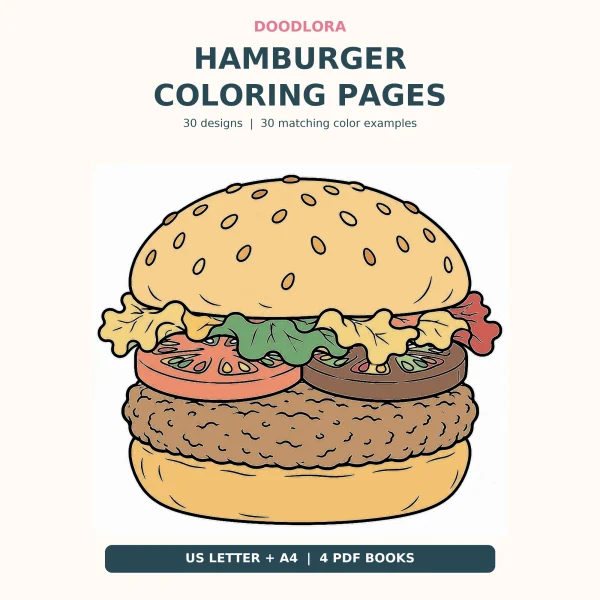
Wikipedia’s list gives Hamburg, Germany as the origin of National Burger Day, which gives older kids a quick map question to start the session. The classroom version is a “build your own burger” drawing: each student stacks a bun, a patty and three toppings of their choice, colors it, and labels each layer. The burger coloring pages work for kids who’d rather color than draw. In September, bring the same pages back for National Cheeseburger Day and add a slice of cheese to every stack.
World Food Day (October 16)
World Food Day is international rather than American. It marks the founding of the United Nations Food and Agriculture Organization on October 16, 1945, and it’s the one food day on this list that works for a social studies lesson. A simple activity: each student picks one food they ate that week and traces it back, step by step, to a farm, a boat or a factory. Coloring a fruit or vegetable page while the class shares their chains keeps hands busy.
National Chocolate Day (October 28)
Late October is Halloween candy season, so National Chocolate Day is a good moment for a small tasting rather than more sweets. Break a milk, a dark and a white chocolate bar into small pieces and let kids taste and describe each one. Keep the pieces small and skip any chocolate with nuts for young children.
National Sandwich Day (November 3) and National Pickle Day (November 14)
National Sandwich Day suits a family lunch assembly line: put bread, fillings and spreads in a row and let each person build their own. For National Pickle Day, a taste test of sweet pickles against dill pickles takes about ten minutes and always produces strong opinions. An adult cuts the pickles into small pieces for young kids.
National Cookie Day (December 4) and National Cupcake Day (December 15)
Wikipedia’s list credits the first National Cookie Day to Blue Chip Cookies, a cookie company, in 1987. Early December is also cookie-exchange season, so the day can double as a trial run for a cookie exchange party. At home, decorating plain baked sugar cookies with icing and sprinkles is the low-stress version: no oven during the kids’ part, and a cleanup that stays on one tray. For National Cupcake Day, frost plain cupcakes with two or three toppings in small bowls.
Summer food holidays to mark at home
June through August, most of these days happen while kids are home, so they fit a summer routine or a weekend. They also tend to involve the stickiest foods of the year, so plan to eat outside or on a covered table.
National Donut Day (first Friday of June)
National Donut Day started in 1938 as a fundraiser for the Salvation Army in Chicago. It honors the Salvation Army “Lassies” of World War I, who served donuts to soldiers. The day lands on the first Friday of June, which can be the last week of school or the first week of summer, depending on where you live.
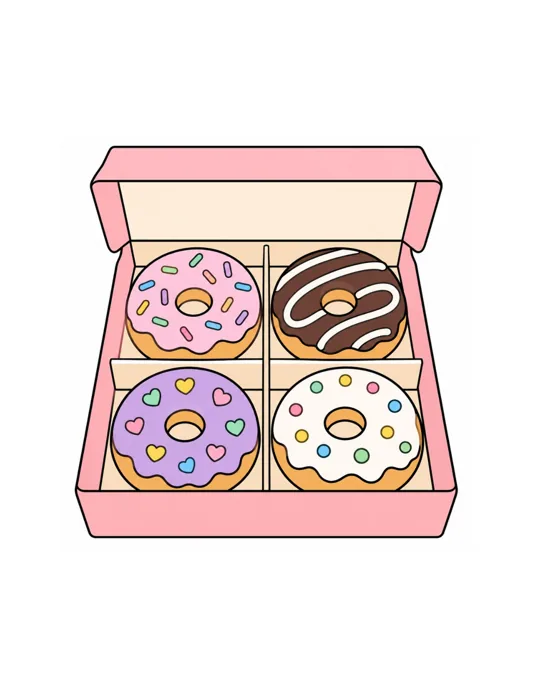
The history makes a good two-minute story before coloring: who the Lassies were, and why a donut would mean so much to a soldier far from home. Then hand out donut pages and ask kids to invent a frosting that doesn’t exist yet. If you serve real donuts, cut them into halves or quarters for preschoolers; it slows down eating and cuts the sugar per child. The donut coloring pages have 30 designs, from single donuts to boxes, plates and stacks.
National Ice Cream Day (third Sunday of July) and National Banana Split Day (August 25)
July is National Ice Cream Month, and its third Sunday is National Ice Cream Day. A sundae bar is the classic home version: one or two flavors of ice cream, three or four toppings in small bowls, and a scoop for each person. An adult does the scooping, since frozen ice cream takes more force than small hands have. Banana Split Day on August 25 follows a month later; one banana split with three scoops makes enough for two or three kids to share from the same dish.
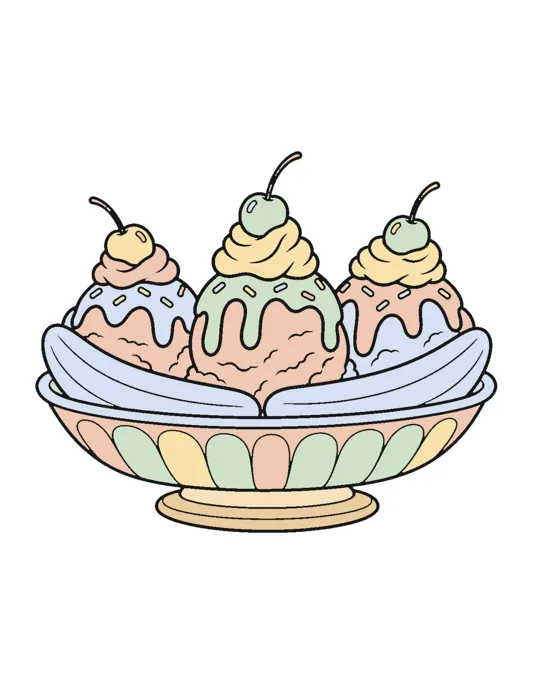
On a hot afternoon, ice cream melts faster than kids can color, so do the coloring first and serve the ice cream as the reward. The ice cream coloring pages include cones, sundaes, popsicles, an ice cream truck and a scoop shop across 30 designs.
National Chocolate Chip Cookie Day (August 4)
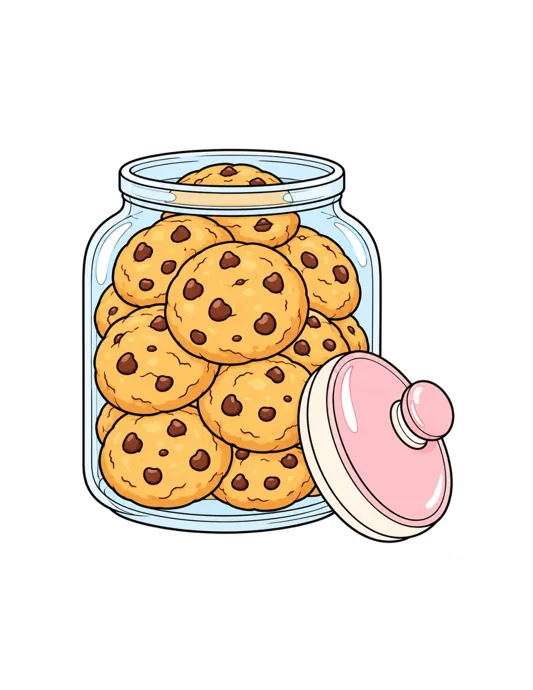
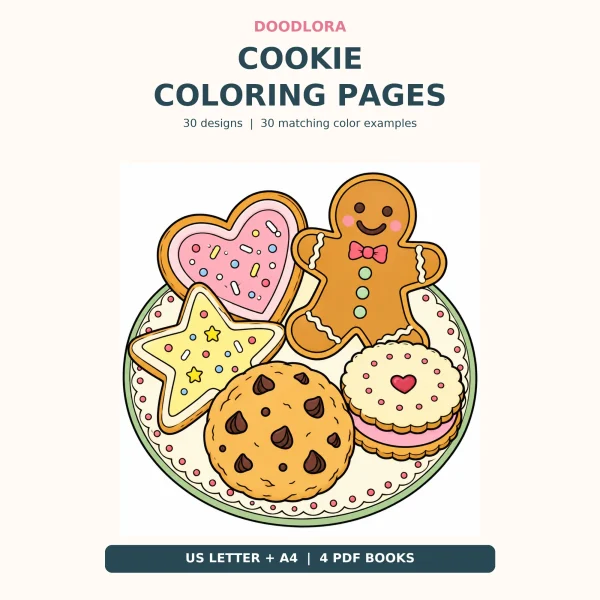
One batch of cookie dough gives kids a real job: measuring flour and sugar, stirring in the chips, and scooping balls of dough onto a lined tray. The adult puts the tray in the oven and takes it out. Raw dough is tempting, so decide the rule before you start: no tasting until the cookies are baked. Our cookie coloring pages include the cookie jar shown earlier, plus gingerbread, sugar cookie and sandwich cookie designs.
National Waffle Day (August 24)
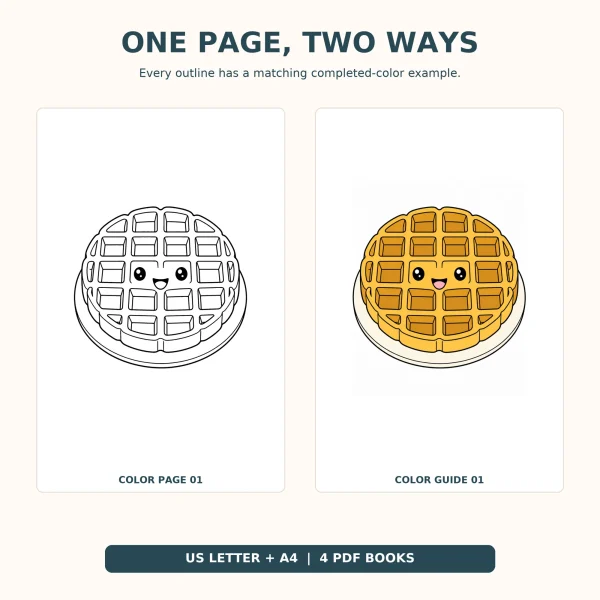
A waffle breakfast is the easiest way to mark it. Set up a topping line-up of sliced fruit, whipped cream, syrup and butter, and let everyone build their own plate. The waffle iron stays on the adult side of the counter; its plates stay hot for a while after unplugging. The waffle coloring pages have stacked waffles, breakfast-table scenes and smiling waffle characters for kids who finish eating before everyone else.
Running a food day in a classroom
A food day in class needs about 30 minutes and works for any group size, as long as each child has a page and a few crayons or markers. Pick one day per month at most; more than that turns into a sugar calendar.
Plan for three parts:
- Two minutes of story. Say what day it is and where the day came from, using the history above.
- Fifteen to twenty minutes of coloring or drawing. One page per child, plus a spare set of pages for anyone who wants a second.
- Five to ten minutes of sharing. Kids show their page and answer one question, such as “What would you add to this pizza?” or “Which pie is your favorite?”
Real food is optional, and it raises the most questions. Check the school’s policy on outside food and allergies before planning any tasting. A coloring-only food day is complete on its own.
A year-long version keeps the routine going. Hang a blank calendar grid on the wall, and on each month’s food day, one or two students color that day’s page and pin it to the grid with the date rule written underneath. By June, the wall shows a full year of food holidays.
Food and safety notes for younger kids
Food days often include the kinds of snacks that bring the biggest choking risks for young children. The American Academy of Pediatrics advises keeping high-risk foods from children until 4 years of age or older, depending on each child’s development. Its list includes hot dogs, popcorn, hard or sticky candy, marshmallows, whole grapes and thick chunks of peanut butter. Round, firm foods such as hot dogs or grapes can be served if completely chopped into tiny pieces, and peanut butter should be spread thinly. So if a food day turns into a movie-and-popcorn afternoon or a summer cookout with hot dogs, plan a different snack for toddlers and preschoolers.
In the kitchen, keep a simple split: an adult handles the oven, stove, blender, waffle iron and every knife. Kids measure, pour, stir, spread, sprinkle and stack. That split covers every food day in the table above.
Printing pages for a year of food holidays
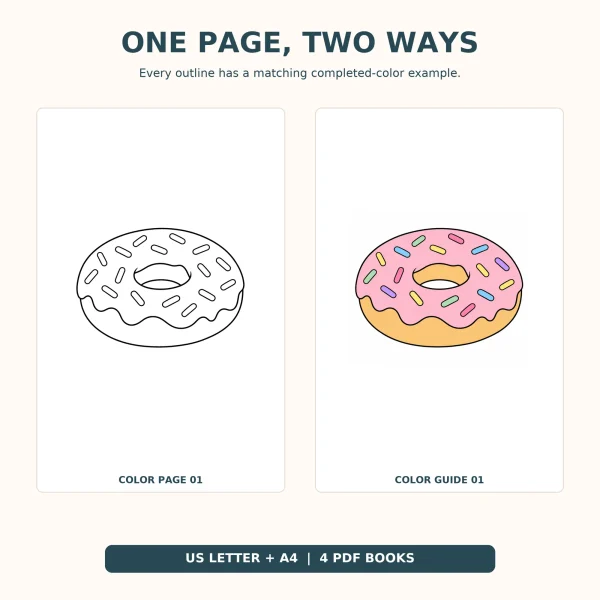
If you plan to print for several months at once, it helps to know what’s in the download for the six sets linked here: pie, donut, ice cream, cookie, pizza and waffle. Every page in those sets appears twice, once as plain outlines and once already filled in, and you can pick US Letter or A4 for either, so a stuck colorer can copy the filled-in version of the same page. Printing at home or in your own classroom is covered by the personal license, which includes a teacher printing pages for their own students. For younger kids whose color keeps running past the outlines, coloring tips has fixes that work on any of these pages.
Questions about food holidays
Is there a food holiday every day of the year?
Close to it. Wikipedia’s list of food days notes that the United States had more than 365 days related to specific foods or drinks as of 2014, so most dates carry at least one food day and some carry several.
Are national food days official holidays?
No. None of them close schools or offices. National Ice Cream Day began with a 1984 resolution and presidential proclamation that named that year’s date, and Pi Day had a non-binding House resolution in 2009. The rest are informal days started by people, charities or companies.
Why does National Donut Day change every year?
Its rule is the first Friday of June, not a fixed date. National Ice Cream Day (third Sunday of July) and Ice Cream for Breakfast Day (first Saturday of February) move around the same way.
What is the difference between Pie Day and Pi Day?
National Pie Day on January 23 celebrates pie itself. Pi Day on March 14 celebrates the number pi (3.14…) and often includes eating pie because of the shared sound.
Write the date rules into the calendar once, pick the two or three days your kids will actually enjoy, and the rest of the food calendar can stay on the wall as trivia.
Printables from this article
Related articles
Printable Coloring Pages
Safari Animals: Big Five and a List of 25 African Animals
The Big Five are lion, leopard, elephant, rhino and buffalo. Here they are with 20 more African safari animals, sorted by where you look for them, with what each eats and how easy it is to see.
Printable Coloring Pages
Santa’s Reindeer Names: How Many, Origins and Facts
Dasher, Dancer, Prancer, Vixen, Comet, Cupid, Donner and Blitzen come from an 1823 poem, and the last two started out as Dunder and Blixem. Here's what each name means, how the team grew to nine, a name-card activity for kids and what real reindeer are like.
Printable Coloring Pages
How Is Chocolate Made? Bean to Bar, Step by Step
Chocolate starts as the seeds inside a cacao pod. Farmers ferment the beans for up to a week and dry them in the sun; a factory then roasts them, cracks off the shells, grinds the nibs into chocolate liquor, mixes in sugar and sometimes milk, and conches, tempers and molds the result.