Christmas Traditions for Kids: Family and Around the World
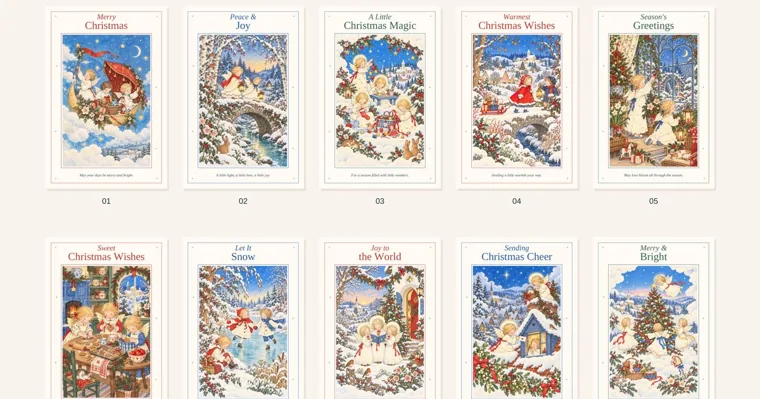
Christmas traditions are the customs people repeat every year around December 25: putting up a tree, hanging stockings, counting down with an Advent calendar, sending cards, singing carols and sharing a special meal. Most of the ones American families keep started in Europe, many in Germany, and changed as they traveled. Some are religious, because Christians mark the birth of Jesus at Christmas. Others, like Santa and the stockings, belong to the holiday side that many non-Christian families enjoy too.
This guide is for a parent or teacher who wants to answer a child’s “why do we do that?” with something true. Each tradition below has where it came from, a version of the story a child can follow, and one way to try it at home or in class. Further down there are three customs from other countries, a guide to explaining traditions by age, and some help for starting a tradition of your own.
What are Christmas traditions? A quick list for kids
The table covers the customs children ask about most. The “where it started” column is the short answer, and the sections below tell the longer story.
| Tradition | Where it started | What kids can do |
|---|---|---|
| Christmas tree | Germany and Livonia (now Estonia and Latvia) | Hang one ornament they made |
| Stockings | Legends of Saint Nicholas | Hang a stocking with their name on it |
| Advent calendar | German Lutherans, 19th and 20th centuries | Open one door a day |
| Advent wreath | Hamburg, Germany, 1839 | Light a new candle each Sunday |
| Christmas markets | German-speaking Europe, Middle Ages | Visit one or set up a pretend stall |
| Christmas cards | England in 1843, sold in America from 1874 | Make or sign a card for someone |
| Poinsettias | Mexico | Spot them in stores and churches |
The date changes depending on who’s celebrating. In 2026, Christmas Day falls on Friday, December 25. Many Orthodox churches keep Christmas on January 7 instead, so a classmate’s family might still be celebrating after New Year’s.
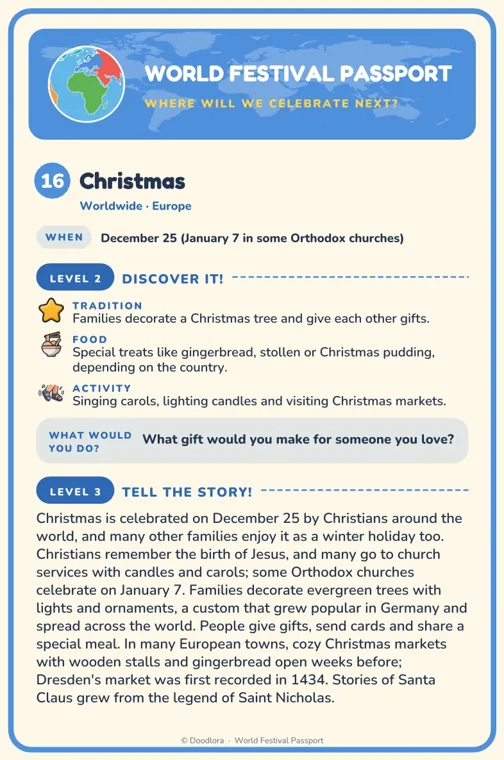
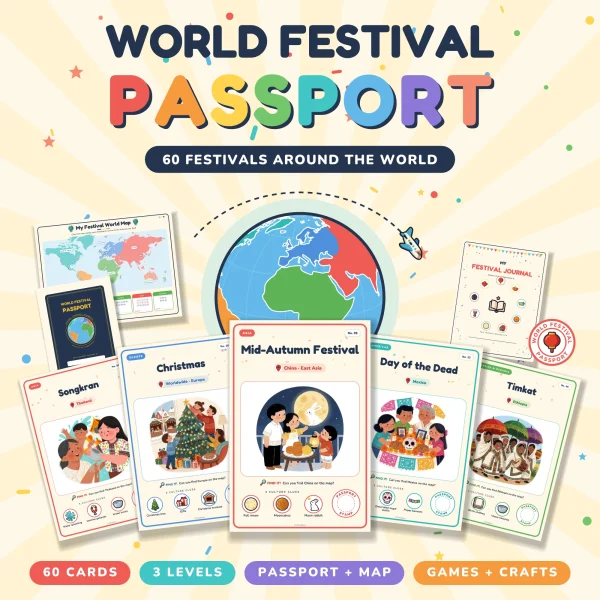
If you need one sentence for a 5-year-old, the Christmas card in our World Festival Passport deck says it simply: “Families decorate a Christmas tree and give each other gifts.” The longer Level 3 paragraph on the back of that card covers church services, the German tree, cards, markets and Saint Nicholas in about 90 words, which is a good length to read aloud before you start any of the activities here.
Where the Christmas tree came from
The decorated Christmas tree comes from Central Europe, particularly Germany and Livonia. Wikipedia’s history of the tree traces the first decorated trees to Renaissance-era guildhalls, where trees were hung with sweets for apprentices and children. After the Reformation, Protestant families in Germany began keeping them at home. Early trees were trimmed with paper roses, apples, wafers and candy, and the first ornaments were mostly things you could eat.
The tree became common in the United States in the early 1800s. One of the earliest American pictures of a Christmas tree, from around 1812, shows a family celebrating Christmas Eve in the Moravian tradition. Two dates are easy for kids to remember. In 1882, Edward Hibberd Johnson, a vice president of the Edison Electric Light Company, lit the first known electrically illuminated Christmas tree at his home in New York City. In 1889, President Benjamin Harrison and his wife Caroline put up the first White House Christmas tree.
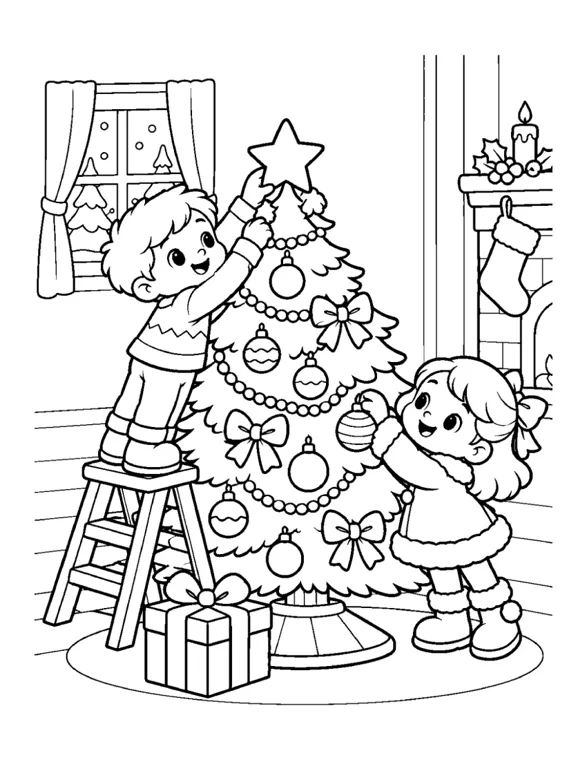
Try it with kids. Have each child make one ornament from paper, then talk about how the first trees were hung with apples and sweets. Plan on about 20 minutes for ages 3 and up. The tree-topper is worth a sentence too, because an angel stands for the angel Gabriel and a star for the Star of Bethlehem. Paper snowflakes and paper ornaments are covered step by step in our Christmas activities for kids.
Why we hang Christmas stockings
Stockings started with stories about Saint Nicholas, the bishop whose legend grew into Santa Claus. The most-told legend says he wanted to help a poor family in secret, so after dark he threw bags of gold through their window, and one bag landed in a stocking drying by the fire. Children began hanging stockings or setting out shoes in the hope he’d visit them too.
That’s why stockings were first filled on Saint Nicholas Day, December 6, and only moved to Christmas Eve in the early 1800s. American poems mentioned them by 1821 and again in “A Visit from St. Nicholas” in 1823. The “coal for naughty children” idea comes from the same Western stocking tradition.
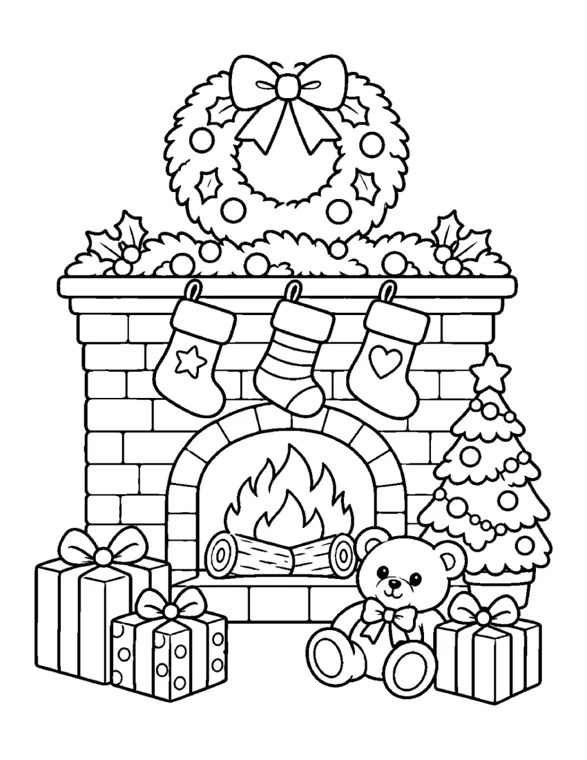
Try it with kids. Tell the gold-in-the-stocking story at bedtime, then let each child write or trace their name on a paper stocking. Families who also keep Saint Nicholas Day can tell the Central European version, where children set out their shoes the night before instead. With kids old enough to ask whether Santa is real, the stocking legend is a gentle place to start, because Saint Nicholas was a real person and the giving in secret is the part of his story that lasted.
Advent calendars and the Advent wreath
Advent is the four-week season before Christmas, and two traditions help children count it down. Both began among German Lutherans, and both reached most American families much later.
The Advent calendar
An Advent calendar has one door, flap or pocket for each day before Christmas, and children open one a day. The first Sunday of Advent moves from year to year, falling between November 27 and December 3, so many reusable calendars just start on December 1. In 2026, Advent begins on Sunday, November 29, right after Thanksgiving weekend. The doors might hide a picture, a verse, part of the Nativity story or a small treat.
A homemade version takes about an hour to set up. Twenty-four small envelopes clipped to a string, each with a one-line activity inside, work as well as a store-bought calendar. The catch is to write the activities before December starts. A note like “color one Christmas page” or “call Grandma” is easy to keep on a busy weeknight, and “go ice skating” is not.
The Advent wreath
The modern Advent wreath dates to 1839, when Johann Hinrich Wichern, a Lutheran pastor in Hamburg, made one for the children at his mission school. They kept asking whether Christmas had come yet. He took a wooden cartwheel and set it with 24 small red candles and four large white ones, lighting a small candle each weekday and a white one each Sunday. Over time it shrank to the wreath with four or five candles that churches use today, and Wikipedia’s account says the custom didn’t reach the United States until the 1930s.
At home, the wreath works for kids ages 4 and up. Light one candle on the first Sunday of Advent, two the next week, and so on, and have a child read or tell one short thing each time. With young children at the table, battery candles keep the countdown without an open flame next to the greenery.
Christmas markets and why they start in Advent
Christmas markets are outdoor markets with wooden stalls that open during Advent, selling ornaments, toys, roasted nuts and gingerbread. They began in the German-speaking part of Europe in the late Middle Ages. Vienna held a “December Market” in 1298, and Dresden’s Striezelmarkt, first held in 1434, is one of the first true Christmas markets. Several US cities now hold their own under the name Christkindlmarket.
Kids ages 5 to 10 can set up a pretend market in an afternoon. Give each child a table or a shoebox stall, a few things they made, such as bookmarks, paper ornaments or cookies, and a jar of paper coins. The trading is the fun part, so keep prices simple, one coin for anything.
How Christmas cards began
The first modern Christmas card was commissioned in England in 1843. In America, the printer Louis Prang began selling Christmas cards in 1874 and is sometimes called “the father of the American Christmas card.” By the 1880s his firm was printing over five million cards a year. Early British cards often showed flowers and fairies rather than snow or Nativity scenes, which surprises kids who expect every card to have Santa on it.
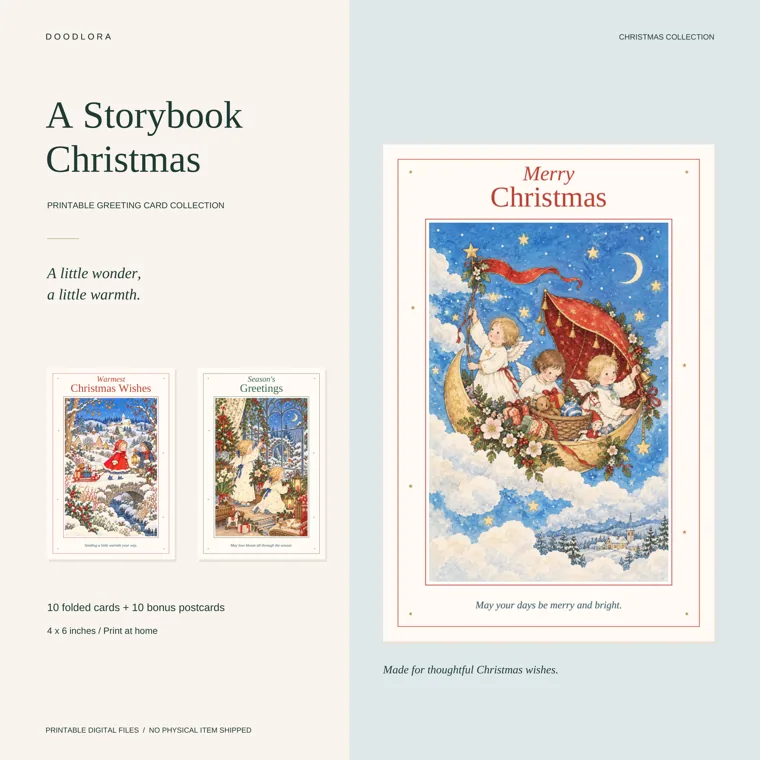
Signing cards is one of the easiest traditions to hand to a child. A 5-year-old can sign their name and draw a small picture, and an 8-year-old can write one line to each person. Set a limit of five or six cards per child, because the last few in a long stack are usually rushed. If you need words for the inside, our Christmas card messages page has lines grouped by who the card is for.
Poinsettias: the Christmas plant from Mexico
The poinsettia is native to Mexico and Central America. Its English name comes from Joel Roberts Poinsett, the first US Minister to Mexico, who began sending the plants home to his greenhouses in South Carolina, possibly as early as 1826. Before that it was called the “Mexican flame flower” or “painted leaf.” In the Aztec language, Nahuatl, the plant was called cuetlaxōchitl, and Aztec people used it to make red dye.
Many families still believe poinsettias are poisonous. Wikipedia’s article traces the idea to a 1919 urban legend, and says the plant is incorrectly called toxic. It also says swallowing it may cause nausea, vomiting or diarrhea, and touching it can give some people a rash. With toddlers or pets in the house, keep the pot up high anyway, and treat the old warning as a myth, not as a reason to skip the plant.
Christmas traditions around the world kids rarely hear about
Many lists of world Christmas customs repeat the same handful, and our Christmas trivia quiz already uses several of those. These three, from Poland, Catalonia and the Philippines, turn up less often. Each one comes with a short “what to say to a 6-year-old” version.
Wigilia in Poland: an empty chair for a guest
Wigilia is the Polish Christmas Eve supper on December 24. Families traditionally wait to eat until someone spots the first star in the sky. The table often has a little hay under the tablecloth for the manger, and one extra place setting is left for an unexpected guest. Before the meal, everyone breaks and shares a thin wafer called opłatek and wishes each other well for the coming year. The supper itself has no meat and is meant to have twelve dishes.
What to say to a 6-year-old: “In Poland, families wait for the first star before Christmas Eve dinner, and they set an extra plate in case someone needs a place to eat.”
Tió de Nadal in Catalonia: the log that brings treats
In Catalonia, in northeastern Spain, many homes keep a Tió de Nadal, a small log with stick legs, a painted smiling face and a red hat. Starting on December 8, children “feed” it a little each night and cover it with a blanket so it stays warm. On Christmas Day or Christmas Eve, they tap it with sticks while singing a song, then reach under the blanket for small shared treats like candy, nuts and turrón. Bigger presents come later from the Three Wise Men.
What to say to a 6-year-old: “In Catalonia, kids take care of a log with a face for weeks, and on Christmas it gives everyone candy.” Kids usually find the song funny once they learn what it tells the log to do, so read the Wikipedia translation yourself before you share it with a class.
The parol in the Philippines: a star made of bamboo and paper
A parol is a Filipino Christmas lantern, most often a five-pointed star for the Star of Bethlehem. The traditional kind is made from bamboo and Japanese paper and lit with a candle or lamp. They began as lanterns carried in Christmas processions during the Spanish colonial period, which people then hung outside their houses. Newer parols are made of plastic, metal or capiz shells and lit with electric bulbs.
What to say to a 6-year-old: “In the Philippines, families hang a big glowing paper star outside the house for Christmas.” Kids ages 8 and up can make a flat version by gluing tissue paper over a star of five craft sticks. Plan on roughly 40 minutes plus drying time.
For a whole unit on how other cultures celebrate in December, with Hanukkah, Saint Lucia Day and Kwanzaa as well as Christmas, our holidays around the world for kids guide has a month-by-month plan.
How to explain Christmas traditions to kids at different ages
The same tradition needs a different story for a preschooler and a fifth grader. These are the three levels that work for most families and classrooms.
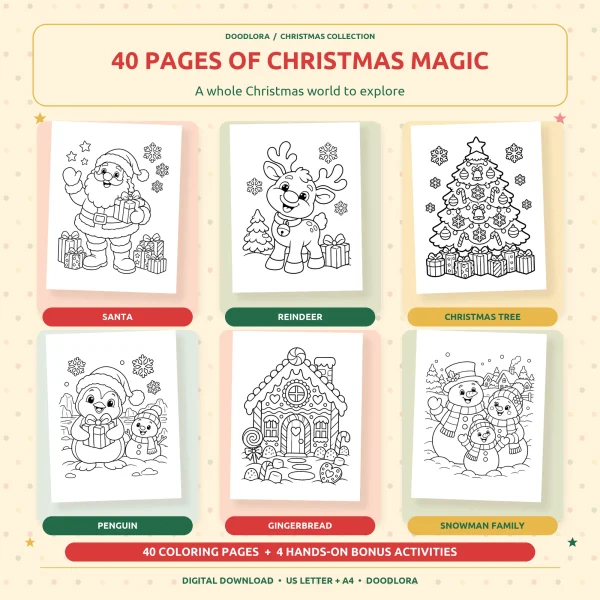
Ages 3 to 5. One sentence and one thing to touch. “We hang stockings because of a kind man called Saint Nicholas who left presents in secret.” Then let them hang theirs. A coloring page of the tradition you’re talking about keeps hands busy while you talk.
Ages 6 to 8. A short story with a place and a person. Tell where the tradition began, who made it popular, and what they’d see if they visited, such as a wooden market stall in Dresden or a paper star outside a house in the Philippines. Ask them, “What would you do?” and let them invent their own version.
Ages 9 and up. Dates, changes over time and the difference between legend and history. Kids this age like knowing that the Saint Nicholas stocking story is a legend while the 1882 electric tree really happened. They can also handle the idea that Christmas is a religious holiday for some families and a cultural one for others.
Starting a family Christmas tradition of your own
Every tradition above started with one family or one town doing something once and repeating it. A new family tradition doesn’t need a history. It needs to be easy enough to repeat next year.
Pick one thing, not five. A tradition that takes an hour on the same evening every year will last longer than a busy December plan you can’t keep. Good starting points include reading one Christmas book together on Christmas Eve, making a single ornament that each child dates on the back, or writing one card to someone who lives alone.
Name the day. “The Saturday after Thanksgiving” or “the night we put up the tree” helps a tradition stick, because kids start reminding you about it.
Write it down. A short note in a notebook or on the back of a photo, with the year and the children’s ages, turns a one-time activity into a record your kids will look for later.
When Christmas traditions cause trouble
Even good traditions have problems. Here are the ones families and teachers run into most.
Two families, two sets of traditions. Parents who grew up with different Christmas Eve and Christmas morning routines often argue about which one wins. Pick one custom from each side and keep both, and let the kids hear the story behind each one.
A classmate who doesn’t celebrate Christmas. In a classroom, teach Christmas as one holiday among several, and give any child who doesn’t celebrate the choice of a winter page or another December holiday. The holidays around the world guide linked above has ideas for those.
A tradition that has grown too big. If a custom has turned into a chore, such as a 24-day calendar of big outings, shrink it instead of quitting. Smaller activities on most days and a bigger one on weekends keep the countdown going without wearing everyone out.
Kids who ask “Is Santa real?” The stocking section above suggests one answer that doesn’t need a yes or no: Saint Nicholas was a real person, and the secret giving is the part that carries on. Older brothers and sisters can be invited to help keep the secret for younger ones.
For the rest of December, our Christmas games for kids has indoor, table and classroom games for the parties and family nights that come with the season.
Printables from this article
Related articles
Kids Activity Books
Letter M Craft Ideas: Monkey, Mouse & Mushroom for Preschool
Twelve letter M crafts grouped by who is at the table, from a foil-print moon for one toddler to monkeys swinging on a paper-chain vine for a whole class, with ages, minutes, supplies, steps and where each one tends to go wrong.
Kids Activity Books
Letter R Crafts for Preschool: Raccoon, Rabbit & Rainbow
Eleven letter R crafts grouped by what the child is into, from a sticky tissue rainbow for 2-year-olds to a raccoon shadow puppet, with ages, minutes, supplies, steps and the usual slip.
Kids Activity Books
Letter D Crafts: Dinosaur, Dog & Donut Ideas for Preschool
Eleven letter D crafts sorted by age, from a play dough D for 2-year-olds to a fuse bead dinosaur footprint, with supplies, times, steps and the snag in each one.