How to Host a Dinner Party: Timeline, Menu & Table Talk
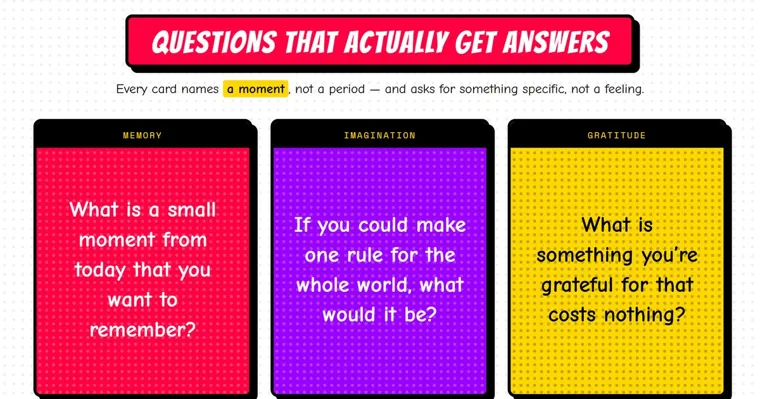
How do you host a dinner party and still get to sit at it? Keep the guest list to the number of chairs and plates you actually own, cook a menu where only one dish needs you after the doorbell rings, and finish every chore an hour before guests arrive. That spare hour is what lets you sit down with everyone else. Below are the guest list and allergy questions, a menu you can cook ahead, a timeline from one week out, the table itself, how to keep talk going, food safety times and how to end the night.
Decide the guest count and the kind of dinner first
The guest count comes before the menu, because it decides the chairs, the plates and how much your oven has to hold. Count the seats that fit around your table with elbows free, then count matching dinner plates and glasses. The smaller number is your guest list, and that number includes you. For a first dinner party, six people is easy to cook for and small enough for one shared conversation.
Mix old friends with a few new faces
A table of only close friends can slide into inside jokes, and a table of strangers can stall after the small talk runs out. Aim for every guest knowing at least one other person. A guest who knows nobody should sit beside the friendliest person there, not across from them. The host guide in our Mix & Mingle card set gives the same seating advice: put people who don’t know each other side by side, not opposite. If most of the table are strangers, these icebreaker games for adults cover both small tables and big rooms.
Seated, family style or buffet
Pick the serving style before you pick recipes, since each one asks something different of the host.
| Style | Works best for | What it asks of you |
|---|---|---|
| Plated and seated | 4 to 8 guests, a birthday or anniversary | Plating each course in the kitchen, so you leave the table between courses |
| Family style | 6 to 10 guests, a relaxed weekend night | Large platters passed around the table, and enough serving spoons for each |
| Buffet | More guests than chairs at one table | Food sits out longer, so the two-hour rule further down matters more |
Family style is the easiest middle ground for most homes. Everyone serves themselves, you stay seated, and a guest who skips a dish doesn’t leave an untouched plate in front of them.
Send invitations and ask about allergies in the same message
Invitations go out two to three weeks ahead for a weekend dinner, or about a week ahead for a casual weeknight one. Put in the start time, the address, where to park and how dressy it is. If you’d like the night to end at a certain hour, say so politely in the invitation rather than at 11 p.m.
Add one line that asks, “Any food allergies, or anything you don’t eat?” Asking at the invitation stage gives you time to plan the menu around the answer. The second half of that question catches what an allergy question misses: vegetarians, guests who avoid pork or alcohol, and anyone who is pregnant or on a medical diet.
The FDA lists nine major food allergens in the United States: milk, eggs, fish, crustacean shellfish, tree nuts, peanuts, wheat, soybeans and sesame. Sesame became the ninth on January 1, 2023, under the FASTER Act. The FDA also notes that some products still on store shelves may not list sesame as an allergen on the label. Store-bought crackers, dressings and desserts are where that gap tends to slip onto a dinner table.
When a guest has a serious allergy, leave that food off the whole menu instead of cooking them one separate plate. Shared serving spoons and a crowded counter make a “safe plate” hard to keep safe. Keep the packaging of anything store-bought until the night is over, so the guest can read the label for themselves.
Plan a dinner party menu you can cook ahead
The menu rule that saves the most stress is simple: only one dish should need you in the last half hour. Everything else is made earlier, served cold, served at room temperature or kept warm in the oven. Cook recipes you’ve made before. A dinner party is a poor place to learn how long a new roast really takes.
A reliable shape for six to eight people looks like this:
- Something to nibble with drinks: a dip with vegetables, nuts or olives. Keep it small, so nobody fills up before dinner.
- Starter: a salad you dress at the table, or a soup that reheats.
- Main: a braise, a roast, baked pasta or a big tray of chicken thighs. These hold well, and most taste better made a day ahead.
- One side: something good at room temperature, like roasted vegetables or a grain salad.
- Dessert: made the day before, or handed to the guest who asks, “What can I bring?”
Plan the oven before the recipes
Two dishes that both need the oven at different temperatures at the same moment is the most common menu clash. Write a short oven schedule: what goes in, at what temperature, and when it comes out. The FDA’s buffet guidance suggests holding hot back-up dishes in an oven set at 200 to 250 °F until serving. Hot food should stay at an internal temperature of 140 °F or warmer, and a food thermometer is the only way to check.
Watch for raw eggs in desserts and dressings
Homemade chocolate mousse, custards, ice cream, eggnog and Caesar dressing can call for raw or lightly cooked eggs. The FDA flags these as riskier for pregnant women, young children, older adults and people with weakened immune systems. If any of those guests are coming, use pasteurized eggs, buy a pasteurized store version, or heat the eggs with the recipe’s liquid until the mixture reaches 160 °F.
Drinks need less thought than food. One pitcher drink, wine or beer, and a nonalcoholic choice that isn’t just tap water cover most tables. Buy more ice than seems reasonable. Ice is the thing that runs out first.
A dinner party timeline from one week out to the doorbell
A timeline matters more than the recipes, because most host stress comes from jobs that land in the same hour. This schedule assumes a 7 p.m. Saturday dinner. Shift the days to fit yours.
| When | What to get done |
|---|---|
| 2 to 3 weeks before | Send invitations with the allergy question |
| 1 week before | Fix the menu, write the shopping list and the oven schedule. Count plates, glasses, cutlery, chairs and serving dishes. Print and cut any cards |
| 3 days before | Shop for drinks and pantry items. Clear fridge space |
| 1 to 2 days before | Shop for fresh food. Make dessert, dressings, sauces and the braise. Clean the bathroom guests will use |
| Morning of | Set the table. Chill drinks. Wash and cut vegetables |
| 3 to 4 p.m. | Start the main dish, or take a made-ahead one out to reheat later |
| 5:30 p.m. | Run and empty the dishwasher, take out the trash, wipe the counters |
| 6 p.m. | Get dressed. This hour is your buffer for whatever runs late |
| 6:45 p.m. | Light candles, start music, put out the nibbles. Cold dishes stay in the fridge until serving |
The empty dishwasher at 5:30 matters more than it looks. Dirty plates can go straight in between courses, and the kitchen never piles up while guests can see it. An empty trash can does the same job for scraps and wrappers.
Card games and question cards belong in the one-week slot, not the morning. Cutting 40 or 60 cards by hand takes longer than it looks, and a paper trimmer makes it much faster.
Set the table and the room
The table should be finished by the morning of the dinner, so the last afternoon goes to cooking. Set only what your menu needs. Three forks for a two-course meal only puzzle people.
A simple place setting
Put the dinner plate in the center with the forks on its left. The knife goes on the right with the blade facing the plate, and a soup spoon, if you need one, sits to the right of the knife. The water glass stands just above the knife, with a wine glass to its right. Fold the napkin onto the plate or set it left of the forks.
Light, centerpieces and music
Keep the centerpiece low enough for people to see each other across the table. Unscented candles are the safer choice, because a strong scent competes with the food. Music should sit quietly under the talk. If you have to raise your voice to be heard, turn it down.
Clear one place for coats and bags, such as a bed or a row of hooks, and one spot on the counter for bottles guests bring. You don’t have to open a bottle someone hands you that night. Thank them and set it aside.
Run the evening from the first drink to dessert
A dinner party needs a loose shape more than a schedule. The plan below fits a 7 p.m. invitation and gives late arrivals a cushion before anyone sits down.
| Time | What happens |
|---|---|
| 7:00 | Guests arrive. Drinks and nibbles |
| 7:30 to 7:45 | Sit down. Starter on the table |
| 8:00 | Main course |
| 8:45 | Clear the plates. Dessert and coffee |
| 9:15 onward | Linger. A short game if the table wants one |
Seat yourself closest to the kitchen so you can slip out without everyone shuffling chairs. Place cards help once there are more than six people. They also let you put the shy guest next to the easy talker without making it obvious.
Get a table of near-strangers talking
The first 30 minutes are when a mixed group either finds its footing or splits into the people who already know each other. Printed question cards give everyone a ready topic and take the pressure off the host to keep inventing one.
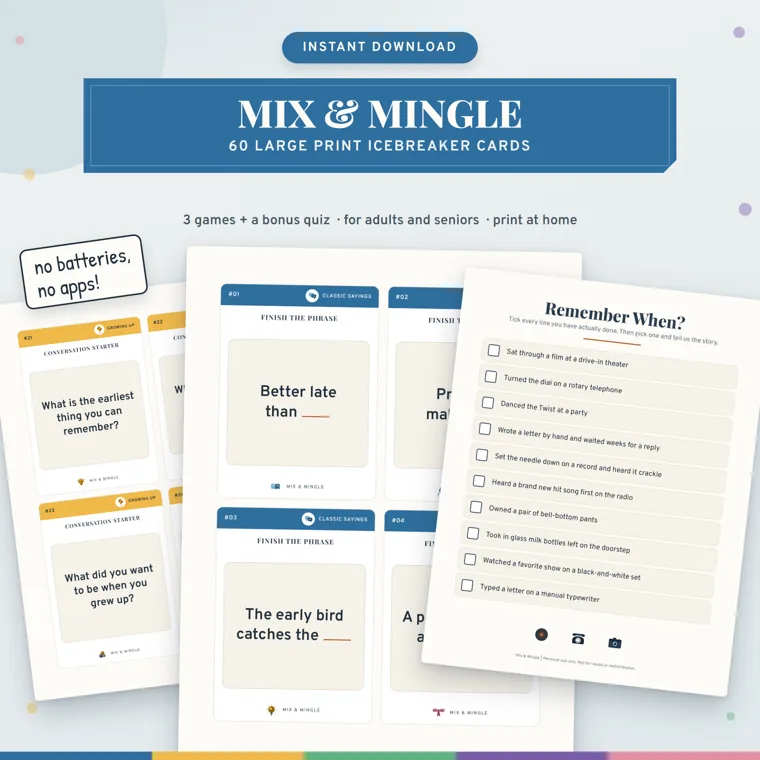
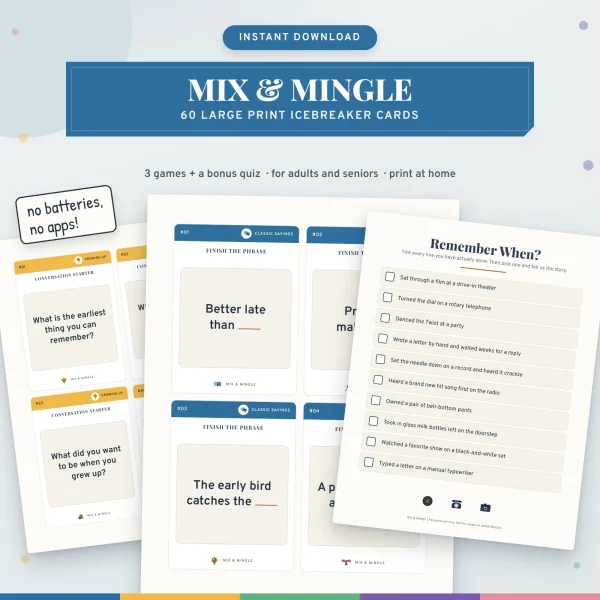
Our Mix & Mingle set has 40 Conversation Starter cards in four groups: Growing Up, Everyday Joys, Looking Back, and Heart & Mind. Its host guide suggests leaving a few cards on each table before guests arrive. People pick them up and start talking before the host says a word. Questions like “What did you want to be when you grew up?” work with a coworker you’ve just met and with a sister-in-law you’ve known for 20 years.
Two tips from the same guide keep the cards from feeling like homework. Read the first card yourself, so nobody has to go first cold. And make passing allowed without explanation. The guide also says twenty minutes is plenty, so stop while people still want more.
Conversation cards at the dinner table
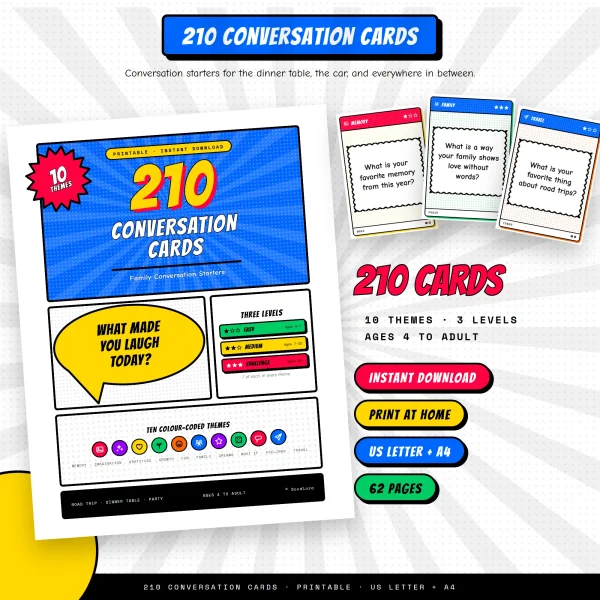
Once everyone is seated, one question for the whole table works better than lots of side chats. The “One Card, One Table” way to play in our family conversation card deck is exactly that. One person draws a card, everyone answers the same question, and it takes about five minutes with no setup.
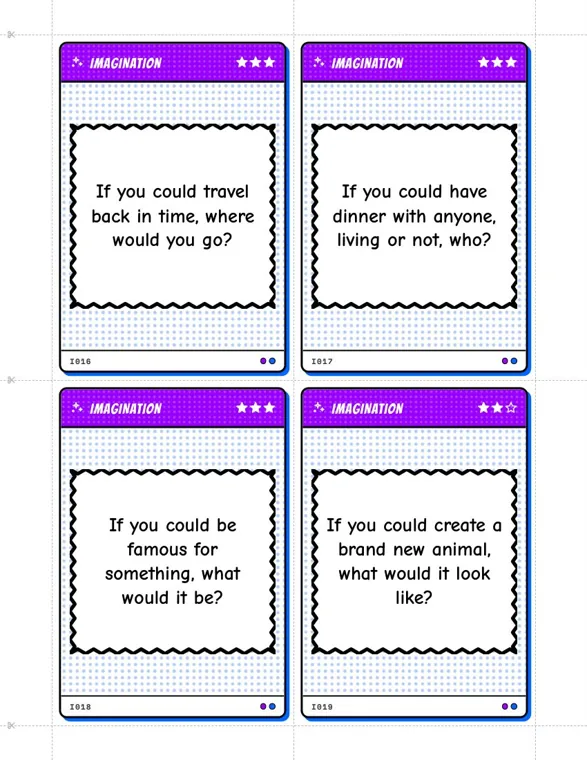
The deck has 210 cards in 10 color-coded themes, and each card carries one, two or three stars for its level. That lets you pull a stack before dinner instead of shuffling all 210. For an adult table, Imagination, Travel, Dreams and Memory are the safest themes. Leave the Feelings stack at home for a dinner with acquaintances. It includes questions like “What makes you feel lonely?” that suit family better than a table of coworkers.
The deck’s how-to page has the best advice in the box. After someone answers, ask “Why?” or “What else?” That second question is where a real conversation starts. Anyone may pass, and the host answers too. If you’d rather not print anything, our list of family conversation starters has 64 questions for dinner, kids and teens.
A short game after dessert
A short game after dessert keeps a good table together without anyone moving to the couch. Riddles are a good fit, because there’s no board and everyone can play from their chair.
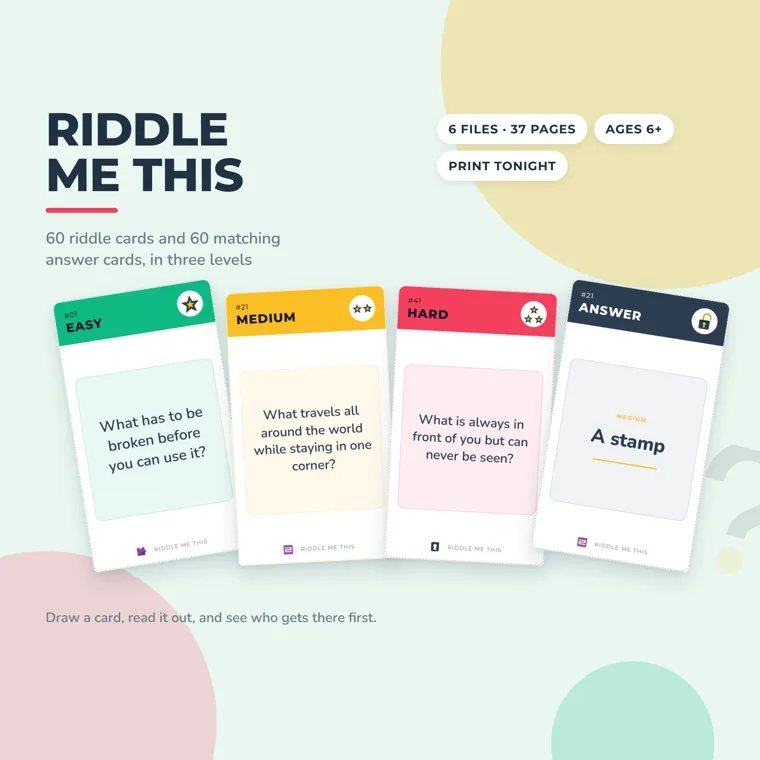
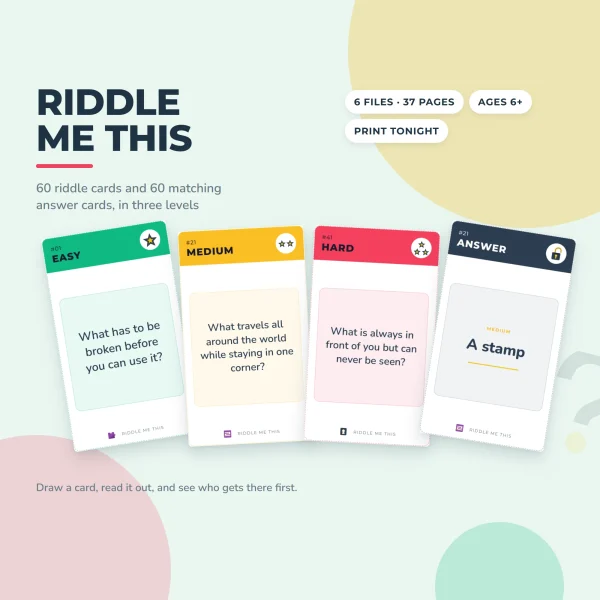
With our Riddle Me This cards, one person reads and holds the matching answer cards. In the classic version, the first correct answer takes a point. If nobody gets it in 30 seconds, read the answer and move on. For a table of adults, the guide suggests the red Hard cards with a 30-second timer. Play to fifteen points rather than through the whole deck, so the game ends before the energy does.
Print the riddles and the answers on separate sheets. Cards printed back to back would put each answer in a guest’s hand. For other games that fit around one table, like Fictionary and Botticelli, see our party games for adults.
Keep the food safe while everyone lingers
Food safety at a dinner party comes down to the clock, because the best part of the night is often the slow hour after the main course. The FDA’s guidance on serving buffets sets the times below, and they apply to platters left on any table.
- The 2-hour rule. Throw out perishable food that has sat at room temperature for more than 2 hours, unless it was kept hot or cold. If you’re eating outside and it’s above 90 °F, the limit drops to 1 hour.
- Hot food at 140 °F or warmer. Some plug-in warmers only hold 110 to 120 °F, so check the label before you rely on one.
- Cold food at 40 °F or colder. Keep cold dishes in the fridge until serving. If they’ll sit out longer than 2 hours, set the plates on ice.
- Swap the dish, don’t top it up. Don’t add new food to a serving dish that’s already in use. Bring out a fresh one instead.
Here’s where most hosts slip. The cheese board and dip go out at 7:00, and the two-hour mark lands at 9:00, right in the middle of dessert and coffee. Set a phone timer when the first food goes out. When it rings, put the nibbles away, even if people are still picking at them.
How to end a dinner party and clean up
Most guests take their cue from the host, so a few clear signals end the night without anyone feeling rushed. Coffee or tea is the traditional last round. Turning the lights up a little, starting to put food away, or simply saying “This was such a lovely night” all tell people the evening is winding down.
Leftovers go into the fridge within that same 2-hour window. The FDA suggests dividing large amounts into shallow containers so they chill faster. If guests take some home, pack them before the goodbyes start and remind them to refrigerate the food as soon as they get in.
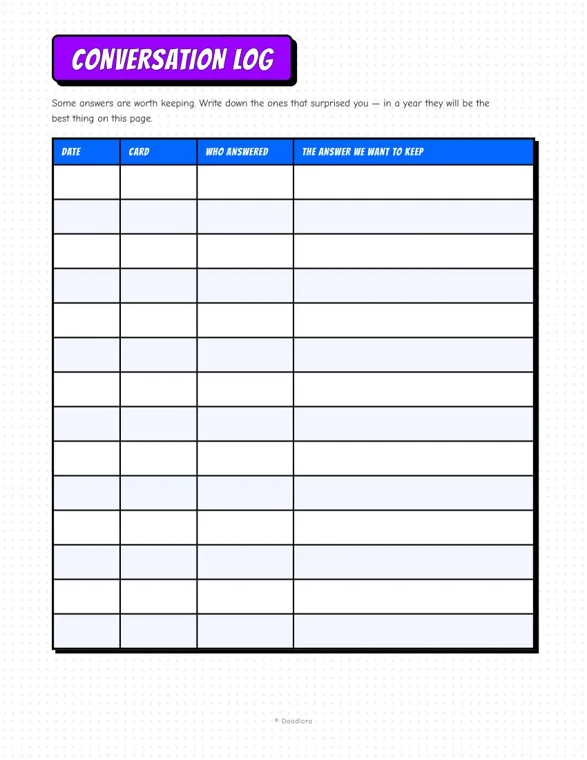
That night, do only three things: food in the fridge, candles out, and pans left to soak. Everything else waits for the morning. If a card got a great answer, the conversation log page in our deck has room to write it down while you still remember who said what.
Dinner party problems and quick fixes
Even a well-planned night has a moment that doesn’t go to plan. These are the common ones and what to do in the first few minutes.
| Problem | What to do |
|---|---|
| A guest is running 30 minutes late | Start the starter without them. Hold the main in a warm oven at 200 to 250 °F |
| A dish didn’t work | Leave it out and say nothing. Guests never miss a dish they didn’t know about |
| A guest arrives with an unexpected plus-one | Add a chair at a corner and split portions from the kitchen. A family-style menu absorbs this easily |
| A guest brings food with an allergen someone avoids | Thank them, keep the packaging, and serve it away from the main table with a clear label |
| One person is doing all the talking | Pull a question card and hand it to a quieter guest by name |
| The table goes quiet | Ask a follow-up about something a guest mentioned earlier |
| Nobody seems ready to leave | Offer coffee, start clearing, and turn the lights up a little |
Hosting a potluck rather than cooking every course yourself? Our Friendsgiving ideas split the menu by course and include a sign-up plan. More printable games and cards for parties are on the Doodlora Studio homepage.
Printables from this article
Related articles
Printable Party Games
New Year’s Eve Party Ideas: Themes, Food & a Night at Home
Choose the kind of New Year's Eve party first, then pick a theme, a timeline that ends where your guests will, food that can sit out for hours, and a countdown that fits the youngest person in the room.
Printable Party Games
Christmas Pajama Party Ideas: Invitation, Food & Games
Pick the kind of Christmas pajama party first, then send an invitation that says pajamas and pickup time, plan food and a simple timeline for that group, and end with bedtime, breakfast or a thank-you card.
Printable Party Games
Western Party Ideas: Cowboy Theme Food, Games and Decor
Pick the western party that fits your crowd first: a 90-minute cowpoke birthday for preschoolers, a two-hour cowgirl or rodeo party for older kids, an evening barbecue and line dance for adults, or a western day at school. Each plan below covers guests, timing, decor, food, games and how to wrap up.