Types of Christmas Trees: Fir, Spruce, Pine, Real vs Fake
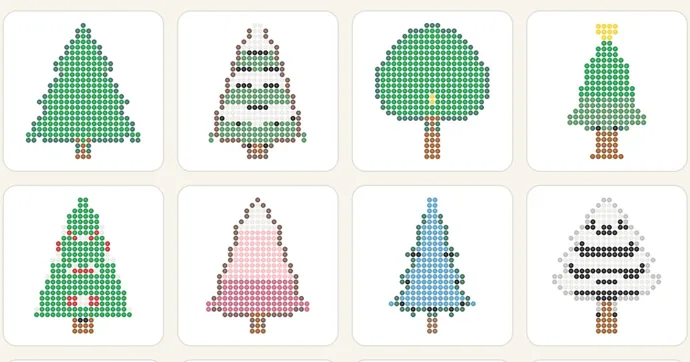
The real Christmas trees sold in the US come from four groups: firs, spruces, pines, and cypress or cedar. Firs such as Fraser, balsam and noble have short, soft, flat needles and the classic piney smell. Spruces have stiff, sharp needles and stiff branches that carry heavy ornaments. Pines have the longest needles, and a Scotch pine keeps them even after it dries. Leyland cypress, common in the Southeast, has feathery foliage and only a light scent.
The right one depends less on looks than on your house: how warm the room is, how heavy your ornaments are, whether small children will grab the branches, and whether anyone reacts to strong tree scent. The table below sorts the common species by those questions, and the sections after it describe each tree and how to keep it fresh and safe once it is home.
Christmas tree types at a glance
Needle feel, scent and branch strength are the three things you notice first at a tree lot. Where the custom of bringing a tree indoors started is told in our guide to Christmas traditions; this table only compares the trees.
| Tree | Needles | Scent | Branches | Good for |
|---|---|---|---|---|
| Fraser fir | Dark green, flat, 1/2 to 1 in (1.3 to 2.5 cm) | Pleasant | Strong, turn upward | Most homes; good needle retention |
| Balsam fir | Dark green with a silvery cast, 3/4 to 1 1/2 in (1.9 to 3.8 cm) | Strong | Medium | People who want the strongest fir scent |
| Douglas-fir | Blue to dark green, 1 to 1 1/2 in (2.5 to 3.8 cm) | One of the best when crushed | Medium | A full cone shape |
| Noble fir | Bluish-green, silvery, about 1 in (2.5 cm) | Mild | Short and stiff | Heavy ornaments |
| Blue spruce | Powdery blue, very stiff and sharp | Mild | Stiff | Heavy ornaments; homes without toddlers |
| Norway spruce | Shiny dark green, 1/2 to 1 in (1.3 to 2.5 cm) | Strong | Medium | Short display; poor needle retention without care |
| Scotch pine | Stiff, dark green, about 1 in (2.5 cm) | Lasts all season | Stiff, open | Needles that stay on even when dry |
| White pine | Soft, blue-green, 2 to 5 in (5.1 to 12.7 cm) | Little or none | Slender | Light ornaments; people bothered by scent |
| Leyland cypress | Dark green to gray, feathery | Light | Upright | Southern homes; people bothered by scent |
| Eastern red cedar | Shiny dark green, sticky | Good | Medium | A short display of 2 to 3 weeks |
Every figure in the table comes from the University of Illinois Extension’s list of Christmas tree species sold in the United States. Scent and branch strength vary from tree to tree within a species, so treat the table as a starting point and check the actual tree on the lot.
Fir trees: soft needles and the classic smell
Firs are the trees most people picture when they think of a Christmas tree: a tidy cone, short flat needles that feel soft in the hand, and a scent that fills the room. For a house with small children, a fir is the easier pick, because its flat needles are kinder to small hands than the very stiff needles of a spruce.
Fraser fir and balsam fir
Fraser fir has dark green, flattened needles 1/2 to 1 inch (1.3 to 2.5 cm) long, good needle retention and a nice scent. Its branches are strong and turn upward, which gives it a pyramid shape and room for ornaments. It comes from the southern Appalachians, where growing Fraser firs for trees and wreaths is a multi-million dollar business.
Balsam fir has short, flat needles 3/4 to 1 1/2 inches (1.9 to 3.8 cm) long, rounded at the tip, dark green with a silvery cast. Illinois Extension calls them long lasting and describes the tree as fragrant. The name comes from the resin, or balsam, found in blisters on the bark.
Douglas-fir and grand fir
Douglas-fir holds a blue to dark green color, with needles 1 to 1 1/2 inches (2.5 to 3.8 cm) long, and it has a good cone shape. Crush a few needles between your fingers at the lot: Illinois Extension rates the aroma as one of the best among Christmas trees. The hyphen in the name is a clue that its Latin name, Pseudotsuga menziesii, puts it outside the true firs, which are Abies.
Grand fir has shiny, dark green needles about 1 to 1 1/2 inches (2.5 to 3.8 cm) long, and crushed needles give off a citrusy smell. White fir, also sold as concolor fir, has blue-green needles, a good shape and a citrus scent with good needle retention. Pick one of these two if a sharp, piney smell feels too strong.
Noble fir and Nordmann fir
Noble fir is the fir to choose for heavy glass ornaments. Its needles are about 1 inch (2.5 cm) long, bluish-green with a silvery look, and the branches are short and stiff. It keeps well, which is why it is also cut for wreaths, door swags and garland.
Nordmann fir has dark green, flattened, shiny needles that are silvery-blue underneath, 3/4 to 1 1/2 inches (1.9 to 3.8 cm) long. It is popular in the United Kingdom and less common on American lots.
Spruce trees: stiff branches for heavy ornaments
Spruces trade comfort for strength. Their branches are the stiffest of the common Christmas trees, so a spruce can carry a big ornament collection without sagging, but the needles are sharp. That is the trap with a spruce: in a house with toddlers who reach into the tree, the needles hurt, and Illinois Extension notes that stiff Black Hills spruce needles may be hard for small children to handle.
Blue spruce
Blue spruce runs from dark green to powdery blue, with very stiff needles 3/4 to 1 1/2 inches (1.9 to 3.8 cm) long. It has a good, symmetrical form, and the stiff branches support many heavy decorations. The catch is heat: Illinois Extension warns that it will drop needles in a warm room, so set it away from vents and keep the stand full. Blue spruce is the state tree of Utah and Colorado.
Norway spruce and white spruce
Norway spruce has shiny, dark green needles 1/2 to 1 inch (1.3 to 2.5 cm) long, a strong fragrance and a nice cone shape, and it is very popular in Europe. Its weak point is needle retention, which is poor without proper care. Buy it close to when you plan to decorate and water it every day.
White spruce has short, stiff needles 1/2 to 3/4 inch (1.3 to 1.9 cm) long, green to bluish-green, with good needle retention. Crushed needles have an unpleasant odor, so skip it if scent is half the reason you want a real tree.
Pine trees: long needles that stay on
Pines look different from firs and spruces up close. Their needles are longer and grow in bundles, and the trees often have a more open shape with gaps between branches. One thing surprises first-time buyers: in fall, all pines shed some of their oldest needles. Illinois Extension says this is normal, and most farms shake or blow the loose needles out before you take the tree home.
Scotch pine
Scotch pine, also called Scots pine, has stiff branches and stiff, dark green needles about 1 inch (2.5 cm) long. It holds its needles for four weeks, and they stay on even when the tree is dry. Its open shape leaves room for ornaments, and it keeps its aroma through the season. European settlers brought it to the United States.
White pine and other pines
White pine has soft, blue-green needles 2 to 5 inches (5.1 to 12.7 cm) long, in bundles of five, and a very full look. It has little or no fragrance, and Illinois Extension lists it as causing fewer allergic reactions than more fragrant trees. Its slender branches hold fewer and smaller decorations than a Scotch pine, so save the heavy glass ornaments for another tree.
A few regional pines show up on lots in some states. Virginia pine has dark green needles 1 1/2 to 3 inches (3.8 to 7.6 cm) long in twisted pairs, strong branches for heavy ornaments and a strong pine scent; it is a popular southern tree. Afghan pine has soft, short needles, sturdy branches and a mild scent, and it is grown in Texas. Austrian pine has dark green needles 4 to 6 inches (10.2 to 15.2 cm) long and holds them well. Pines also tend to have at least some crook in the trunk, so check that it will sit straight in your stand.
Cypress and cedar trees for southern homes
Cypress and cedar fill the gap in places where firs and spruces don’t grow well. Their soft, feathery or sticky foliage suits lights, ribbon and lighter ornaments better than a heavy glass collection.
Leyland cypress
Leyland cypress has dark green to gray foliage on upright branches with a feathery look, and only a light scent. Illinois Extension calls it one of the most sought-after Christmas trees in the Southeastern United States and a good choice for people with allergies to other Christmas tree types.
Eastern red cedar and deodar cedar
Eastern red cedar has shiny, dark green leaves that are sticky to the touch and a good scent. It can dry out quickly and may last only 2 to 3 weeks, so put it up late. Deodar cedar has short, bluish-green needles, and its branches hang down at the tips.
Real vs fake Christmas tree: which one fits your home
The real-or-artificial choice comes down to care, scent and space. A real tree needs water every day and leaves when it dries. An artificial tree goes back in its box and comes out again next year. Which is better for the environment is argued on both sides, and this guide doesn’t settle that. The points below are the practical ones.
When a real tree makes sense
Pick a real tree if you want the scent, have time to water every day, and can keep it at least 3 feet (0.91 m) from heat. A well-kept fresh-cut tree lasts at least five weeks before drying out, according to Illinois Extension. Some apartment buildings don’t allow real trees because of fire concerns, so check your lease or building rules before you shop.
When an artificial tree makes sense
An artificial tree suits a home where no one will remember to water, a household that puts the tree up right after Thanksgiving, or anyone bothered by tree scent. Most are made of PVC plastic, which is fire-retardant but not fireproof, so the same rules about heat sources and lights apply. Many come with lights already strung and hinged branches that snap into place.
Potted trees you can plant later
Some farms grow potted trees with balled roots, which can be replanted after Christmas. A potted tree is smaller and much heavier than a cut tree of the same height, because the root ball comes with it. Ask the grower how many days it can stay indoors and where to keep it until the ground can be dug.
How to pick a fresh tree at the lot or farm
Choosing the tree starts at home, not at the lot. Decide where it will stand, then measure the height and width of that space and take the tape measure with you. A tree that looks right outdoors often turns out too tall indoors.
- Count the sides you need. In front of a window, all four sides should look good. Against a wall, three good sides are enough, and in a corner, two will do.
- Test for freshness. Run a branch through your hand: the needles should bend and stay on. Then lift the tree a few inches and drop it on its cut end. A few brown inner needles falling is normal; very few green ones should drop.
- Check the trunk. The bottom of the trunk should be straight and 6 to 8 inches (15.2 to 20.3 cm) long so it fits the stand.
- Buy early, from shade. Trees on city lots may have been cut weeks earlier and dried by wind on the trip. The best trees go first.
- Cover it for the drive. Wrap the tree in a tarp or plastic so wind doesn’t dry it on the way home, and bring a cord to tie it to the car.
At a choose-and-cut farm, wear sturdy shoes and old clothes, and bring gloves for whoever cuts and loads. Most farms provide the saw. Cutting goes easier with two people: one saws while the other holds the lower branches up and pulls the tree gently away from the cut so the saw doesn’t bind. Ask about pricing before you head into the field, since some farms price each tree and others sell by the foot.
Keeping a real Christmas tree fresh and safe
A real tree’s biggest risk is drying out. The National Fire Protection Association’s tip sheet notes that a heat source too close to the tree causes one in every four Christmas tree fires, and that dried-out trees are a fire danger. Water and distance from heat take care of most of it.
- Cut the trunk before it goes in the stand. NFPA says to cut 2 inches (5.1 cm) from the base so the tree can take up water.
- Use a stand that holds enough water. Illinois Extension suggests at least 1 gallon (3.79 L), or 1 quart (0.95 L) for every inch of trunk diameter.
- Add water every day. If the base dries out, resin seals the cut and the tree stops drinking. Plain water works; Illinois Extension says sugar, aspirin and other additives aren’t needed.
- Keep it 3 feet (0.91 m) from heat. That means fireplaces, radiators, candles, heat vents and lights, and the tree shouldn’t block an exit.
- Check the lights. Use lights listed by a qualified testing laboratory, replace strings with worn cords or loose bulbs, never decorate with lit candles, and turn the tree lights off before you leave home or go to bed.
- Take it down when it’s dry. NFPA says a dried-out tree shouldn’t stay in the home or garage or lean against the house outside. Check with your community about tree recycling.
Watering a tree once the skirt and presents are around it is awkward. Illinois Extension’s trick is a funnel with 3 to 4 feet of vinyl tubing slipped over the spout, tied out of sight in the branches with the tube running down into the stand, so you can top up the water without moving anything.
Christmas tree coloring pages and bead patterns for kids
Talking about tree types gives kids a reason to look closely at the tree in the living room: are the needles flat or round, short or long, soft or sharp? Our two Christmas tree sets work well after that, though neither is a species guide. The drawings are simple holiday trees, not botanical portraits.
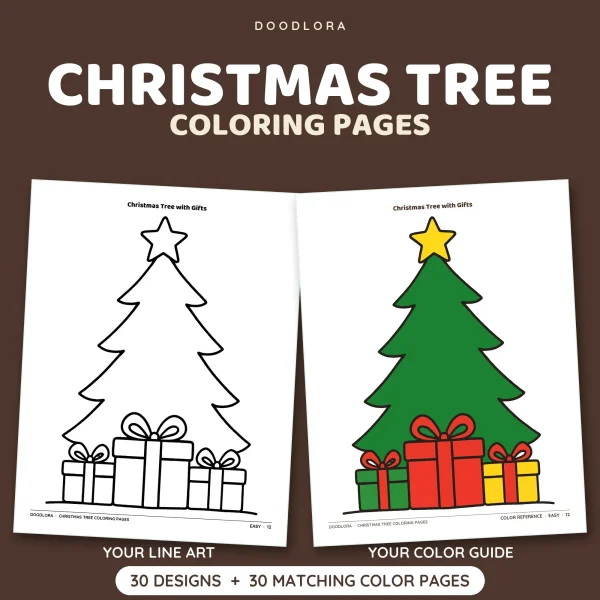
The coloring set has 30 designs, all marked Easy, in a US Letter and an A4 book, each with a color reference page that matches it page for page. About half are pointed pine-style trees hung with ornaments, snowflakes, a stocking or a star. Twelve are round, leafy trees with bows and bells, and three pages show a star or an ornament with no tree. For a drawing lesson to go with it, how to draw a Christmas tree builds one from a stack of triangles.
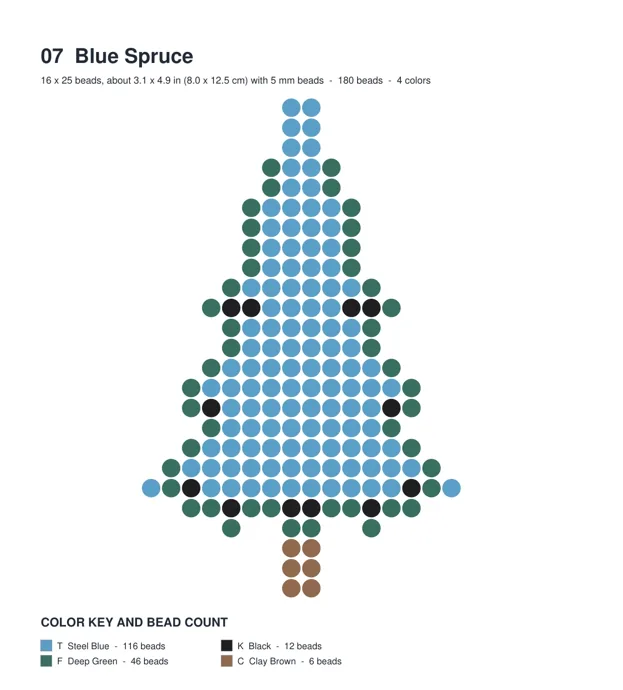
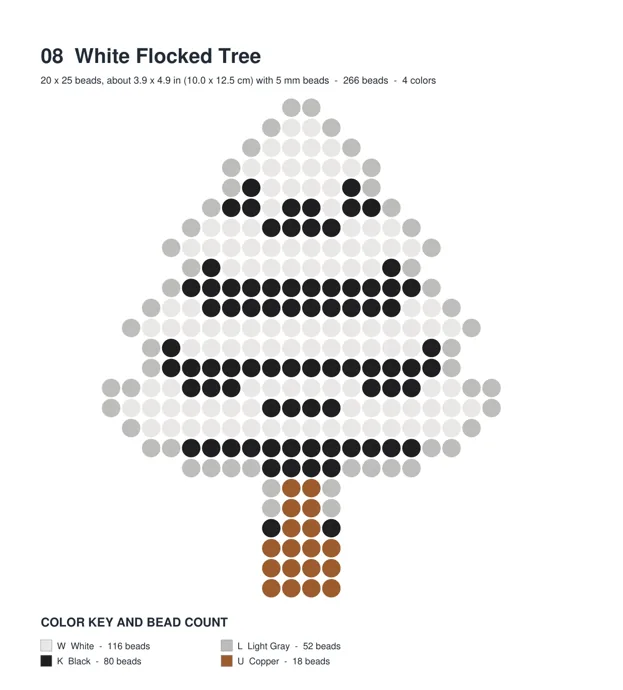
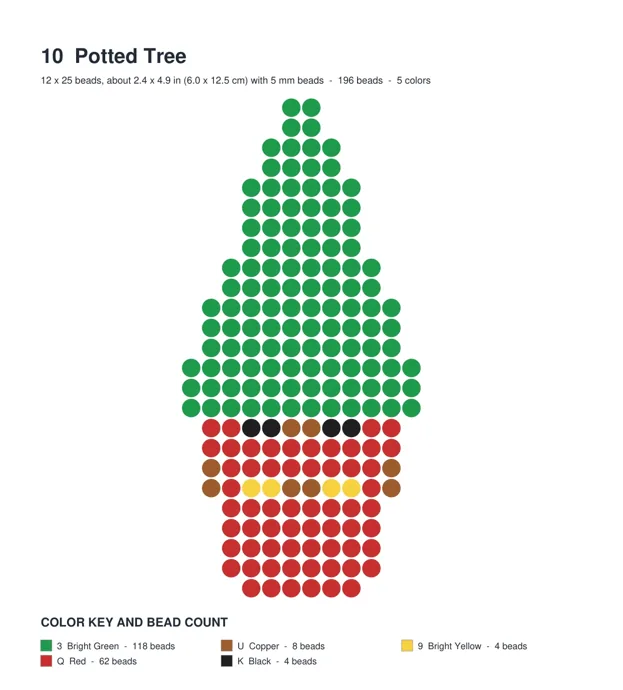
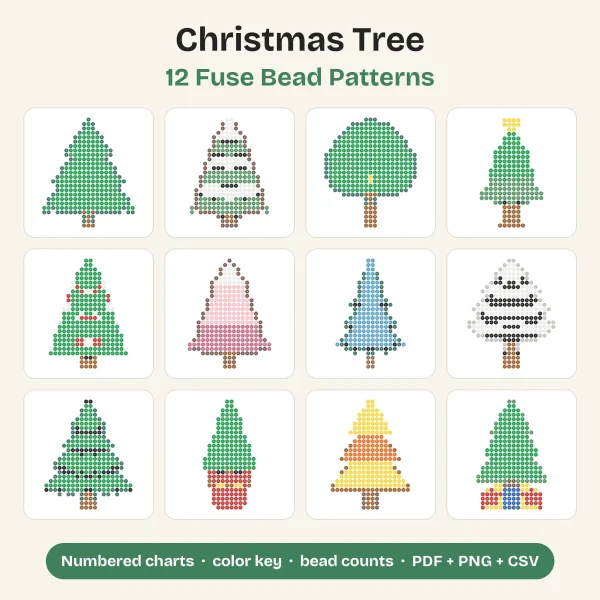
The fuse bead set has 12 small trees, including the Blue Spruce, the White Flocked Tree and the Potted Tree shown above. With 5 mm beads, all but the Star Topper Tree finish about 4.9 inches (12.5 cm) tall, and no design takes more than 319 beads. An adult does the ironing. Finished bead trees make good ornaments, and our DIY Christmas ornaments guide covers how to hang and store them.
Both sets come with a personal license, which covers printing at home and a teacher copying pages for their own class. Print at Actual Size, not Fit to Page, so the bead charts keep their scale. Once the tree comes down, winter decorating ideas shows what to put up in its place.
Flat soft needles mean a fir, sharp stiff ones a spruce, long bundled ones a pine. Check those three at the lot, then measure the trunk and keep the stand full.
Printables from this article
Related articles
Printable Coloring Pages
How to Draw a Strawberry: Easy, Cut, Cute and Realistic
Build the berry from a cone with wide shoulders, lay the cap over the top, set the seeds in offset rows that shrink toward the edges, save a white shine spot, and then try a cut berry, a cute face or a shaded realistic one.
Printable Coloring Pages
The 5 Food Groups: MyPlate, the Food Pyramid and Examples
The five food groups the USDA's MyPlate used from 2011 to January 2026 are fruits, vegetables, grains, protein foods and dairy. Here is what MyPlate listed in each one, the foods that land in a surprising group, how the food pyramid turned into MyPlate and then a new pyramid, and a sorting activity built on coloring pages.
Printable Coloring Pages
Types of Pizza: Regional Styles From Naples to Detroit
Most pizza styles are named for the city that made them famous, and you can tell them apart by four things: how thick the crust is, what shape the pie is, how it's cut and whether the sauce sits under or over the cheese. Here are 14 styles from Italy and the US, with what each one looks like on the plate.