The 5 Food Groups: MyPlate, the Food Pyramid and Examples
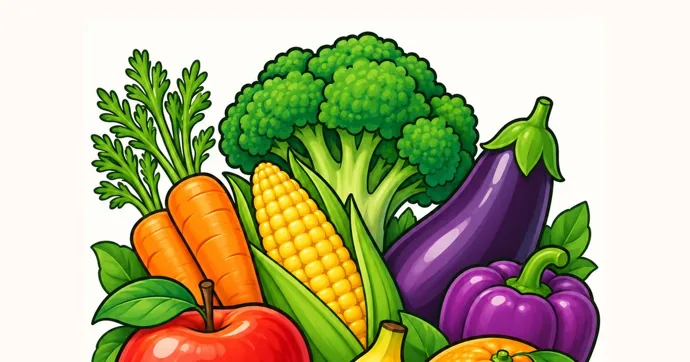
The five food groups are fruits, vegetables, grains, protein foods and dairy. Those are the five sections of MyPlate, the plate-and-cup picture the U.S. Department of Agriculture used to teach eating from 2011 until January 2026: four wedges on the plate for fruits, vegetables, grains and protein, and a cup beside it for dairy. Each group is defined by what a food is made from, not by how it’s served, which is why corn, peas and an egg on toast catch kids out.
The group names and examples on this page come from MyPlate’s own group pages. In January 2026 the USDA switched to a new graphic, so for the current official wording, check the federal guidelines themselves. Below are MyPlate’s lists for each group, the foods that land somewhere unexpected, how the old food pyramid became MyPlate, and a sorting activity that uses coloring pages.
The five food groups at a glance
This table is the short version. Each row uses MyPlate’s wording for what belongs in the group, plus foods from the group that a child will recognize.
| Food group | What MyPlate puts in it | Foods a child knows |
|---|---|---|
| Fruits | All fruits and 100% fruit juice, fresh, frozen, canned or dried | apple, banana, grapes, orange, strawberries |
| Vegetables | Any vegetable or 100% vegetable juice, raw or cooked | broccoli, carrots, corn, lettuce, tomatoes |
| Grains | Foods made from wheat, rice, oats, cornmeal, barley or another cereal grain | bread, pasta, tortillas, oatmeal, popcorn |
| Protein foods | Seafood; meat, poultry and eggs; beans, peas and lentils; nuts, seeds and soy products | chicken, fish, eggs, peanut butter, beans |
| Dairy | Milk, yogurt, cheese, lactose-free milk, and fortified soy milk and yogurt | milk, yogurt, cheese |
The table also works as a quick check when you write out a week of family dinners: run down the five rows and see which group is missing. Our meal planning guide covers the rest of that job, from picking dinners to writing the grocery list.
Fruits: fresh, frozen, canned, dried or 100% juice
The Fruit Group takes in every fruit and 100% fruit juice. MyPlate counts fruit whether it is fresh, frozen, canned or dried, and whether it’s eaten whole, cut up, puréed or cooked. It adds one line about juice: at least half of the fruit people eat should come from whole fruit rather than 100% juice.
That juice rule gives kids a good sorting question. A carton of orange juice belongs with fruits only when it’s 100% juice. A drink that just tastes of fruit, like lemonade, isn’t on MyPlate’s fruit list.
Vegetables: five subgroups on one plate section
Any vegetable or 100% vegetable juice counts in the Vegetable Group, raw or cooked, fresh, frozen, canned or dried. MyPlate then splits vegetables into five subgroups based on their nutrients:
- Dark green: broccoli, spinach, kale, bok choy, romaine
- Red and orange: carrots, tomatoes, pumpkin, red and orange bell peppers
- Beans, peas and lentils: black beans, kidney beans, pinto beans, split peas, lentils
- Starchy: corn, green peas, white potatoes, plantains, cassava
- Other vegetables: cabbage, celery, cucumbers, green bell peppers, iceberg lettuce, mushrooms, onions, zucchini
The subgroups matter most for older kids. A first grader only needs “vegetable.” A fourth grader can sort a pile of vegetable pictures into the five colors and kinds and find that the same bell pepper lands in two subgroups depending on its color.
Grains: whole grains and refined grains
Any food made from wheat, rice, oats, cornmeal, barley or another cereal grain is a grain product. MyPlate’s examples are bread, pasta, breakfast cereals, grits and tortillas, and it puts popcorn, rice and oatmeal in the group too. Pancakes are on its grain list as well.
Grains come in two kinds. Whole grains keep the entire kernel, so whole-wheat flour, bulgur, oatmeal and brown rice are whole grains. Refined grains have been milled to take out the bran and germ, which gives white flour, white bread and white rice their fine texture. MyPlate’s short rule for this group is “Make half your grains whole grains.”
Protein foods: from fish to beans and nuts
The Protein Foods Group is the widest one. MyPlate lists seafood; meat, poultry and eggs; beans, peas and lentils; and nuts, seeds and soy products. A child who doesn’t eat meat still has a whole list here, since MyPlate names beans, peas, lentils, nuts, seeds and soy products as vegetarian protein options.
Kids usually expect this group to be “meat,” so it helps to point at the peanut butter and the eggs. Both sit in the same group as chicken and fish.
Dairy: milk, yogurt, cheese and fortified soy milk
The Dairy Group holds milk, yogurt and cheese, plus lactose-free milk and fortified soy milk and yogurt. On MyPlate it’s the cup beside the plate, not a wedge on it.
Two things are left out on purpose. Foods made from milk that have little calcium and a lot of fat, such as cream cheese, sour cream, cream and butter, aren’t part of the group. Plant “milks” made from almond, rice, coconut, oat or hemp aren’t either, because MyPlate says their nutrition isn’t like dairy milk and fortified soy milk.
Foods that land in a surprising food group
A food’s group comes from what it’s made of, and these are the ones children, and plenty of adults, put in the wrong spot. Each answer below comes from MyPlate’s group pages.
| Food | Where MyPlate puts it | Why it trips people up |
|---|---|---|
| Corn on the cob | Vegetables (starchy) | Popcorn is listed under grains, so the same plant shows up twice |
| Green peas, beans, lentils | Vegetables and protein foods | MyPlate lists them in both groups |
| Potato | Vegetables (starchy) | It’s served next to rice and bread, so it gets mistaken for a grain |
| Tomato, pumpkin | Vegetables (red and orange) | Some people call them fruits |
| Eggs | Protein foods | Eggs aren’t made from milk, so they aren’t dairy |
| Butter, cream cheese | Not in the Dairy Group | They’re made from milk but have little calcium |
| Almond or oat “milk” | Not in the Dairy Group | MyPlate counts fortified soy milk, but not almond, rice, coconut, oat or hemp milks |
| Orange juice | Fruits, if it’s 100% juice | Fruit-flavored drinks aren’t fruit juice |
Mixed foods are their own puzzle. A burger has a bun from the grain group, a patty from protein foods, cheese from dairy and lettuce from vegetables, so it doesn’t belong in a single section. Pizza and tacos work the same way. Cupcakes, cookies, donuts, ice cream and lollipops aren’t named on any of MyPlate’s five group pages, so a sorting game needs a separate spot for them where kids can name what’s inside.
From the food pyramid to MyPlate, and the 2026 pyramid
The USDA’s first food pyramid came out in 1992, with foods stacked in six horizontal bands. In 2005 it became MyPyramid, which swapped the bands for vertical stripes and often showed no pictures of food at all. On June 2, 2011, MyPlate replaced MyPyramid and ended 19 years of USDA pyramid diagrams. The plate gave fruits and vegetables half the space, with grains and protein filling the other half.
The picture changed again in January 2026. Wikipedia’s MyPlate entry puts it in one line: MyPlate “was succeeded by The New Pyramid on January 7, 2026.” So a poster or worksheet from 2011 to 2025 shows a plate, while newer federal materials show an upside-down pyramid. The five groups and the examples in this article all come from MyPlate’s group pages as they stood before that switch. For the current federal wording, go to the official Dietary Guidelines for Americans pages.
How much a child should eat from each group isn’t covered here. Amounts vary with age and from child to child, so check the current official guidelines or ask your child’s pediatrician.
A food group sorting activity with coloring pages
Sorting colored-in pictures onto a big paper plate turns the five groups into something kids can handle. This version suits ages 4 to 8 at a kitchen table or in a classroom, in groups of three or four, and takes about 30 to 40 minutes by our planning estimate: 15 to 20 minutes of coloring, 10 minutes of sorting and a few minutes of talking through the tricky ones.
What to print and prepare
You need one food picture per child, or two or three each for a small group, and a big sorting plate.
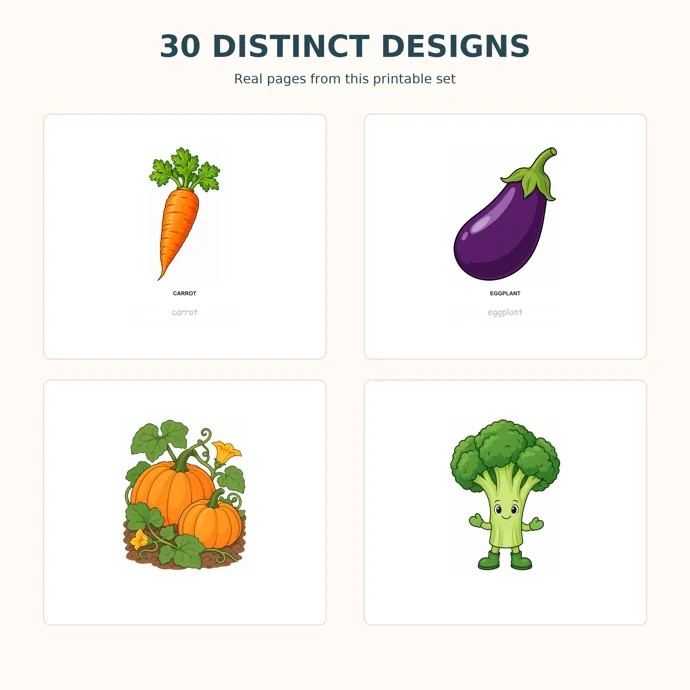
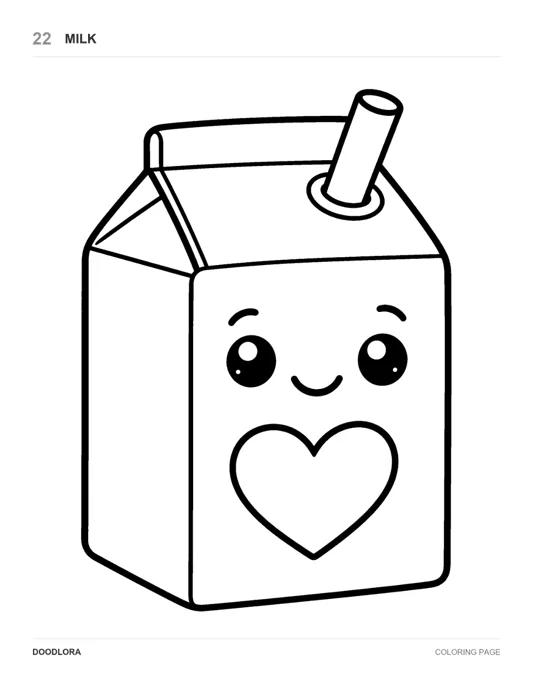
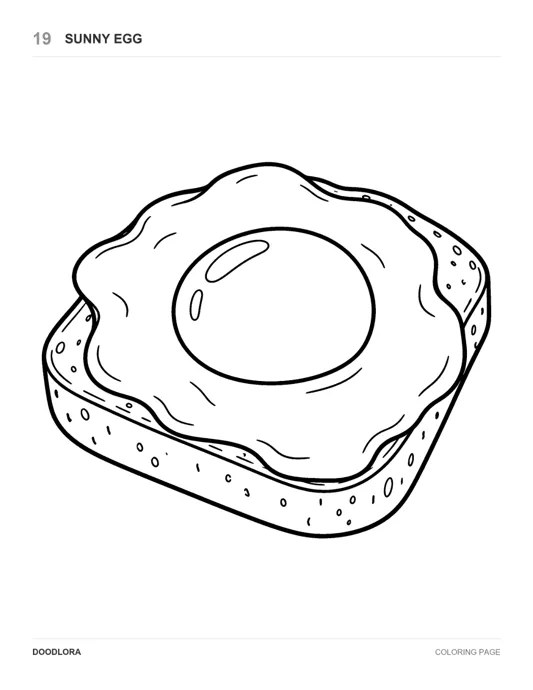
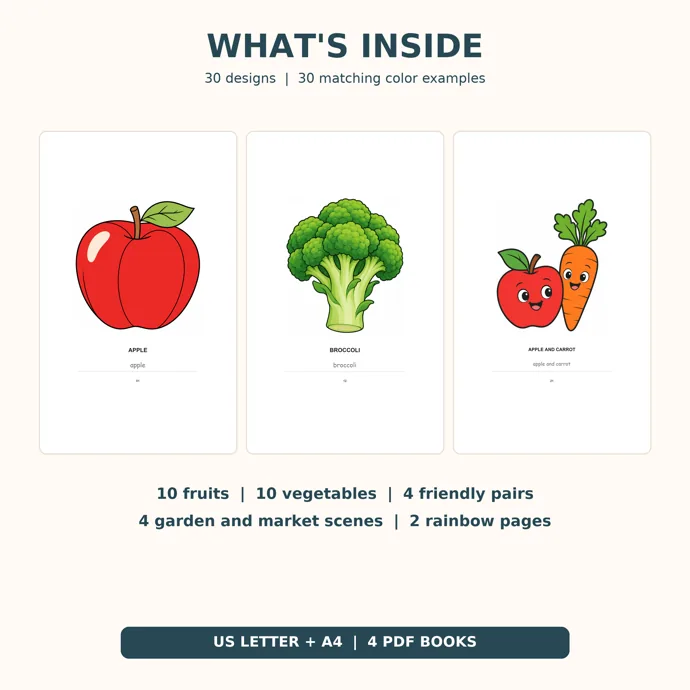
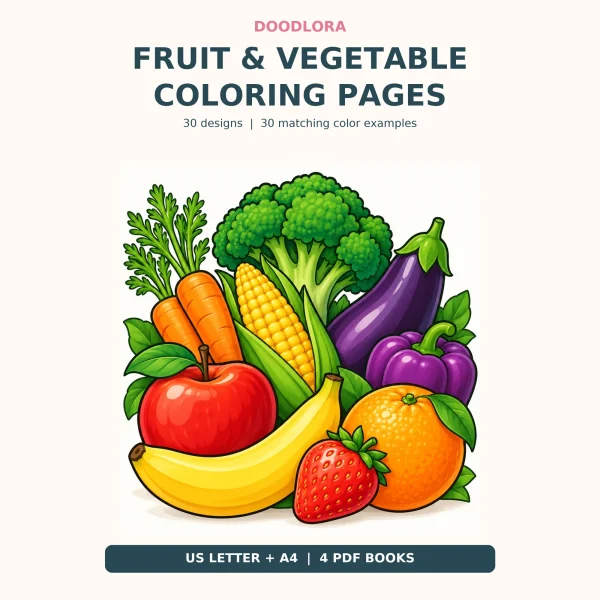
- Food pictures: Our fruits and vegetables coloring pages start with 10 single fruits on pages 01 to 10 and 10 single vegetables on pages 11 to 20, each with its name printed under the picture. The food coloring pages add the groups that produce can’t fill: 19 Sunny Egg, 20 Toast, 11 Pancakes, 21 Waffle and 22 Milk, plus mixed foods like the burger, pizza and taco for the “it depends” pile.
- The plate: Draw a big circle on poster paper or a paper tablecloth, split it into four sections labeled Fruits, Vegetables, Grains and Protein Foods, and draw a smaller circle beside it labeled Dairy. Leave a space off to one side for foods that fit more than one group.
- Supplies: Crayons or markers, child safety scissors if the kids will cut their pictures out, and tape or glue sticks.
Print the line-art pages at Actual Size, one page per sheet, which is what the files’ own print notes ask for. If a page comes out gray or with broken lines, our guide to printing coloring pages walks through the printer settings.
Running the sort
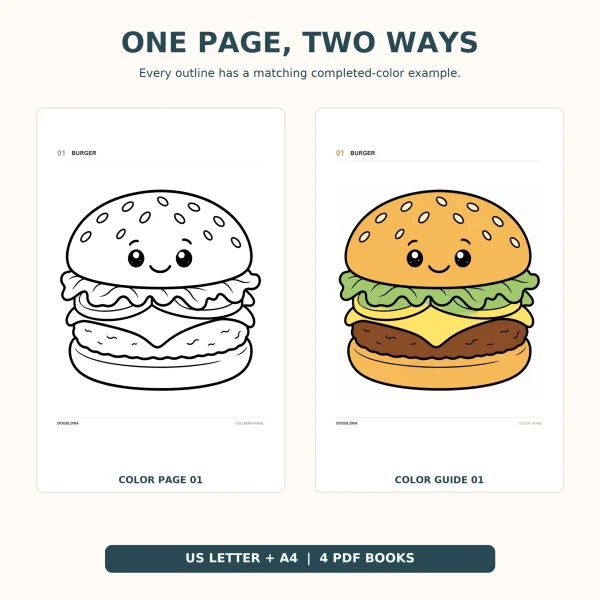
- Color first. Each child colors their food. If you have the color-guide book printed or on a screen, younger kids can match the colors.
- Name it out loud. Before a picture goes on the plate, the child says what the food is made from: “toast is made from bread, bread is made from wheat.”
- Place it. The child tapes the picture into a section. Nobody corrects anyone yet.
- Check the tricky ones together. Pick out the corn, the peas, the potato, the egg and anything on the “it depends” side, and use the surprising-group table above to settle them.
- Finish with a count. Count how many pictures ended up in each section and which one is still empty. If you printed only fruit and vegetable pages, the grains, protein and dairy spots stay bare, and that’s the moment to hand out the toast, egg and milk pages.
Changing the sort for younger and older kids
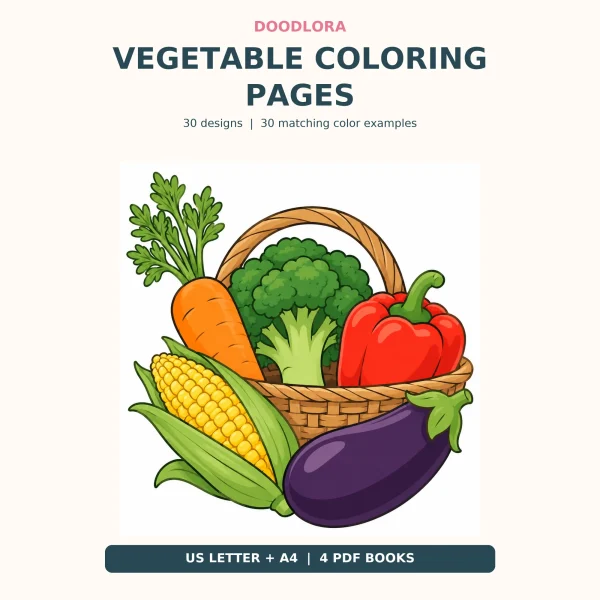
For 3- and 4-year-olds, cut the plate down to two sections, fruits and vegetables, and use only the single-food pages. Our vegetable coloring pages help here, since the first 20 pages put each vegetable’s name under the picture with a dotted line for tracing it. If you’re choosing crayons for that age, our coloring tips compare thick crayons, markers and colored pencils.
For ages 7 and 8, add the five vegetable subgroups. Hand out the 20 single vegetables and have the group split them into dark green, red and orange, starchy, beans and peas, and other. The bell pepper and the peas make the best arguments.
All three sets are sold with a personal license. A teacher can print them for the students in their own classroom, but the pages can’t be resold or shared as files.
Food group questions kids and parents ask
Are there 5 food groups or 6?
MyPlate has five: fruits, vegetables, grains, protein foods and dairy. The six that some people remember come from the 1992 food pyramid, which was drawn in six horizontal sections.
Which food group is a tomato in?
MyPlate lists tomatoes in the Vegetable Group, in the red and orange subgroup, along with carrots and pumpkin.
Is peanut butter a protein food?
Yes. MyPlate lists nuts and seeds in the Protein Foods Group, and peanut butter is made from peanuts.
Printables from this article
Related articles
Printable Coloring Pages
Types of Christmas Trees: Fir, Spruce, Pine, Real vs Fake
Most real Christmas trees sold in the US are firs, spruces, pines or cypress. Firs have soft needles and the strongest scent, spruces have stiff branches for heavy ornaments, pines hold their needles longest, and Leyland cypress has almost no scent. Here is how each one looks, smells and lasts, and how to keep it fresh and safe.
Printable Coloring Pages
How to Draw a Strawberry: Easy, Cut, Cute and Realistic
Build the berry from a cone with wide shoulders, lay the cap over the top, set the seeds in offset rows that shrink toward the edges, save a white shine spot, and then try a cut berry, a cute face or a shaded realistic one.
Printable Coloring Pages
Types of Pizza: Regional Styles From Naples to Detroit
Most pizza styles are named for the city that made them famous, and you can tell them apart by four things: how thick the crust is, what shape the pie is, how it's cut and whether the sauce sits under or over the cheese. Here are 14 styles from Italy and the US, with what each one looks like on the plate.