Cleaning Schedule: Weekly Plan and Deep Cleaning Checklist
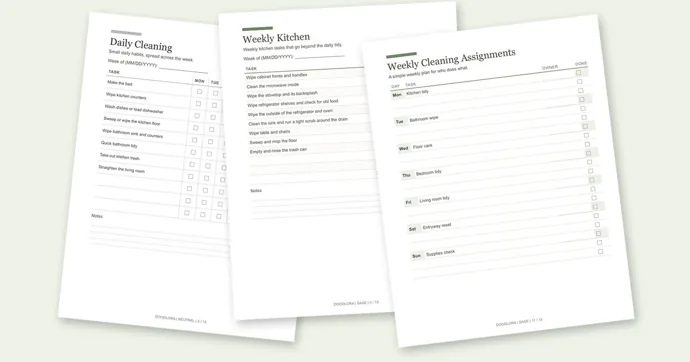
A cleaning schedule that lasts splits housework by how often each job comes back, not by room. Build it in four layers: a short daily reset, one room or job per weekday, one monthly deep-clean session and a seasonal list for the big jobs. The weekly layer is where most schedules break, so it should fit around who lives in the home and when they are at work. Below are the tasks for each layer, three sample weeks for different households, a deep cleaning checklist and a plan for the days that slip.
The four layers of a cleaning schedule
Each layer answers a different question. The daily reset stops mess from piling up. The weekly layer keeps each room usable. The monthly and seasonal layers handle the jobs nobody notices until they are bad, like the range hood filter or the window screens.
| Layer | How often | Rough time (planning estimate) | Typical jobs |
|---|---|---|---|
| Daily reset | Every day | 15–20 minutes | Dishes, counters, beds, trash |
| Weekly rooms | One area per day | 30–45 minutes | Bathroom, floors, sheets, dusting |
| Monthly deep clean | One session a month | 2–3 hours | Inside the microwave, baseboards, under beds |
| Seasonal | Four times a year | Half a day | Windows, curtains, heavy bedding, vents |
The times are our estimates for a small home. Use them to decide where jobs go, then adjust after your first two weeks.
Daily cleaning tasks
Keep the daily list short enough to finish on a tired evening. If it takes more than 20 minutes, a weekly job has crept in. A workable daily list:
- Make the beds
- Wash the dishes or load the dishwasher
- Wipe the kitchen counters and stovetop after cooking
- Clear and wipe the kitchen sink
- Quick wipe of the bathroom sink, and hang towels to dry
- Sort the mail as it comes in
- Put shoes and bags away by the door
- Reset the living room: pillows, throws, cups and toys back in place
Weekly cleaning tasks
Weekly jobs are the ones that take real time in one room. Give each a day so no evening carries more than one of them:
- Kitchen: wipe cabinet fronts and appliance fronts, clean the microwave, mop the floor, wash the dish towels, empty and rinse the trash can
- Bathroom: scrub the toilet, clean the shower and tub, wipe the mirror, check the drains for hair, change towels, wash the bath mat
- Bedrooms: change the sheets, dust nightstands and dressers, put laundry away, vacuum
- Living room: dust shelves, vacuum the rug and sofa cushions, wipe remotes and side tables
- Entryway: shake out the mat, wipe the door handles, sweep, clear the shoe area
- Laundry: wash, dry and fold the week’s clothes and towels
Monthly and seasonal cleaning tasks
Monthly jobs fit in one longer session, often a weekend morning. They include cleaning inside the microwave and oven door, wiping inside cabinet shelves, cleaning the range hood filter, dusting baseboards and light switches, wiping the refrigerator shelves and vacuuming under beds and furniture edges.
Seasonal jobs are big enough to need their own date on the calendar: washing windows, curtains and window screens, washing blankets and comforters, wiping ceiling fans and vents, clearing out the pantry and sorting outgrown clothes. The deep cleaning checklist further down groups both layers by room.
How to make a weekly cleaning schedule that fits your week
The weekly layer has to match the hours people are actually home. Start by writing down three things before you assign any job:
- Who lives here and who can take a share, including kids old enough to help.
- When each person works, including late shifts and travel days.
- Which day of the week is always the busiest, and leave that day empty.
Then put the heaviest job, usually the bathroom or floors, on the evening with the most free time. Put sheets on a day with time to dry them. Keep one day for a short review of the week ahead.
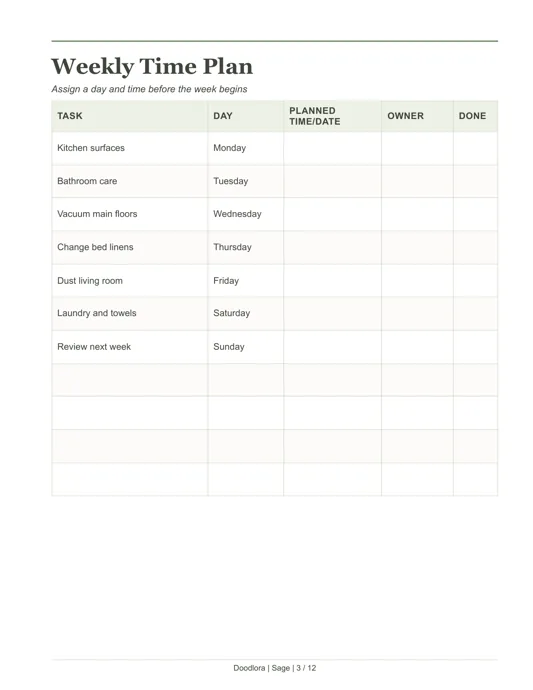
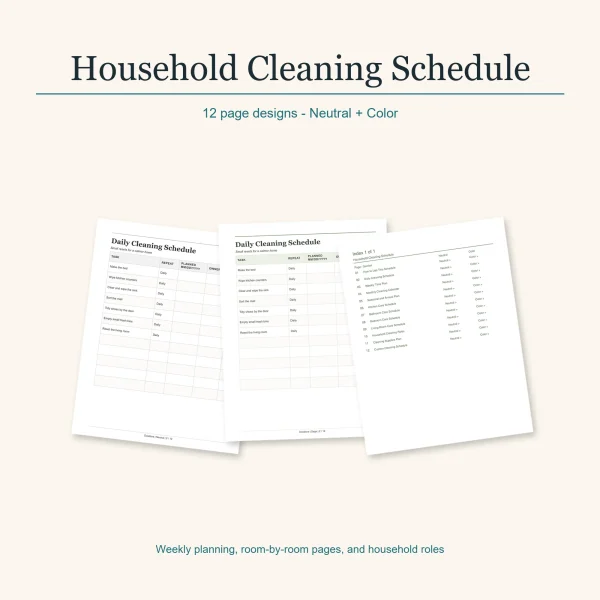
The page above is the weekly planner from our house cleaning schedule. It starts with one job per day, from kitchen surfaces on Monday to a review on Sunday, and leaves the time and owner columns blank. Write the time in, not just the day. “Bathroom, Tuesday 7:30 p.m.” gets done more often than “Bathroom, Tuesday.”
Sample week: one person working full-time
A single adult in an apartment has no one to share with, but also less to clean. Keep weekdays light and give the weekend one longer block.
| Day | Job | About |
|---|---|---|
| Monday | Kitchen: fronts, microwave, floor | 30 min |
| Tuesday | Bathroom | 30 min |
| Wednesday | Nothing extra (daily reset only) | — |
| Thursday | Vacuum and dust all rooms | 30 min |
| Friday | Nothing extra | — |
| Saturday | Laundry and sheets | Between other plans |
| Sunday | Plan the week, check supplies | 10 min |
Two empty weekdays give the schedule room to absorb a late night at work without falling behind.
Sample week: two adults who both work
Two working adults usually clash over who does more, so split by owner, not by day. Each person owns whole jobs from start to finish.
| Day | Person A | Person B |
|---|---|---|
| Monday | Kitchen deep wipe | — |
| Tuesday | — | Bathroom |
| Wednesday | Vacuum and mop | — |
| Thursday | — | Sheets and bedroom dusting |
| Friday | Nothing extra | Nothing extra |
| Saturday | Laundry (shared) | Laundry (shared) |
| Sunday | Plan the week together | Plan the week together |
If one person works evenings, give that person weekend jobs instead of weeknight ones. Swap whole jobs every month so nobody is stuck with the bathroom forever.
Sample week: a family with kids
A family of four with school-age kids makes more mess, but also has more hands. Kids get short, specific jobs that come back on the same day, and adults keep the cleaning that needs chemicals.
| Day | Adult job | Kids’ job |
|---|---|---|
| Monday | Kitchen fronts and floor | Empty small trash bins |
| Tuesday | Bathrooms | Hang towels, put toys away |
| Wednesday | Vacuum main floors | Clear their bedroom floor first |
| Thursday | Change sheets | Strip their own beds |
| Friday | Nothing extra | Living room reset |
| Saturday | Laundry | Fold and put away their clothes |
| Sunday | Plan the week | Help check the supply list |
For which jobs fit which ages, from toddlers wiping spills to teens cleaning a bathroom, see our guide to age-appropriate chores. Pick from it here instead of inventing a separate kids’ list.
Who does what: sharing the cleaning schedule
A schedule with names on it holds up better than one with only tasks. Each person needs three things written down: the jobs they own, the days they help with shared jobs, and what happens when they miss one.
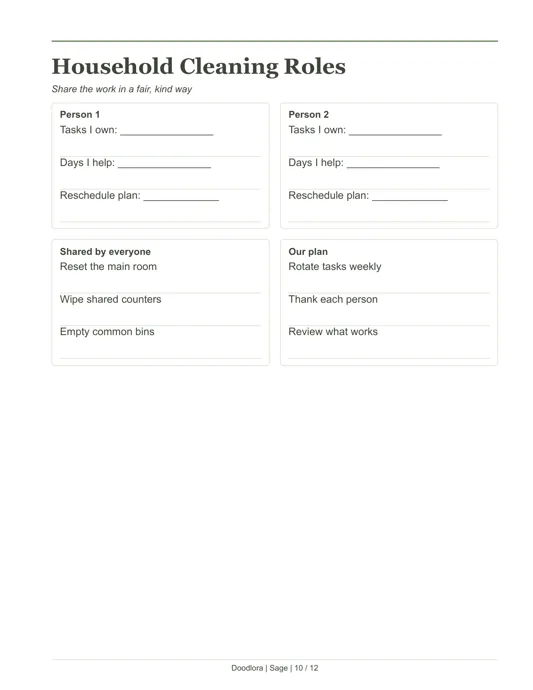
That roles page in the house cleaning schedule has two person boxes, a “Shared by everyone” box for counters, bins and the main room, and an “Our plan” box with rotating tasks weekly and reviewing what works. One trap: there are only two person boxes. In a home of three or more, print the page once per pair of people, or write each extra person’s jobs on the Custom Cleaning Schedule page in the same set.
Keep shared jobs to the ones everyone touches, like the main room and the counters. Anything bigger works better with one clear owner.
Deep cleaning checklist by room
A deep clean covers the jobs in the monthly and seasonal layers. Do one room per session rather than the whole house in a day. A full-house deep clean usually stalls halfway and leaves every room half-done.
Kitchen
- Wipe inside the oven door and clean the oven
- Clean inside the microwave
- Clean the range hood filter
- Wipe the dishwasher door and seal
- Wipe inside cabinet shelves and cabinet fronts
- Empty and wipe the refrigerator shelves and drawers, and check for old food
- Clear out old pantry items
- Wash the kitchen trash bin
Bathroom
- Scrub soap and water marks in the shower
- Wipe the toilet base and the floor around it
- Wipe the mirror edges and cabinet fronts
- Wash the bath mat and the bathroom bin
Bedrooms
- Vacuum under the bed
- Wash pillows if the care label allows
- Wipe furniture and baseboards
- Rotate the mattress if the maker recommends it
- Sort the closet shelf and outgrown clothes
Living areas and entryway
- Dust high shelves, picture frames, ceiling fans and vents
- Wipe interior windows, sills and light switches
- Vacuum under and behind furniture
- Wash throw blankets and curtains
- Clean the TV screen with a soft dry cloth
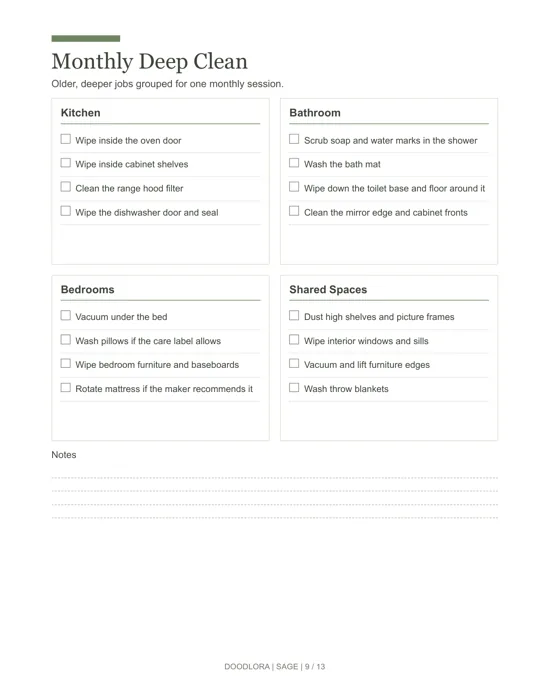
The monthly page in our house cleaning checklist groups four of these per room into one session, as shown above. A seasonal page in the same set splits the year’s bigger jobs into spring, summer, fall and winter.
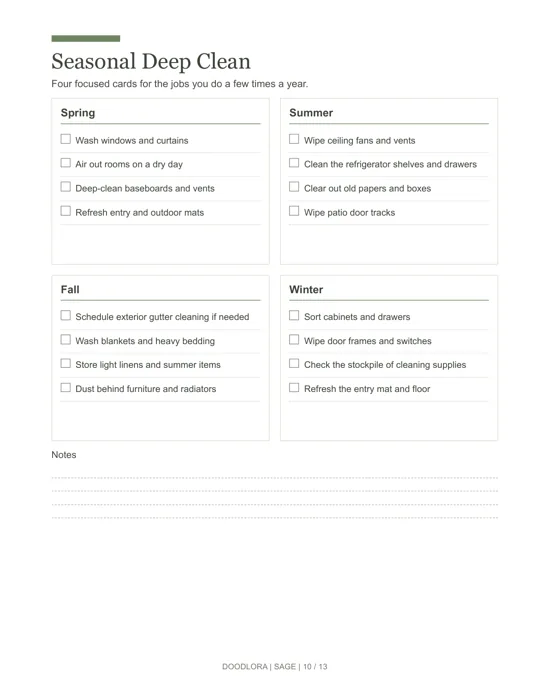
Spread the seasonal jobs out so one season does not hold all the heavy work. Washing windows and curtains suits spring, when rooms can air out on a dry day. Heavy blankets go in fall, before they come back into use.
Cleaning products: one safety rule
A deep clean is when people reach for stronger products, and also when they are tempted to mix them. The CDC’s rule is short: “Never mix bleach with ammonia or any other cleaner.” The same page says to open windows and doors when using products indoors. Store cleaners in their own containers, out of reach of children, and keep the cleaning jobs that use them with the adults on your schedule.
How to clean your house when the schedule falls apart
Every schedule slips. A sick week, a work deadline or a trip will leave a pile of skipped jobs. The fix is to restart small rather than catching up all at once.
- Do the daily reset first. Dishes, counters and trash make the home feel under control again within one evening.
- Skip the missed weekly jobs, don’t stack them. Doing two bathrooms and the floors on one night is how a schedule gets dropped for good. Pick the one job that bothers you most and let the others wait for their normal day.
- Write a new date next to anything that matters. A reschedule note keeps a job from vanishing. The house cleaning schedule pages have a date column for this.
- Move the monthly session, don’t cancel it. Push it to the next free weekend.
- Look for the pattern. If the same job slips three weeks running, its day is wrong. Move it to a lighter evening or hand it to someone else.
For the whole house after a long break, go top to bottom and dry to wet in each room: clear clutter, dust high surfaces, wipe counters, then do the floors last.
Printing and using the cleaning schedule pages
Both sets come as US Letter and A4 PDFs, each in a neutral gray version and a sage green version, plus a digital PDF for a tablet. Here is what is inside, counted from the files:
| House cleaning schedule | House cleaning checklist | |
|---|---|---|
| Page designs | 12 | 13 |
| Pages in each print PDF | 24 (both colors) | 26 (both colors) |
| Best for | Planning dates and owners | Ticking off room tasks |
| Main pages | Daily, Weekly Time Plan, Monthly, Seasonal and Annual, four room pages, Roles, Supplies, Custom | Daily (Monday to Sunday boxes), five weekly room pages, Monthly Deep Clean, Seasonal Deep Clean, Weekly Assignments, Supplies Inventory, Custom |
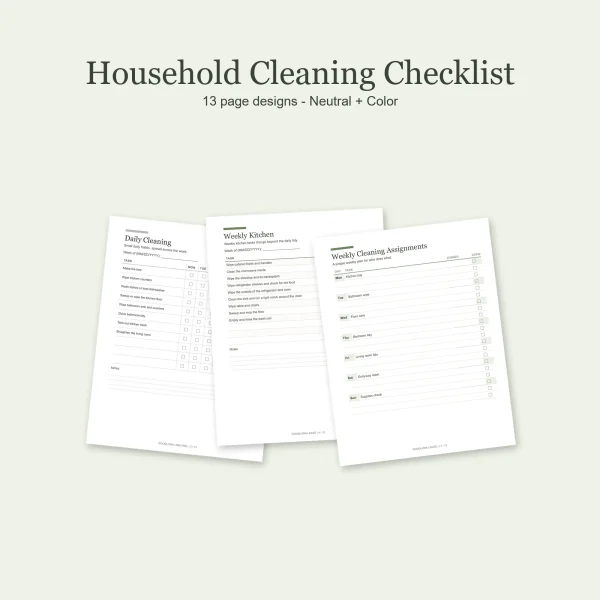
The schedule set plans who does what and when. The checklist set is the one to hang on the fridge and tick off. Print only the pages you need, single-sided at 100% (Actual Size) so the margins stay as printed. Each schedule page keeps a wide left margin for a hole punch.
On a tablet, the digital PDFs open on a linked index page that jumps to each page. You write on them with a pen tool in a PDF app. They are not fillable forms, so there are no boxes to type into.
If your home also needs a plan for furnace filters, gutters and smoke alarm tests, that is maintenance rather than cleaning. Our home maintenance checklist covers those jobs month by month. For keeping all these pages in one binder with your other lists, see how to use a planner.
Frequently asked questions
How often should you deep clean your house?
Most schedules deep clean one area each month and do the larger seasonal jobs, like windows and heavy bedding, about four times a year. The daily and weekly layers keep the rest from building up between sessions.
What should be on a daily cleaning schedule?
Keep it to jobs that take a few minutes each: dishes, counters, the kitchen sink, beds, trash and putting things back in the living room. Anything that needs a bucket or a vacuum belongs on the weekly list.
Is it better to clean a little every day or all at once?
A short daily reset plus one weekly job per day spreads the work so no single day gets too long. Cleaning everything on one weekend day also works for some people, but missing that one day means missing the whole week.
Printables from this article
Related articles
Printable Planners
How to Build a Workout Plan: Weekly Schedule & Template
A step-by-step way to turn a fitness goal into a weekly workout schedule, with 3-, 4- and 5-day sample weeks, a logging routine and simple rules for progressing, resting and restarting.
Printable Planners
How to Create a Home Maintenance Checklist: Monthly & Yearly
A step-by-step way to build a home maintenance checklist that fits your house, with monthly, quarterly, seasonal and yearly jobs and where the safety intervals come from.
Printable Planners
Self Care Ideas for Mental Health: Relaxing Habits & Tracker
Sixteen small, non-clinical self-care habits sorted by what you need, from sleep and walks to boundaries and a joy list, plus a low-pressure weekly check-in.