14 Gift Exchange Games: Christmas, Dice & Secret Santa Ideas
The right gift exchange game comes down to four questions: is each gift bought for a named person, how many people are playing, are children in the circle, and does your group enjoy stealing? A family of 12 with young kids does best when everyone passes at once, as in a left-right story. An office of 25 that likes a little rivalry suits white elephant. Friends who shop for each other need Secret Santa.
Personal gifts and random gifts need different games. A present chosen for one person has to reach that person, so it can’t go into a passing or stealing game. A random exchange needs gifts on the same budget that anyone in the group could use. The table matches 14 games to these situations. Each game’s section gives the headcount, preparation, play, the ending and the step most likely to go wrong.
| Game | Best for | Who gets which gift | Stealing? | What sets the length |
|---|---|---|---|---|
| Left-right story | 6–20 players and a reader | Random | No | A 4- or 8-page story |
| Swap-card round | The same circle, after the story | Random | No | One card |
| Dice gift exchange | 4–20 players, ages 5 and up | Random | Trades only | Twelve rounds or a timer |
| White elephant | Teens and adults who like rivalry | Random, chosen | Yes | One turn per player, plus steals |
| Numbered draw | Any size, kids included | Random | No | One draw each |
| Secret Santa | 3 or more people who shop ahead | A named person | No | The reveal |
| Guess-the-giver Secret Santa | People who know each other well | A named person | No | One guess each |
| Conspiracy Santa | Workplaces and classes | A named person | No | The reveal |
| Virtual white elephant | Remote teams | Random, chosen | Yes | One turn per player |
| Mailed secret present | Remote teams | A named person | No | Opening on the call |
| Pass the parcel | Children’s parties | One layer per child | No | The number of layers |
| Musical gift pass | Kids and mixed ages | Random | No | An agreed number of stops |
| Cookie exchange | Bakers at a home party | A bundle from every other baker | No | Collecting the bundles |
| Book exchange | Readers of any age | Random | Optional | The format you pick |
Christmas gift exchange games where everyone passes at once
Passing games suit a group that would rather listen and laugh than compete. Everyone starts with one wrapped gift and every move happens at the same moment. Nobody has to take a present away from someone else, so these three work for families with children and for coworkers who don’t want to steal.
Left-right story exchange
A left-right story moves every gift on a spoken cue. Each player holds one wrapped gift and a host reads a story aloud. On each LEFT or RIGHT, all the gifts move one seat that way. When the story ends, you keep what you’re holding.
- Players: our Christmas Gift Pass kit is written for a circle of 6–20, plus a host who reads.
- Time: the kit’s short story runs 4 pages and the main story 8. Read your copy aloud once beforehand to see how long it takes.
- Prepare: one small, light wrapped gift per player and enough room for easy handoffs. Practice one pass left and one pass right before the story starts.
- Ending: the reader says THE END, and the gift in your hands is yours.
- Watch for: the DOUBLE cue. In this kit, DOUBLE LEFT and DOUBLE RIGHT mean two seats, so read the whole phrase before anyone moves. If a pass goes wrong, stop and redo that handoff until everyone holds exactly one gift.
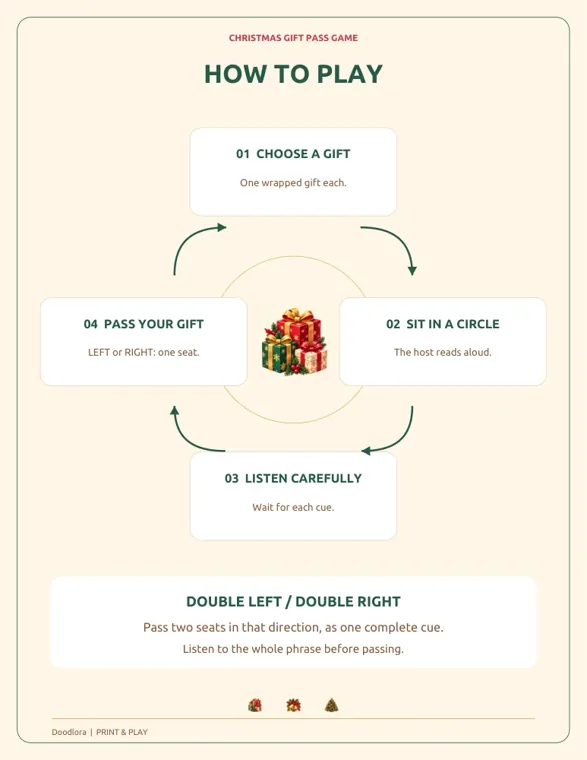
A child who mixes up left and right can sit beside an adult who points the way. With one prize instead of a gift each, or at a baby or bridal shower, the setup changes. Our left-right story game page sets out those versions.
Swap-card round after the story
A swap-card round gives a left-right circle one last shake-up. Agree to add it before the story starts. When the story ends, draw a single card for the whole group, do what it says, then stop.
- Players: the same circle, still holding their gifts.
- Time: one card.
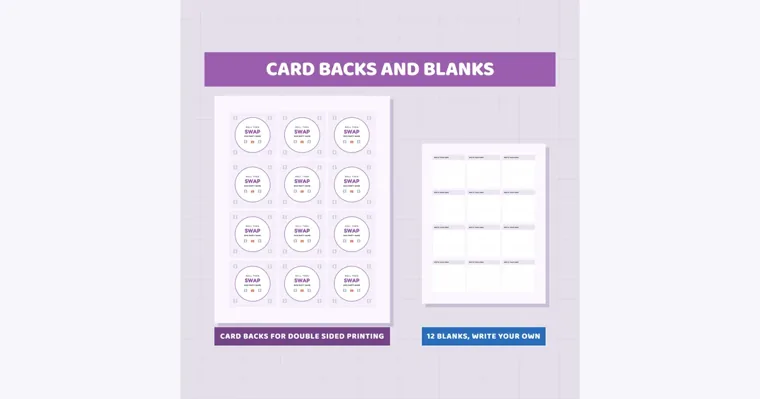
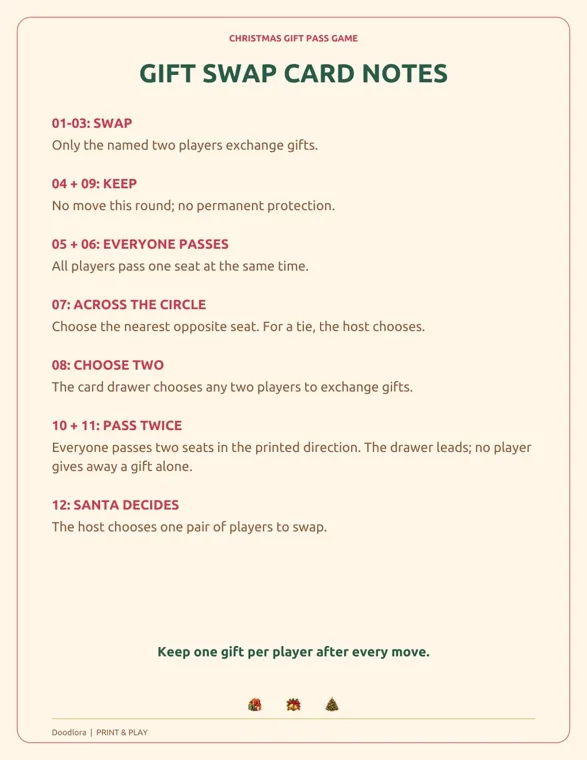
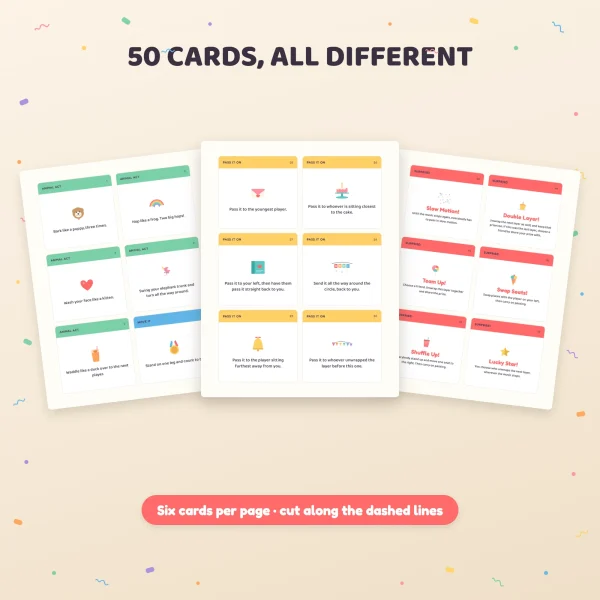
- Prepare: the Christmas Gift Pass kit has 12 gift swap cards, or you can write your own on slips. They include swap with the player on your left or right, swap with any player, everyone passes, pass twice, keep your gift, and Santa decides, where the host picks one pair to swap.
- Ending: gifts are final once that one agreed round is done.
- Watch for: arguments over the odd cards. The kit’s notes settle them: “across the circle” means the nearest opposite seat, and the host breaks a tie. A keep card protects a gift for that round only.
Gift exchange games with dice: a six-action plan
A dice exchange keeps the gifts moving turn after turn. Players take turns rolling one die, the number picks an action, and the circle follows it. Our six-card host plan uses only group passes and two-person trades, so every player holds exactly one gift for the whole game.
Write one action on each of six blank cards, or on slips of paper:
- Everyone passes their gift one seat left.
- The roller trades gifts with the person on their left.
- The roller picks any player, and those two trade gifts.
- Everyone passes their gift one seat right.
- Everyone passes three seats left, one seat at a time.
- The roller trades gifts with the person on their right.
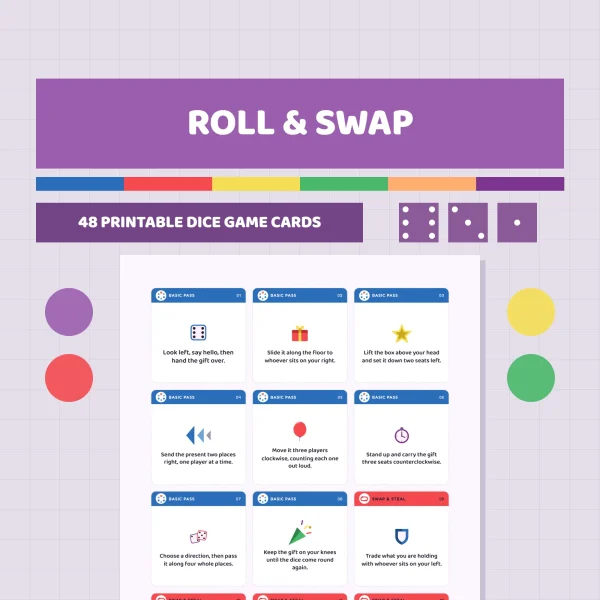
- Players: the Roll & Swap set from Doodlora Studio plays its gift exchange with 4–20 people. Each brings one wrapped gift on the same budget. The kit says ages five and up.
- Time: the kit plays twelve rounds or until a timer goes off. Its setup page calls twenty minutes plenty for an office party or family night.
- Prepare: one ordinary six-sided die and the six cards. The set includes 12 blank cards, so you can use six of them. Leave the second die and the score sheet out.
- Ending: if the timer rings during an action, finish it. Check that everyone holds one gift, then open.
- Watch for: the full printed deck. Some cards have one player hand a gift away, or take one without giving one back, and that leaves someone holding two. For a one-gift-each exchange, use the six actions above.
Gift exchange games with choosing and stealing
Stealing games give each player a real choice. Guests pick a wrapped gift or take one that somebody else has already opened, and the rivalry is the fun. Choose these for teens and adults who enjoy that. Keep personal gifts out, since a steal can carry a present away from the person it was bought for.
White elephant (Yankee swap, Dirty Santa)
White elephant is the classic open-or-steal game. Players draw numbers for the turn order, and the first player opens a wrapped gift. Each later player either opens a new gift or steals one that’s already open. A player who loses a gift then opens another or steals in turn.
- Players: one turn per player, so a bigger group means a longer game, before you count the steals.
- Gifts: one wrapped gift each, of similar value. Wikipedia’s entry says white elephant gifts lean funny and impractical. Tell guests whether you want gag gifts or useful ones.
- Steal limit: a common rule caps each gift at two steals, and then its holder keeps it. Pick your limit before the first turn.
- Ending: the game ends when everyone has a present. Some groups give player one a final chance to steal.
- Watch for: steal-backs. Decide whether someone can grab back the gift that was just taken from them. Our white elephant rules page walks through steal limits and the last turn.
Numbered draw
A numbered draw is the simplest random exchange. It’s a version we suggest, not a named tradition. Number each wrapped gift and put matching numbered slips in a bowl. Each person draws a slip and collects that package. There’s no stealing to explain.
- Players: any size, young children included. An adult can help a child find the matching number.
- Time: one draw per person.
- Prepare: a marker, folded slips and a bowl.
- Ending: the last slip is drawn and everyone has a gift.
- Watch for: drawing your own gift. Announce before the draw that two people may swap after opening if both agree.
Secret Santa gift exchange games for a named recipient
Assigned-gift games suit a group that shops ahead and wants something personal. Each giver buys for one recipient, and the gift stays with that recipient. Sending it around a passing circle would undo the matching.
Secret Santa (Kris Kringle)
Secret Santa gives each person someone to buy for. Wikipedia describes the giver’s identity as either staying secret or being revealed at the end. In Canada and Australia it’s also called Kris Kringle.
- Players: 3 or more. With two people, each one knows who drew them.
- Time: names are drawn days or weeks ahead. The exchange itself is one round of opening.
- Prepare: a private way to draw names, such as an online generator or names in a hat. Send the budget and the exchange date with each assignment.
- Ending: everyone has opened their gift, and givers reveal themselves if your group chose that.
- Watch for: drawing your own name from a hat. Have everyone read their slip in private and redraw at once, before anyone leaves.
Guess-the-giver Secret Santa
The guessing version adds a game to the handover. Wikipedia describes each giver bringing a letter with the gift, which may or may not hold hints. Each receiver then has to guess who the giver is.
- Players: people who know each other well enough to guess.
- Time: one guess per person at the exchange.
- Prepare: a short note from each giver. Agree beforehand whether notes carry hints.
- Ending: each giver owns up after the guess.
- Watch for: handwriting. A handwritten note can give the giver away, so ask for typed or printed notes.
Conspiracy Santa
Conspiracy Santa gives every person a whole team of givers. Everyone except one person works together, without that person knowing, to choose their gift. One conspiracy runs for each participant at the same time. Wikipedia notes that learning about each other is a common theme, which makes it popular in workplaces and schools.
- Players: a small group. Each person joins every conspiracy except their own.
- Time: planning runs over days or weeks, and the gifts come out together.
- Prepare: a separate chat or list for each recipient that leaves that person out.
- Ending: each team presents its gift.
- Watch for: the workload. In a group of 10, each person helps plan 9 gifts. Keep the group small or the budget low.
Remote gift exchange games for teams on a video call
Remote exchanges need delivery settled before the call. West Virginia University’s talent and culture office published a one-page virtual gift exchange sheet with two formats, and both games here follow it. For running the rest of a hybrid party, see our office Christmas party games.
Virtual white elephant
The virtual version swaps wrapped boxes for photos or links. Before the party, each person gets a number. They pick a gift online or photograph one they’ve bought, and keep both secret. On the call, the first person picks a number and that gift’s link or photo is revealed. The next person steals it or picks another number.
- Players: a remote team, one turn each.
- Prepare: a way to set the order, decided ahead. The WVU sheet suggests alphabetical order, birthdays or a free number generator.
- Steal rule: a player who loses a gift can’t steal it straight back in that round. The sheet caps each gift at three steals.
- Ending: all the gifts have been given out. After the party, each giver ships their gift to whoever ended up with it.
- Watch for: shipping. Say in the invitation whether the price limit includes postage.
Mailed secret present
A mailed secret present is Secret Santa opened together over video. Pair each giver with a recipient; the WVU sheet suggests numbers and a random number generator. Decide how gifts get delivered, set the meeting date, and everyone opens on the call.
- Players: a remote team of 3 or more.
- Delivery: ship to each home with a note not to open until the call, or drop gifts at a central spot such as the office.
- Ending: the last person has opened their gift on the call.
- Watch for: late parcels. Set the shipping date well before the call, and let anyone whose gift hasn’t arrived open last.
Gift exchange games for kids
Children do best when nobody loses a present once they’ve held it. Both games here hand every child something, and an adult runs the music. The left-right story, the dice exchange and the numbered draw above also work with children.
Pass the parcel, one layer per child
Pass the parcel, called pass the present in North America, is one parcel wrapped in many layers. Music plays while the children pass it around. When the music stops, the child holding it unwraps one layer and keeps the small prize inside. The last layer holds the main prize.
- Players: one layer per child, so everyone unwraps exactly once. That’s the rule on the wrapping page of our pass the parcel game.
- Prepare: wrap the grand prize first, then add a card and a small prize with each new layer. Use a different paper for each layer and tape it lightly. The kit puts this at ten minutes the night before.
- Music: stop it every 20 to 40 seconds, with your back to the circle. Keep a tally of who has unwrapped, so you can steer the stops toward children who haven’t had a turn.
- Ending: the last layer comes off and the grand prize is found.
- Watch for: small parts. The kit’s prize page warns that small parts and hard candy are a choking risk with children under three. It also says to check for food allergies before using edible prizes.

Musical gift pass
A musical gift pass is our version for a party where every child brings a gift. Everyone holds one wrapped gift. While the music plays, the gifts pass one seat to the right, hand to hand. When the music stops, everyone holds still.
- Players: a circle small enough that every child can reach both neighbors.
- Time: agree on a number of stops before you start, such as five.
- Ending: after the last stop, the gift in your hands is yours.
- Watch for: pile-ups. A slow passer ends up with two gifts and a neighbor with none. At every stop, check that each child holds one gift before the music starts again.
Themed gift exchange ideas: cookies and books
A theme changes what people bring, not how the gifts move. You can pair a theme with any game above, or use one of these two, which share things in their own way.
Cookie exchange
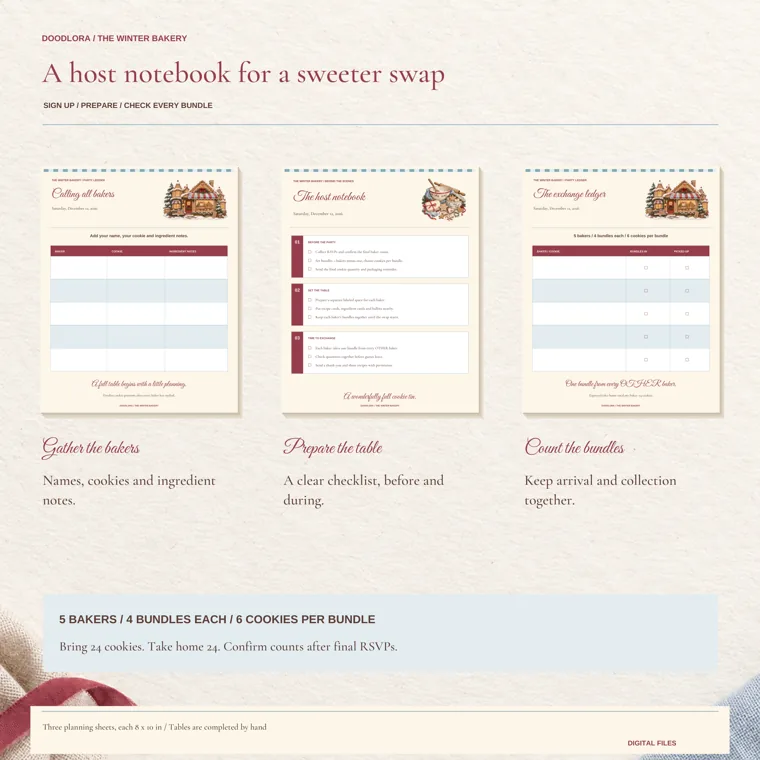
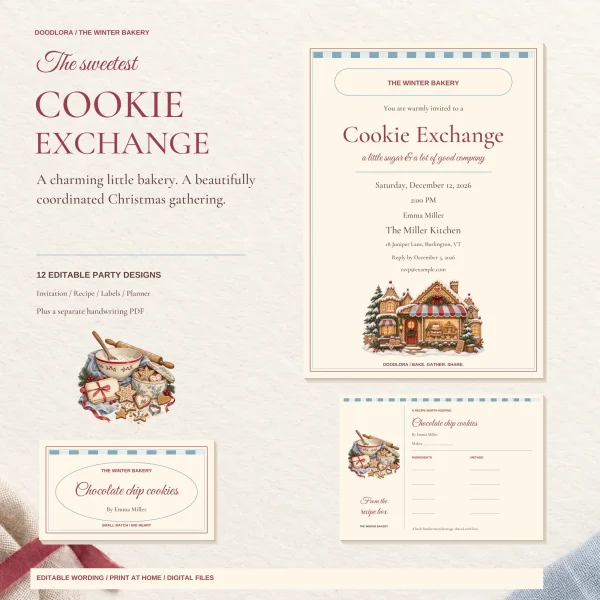
A cookie exchange swaps homemade batches instead of wrapped gifts, so everyone goes home with a mix. Each baker brings one kind of cookie packed in bundles, then collects one bundle from every other baker.
- Players: the sample party in our cookie exchange kit has 5 bakers. Each brings 24 cookies packed as 4 bundles of 6, and takes 24 home.
- The math: bundles per baker equal the number of bakers minus one. Work it out after the final RSVPs.
- Prepare: a separate labeled spot on the table for each baker, and an ingredient card for every kind of cookie.
- Ending: every baker has one bundle from each of the others. Check the counts together before guests leave.
- Watch for: allergies. The kit’s ingredient cards are blank forms, not allergy-free certificates. Bakers write what’s really in their batch, and guests decide which cookies suit them.
Book exchange
A book exchange runs any format above with a wrapped book as the gift. It borrows from Iceland’s Christmas book flood, Jólabókaflóð. New books come out in the months before Christmas and are given as presents on Christmas Eve, which makes books the country’s most popular Christmas gift. The tradition began in 1944 with the first Journal of Books, a catalog sent free to every household.
- Players: any group. Set an age range for the books if children are taking part.
- Format: a numbered draw keeps it calm. White elephant lets readers steal a title they want.
- Ending: the same as the format you chose.
- Watch for: every package is book-shaped. In a stealing game guests choose blind, so a one-line hint on the tag, such as the genre, gives them something to go on.
Before any gift exchange: budget, sign-up and a spare gift
Every game above runs more smoothly when the invitation settles three things. Set one price limit. Say whether gifts are for a named person or a random exchange. At work, make it opt-in: the WVU sheet asks interested team members to sign up and stresses that taking part is not mandatory.
Keep one spare wrapped gift for a guest who forgets theirs. Count players and gifts before the first move. Then announce the ending, whether it’s the story’s last line, the timer, the last numbered turn or the reveal. To fill the time before the exchange, our Christmas party games list floor games for adults and coloring contests for the kids’ table.
Printables from this article

Related articles
Printable Party Games
How to Plan a Baby Shower: Timeline, Food & 2-Hour Schedule
A baby shower plan from the first talk with the parents-to-be to the last gift: timing, guest list, budget, venue, a two-hour schedule, safe food and backup plans.
Printable Party Games
How to Plan a Bridal Shower: Timeline, Budget and Schedule
A host's plan for a bridal shower, from the first talk with the bride and co-hosts to the guest list, invitations, a timed party schedule, the gift opening and what to do when something slips.
Printable Party Games
35th Birthday Ideas: Party, Trip, Theme and Gift Ideas
Ways to celebrate turning 35, sorted by how many people the birthday star wants around, with group size, time, prep and the snag to plan for in each.