RSVP Meaning: How to RSVP, When to Reply and Etiquette
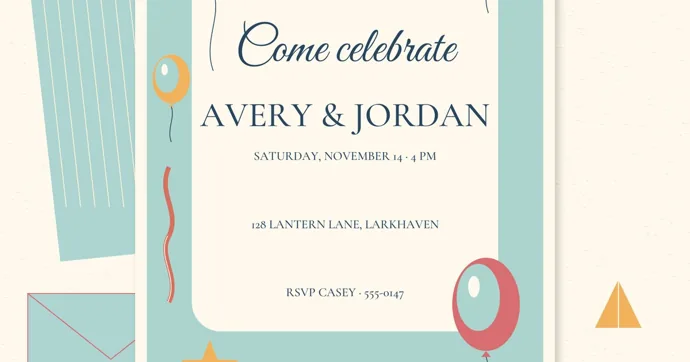
RSVP means “please reply.” The letters stand for the French phrase répondez s’il vous plaît, which word for word reads “respond if it pleases you,” and on an invitation they tell you the host needs a yes or a no. You answer in the way the invitation asks, by text, call, reply card or link, within a day or two of getting it and before any deadline printed beside the letters. The one exception is “regrets only,” where you reply just if you can’t go.
Below are the phrases you’ll see on invitations and what each one asks of you, sample replies for text, card and online, the timing, the plus-one question and changing your answer. The last part is for hosts: how to word the RSVP line, where to put the deadline and what to send when nobody answers.
What RSVP means on an invitation, line by line
RSVP came into English from French, and English uses it two ways. As a noun, an RSVP is your reply to an invitation. As a verb, to RSVP is to send that reply, so “Have you RSVPed?” is normal party talk. Wiktionary notes that RSVP is properly used by itself, and “please RSVP” repeats the “please” already built into the French. Both forms are everywhere, and no guest will judge a host for writing “Please RSVP.”
The letters rarely appear alone. What comes after them tells you how and when to answer:
| What the invitation says | What the host is asking |
|---|---|
| RSVP | Tell me yes or no. Reply to the return address or the contact given |
| RSVP to Casey, 555-0147 | Text or call that person with your answer |
| RSVP by November 7 | Answer before that date, yes or no |
| Kindly reply / Please respond | The same request as RSVP, in English |
| Regrets only | Reply only if you can’t come. Silence counts as yes |
| Reply card enclosed | Fill in the card and mail it back in its envelope |
| No RSVP line at all | No reply required, but a quick note if you can’t come is polite |
The Emily Post Institute, the etiquette authority behind the long-running Etiquette book, puts the core rule plainly: unless the invitation says regrets only, telling the host you can’t attend matters as much as telling them you can. A no is a full answer. It lets the host count chairs, cake slices and favors correctly.
How to RSVP: answer the way the invitation asked
The invitation chooses the channel, and your reply should follow it. Emily Post’s advice is to judge the reply by how formal the invitation is: an emailed invitation can get an emailed answer, while a wedding invitation with an enclosed card gets that card back by mail. If a phone number is printed, text or call that number rather than commenting on a group post.
Whatever the channel, a good RSVP has four parts: yes or no, who is coming by name, the total number in your group, and any detail the host asked for, such as a food allergy. A decline needs only a kind sentence. Emily Post says there’s no need for a long explanation, and a short reason is optional.
RSVP by text message or phone
A text is the easiest reply for most birthday parties and casual gatherings, and it works best when it can stand alone. The host may be sorting thirty threads, so put your name and the event in the text. Some sample replies:
- Accepting: “Hi Casey, it’s Jamie. Mia would love to come to Avery’s party on Saturday, November 14 at 4. Just the two of us. She has a peanut allergy, so I’ll bring her a safe snack.”
- Declining: “Hi Casey, this is Jamie, Mia’s mom. Thank you so much for inviting her! We’re out of town that weekend, so she can’t make it. Hope Avery has a great birthday.”
- Not sure yet: “Thanks for the invite! Let me check our calendar and I’ll confirm by Wednesday.” Then confirm by Wednesday.
If the invitation lists a phone number without saying “text,” a text is still fine for most parties. Emily Post’s guidance for an RSVP phone number is to call and speak in person, since answering machines can be unreliable. For a formal dinner, an older host or a small gathering where every seat matters, a call is the safer choice.
RSVP with a reply card or by mail
A reply card usually has lines to fill in and a date to beat. Write the names clearly, circle or tick your answer, fill in the headcount, then mail it in the enclosed envelope or hand it back to the person who gave it to you.
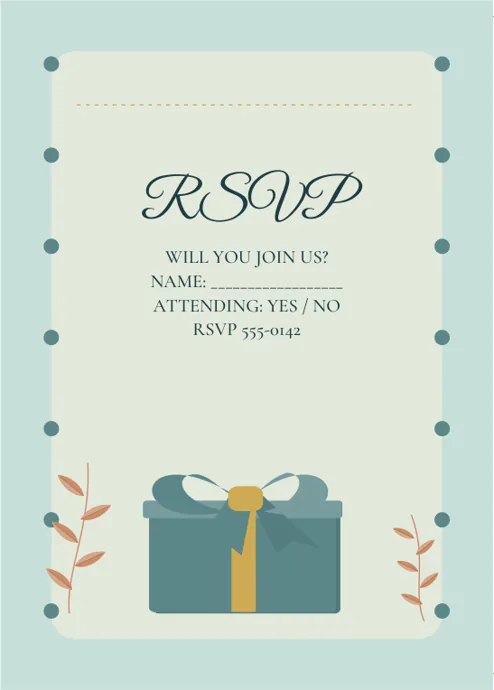
The gift box suite in our birthday party invitations includes a reply card like the one above, with a name line and “Attending: yes / no.” If a card has no space for the number of guests, add it next to your name: “The Lee family, 4 attending.” Formal wedding cards often ask for meal choices too, and they need the same care.
When there is no card and no phone number, Emily Post’s guidance for a formal invitation is a short handwritten note to the return address on the envelope. “Jamie and Mia Lee accept with pleasure your kind invitation for Saturday, the fourteenth of November” is enough. A decline follows the same pattern with “regret that they are unable to attend.”
RSVP online, by email or through a link
Online invitations usually carry a reply button or a form. Tap yes or no, fill in the headcount and the notes box, and check that the confirmation screen came up. If the form has no box for a child’s allergy or a late arrival, send the host a separate short message with that detail.
An emailed invitation can get an emailed reply: “Hi Pat, thank you for the invitation to the retirement dinner on the 20th. I’ll be there, and I’m bringing my husband, Sam.” When an invitation is a picture sent by text, such as the phone images in our text message invitations, there is no button to press. Guests reply to the contact the host typed on the card.
When to RSVP and how late is too late
Answer within a day or two of getting the invitation, and by the RSVP date at the latest. That is Emily Post’s rule, and it covers both yes and no. An early decline is a favor to the host, since it frees a spot they may want to offer to someone else.
If you can’t answer yet, say so and name a day you’ll know by. Emily Post allows “Let me check my calendar and get right back to you,” as long as you really do get back. A “maybe” left hanging past the deadline is worse than a no, because the host has to plan around it.
Missed the date? Reply anyway, as soon as you notice. Say sorry in one line and ask rather than assume: “I’m so sorry I missed your RSVP date. Is there still room for Mia on Saturday? Completely fine if not.” Some hosts will already have given the caterer a final number, and then a late yes simply can’t be added.
Regrets only: when you reply only if you’re not coming
“Regrets only” flips the usual rule. You reply only if you can’t attend, and if the host hears nothing, they expect you to come. Emily Post states it directly: if your host doesn’t hear from you, he’s expecting you to be there.
That makes silence a yes, so the catch is guests who meant to decline and never did. If you see “regrets only” and can’t make it, send your no the same day. A short message is enough: “Thank you for including us. We have a conflict that evening and can’t come, but we hope it’s a wonderful night.”
Regrets-only invitations suit open houses, office parties and drop-in events where the host plans food for a range rather than an exact count. They don’t suit a seated dinner or a party with a paid headcount. In those cases, ask everyone for a yes or no.
Plus ones, kids and extra guests: who the RSVP covers
An invitation covers only the people named on it. Emily Post’s advice is not to ask to bring anyone else: the hosts invited the people they wanted. If the envelope reads “Jamie Lee and Guest,” you may bring one person, and your RSVP should say whether you’re bringing someone and give that person’s name.
Children follow the same rule. If the kids were invited, the invitation would have named them or said “and family.” A child’s birthday invitation addressed to one child covers that child. Brothers and sisters aren’t included unless the host says so, though many hosts will say yes if asked early and politely.
A houseguest staying with you that weekend is the tricky case. Emily Post’s suggestion is to decline and give the reason. That leaves the host free to extend the invitation to your guest, without being put on the spot.
Changing your RSVP after you’ve answered
Once you’ve said yes, the host has counted you. Emily Post lists the good reasons to switch a yes to a no: illness or injury, a death in the family, or an unavoidable work conflict. Call or message the host right away, not on the day. Backing out because something better came up is the fastest way off future guest lists.
Switching a no to a yes is fine only if it won’t upset the host’s plans. For a backyard party, a quick “Our trip got canceled, is there still room for Mia?” is easy to say yes to. For a wedding where meals and seating are fixed, the answer may have to be no, and you should accept that graciously.
For hosts: how to word the RSVP line on an invitation
A clear RSVP line answers three questions for the guest: who to reply to, how to reply, and by when. Put a name and a phone number or link on the card, and add a date. “RSVP” on its own leaves guests guessing whether to text, call or reply to a group message, and that is where answers go missing.
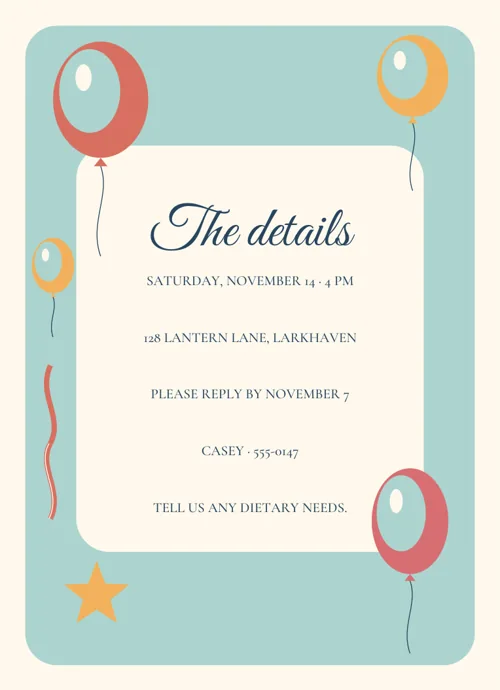
The details card above, from our text message invitation set, shows a working layout: the party date, the address, “Please reply by November 7” for a November 14 party, the contact name and number, then “Tell us any dietary needs.” A guest reading it knows exactly what to send and where.
Picking an RSVP deadline
Set the date by working back from whatever needs a final number. For a child’s birthday party at home, one week before is common, and it matches the sample card above. If a venue, a trampoline park or a caterer wants a headcount, find out their cutoff and put your RSVP date a few days before it.
Weddings run on a longer clock, with the reply date usually three to four weeks before the day so the caterer gets a final count. The full countdown from save-the-dates to reply cards is laid out in when to send wedding invitations. Whatever the event, leave a gap after the deadline, because some guests will still need a nudge.
RSVP wording examples you can copy
Match the wording to how formal the event is. These lines go on the invitation or its details card:
- Kids’ party, by text: “RSVP to Casey at 555-0147 by November 7.”
- Casual adult party: “Let us know if you can make it by Friday the 6th. Text Jordan: 555-0147.”
- Party with food to plan: “Please reply by November 7 with the number of guests and any food allergies.”
- Drop-in or open house: “Regrets only to Pat, 555-0147.”
- Formal dinner or wedding: “The favor of a reply is requested by the first of October.”
- Online reply: “Kindly RSVP at the link below by October 1.”
If siblings are welcome, say so on the card (“Brothers and sisters welcome”), since guests won’t assume it. If they aren’t, address the invitation to the invited child by name and leave it there.
Reply cards and phone screens for collecting answers
A reply card that asks for exactly what you need saves a round of follow-up messages. Ask for the guest’s name, the number coming and food needs on one card, and the replies arrive ready to add up.
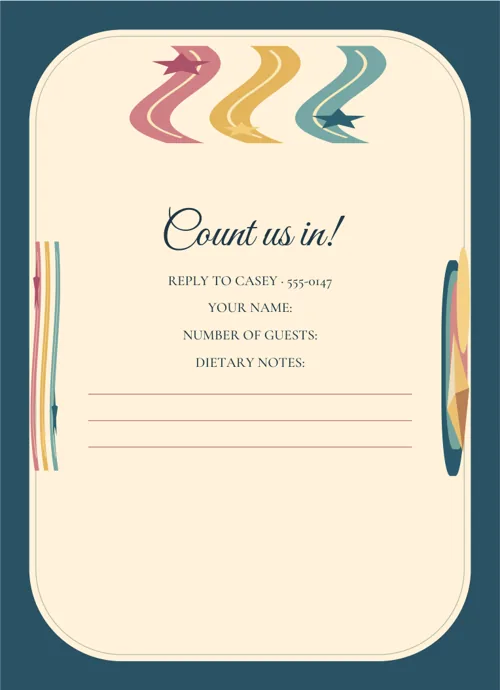
The “Count us in” card above is the reply prompt from our digital party invitations. The set has it as a phone image to text to guests, as well as a printable card. The same set also has a save the date and a day-before reminder, so a host can send all three from a phone in the weeks around the party.
What to do when guests don’t RSVP
Some guests won’t answer, whatever the card says. Plan for it rather than taking it personally. The day after your deadline, send each missing guest one short, friendly message that makes replying easy:
- “Hi Jamie! Just checking whether Mia can make it to Avery’s party on Saturday at 4. A quick yes or no by tomorrow would really help with the food. Thanks!”
- “Hope you got our invite for the 14th. I’m giving the venue a final count on Thursday. Will you be joining us?”
Send it to the person, not the group thread, and give a clear answer-by day. If a guest still says nothing, count them in. Buying food and favors for two or three phantom guests is cheaper than running short, and the spares usually go to a sibling nobody mentioned. The rest of the party-day fixes, from rain to late arrivals, are covered in our birthday party planning steps.
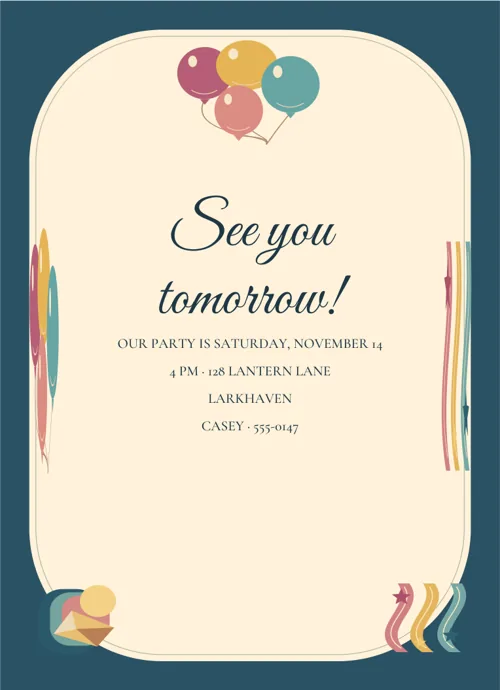
A reminder the day before helps too, especially when replies came in weeks earlier. The “See you tomorrow” card from the same digital set repeats the date, time, address and host contact. Send it to everyone who said yes. Guests who forgot to reply sometimes answer the reminder instead, which gives you a last count.
Quick answers about RSVPs
Is it rude not to RSVP?
Yes, when the invitation asks for a reply. Emily Post calls a missing RSVP one of the etiquette complaints it hears most often. A no takes ten seconds and lets the host plan, so send one even if you barely know the host.
Do I RSVP if I’m not going?
Yes, unless the invitation says “regrets only.” Then a reply is exactly what’s needed, because silence would mean you’re coming. On a standard RSVP invitation, a no is as useful to the host as a yes.
What if the invitation doesn’t say RSVP?
No reply is strictly required. Emily Post still calls it polite to let the host know if you can’t come, and a short call, text or note is enough.
Printables from this article
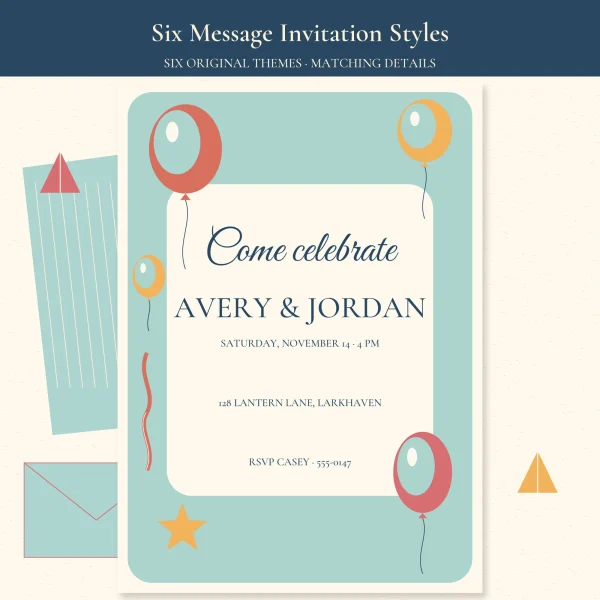
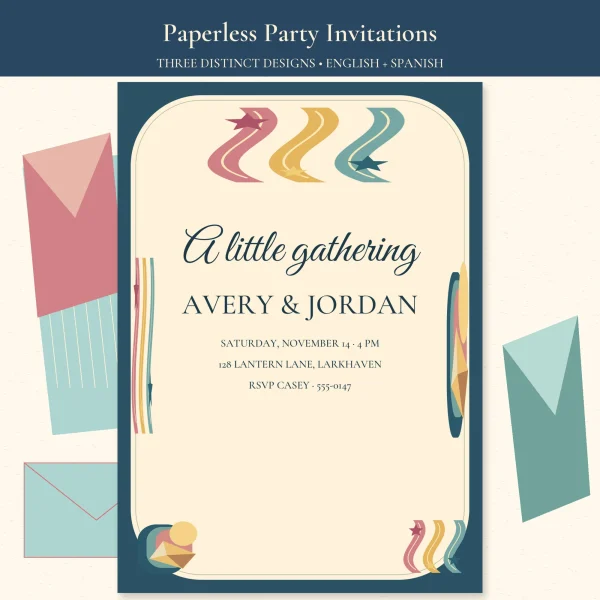
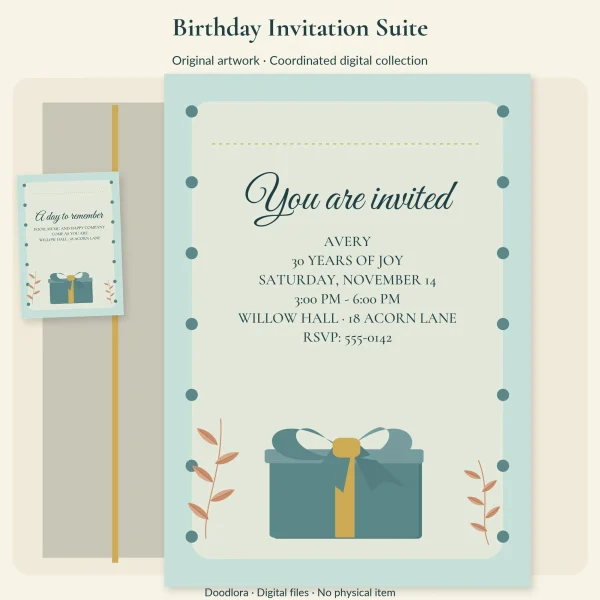
Related articles
Printable Invitations & Cards
Sweet 16 Wishes: What to Write in a 16th Birthday Card
A good sweet 16 wish names what sixteen actually brings, like a license, a first job or a later curfew, and says one true thing about the teen. Here are wishes sorted by who is signing the card, from parents to a coach, plus a section for boys and a list of lines to keep out of a post.
Printable Invitations & Cards
Happy Birthday Mom: Wishes, Messages & What to Write
What you write to your mom depends on who's holding the pen and where things stand between you. Here are birthday wishes for mom from daughters, sons and little kids, plus messages for a stepmom, a mother-in-law, a mom far away, a new mom's first birthday as a mom, milestone ages and a relationship that's complicated.
Printable Invitations & Cards
Birthday Wishes for a Friend: Best, Old and New Friends
A good birthday wish for a friend mentions something only the two of you share and points to the next time you'll see each other. Here's what to include for a best friend, an old friend, a new friend, a long-distance friend, a friend you just made up with and a group card, with sample wishes for each.